2 February 2026 The Future is the Product of the Past

Ancient Christian Settlement Discovered in Egypt

The Egyptian Ministry of Antiquities said on Saturday that a French-Norwegian archaeological team had discovered a new ancient Christian settlement in the western desert of Egypt, revealing monastic life in the area in the fifth century.

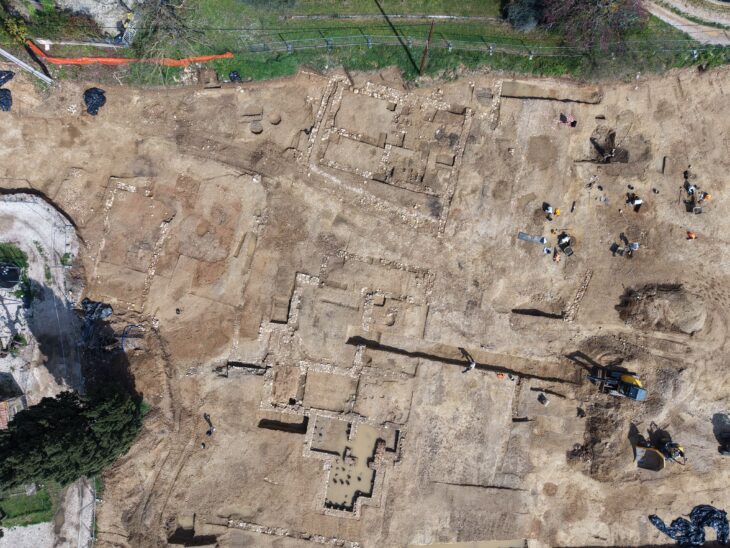
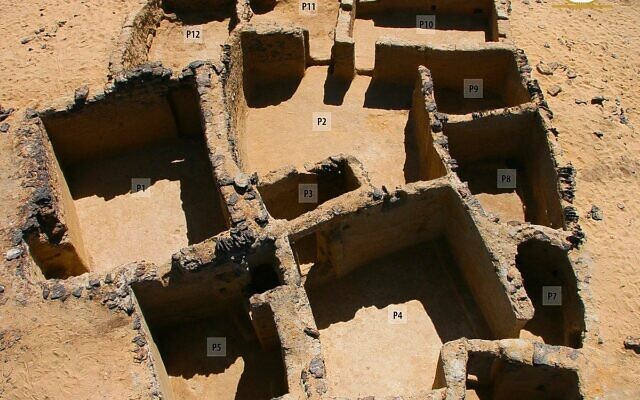
The mission unearthed “several buildings made of basalt, others carved into the bedrock and some made of mud bricks,” during its third excavation campaign at the Tal Ganoub Qasr Al-Agouz site in the Bahariya Oasis, the ministry said in a statement.

The complex is comprised of “six sectors containing the ruins of three churches and monks’ cells,” whose “walls bear graffiti and symbols with Coptic connotations,” said Osama Talaat, head of Islamic, Coptic, and Jewish Antiquities at the ministry.

Mission head Victor Ghica said, “19 structures and a church carved into the bedrock” were discovered last year.

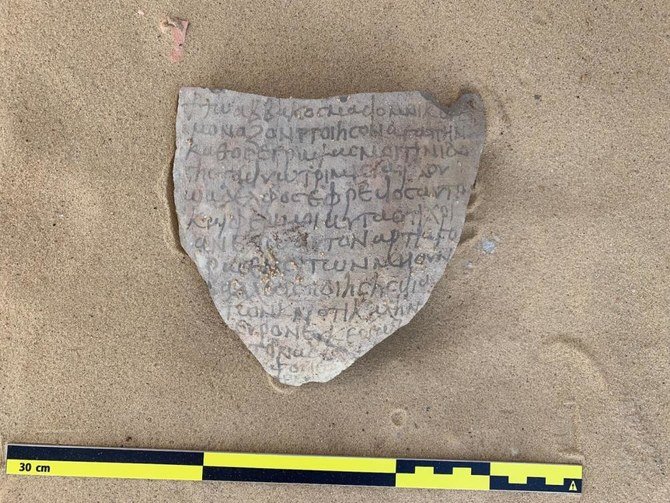
The church walls were decorated with “religious inscriptions” and biblical passages in Greek, revealing “the nature of monastic life in the region,” Ghica said, according to the statement.


📣 Our WhatsApp channel is now LIVE! Stay up-to-date with the latest news and updates, just click here to follow us on WhatsApp and never miss a thing!!


Bahariya oasis
A picture shows a view of ancient Christian inscriptions on a clay fragment discovered in the Tal Ganoub Qasr Al-Ajouz site in the Western Desert Bahariya Oasis. (AFP)

It clearly showed that monks were present there since the fifth century AD, he said, adding that the discovery helped understand “the development of buildings and the formation of the first monastic communities” in this region of Egypt.

The remote site, located in the desert southwest of the capital Cairo, was occupied from the fourth to eighth centuries, with a likely peak of activity around the fifth and sixth centuries, according to the French Institute of Oriental Archaeology (IFAO), in charge of the mission.

Previous excavations undertook in 2009 and 2013 shed light on subjects including “the production and preservation of wine as well as the husbandry of animals” in a monastic context, according to the IFAO.
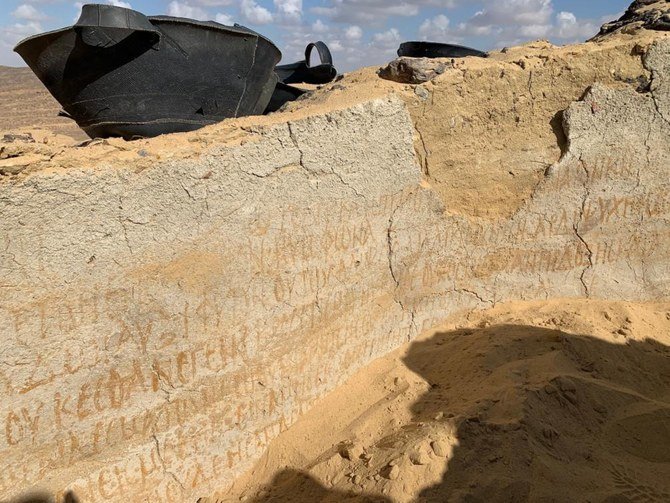
A picture shows a view of ancient Christian rock inscriptions in Greek, discovered in the Tal Ganoub Qasr Al-Ajouz site in the Western Desert Bahariya Oasis. (AFP)

Cairo has announced several major new archaeological discoveries in recent months with the hopes of spurring tourism, a sector that has suffered multiple blows, from a 2011 uprising to the coronavirus pandemic.

Also last month, an Egyptian-Dominican archaeological mission working near Alexandria said it had discovered mummies from around 2,000 years ago bearing golden-tongued amulets.

In January, Egypt unveiled ancient treasures found at the Saqqara archaeological site south of Cairo, including sarcophagi over 3,000 years old, in a discovery that “rewrites history,” according to famed Egyptologist Zahi Hawass.

It seems that Egypt will continue to surprise us with its historical richness.
Related Articles

3,000-Year-Old Lost Anatolian language ‘Kalašma’ deciphered

5 July 2024

5 July 2024

In 2023 excavation site at the foot of Ambarlikaya in Boğazköy-Hattusha in Turkey, a cuneiform tablet with a previously unknown...

Votive Altar Dedicated to Basque Deity Larrahe Found in Medieval Well

23 June 2024

23 June 2024

Archaeologists have unearthed a Roman-era votive altar dedicated to the ancient Basque deity Larrahe at the medieval monastery of Doneztebe...

Rare 4th-Century BC Marble Mask of a Phoenician Woman Unearthed in Carthage

12 November 2025

12 November 2025

Archaeologists in Tunisia have uncovered a marble mask depicting a woman with a Phoenician-style coiffure, described as “unique in form...

New research reveals the true function of Bronze Age daggers

30 April 2022

30 April 2022

A new study led by Newcastle University has revealed that the analysis of Bronze Age daggers has shown that they...

Newly discovered inscribed brick may reveal Elamite water supply system in Western Iran

15 January 2024

15 January 2024

Archaeologists discovered a brick inscribed with Akkadian script, marking the Elamite water supply system, alongside some intricately patterned bricks in...

Evidence of Intentional Roman Use of Narcotic Seeds, Found in Bone Vessel in the Netherlands

8 February 2024

8 February 2024

Archaeologists have discovered the first conclusive evidence of the existence of a hallucinogenic and poisonous plant thought to have been...

Archaeologists Uncover Evidence of British Rule in Florida

29 March 2025

29 March 2025

A recent archaeological excavation in St. Augustine, Florida, has revealed a British redoubt dating back to 1781, offering valuable insight...

Researchers identified, for the first time, the composition of a Roman perfume more than 2,000 years old

25 May 2023

25 May 2023

A research team at the University of Cordoba has identified, for the first time, the composition of a Roman perfume...

Roman-Era Sarcophagus Discovered on Varna Beach one of Bulgaria’s Most Popular Tourist Destinations

26 July 2024

26 July 2024

An ancient sarcophagus from the Roman era was discovered by chance on the beach near the resort of Saints Constantine...

Researchers reveal the 4,500-year-old network of funerary avenues in Arabian Peninsula

15 January 2022

15 January 2022

Archaeologists from the University of Western Australia (UWA) have determined that people living in ancient northwest Arabia built long-distance “funerary...

Ötzi the Iceman Had Dark Skin, Bald Head and Anatolian Ancestry -New study rewrites ancient history

17 August 2023

17 August 2023

New DNA analysis by German researchers shows that the famous glacier mummy Ötzi may have had dark skin, dark eyes,...

Teymareh Petroglyphs, One of the World’s Largest Rock Art Collections, at Risk of Disappearing Due to Mining Activities

20 August 2024

20 August 2024

Petroglyphs are among the world’s oldest practiced art forms and are as diverse as the wide-ranging cultures and civilizations that...

First Trilobite Fossil Amulet from Roman Early Empire (1st–3rd Century CE) Found in Spain

22 July 2025

22 July 2025

In a discovery that may reshape our understanding of how ancient Romans perceived the natural world, archaeologists have uncovered a...

Astonishing discovery in Kazakhstan: Bronze Age girl buried with more than 150 animal ankle bones

7 September 2023

7 September 2023

Archaeologists in eastern Kazakhstan have unearthed a Bronze Age burial mound of a girl surrounded by various grave goods in...

World’s Oldest Murder

14 February 2021

14 February 2021

Researchers found a mass grave in a cave in Spain, now known as Sima de los Huesos, or the Pit...