

They entered the muddy moat looking for the kind of treasure that belonged in a film script. Instead, beneath layers of dark silt at a historic palace in Poland, the searchers encountered something very real: a 19th-century cavalry cuirass that had survived hidden from view for generations.
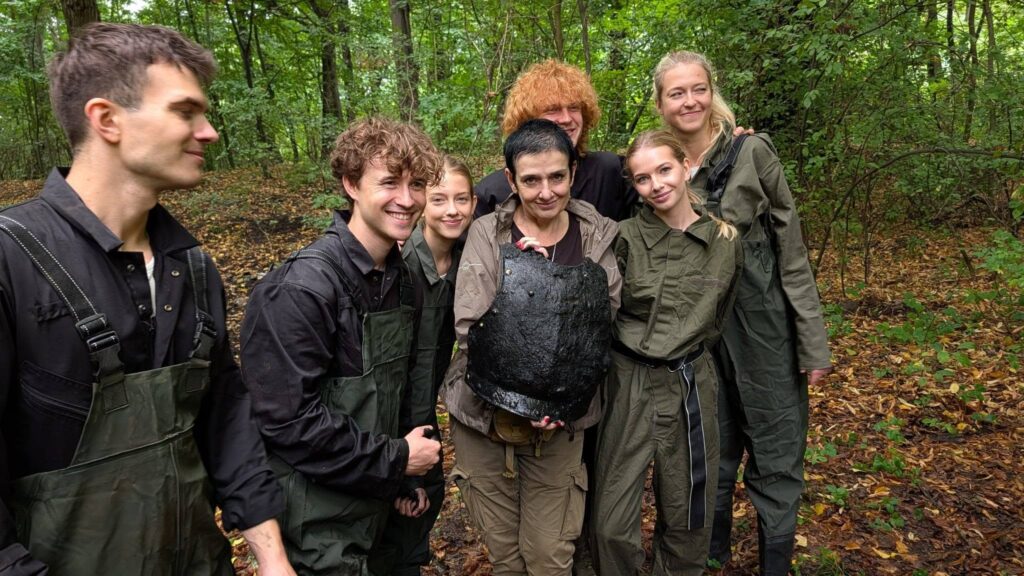
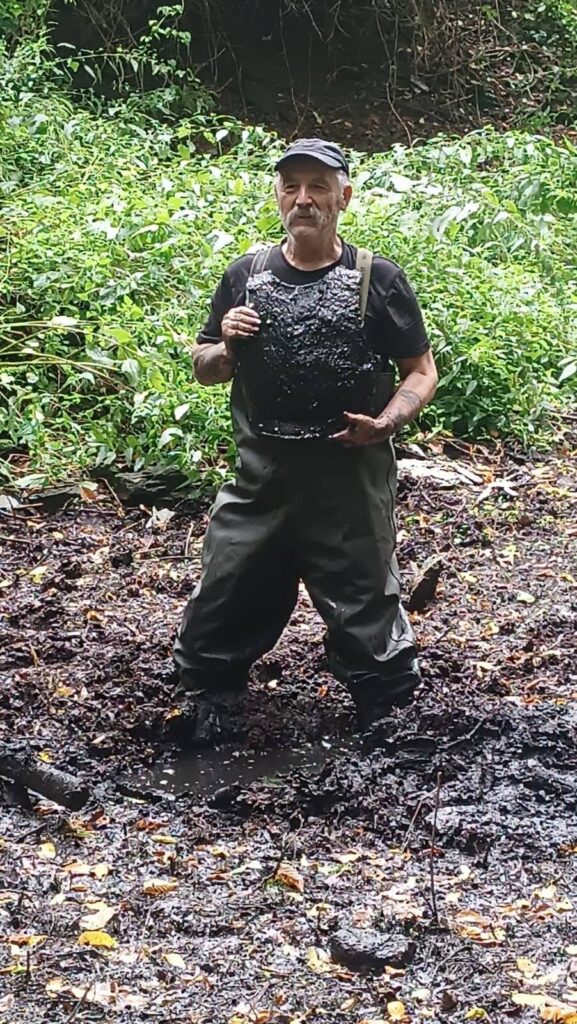
The discovery came from the moat surrounding Pielaszkowice Palace in Lower Silesia, where Wiesław Andrysiak of the DRACO History Explorers Association worked through mud that reportedly reached as high as his waist. According to the Muzeum Domu Śląskiego w Ziębicach, the object is a 19th-century German guard cuirass and will enter the museum’s collection after conservation.
What began partly as preparation for a movie had suddenly produced a substantial piece of military history.
A piece of cavalry armour beneath the moat
The cuirass was one of the most recognizable elements of a cuirassier’s equipment. Made from metal and worn across the torso, it was designed to protect heavy cavalrymen from sword blows and lance thrusts while also contributing to the imposing appearance of elite mounted units.
Finding such an object in a palace moat is unusual, but the setting may help explain its survival. The armour had remained inside thick, waterlogged layers of mud where lost, discarded and deliberately dumped objects from different periods could accumulate over time.
The team recovered more than the cuirass. Fragments of decorative park sculptures and metal fittings connected with the residence also emerged from the moat, suggesting that the deposits preserve traces of several episodes in the palace’s long history.
A palace already linked to war
Pielaszkowice Palace, historically known as Pläswitz, has its own military associations. In 1813, during the Napoleonic Wars, the residence became connected with the armistice between Napoleon’s forces and the allied Russian and Prussian armies.
The ceasefire came after the battles of Lützen and Bautzen and gave both sides time to reorganize. In the months that followed, the balance of the campaign shifted sharply, with Austria joining the coalition and Napoleon eventually suffering a major defeat at Leipzig.
That history makes the discovery of cavalry armour in the moat especially evocative, but the cuirass should not automatically be treated as a Napoleonic relic. The museum identifies it more broadly as a 19th-century German guard cuirass, and its precise date and military affiliation may become clearer after conservation.
The moat may preserve more than one chapter
The palace also experienced severe disruption during the final months of the Second World War. In 1945, the residence was looted, and accounts associated with the site describe furnishings and other objects being thrown from the building toward the moat.
Local residents later recovered valuable porcelain from the water, but much of what entered the moat appears to have remained beneath layers of mud and sediment. That raises the possibility that the recent finds do not all belong to the same moment, but instead represent material lost or discarded across different generations.
For archaeologists and historians, that makes the moat potentially more significant than the cuirass alone. Its deposits may preserve a compressed record of the palace’s changing fortunes, from military history to wartime destruction and everyday life on the estate.
The treasure hunt was supposed to stay fictional
The latest search had an unusual beginning. Writer and journalist Joanna Lamparska and the Hi! History team organised the expedition with experienced search groups while actors from a new adaptation of Kornel Makuszyński’s Satan from the Seventh Grade joined them in the field.
The novel follows a mystery involving treasure linked to a soldier from Napoleon’s defeated army. The idea was to give the actors a sense of what real searching feels like before they portrayed similar scenes on screen, and Pielaszkowice—with its own Napoleonic connection—offered an unusually fitting setting.
Instead of merely recreating a fictional hunt, however, the group found themselves watching genuine historical objects emerge from the mud. The contrast between the purpose of the exercise and the reality of the discovery is what gives the find much of its appeal.
From the moat to the museum
The cuirass will now undergo conservation before joining the collection of the Muzeum Domu Śląskiego w Ziębicach. Treatment of the metal may reveal construction details, markings or other evidence that could help specialists refine its identification and date.
For now, the discovery has already transformed an unusual film exercise into a genuine historical investigation. And if a substantial piece of 19th-century cavalry armour could survive unnoticed in the moat, Pielaszkowice may still be hiding further objects beneath its layers of mud and silt.
