
A vast royal tomb near a Chinese airport may hold the remains of a legendary empress who helped pave the way for China’s first emperor. But the mystery extends far beyond its central burial chamber. Archaeologists have uncovered 45 smaller graves around the mausoleum, and an examination of the human remains has revealed a striking detail: all 30 individuals whose biological sex could be determined were women.
The 2,250-year-old tomb near Xi’an Xianyang International Airport is believed to belong to Empress Dowager Huayang, the adoptive grandmother of Qin Shi Huang, who unified China in 221 BC. Researchers announced their findings on September 18, following years of excavation that uncovered an extensive royal cemetery, hundreds of surviving artefacts and evidence of the lives of women who may have served the Qin court.
Although the main tomb was heavily looted, its architecture and location have led archaeologists to propose Huayang as its most likely occupant. The surrounding graves, meanwhile, offer a rare glimpse into the lives of women whose labour supported the royal household more than two millennia ago.
The 43 Skeletons That Reveal Another Side of the Royal Court
The smaller graves have already revealed something remarkable about the people who lived and worked within the Qin royal household.
In a separate study published in Antiquity on March 18, 2026, researchers from Shandong University and the Shaanxi Provincial Institute of Archaeology examined 43 individuals recovered from the 45 satellite graves at Shangzhaoyao. The study offered a rare opportunity to look beyond the lives of kings and queens and investigate those who served them.
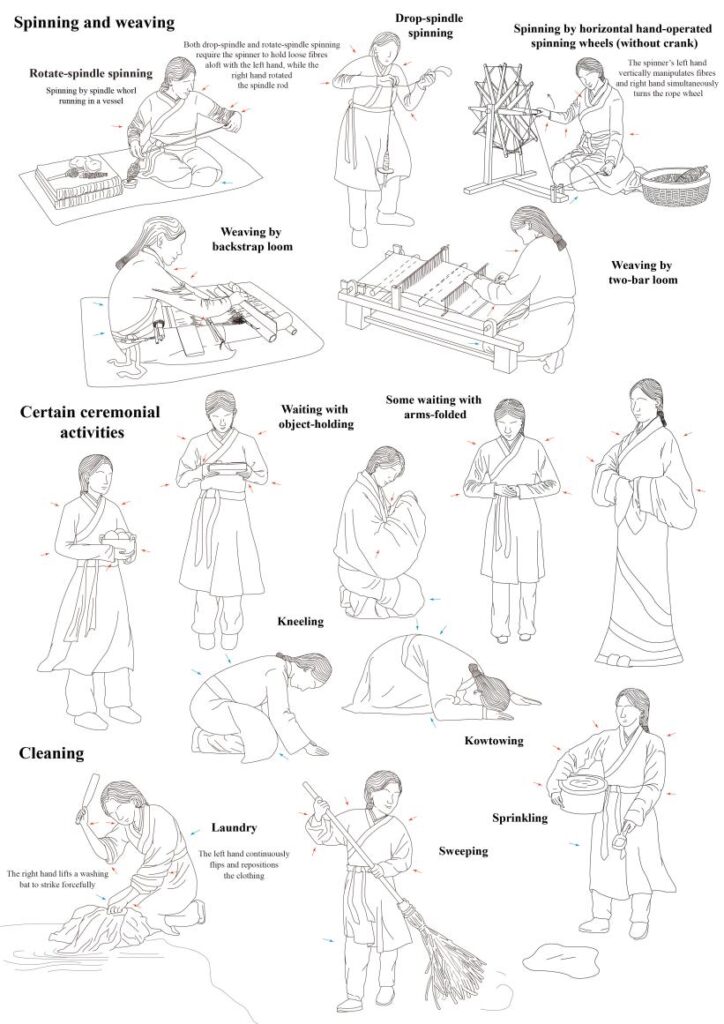
The women’s bones told a difficult story. Researchers identified signs of poor health, nutritional stress earlier in life, and repeated physical strain affecting the spine, shoulders, elbows, and forearms. The patterns suggest that these individuals spent years performing demanding or repetitive tasks.
Yet the women also appear to have lived longer, on average, than contemporary female commoners from the Qin state. Researchers suggested that their association with a royal household may have provided certain advantages, even as their daily work placed considerable demands on their bodies.
The team proposed that they were lower-ranking palace attendants, potentially responsible for textile production, cleaning royal buildings or similar duties. Their graves occupied a designated area between the cemetery’s inner and outer boundary ditches, suggesting that social status continued to determine their treatment after death.
The findings do not prove that the women personally served Huayang, nor do they establish how each individual died. Nevertheless, they provide unusually direct evidence of the people whose labour supported the Qin elite, a group largely overshadowed by the rulers recorded in ancient histories.
The Woman Who Helped Put China’s First Emperor on the Throne
Empress Dowager Huayang was never an emperor herself, but she played an important role in the succession that eventually placed Qin Shi Huang on the throne. Born into the aristocracy of the southern state of Chu, she became the principal wife of a Qin prince who would later reign as King Xiaowen.
Huayang had no children. Her husband, however, had numerous sons, including Ying Yiren, a relatively overlooked prince living as a political hostage in the rival state of Zhao. Yiren had little wealth, and his prospects of inheriting the Qin throne appeared limited.
His fortunes changed when the wealthy merchant Lü Buwei recognised an opportunity. According to the ancient Chinese historian Sima Qian, Lü Buwei persuaded Huayang to adopt Yiren and support his appointment as heir. Yiren subsequently adopted the name Zichu, reflecting Huayang’s connection to Chu.
When King Xiaowen died in 250 BC, Zichu inherited the throne as King Zhuangxiang. He died just three years later, leaving the kingship to his young son, Ying Zheng, who would eventually conquer the remaining rival states and proclaim himself Qin Shi Huang, China’s first emperor.
Huayang lived long enough to see her adoptive grandson become king, dying in 230 BC, nine years before his final victory. More than two millennia later, archaeologists believe they may have located her burial place.
An Enormous Royal Cemetery Beside a Modern Airport
The investigation began in 2018, when archaeologists surveyed land designated for the third-phase expansion of Xi’an Xianyang International Airport. Their attention turned to a protected burial site previously known as Gongling, where a substantial earthen mound concealed a much larger structure.
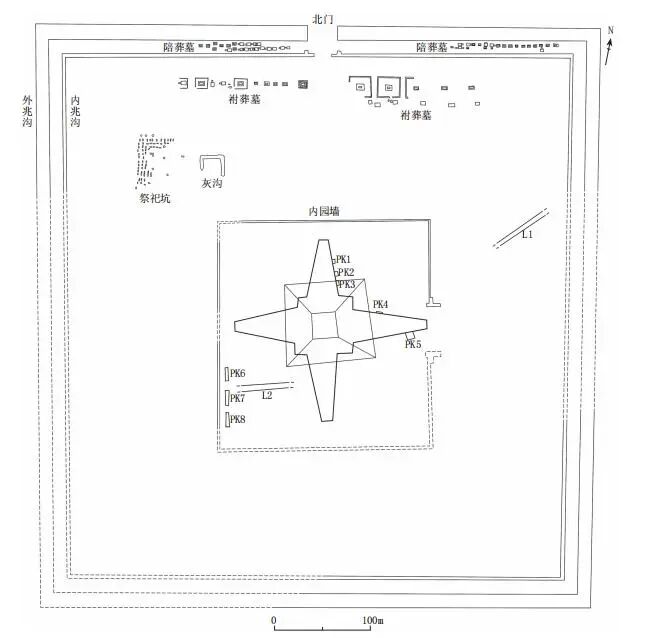
Further excavations in 2022 revealed a nearly square cemetery with a carefully organised arrangement of walls, boundary ditches and burial areas. Researchers named the complex the Shangzhaoyao Qin Mausoleum after a nearby village.
The outer enclosure extends more than 600 metres from north to south and almost 590 metres from east to west. At its centre stands the main tomb, beneath a mound that still rises approximately 10 metres above the surrounding ground.
Four sloping passages approach the burial chamber from different directions, giving the underground structure a distinctive cross-shaped plan. Including these passages, the tomb measures approximately 200 metres east to west and 188.5 metres north to south. The central chamber lies about 26.4 metres underground.
The surrounding cemetery is equally revealing. Alongside the 45 smaller satellite tombs, archaeologists identified another 15 affiliated burials and 62 ritual pits. Five of the affiliated burials had accompanying chariot-and-horse pits, while seven possessed their own boundary ditches.
These features indicate that the central occupant was buried within a complex designed to reflect distinctions of status, kinship and court hierarchy.
What Survived the Tomb Robbers?
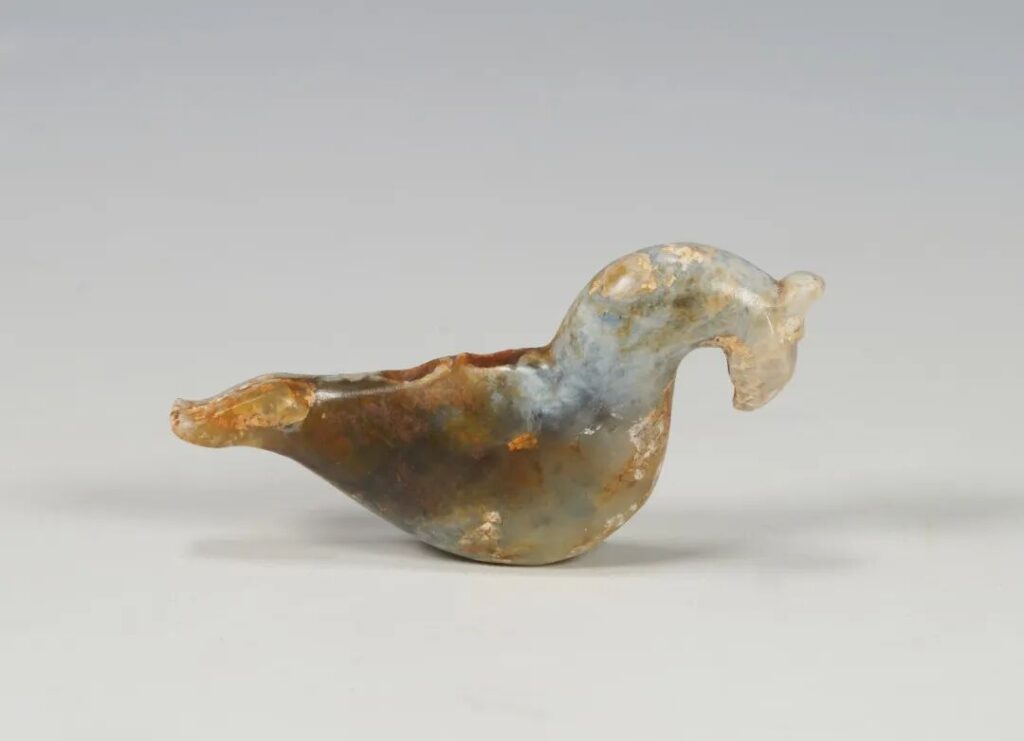
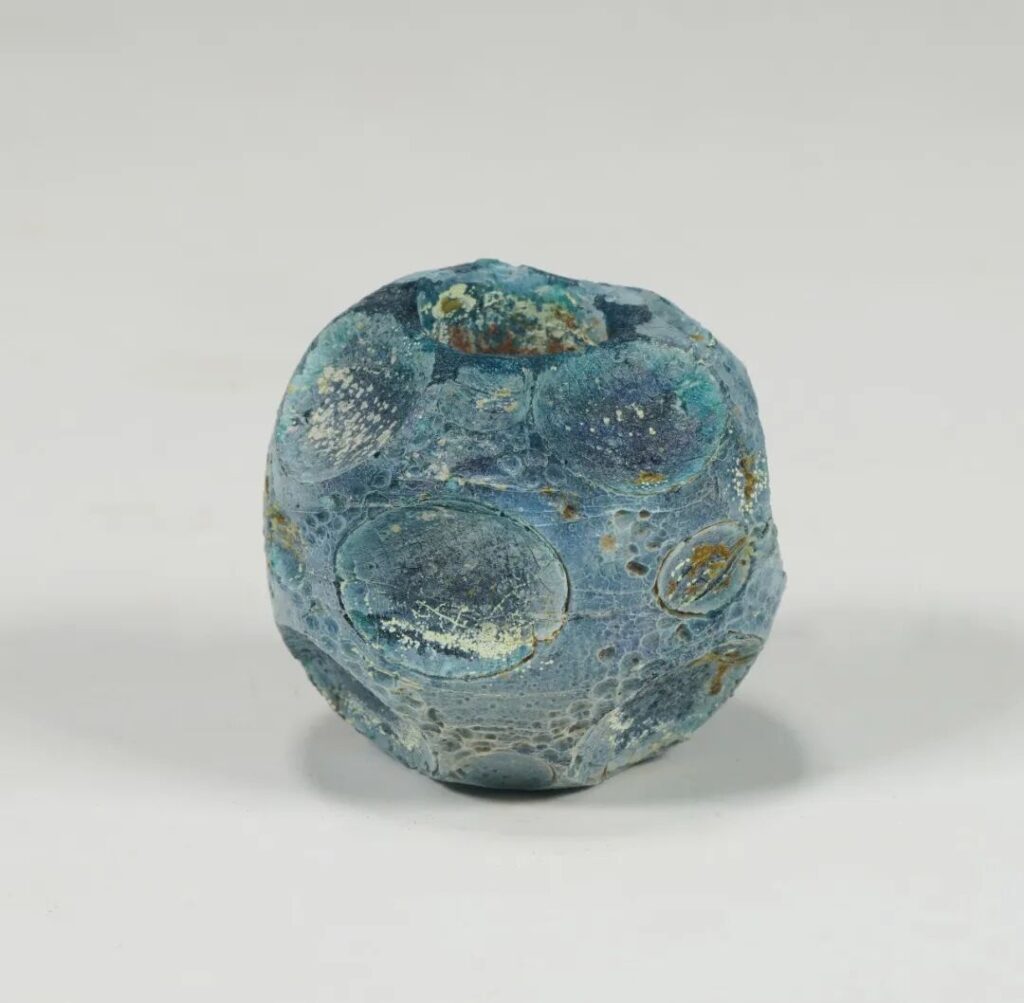
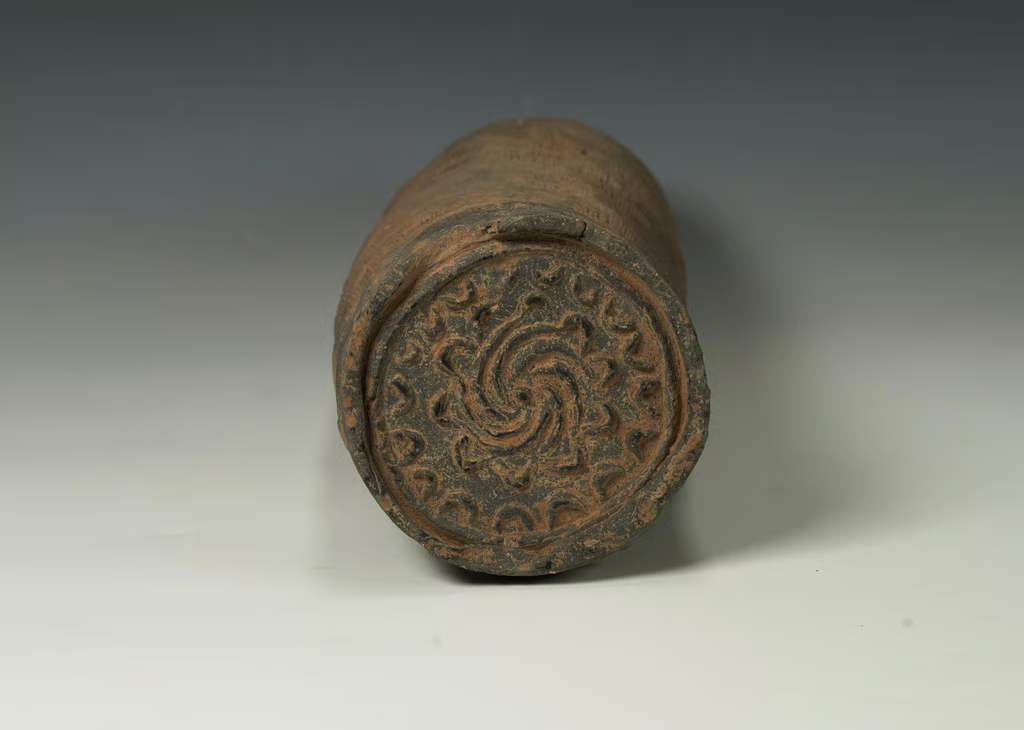
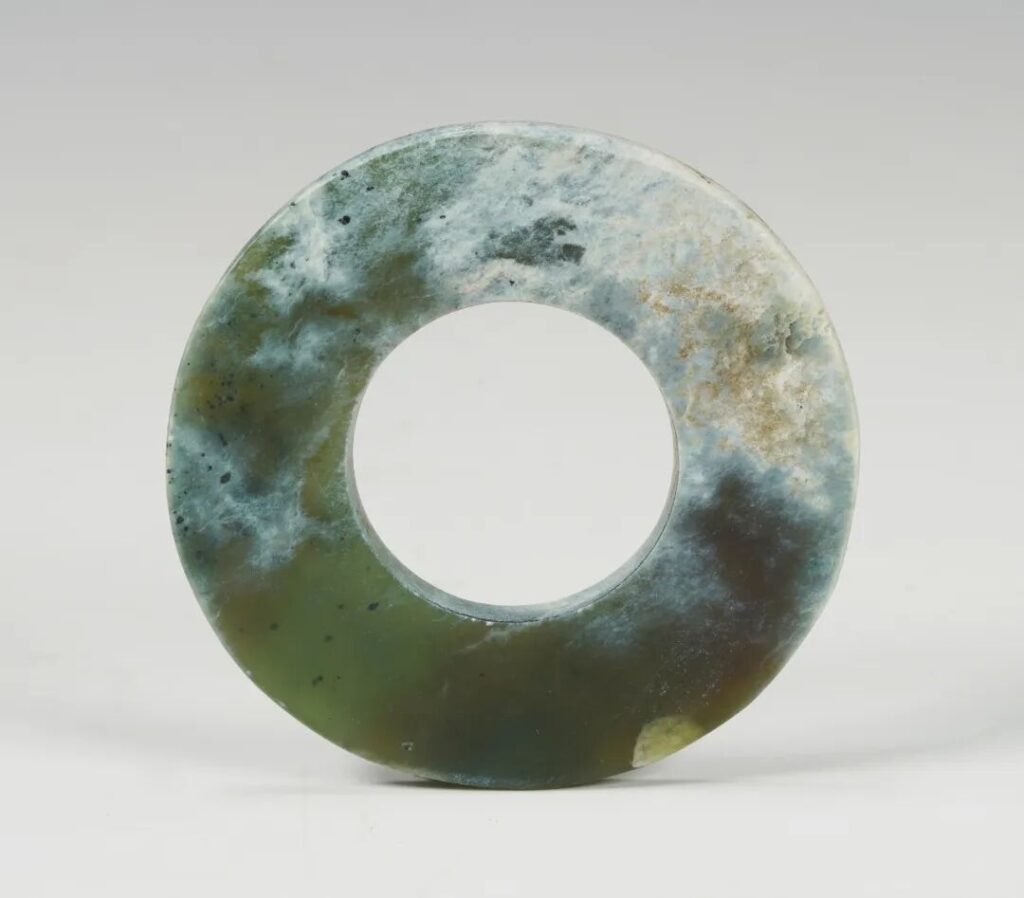
Despite extensive looting, excavations across the cemetery recovered 258 artefacts or groups of objects. These include pottery vessels, bronze containers, iron implements, jade ornaments, agate and ancient glass.
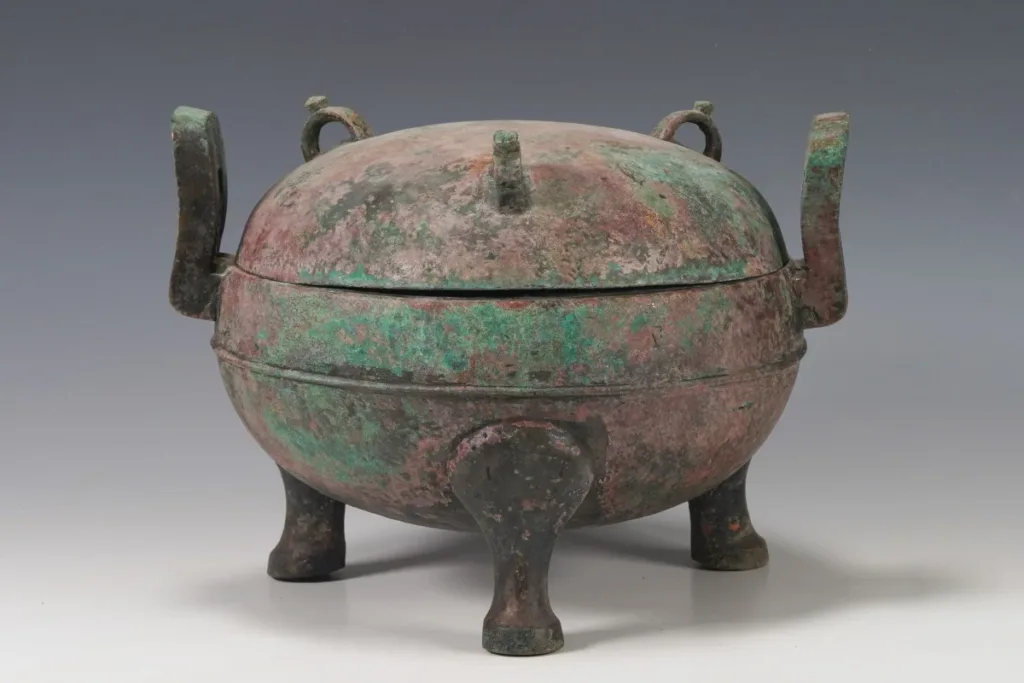
Some objects preserve particularly intriguing details. A bronze ding, a traditional ceremonial vessel, bears an inscription referring to the Song family. Other burials yielded inscribed bronze seals, while a yellow jade seal carries the characters Si Zhi. The jade finds also include a carved bird and other finely worked objects.
Yet none of these discoveries establishes who occupied the main tomb. No inscription securely naming Huayang has been reported, and the looting prevented researchers from identifying the royal occupant through human remains.
Radiocarbon dating of bones from accompanying graves produced a range of 389–208 BC. This supports the cemetery’s broad chronological attribution, although it cannot independently establish the identity or precise death date of the person buried at its centre.
The identification must therefore be based on the cemetery’s architecture, its position among other Qin royal tombs and historical accounts of the dynasty.
Why Archaeologists Believe the Tomb Belongs to Huayang
The strongest argument for identifying Huayang comes from another royal cemetery approximately 2.3 kilometres southwest of Shangzhaoyao.
Known as Sijiazhuang, that cemetery has been proposed as the burial place of King Xiaowen, Huayang’s husband. The two sites share remarkably similar architectural layouts and may date to approximately the same period.
Zhao Hanqing, a researcher at the Shaanxi Provincial Institute of Archaeology, examined the arrangement of four Qin royal cemeteries on the Xianyang Plain and compared them with historical burial records. In a study published in the seventh issue of the Chinese journal Archaeology and Cultural Relics in 2026, Zhao argued that Huayang is the most plausible candidate for the Shangzhaoyao tomb.
This interpretation could also help explain a change in Qin burial customs.
A Burial Tradition That Preceded the Terracotta Army
Earlier Qin rulers and their queens generally received separate tombs within a shared cemetery. King Xiaowen’s family, however, presented a more complicated situation: Huayang was Zichu’s adoptive mother, while his biological mother, Lady Xia, was also granted the status of empress dowager.
Researchers suggest that the presence of two recognised dowagers may have contributed to a new arrangement in which royal family members received separate but nearby cemeteries.
Sima Qian recorded that Huayang was buried in association with King Xiaowen at Shouling. Zhao’s interpretation allows for the possibility that their graves occupied neighbouring burial complexes rather than the same enclosure.
If the proposed identification is confirmed, it could help explain how Qin royal burial practices developed before the construction of Qin Shi Huang’s vast mausoleum and its famous Terracotta Army.
For archaeologists, Shangzhaoyao presents two intertwined stories. One concerns a royal woman whose place in history is well established, but whose final resting place remains uncertain. The other belongs to the women buried around the central tomb, whose bones preserve evidence of lives spent working within the Qin court.
Whether or not Huayang is eventually confirmed as the mausoleum’s occupant, the cemetery offers a fuller picture of the royal world that preceded China’s first unified empire.
Zhao, H. (2026). 上召窑秦陵墓主身份试析 [A preliminary analysis of the identity of the tomb occupant at the Shangzhaoyao Qin Mausoleum]. Archaeology and Cultural Relics, (7), 3-28
Cheng, W., Yang, Z., Bai, C., Wang, Q., Zhao, H., & Zhao, Y. (2026). Bioarchaeological reconstruction of social identity among satellite tombs in Shangzhaoyao Qin mausoleum, China. Antiquity, 100(411), 654–672. doi:10.15184/aqy.2026.10307
