Just a few centimeters beneath centuries-old farmland, archaeologists have uncovered one of the most spectacular discoveries in early Christian archaeology: a monumental church complex and lavish bishop’s palace dating back nearly 1,700 years. The find, led by researchers from the University of Bonn in collaboration with German and Italian institutions, is reshaping what scholars know about the rise of Christian power and representation in Late Antiquity.
For generations, plow blades skimmed across the buried stones of this early Christian site near Rome, unknowingly preserving a structure of immense historical importance. Rather than destroying it, continuous agricultural use spared the area from later construction. This stroke of luck allowed archaeologists to excavate an unusually intact early Christian complex within the Archaeological Park of Ostia Antica.
A Rare Window into Early Christian Architecture
Ostia, once Rome’s most important harbor city, flourished during the Roman Empire due to trade and shipping. When silting gradually rendered the harbor unusable, the city declined economically. Yet for Christianity, Ostia entered a new phase of importance. After Christianity became the official religion of the Roman Empire in 380 AD, monumental churches began to reshape urban landscapes.
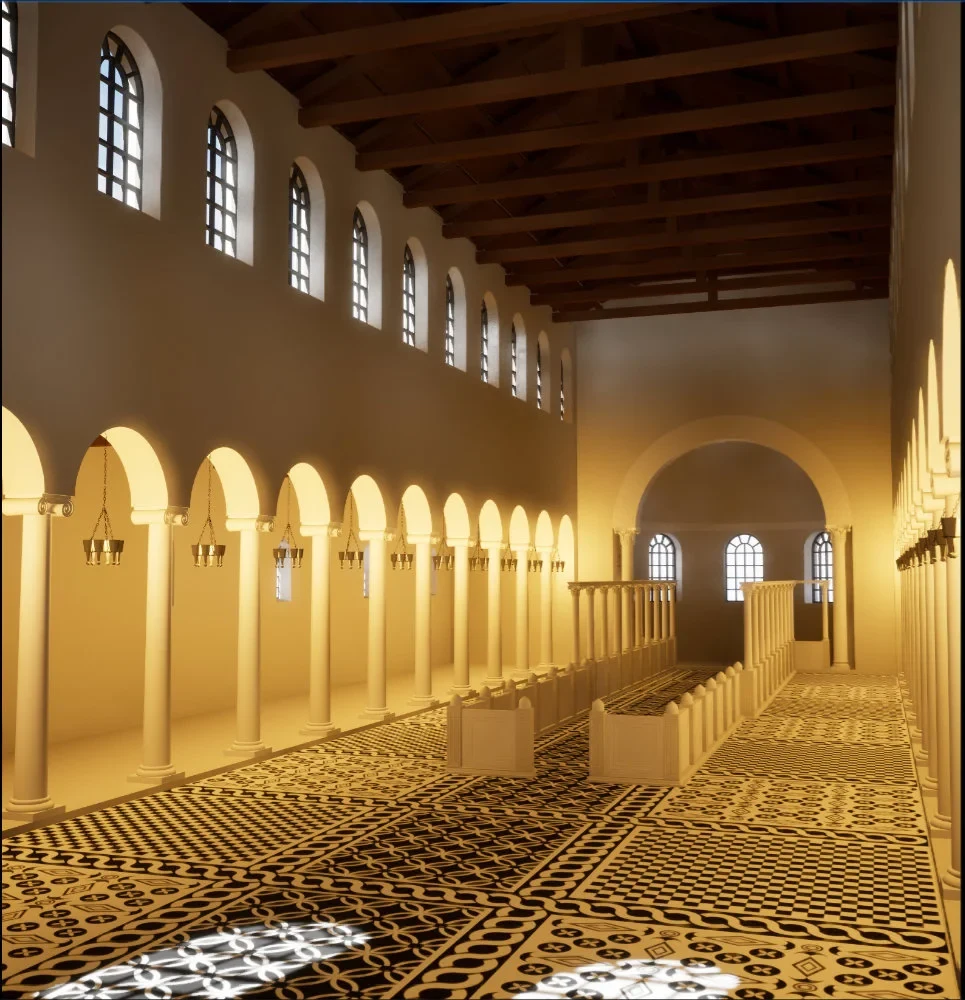
Until recently, little was visible on the surface to suggest that one of the earliest and largest churches of this era lay hidden here. Built around 330 AD during the reign of Emperor Constantine the Great, the church in Ostia functioned as a prototype for later monumental cathedrals across Europe, including architectural traditions that would eventually culminate in structures like Cologne Cathedral and Ulm Minster.
The Bishop of Ostia held a particularly prestigious role as Cardinal Dean, the figure responsible for convening the conclave after a pope’s death. Despite this importance, the exact location of the bishop’s seat had long remained a mystery—until now.
📣 Our WhatsApp channel is now LIVE! Stay up-to-date with the latest news and updates, just click here to follow us on WhatsApp and never miss a thing!!
From Geophysical Survey to Groundbreaking Discovery
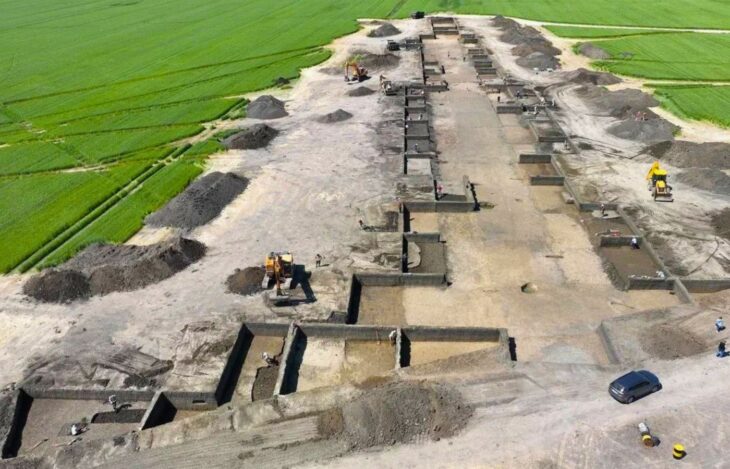
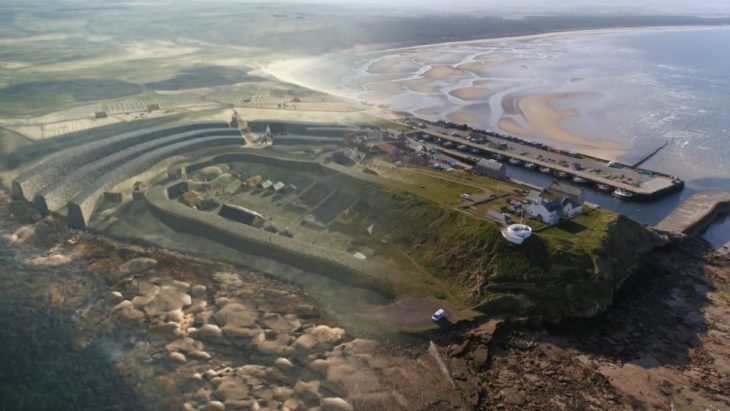
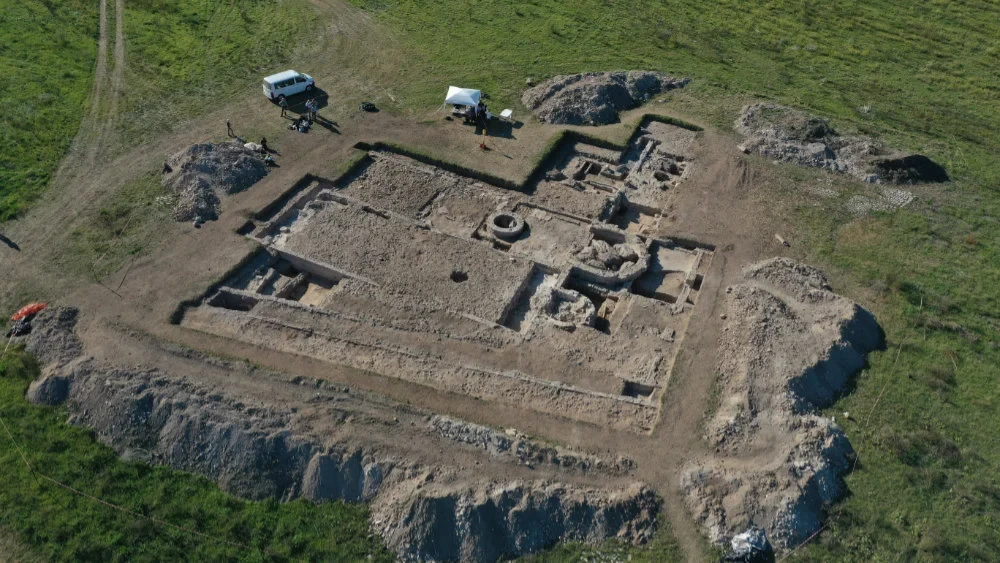
In 1996, geophysical surveys by the German Archaeological Institute identified a massive church complex measuring approximately 50 by 80 meters at the southeastern edge of Ostia. However, full-scale excavations only became possible decades later. Supported by funding from the German Research Foundation (DFG), excavation campaigns in 2023 and 2024 revealed large sections of the church, built partly atop a former Roman insula, or multi-story apartment block.
Since 2022, the project has been jointly directed by Prof. Dr. Sabine Feist (University of Bonn), Prof. Dr. Michael Heinzelmann (University of Cologne), and Prof. Dr. Norbert Zimmermann (German Archaeological Institute). The interdisciplinary team combines expertise in architecture, classical archaeology, and wall painting, with additional contributions from La Sapienza University of Rome focusing on ceramics and small finds.
A Bishop’s Hall Unlike Any Other
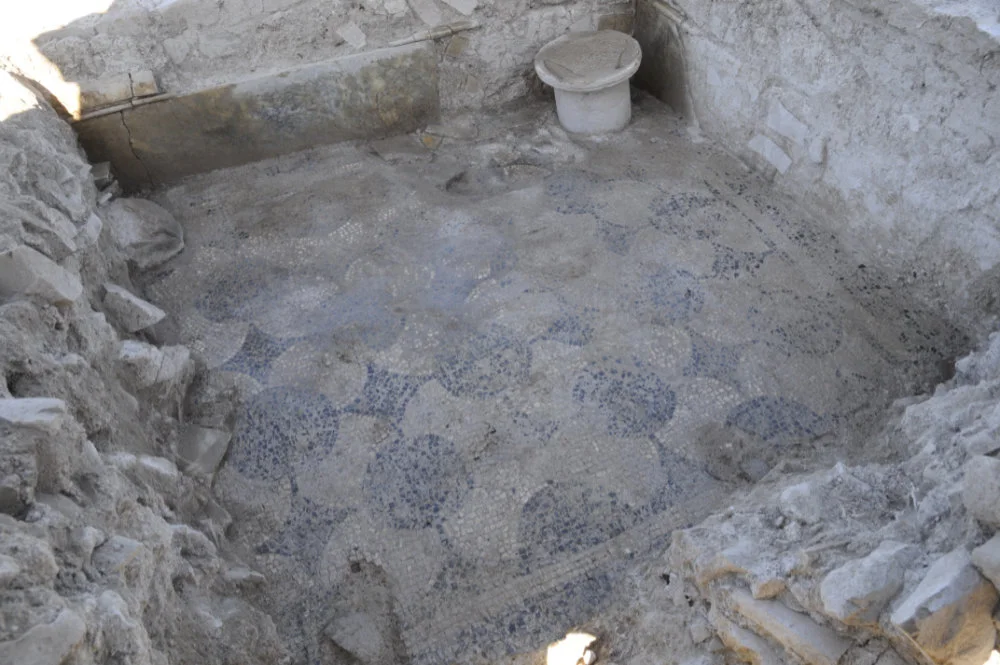
The most astonishing discovery emerged during the 2025 excavation season: a monumental ceremonial hall, or aula, attached to the bishop’s palace. Measuring approximately eight by twenty meters and reaching an estimated height of at least eight meters, the hall was richly decorated with marble wall cladding and mosaic floors.
“We have nothing comparable from the Constantinian period,” explains Prof. Sabine Feist. “Bishops were a newly rising elite in Late Antiquity, and they clearly adopted the architectural language of imperial and aristocratic power.”
While other buildings in Ostia feature decorative elements, none rival the scale and luxury of this episcopal hall. According to Feist, the site represents a singular example of early Christian self-representation through monumental architecture.
Life on the Dig: Heat, Precision, and Discovery
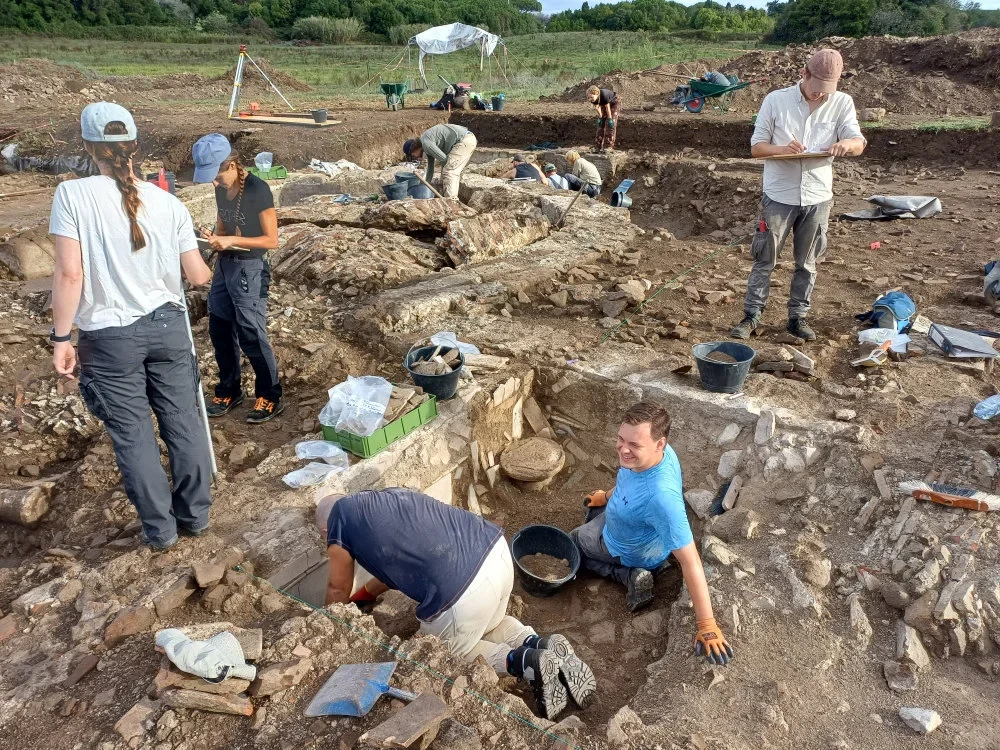
Excavation work at Ostia Antica is physically demanding. Under the intense Italian sun, researchers and students wear safety boots, long trousers, and caps for protection. Despite the heat and hard labor, enthusiasm remains high.
“It’s exhausting,” Feist admits, “but every day brings something new. That’s what makes it worth it.”
Daily routines are tightly scheduled. The team enters the park as soon as it opens at 7:30 a.m., begins digging before 8, and pauses for short breaks before ending fieldwork around 3 p.m. The afternoons and evenings are devoted to documentation using drones, photography, drawings, and written records—often continuing late into the night.
A Thousand Years of Continuous Settlement
One of the site’s most remarkable aspects is its long occupation history. While most areas of Ostia were abandoned much earlier, the bishop’s church complex remained in use well into the early Middle Ages.
“This area was inhabited longer than any other part of Ostia,” says Feist. “Here, we can study nearly 1,000 years of continuous settlement.”
The coexistence of a relatively standard basilica with an exceptionally lavish bishop’s hall raises new questions. How did local residents perceive this display of power? What role did the church play in sustaining the settlement? And how does this blend of modest religious space and extraordinary episcopal luxury reflect broader changes in Late Antique society?
Looking Ahead: More Discoveries to Come
Much of the ancient complex still lies beneath the soil. With new funding approved for a three-year continuation project, the research team plans another six-week excavation campaign in September and October 2026.
For Prof. Sabine Feist, the tools are already waiting: trowel, safety shoes, and cap—ready for the next chapter in uncovering one of early Christianity’s most impressive and unexpected architectural treasures.
Cover Image Credit: Reconstruction of the Bishop’s Church based on the excavation results from 2023 and 2024. Reconstruction: Daniel Hinz