6 March 2026 The Future is the Product of the Past

Mysterious Handprints Found in the Ancient Mayan Cave

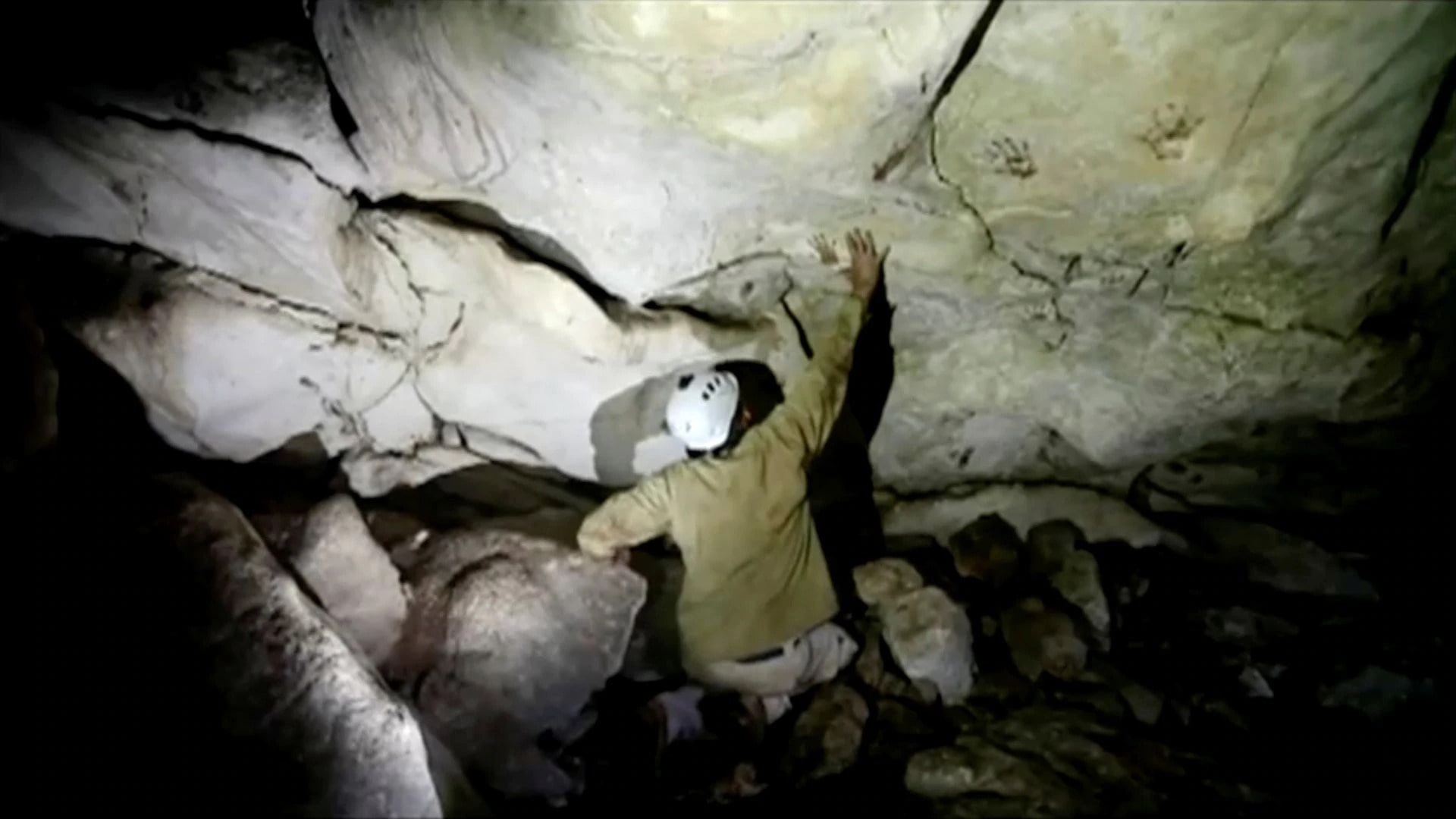
In Mexico, home to ancient civilizations such as the Maya, Aztec, and Inca, archaeologist Sergio Grosjean found dozens of mysterious black and red painted handprints on the walls of the underground cave.

The 137 prints, mostly made by children’s hands, unearthed by archaeologist Sergio Grosjean, date back more than 1,200 years.

The cave is 33 feet (10 meters) below a massive ceiba tree, which the Mayas regard as sacred, and is situated near the northern tip of Mexico’s Yucatan peninsula, where the towering pyramids of urban centers such as Uxmal and Chichen Itza still stand.

Due to an examination of the hand prints’ scale, archeologist Sergio Grosjean believes they were possibly created by children as they approached puberty, with the colors offering a hint as to their significance.
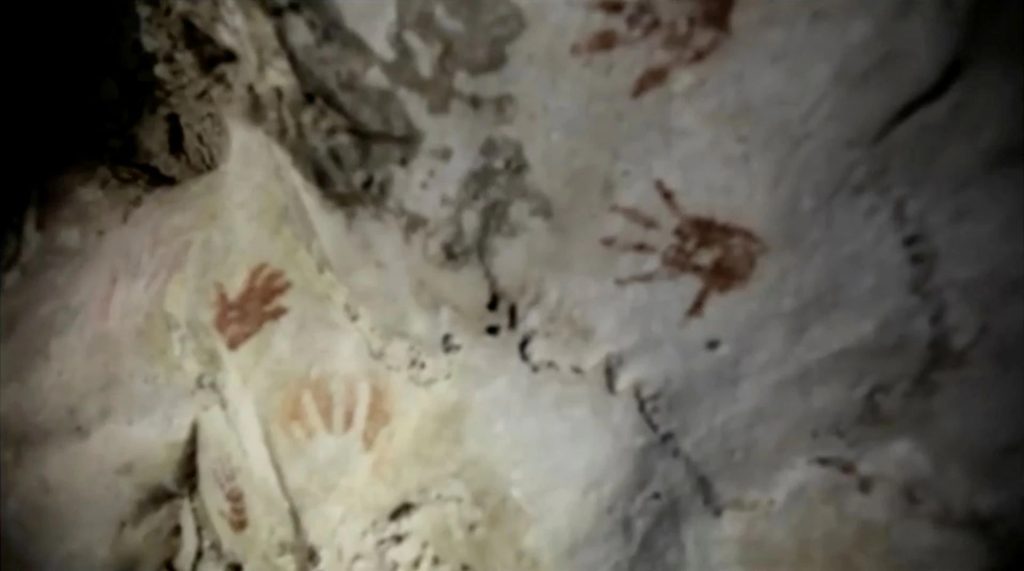
hand print
Handprints, reportedly 1,200 years old, are seen on the cave walls, in Merida, Mexico April 2021, in this screengrab taken from a handout video. SERGIO GROSJEAN/Handout via REUTERS

“They imprinted their hands on the walls in black… which symbolized death, but that didn’t mean they were going to be killed, but rather died from a ritual perspective,” he said.


📣 Our WhatsApp channel is now LIVE! Stay up-to-date with the latest news and updates, just click here to follow us on WhatsApp and never miss a thing!!


“Afterwards, these children imprinted their hands in red, which was a reference to war or life,” he added.

Other Mayan artifacts discovered in the cave include a carved mask and six painted relief sculptures dating from 800-1,000 A.D., a period when the area experienced extreme drought, which may have led to the classical Maya’s abrupt abandonment of major cities.
Related Articles

Hidden Gods of Kurul Castle: Dionysus and Pan Figurines Capture Spotlight as Dig Resumes

10 July 2025

10 July 2025

Excavations are set to resume next week at the ancient Kurul Castle in Ordu, the first scientifically excavated archaeological site...

3,500-Year-Old Cuneiform Tablets and Seal of Unknown Hittite Prince Unearthed in TĂĽrkiye

19 October 2025

19 October 2025

In the ancient heart of southern TĂĽrkiye, history has once again spoken through the clay. Archaeologists excavating the site of...

The First Ancient Celtic Languages Dictionary Reconstructs Britain and Ireland’s Early Linguistic Past

15 December 2025

15 December 2025

Aberystwyth scholars unite fragments of language to reveal the forgotten linguistic landscape of the Celtic world For centuries, the ancient...

From Bronze Age to Buddhism: Xinjiang’s Archaeological Journey Through Time and Recent Discoveries

4 March 2025

4 March 2025

Recent archaeological investigations in the Xinjiang Uygur Autonomous Region have significantly enhanced our understanding of the area’s historical context and...

Archaeologists uncover intact 16th-century quayside in the Belgium town of Leper

24 March 2022

24 March 2022

Excavations at Leper (Ypres), located in the West Flanders province of Belgium, have uncovered a 16th-century quayside. The find was...

A prehistoric monument consisting of three round enclosures, one of which resembles a horseshoe, was discovered in France

7 April 2024

7 April 2024

Archaeologists from the French National Institute for Preventive Archaeological Research (INRAP) unearthed an unusual, prehistoric monument in the shape of...

6,000-Year-Old Settlement Was home to Europe’s first megalithic monument makers

22 February 2023

22 February 2023

Archaeologists in France unearthed the remains of a series of wooden buildings within a defensive enclosure that were built at...

Discovery in Georgia Reveals How Bronze Age Smelters Sparked the Iron Age

1 October 2025

1 October 2025

A groundbreaking study from Georgia’s Kvemo Bolnisi site reveals that Bronze Age metallurgists were experimenting with iron oxides long before...

The Gobi Wall: Ancient Statecraft Hidden in Mongolia’s Sands

17 June 2025

17 June 2025

Stretching 321 kilometers across the arid highlands of southern Mongolia, the Gobi Wall has long stood as a silent enigma...

Hellenistic cremation tomb found in Istanbul’s Haydarpasa excavations

11 April 2022

11 April 2022

A brick tomb belonging to the Hellenistic period (330 BC – 30 BC) was found during the HaydarpaĹźa excavations, which...

One of the Oldest Tin-Bronze Knife in the Eurasian Steppe Discovered in a Unique Bronze Age Cemetery in Uygur ­Autonomous Region

29 January 2025

29 January 2025

Chinese archaeologists have recently uncovered a large and uniquely structured cemetery dating back to 2800-2600 BC, located about two kilometers...

Archaeologists in northern Spanish have discovered what they believe to be the oldest Basque language text

15 November 2022

15 November 2022

Archaeologists have discovered what they believe to be the oldest Basque language text, on  Irulegi archaeological site, near the Aranguren...

3 Bronze Shields and Helmet of 2700 Years Old Belonging to Urartians Found in Ayanis Castle

8 September 2024

8 September 2024

Three bronze shields and a bronze helmet dedicated to Haldi, the chief god of the Urartians, were discovered during excavations...

Salvage Excavations Started in Giresun Island on Turkey’s Black Sea Coast

18 May 2021

18 May 2021

Rescue excavations are starting again on Giresun Island, where the first examples of human settlement in the Black Sea Region...

Archaeologists Discover Kazakhstan’s Earliest Human Burial — A 7,000-Year-Old Neolithic Grave at Koken

24 October 2025

24 October 2025

Archaeologists in eastern Kazakhstan have uncovered the country’s oldest known human burial, dating back around 7,000 years. Found beneath Bronze...