
23 June 2026 The Future is the Product of the Past

5,000-year-old Settlement Unearthed in Al Mudhaibi, Oman

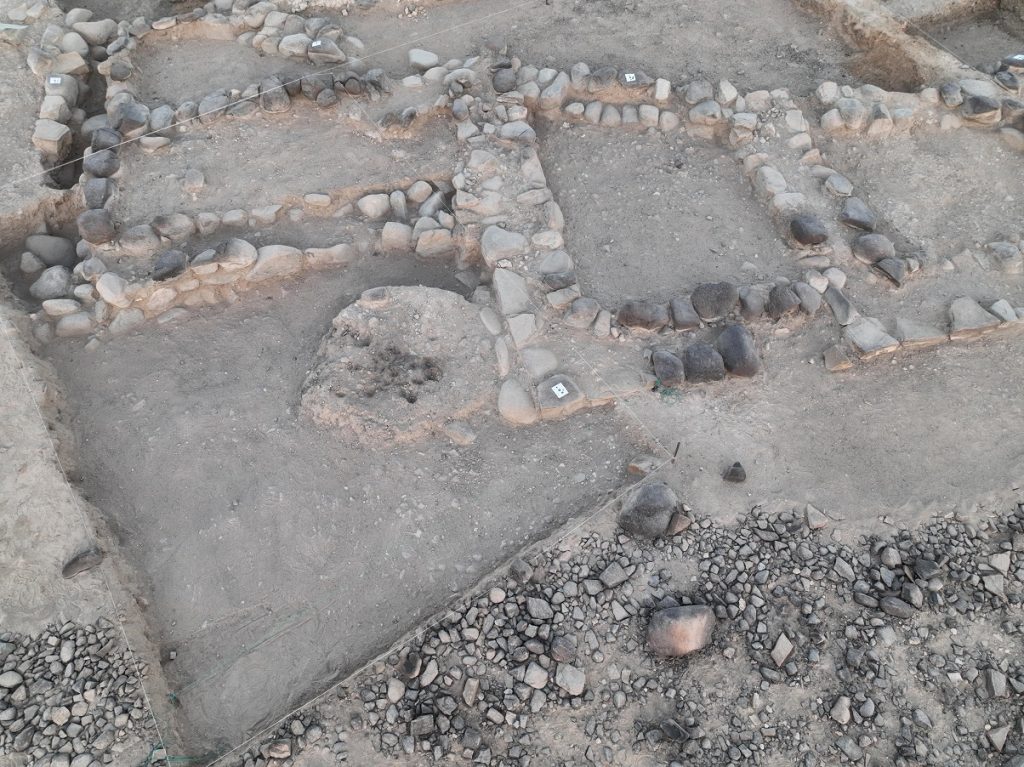
The Oman News Agency announced that a 5,000-year-old settlement was discovered during archaeological excavations at the Al Gharyein archaeological site in the Wilayat of Al Mudhaibi in the Ash Sharqiyah North Governorate.

The settlement was uncovered by a team of experts from Sultan Qaboos University (SQU) and the Ministry of Heritage and Tourism.

The traces of the Hafeet and Umm Al Nar cultures found here suggest that the site dates from the early Bronze Age.

Umm Al Nar  (Mother of the Fire) is a Bronze Age culture that existed around 2600-2000 BCE in the area of modern-day United Arab Emirates and Northern Oman. The name derives from the same-named island, which is adjacent to Abu Dhabi city and provided early evidence and finds attributed to the period.
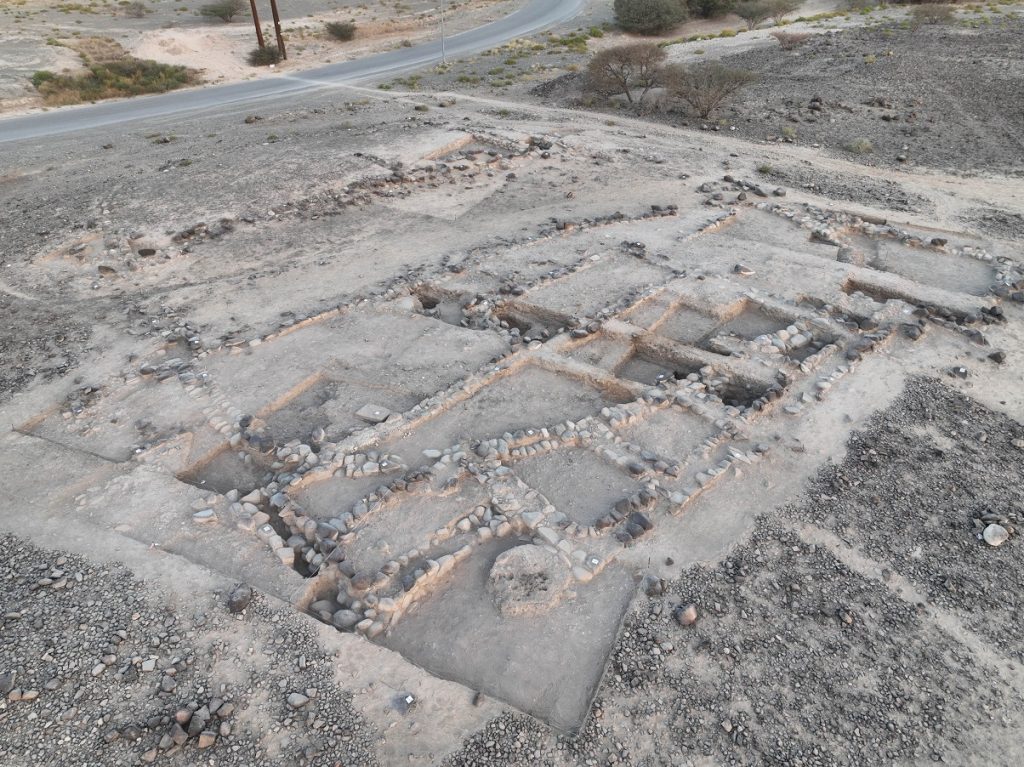
Photo: Oman News

Between 2500 and 2000 BCE, this small island was home to a relatively large settlement that played an active role in regional commerce. Artifacts show that people on the island traded with civilizations as far away as ancient Mesopotamia (modern-day Iraq) and the Indus Valley Civilisation (modern-day Pakistan and India).


📣 Our WhatsApp channel is now LIVE! Stay up-to-date with the latest news and updates, just click here to follow us on WhatsApp and never miss a thing!!


The excavation team was headed by Dr. Nasser Said Al Jahwari, a Professor in the Department of Archaeology at the SQU College of Arts and Social Sciences. The team comprised Dr. Khalid Douglas and Dr. Mohammad Hussein.

The settlement at the Al Gharyein site has a distinctive layout. It included a tower structure, multi-room homes surrounding it, a cemetery with mass graves, and the ruins of other structures.
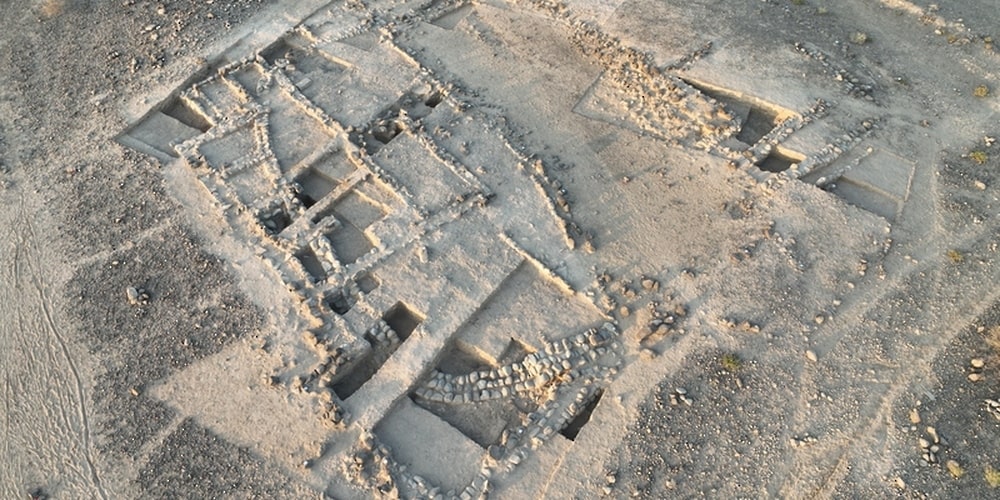
Photo: Oman News

Al Gharyein settlement is distinguished for its large buildings as huge as 600 square meters each.

Aside from its exceptional architectural styles, the settlement played an important role in the region, with manifestations of human activities such as early farming, herding, copper smelting, and trade exchange, particularly among coastal communities.

Related Articles

2,500-year-old Salt Production and Rare Germanic Settlement Discovered in Werl, Germany

7 February 2026

7 February 2026

Archaeological excavations in Werl-Westönnen uncover a 2,500-year-old salt production site and a unique Germanic farmstead Nearly two years of archaeological...

Archaeologists have discovered the origins a Herefordshire Stone Age monument

22 August 2021

22 August 2021

Archaeologists have finally uncovered the mysterious origins of Arthur’s Stone, named after the mysterious legends of King Arthur, who inspired...

Ancient Roman Breakwater Discovered Underwater in Misenum: Sculptures and Architecture Reused to Tame the Sea

27 June 2025

27 June 2025

An underwater excavation off the coast of Bacoli, in southern Italy, has uncovered a remarkable Roman-era breakwater built from reused...

China’s ancient water pipes show people mastered complex engineering 4,000 years ago without the need for a centralized state authority

16 August 2023

16 August 2023

A system of ancient ceramic water pipes, the oldest ever unearthed in China, shows that neolithic people were capable of...

Study Reveals Mysterious Avars Origin

1 April 2022

1 April 2022

Ruled much of Central and Eastern Europe for 250 years, the Avars were less well known than Attila’s Huns, but...

In Oman, a 4,000-year-old Early Bronze Age settlement was unearthed

25 January 2022

25 January 2022

A large settlement dating back more than 4,000 years has been discovered in Oman. Archaeological excavations in the Wilayat of Rustaq,...

4,500-Year-Old Burned House and Hellenistic Fortress Unearthed in Aşağıseyit Mound, Türkiye

21 October 2025

21 October 2025

Archaeological excavations in the Aşağıseyit Mound (Aşağıseyit Höyüğü) in Denizli’s Çal district have revealed extraordinary findings that shed new light...

Christians Supplied Medieval Pagans with Horses for Sacrifice for Funeral Rituals

20 May 2024

20 May 2024

In the late medieval period, pagans in the Baltic region of northern Europe imported horses from neighboring Christian nations for...

In French Necropolis 21 Roman “curse tablets” discovered including one written in the extinct Celtic language of Gaulish

18 January 2025

18 January 2025

During the excavation of an eighteenth-century hospital in north-western France by researchers from the Orléans Archaeological Service, a 2,000-year-old necropolis...

World’s Only Ancient Wooden Twin-Hulled Boats Unearthed in Vietnam

20 May 2025

20 May 2025

A groundbreaking archaeological discovery in Bac Ninh province, northern Vietnam, has brought to light two remarkably well-preserved ancient wooden boats,...

2,000-year-old Roman pewter hoard discovered in Suffolk

4 July 2023

4 July 2023

A rare hoard of Roman pewter has been discovered in Euston, western Suffolk, in eastern England. The rare discovery includes...

Excavations Near Stonehenge Uncover Bronze Age Barrow Cemetery

4 June 2023

4 June 2023

The Cotswold Archeology team excavating at the site of a planned housing development near Salisbury, England, has unearthed a giant...

Archaeologists unearth 600,000-year-old evidence of Britain’s early inhabitants

22 June 2022

22 June 2022

New finds have indicated that some of Britain’s earliest people lived in the Canterbury suburbs. According to the research, led...

Comb and gold hair-ring dating back more than 3,000 years unearthed in south Wales

14 July 2023

14 July 2023

Archeologists in south Wales, have unearthed a golden hair ring and the oldest wooden comb ever found in the U.K....

A Decorated Block with Decapitated Gaul Found for the First Time in Toul, France

22 July 2024

22 July 2024

A Corinthian-style carved block that was once part of the entablature of a monumental Gallo-Roman public building has been discovered...