

What began with a farmer discovering a mosaic while planting trees in his field has developed into the excavation of a much larger Roman and Early Byzantine settlement in eastern Türkiye.
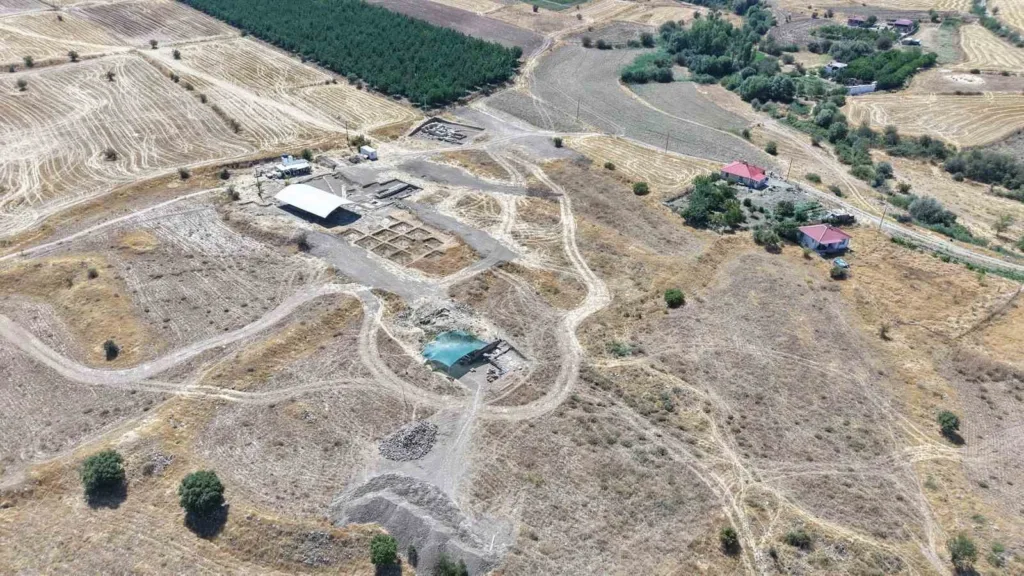
Archaeologists working at Salkaya village in Elazığ have uncovered far more than the 84-square-meter mosaic that first drew attention to the site. Excavations have now revealed villa structures, a bath complex, a grain storage facility, a church or chapel, and the burial of a child near the religious building.
The growing number of structures has changed how archaeologists interpret Salkaya. Rather than representing an isolated decorated residence, the site now appears to have formed part of a broader settlement occupied during the Late Roman and Early Byzantine periods.
The archaeological investigation began after a local farmer encountered mosaic remains while planting saplings in his field and reported the discovery to the Elazığ Museum Directorate.
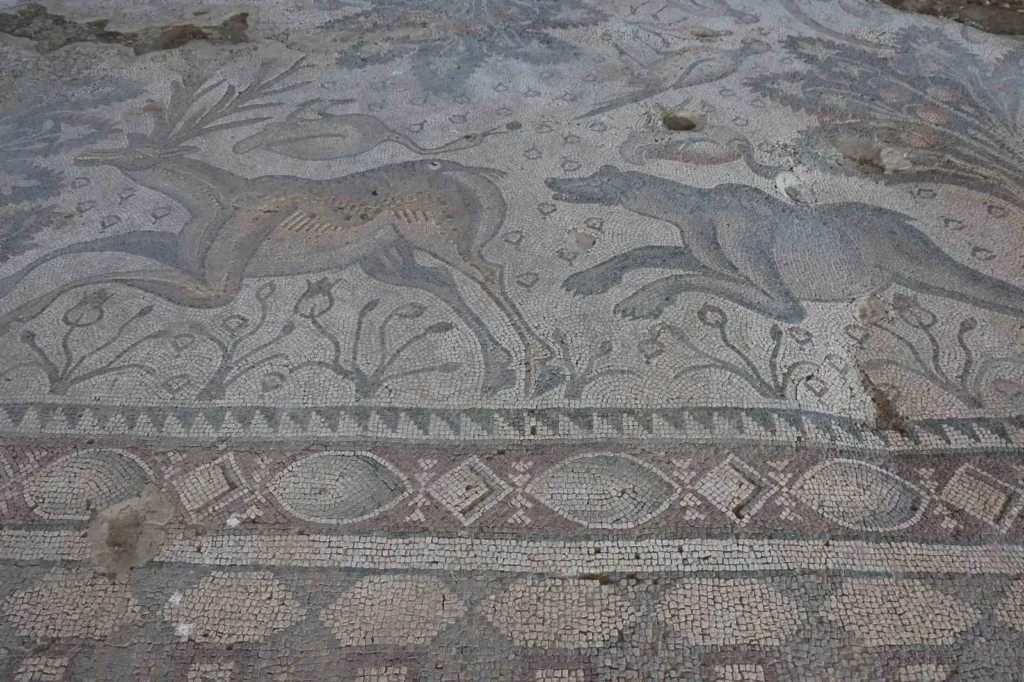
Museum archaeologists launched a rescue excavation in 2023. During the following season, they fully exposed an extensive mosaic floor covering approximately 84 square meters.
The importance of the site quickly became apparent. By the end of 2024, authorities had moved the project beyond its original rescue excavation status, and in 2025 Salkaya became an official museum excavation.
The mosaic opened the door to a much larger site
As excavation expanded beyond the mosaic, archaeologists encountered additional architecture that showed Salkaya contained a much more complex archaeological landscape.
Teams working under the direction of the Elazığ Museum, with Associate Professor Mehmet Kayhan Murat serving as scientific adviser, identified villa remains alongside a bath, grain storage areas and a Christian religious structure described as a church or chapel.
More recently, excavations near the church uncovered the burial of a child from the same broad period.
Taken together, these discoveries indicate that Salkaya was not simply the location of a single luxurious Roman villa. The evidence instead points to a settlement that included residential, economic and religious spaces.
Elazığ Governor Numan Hatipoğlu, who recently visited the excavation, said the discoveries continue to expand researchers’ understanding of the site.
He noted that archaeologists first uncovered the 84-square-meter mosaic before identifying a grain storage facility, bath remains, the church and the nearby child burial.
Hatipoğlu also emphasized that the site should not be understood as a single structure, describing it instead as a settlement containing villas.
Who occupied the settlement remains unknown
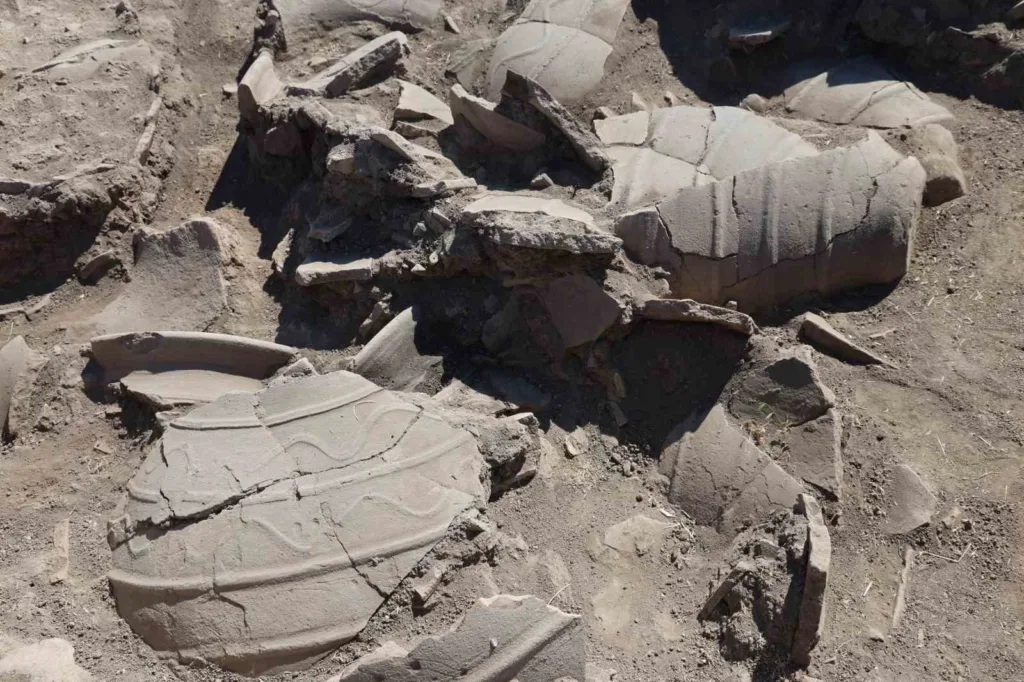
Archaeologists have not yet identified the people who owned or controlled the settlement.
Officials have suggested several possibilities, including a wealthy mining merchant, a regional landowner or a military commander. However, excavators have not yet found inscriptions or other direct evidence that would connect the site to a specific individual.
For now, those interpretations remain tentative.
The scale of the mosaic nevertheless suggests that at least part of the settlement belonged to people with considerable financial resources. Large mosaic floors required specialist craftsmen, significant labor and expensive materials.
The bath complex also points to substantial investment in the site, while the grain storage facilities suggest that economic activity formed an important part of daily life at Salkaya.
Further excavation may reveal whether the settlement operated primarily as a large agricultural estate, a residential center connected with regional trade or a community that combined several economic functions.
From the Roman period into the Byzantine era
The combination of residential, economic and religious structures could make Salkaya particularly valuable for understanding the transformation of eastern Anatolia between the Late Roman and Early Byzantine periods.
Large estates and rural settlements played an important role in agricultural production during the Roman era. Over time, the spread of Christianity also reshaped settlements across Anatolia, with churches and chapels becoming increasingly visible parts of local communities.
At Salkaya, archaeologists can now study these developments within the same settlement.
The church and the child burial discovered nearby may provide additional evidence for the religious life of the community. Researchers will need further excavation and analysis to establish the precise chronology of the burial and determine how it relates to the church and the surrounding structures.
Large areas of the site remain unexplored, meaning the full extent and organization of the settlement are still unknown.
Local authorities have meanwhile started improving roads and infrastructure around Salkaya with the aim of eventually opening the archaeological area to visitors.
A farmer’s chance discovery of a mosaic therefore proved to be only the first indication of what lay beneath the fields of Salkaya. The 84-square-meter mosaic may have started the excavation, but the settlement now emerging around it could ultimately become the more important archaeological discovery.
