
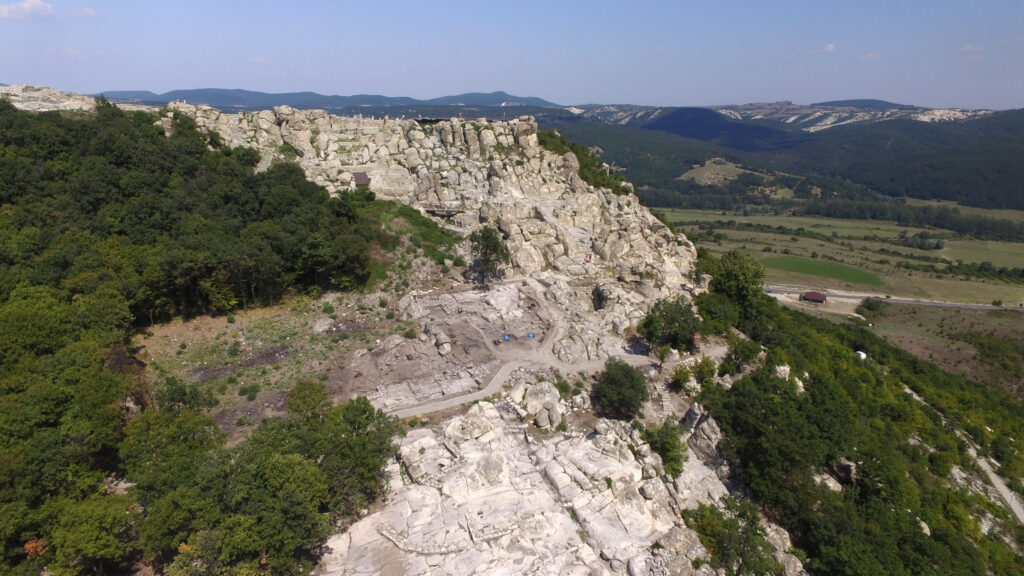
After more than a quarter century of excavations at Perperikon, archaeologists have uncovered the first direct evidence that monumental statues once stood among the temples and mausoleums of the ancient rock city.
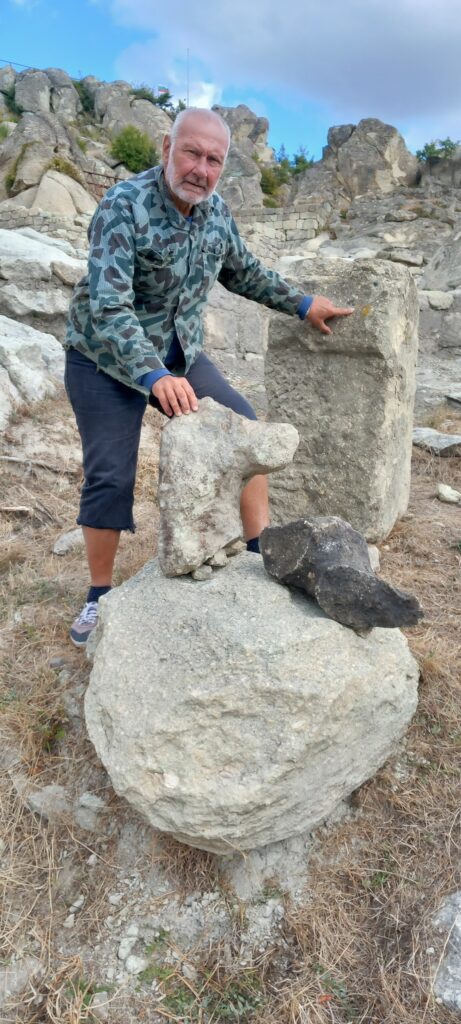
The discoveries include a stone pedestal, part of a life-size male statue, and another sculptural fragment that may have belonged to an animal, possibly a lion. The finds emerged during the final weeks of this year’s nearly four-month archaeological campaign at Perperikon in southern Bulgaria.
According to excavation director Prof. Nikolay Ovcharov, the pieces date from the Late Roman and Late Antique periods, between the third and early sixth centuries AD. They were found in the city’s Southern Quarter, within the so-called Area Sacra, or Sacred Zone, where archaeologists have uncovered temples and mausoleums associated with wealthy inhabitants.
The first statues found after 26 years of excavation
Perperikon has produced extensive evidence of monumental architecture over decades of research, including columns, capitals, cornices and other carved architectural elements. Until now, however, archaeologists had not identified comparable remains of large-scale figurative sculpture.
That makes the newly discovered pedestal and statue fragments particularly significant. The male figure was approximately life-size, while the second sculptural fragment appears to represent part of an animal. Archaeologists have suggested that it may come from a lion, although the identification remains uncertain.
Their position within the Sacred Zone also raises questions about whom or what the statues represented. Ovcharov suggests that they may once have decorated the surrounding religious and funerary buildings. One possibility is that the human statue portrayed an important local figure buried in one of the nearby mausoleums, although no firm identification has yet been made.
A local sculptural tradition emerges
The newly found sculptures were carved from local stone and, according to the archaeological team, were produced by local craftsmen. Their workmanship fits a broader pattern already observed in architectural decoration from Late Roman Perperikon.
Archaeologists describe the architectural stonework of this period as distinctive and sometimes relatively simple in style. Perperikon’s builders were highly skilled at shaping stone for monumental construction, while figurative sculpture appears to have followed a less technically refined local tradition. The newly discovered fragments seem to belong to that same artistic environment.
Rather than diminishing their importance, this local character may make the sculptures more revealing. They offer a rare glimpse of how the inhabitants of Perperikon interpreted the artistic conventions of the wider Roman world through their own materials, craftsmen and traditions.
For Ovcharov, this individuality is one of the enduring characteristics of the site. Across different historical periods, Perperikon developed distinctive approaches to architecture and art rather than simply reproducing models found elsewhere.
Monumental statues did not disappear in Late Antiquity
The discovery also adds Perperikon to the wider discussion about the changing role of public sculpture during Late Antiquity. Although the production of monumental statues declined compared with earlier centuries of the Roman Empire, it did not disappear.
Statues continued to commemorate emperors, officials, military commanders, religious figures and other prominent individuals. Ovcharov notes that archaeologists have classified 435 statues in Rome alone dating between AD 284 and 604, from the reign of Diocletian to that of Phocas.
By the fourth to sixth centuries, the people represented in monumental sculpture had become increasingly diverse. Alongside rulers such as Constantine the Great and Valentinian I were Christian clergymen, generals, senior officials, celebrated charioteers and physicians.
The Perperikon fragments cannot yet be connected with any specific individual, but their discovery shows that monumental sculpture formed part of the visual landscape of the mountain city during this period.
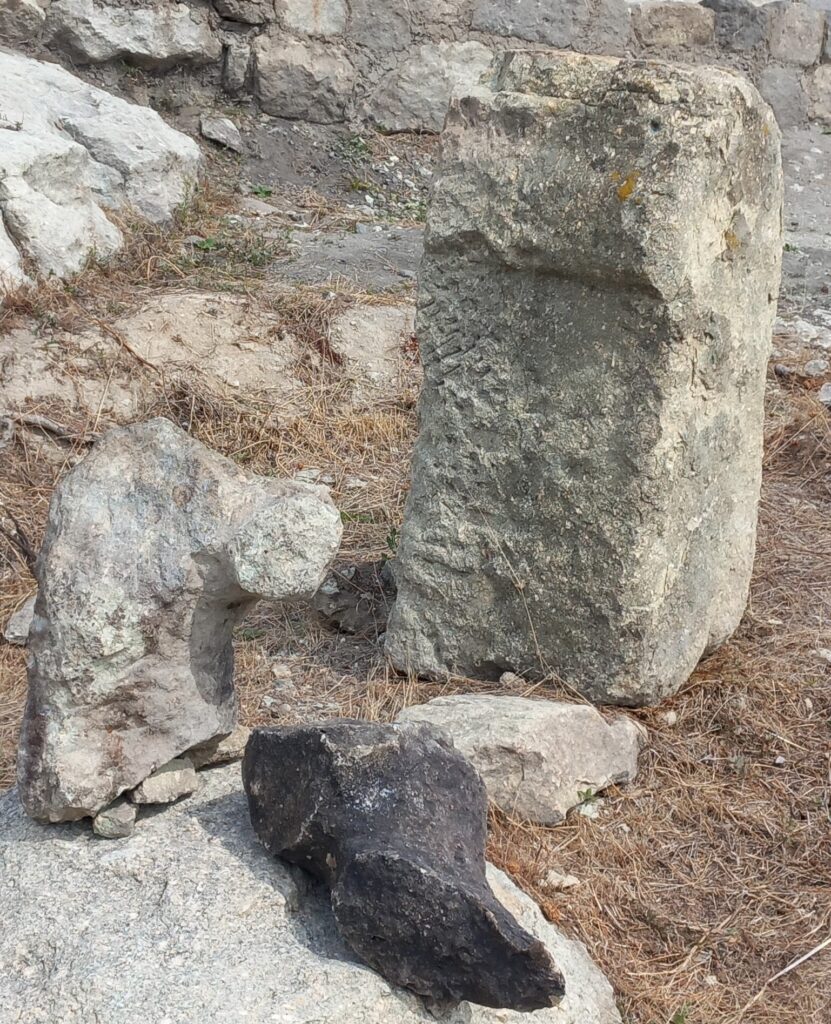
The newly discovered sculptural remains from Perperikon, including a statue pedestal, part of a life-size male figure and a fragment believed to represent an animal, possibly a lion. Photo: Courtesy of Prof. Nikolay Ovcharov
A season that may reshape the picture of Perperikon
The statue fragments come near the end of what Ovcharov describes as an exceptionally productive archaeological season. The team is now entering the final two weeks of a campaign that has lasted almost four months.
The discoveries also appear to be part of a broader reassessment of how Perperikon developed as an urban centre. Ovcharov says the final results of this year’s study of the city’s urban planning are expected to be presented in October.
For the moment, the newly discovered sculptures have already altered one part of the picture. Perperikon was not only a city of monumental stone buildings, temples and mausoleums. Its sacred spaces were also populated by statues — works produced by local craftsmen that once formed part of the city’s religious, funerary and public landscape.
Source: Original article and photographs provided directly to Arkeonews by Prof. Nikolay Ovcharov. More of his writings can be found on his author page at 168 Chasa.
