

Archaeologists excavating Gedikkaya Cave in northwestern Türkiye have uncovered around 25 stone turtle figurines from Epipaleolithic contexts dating between approximately 14,500 and 11,200 BCE, adding striking new evidence that prehistoric hunter-gatherers used parts of the cave for ritual or symbolic activities.
Prof. Dr. Deniz Sarı of Bilecik Şeyh Edebali University leads the excavations at Gedikkaya Hill and İn Cave in the İnhisar district of Bilecik Province. A 14-member team carried out the 2026 campaign between May 18 and July 18 on behalf of Türkiye’s Ministry of Culture and Tourism.
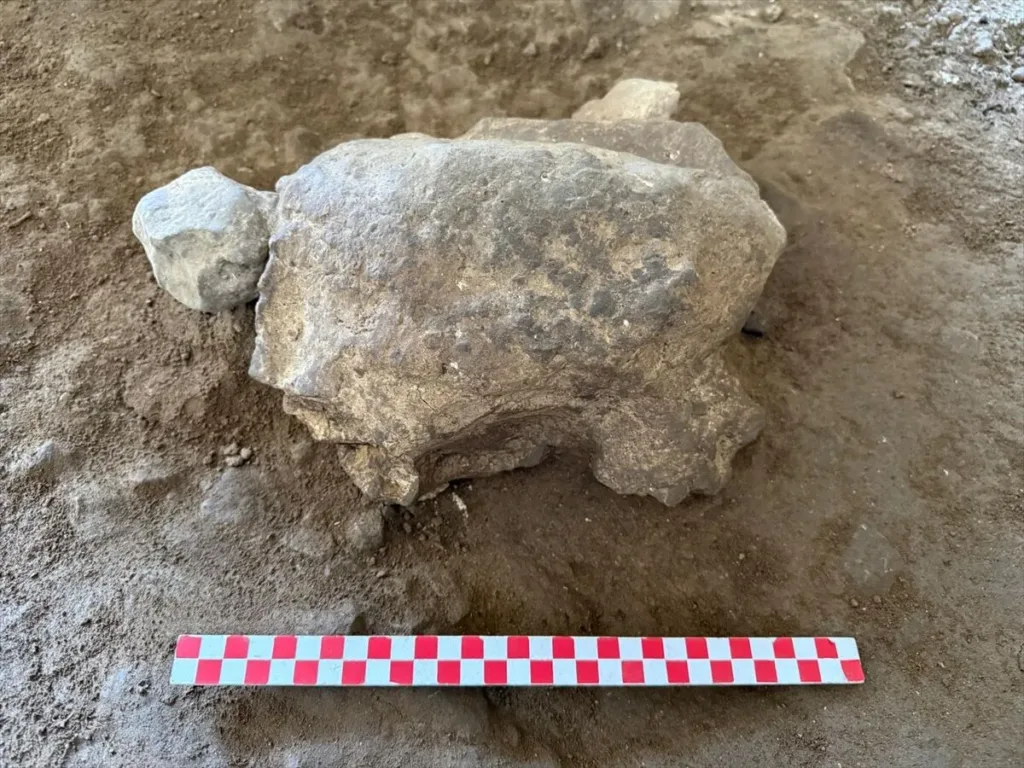
The team found approximately 25 figures made mainly of limestone, with some appearing to have a coating of clay. The largest measures roughly 30 centimeters long and 20 centimeters wide. Rather than carefully finishing the objects as portable artworks, their makers often shaped them quickly and left some only partially completed.
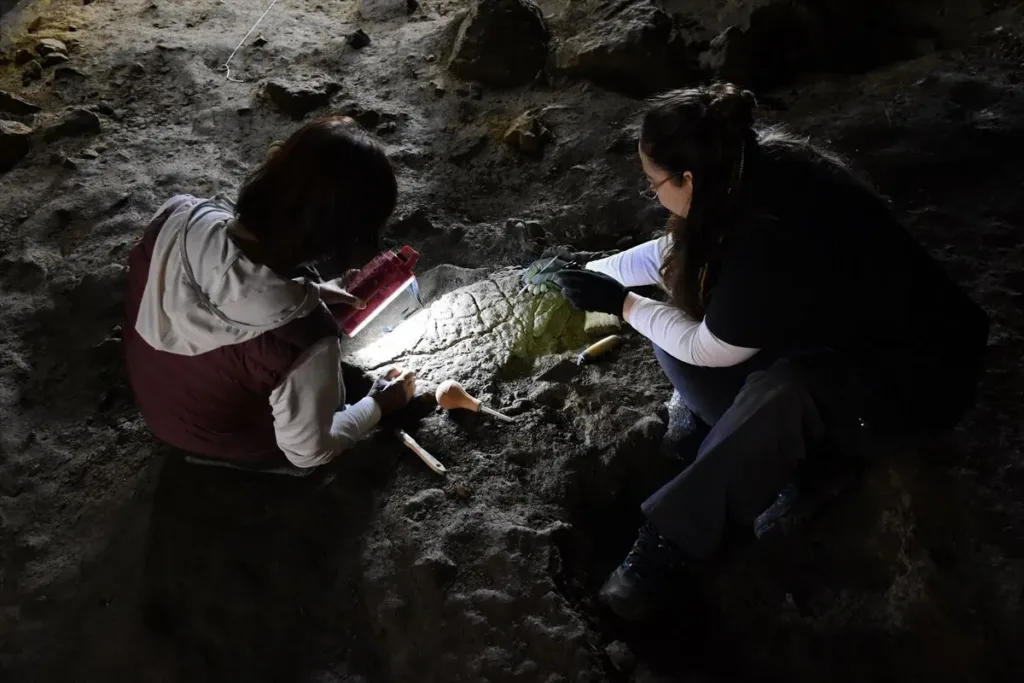
According to Sarı, archaeologists found several of the figurines inserted vertically into the soil around circular or curved stone arrangements. This unusual placement has led the excavation team to interpret them as objects created for ritual deposition rather than ordinary decoration. Radiocarbon analysis dates the archaeological layers associated with these features to the Epipaleolithic period.
A cave with a much older ritual story
The turtle figurines do not provide the first evidence that prehistoric communities gave Gedikkaya special significance.
Researchers investigated the cave for geological purposes as early as 1960 and examined it again during a natural-caves survey in 2001. Archaeologists recognized its importance during a 2017 survey of Bilecik Province. The Bilecik Museum then conducted rescue excavations between 2019 and 2023.
Those investigations revealed intermittent human activity stretching from the Epipaleolithic through the Neolithic and Chalcolithic periods, along with limited evidence of later visits during the Hellenistic period.
Earlier excavations had already revealed an unusual Epipaleolithic activity area around 20 meters inside the cave. Natural niches along the cave wall contained deliberately grouped animal remains and stone tools. Archaeologists identified vertebrae, horns, a raptor claw and, significantly, tortoise shell fragments among these deposits. They also found a stylized stone animal sculpture nearby.
Farther inside the cave, the excavation team documented another remarkable feature. Prehistoric people had arranged two curved rows of carefully selected stones around a large natural stalagmite. They appear to have deliberately incorporated the stalagmite into the space and placed stone and bone objects nearby, including a stylized human figurine. Researchers have interpreted this feature as an offering or ritual pit.
A previously identified tortoise sculpture and tortoise shells from the niches had already prompted Sarı to suggest that the animal held symbolic importance at Gedikkaya. The discovery of around 25 additional turtle-shaped objects now strengthens the idea that the repeated appearance of the animal was not accidental.
Why were turtles important to prehistoric people?
The meaning of the turtle imagery remains uncertain, and archaeologists have no evidence that the animal carried a single universal meaning across prehistoric societies. Yet turtles and tortoises repeatedly appear in ritual contexts throughout the prehistoric Near East.
One of the best-known examples comes from the Late Natufian site of Hilazon Tachtit Cave in present-day Israel, where archaeologists found large numbers of tortoises associated with unusual burial and feasting practices. Researchers have argued that the concentration, treatment, and deliberate deposition of the animals indicate a role that extended beyond ordinary subsistence.
At the Natufian settlement of Wadi Hammeh 27 in Jordan, researchers have gone further. They proposed that the geometric pattern of the tortoise carapace itself may have influenced symbolic imagery and formed part of ritual beliefs.
The association reaches even deeper into the Paleolithic. At Manot Cave in Israel, researchers identified a deliberately engraved boulder resembling a tortoise shell inside a chamber that appears to have hosted collective activities. Calcite dating places the engraving roughly 37,000 to 35,000 years ago, showing that tortoise imagery could acquire symbolic importance long before farming communities emerged.
Sarı has also suggested that Epipaleolithic inhabitants may have seen the shape of Gedikkaya Hill itself as resembling a turtle. If so, the figurines could represent more than animals. Prehistoric people may have reproduced the shape of the surrounding landscape in miniature, connecting the cave, the hill and ritual activity within a shared symbolic system.
That interpretation remains a hypothesis. Archaeologists also cannot automatically project later concepts such as longevity, endurance or protection—qualities widely associated with turtles in many historical cultures—thousands of years back into the Epipaleolithic.
What is becoming clearer, however, is that Gedikkaya Cave served as more than a temporary shelter. Carefully arranged stone features, animal remains, anthropomorphic and zoomorphic objects, tortoise shells and now dozens of turtle figurines together suggest that hunter-gatherers repeatedly transformed parts of the cave into places where animals, natural formations and deliberately created objects carried meanings beyond everyday survival.
The excavation team transferred the newly discovered figurines to the Bilecik Museum and Bilecik Şeyh Edebali University for further study and conservation.
