21 January 2026 The Future is the Product of the Past

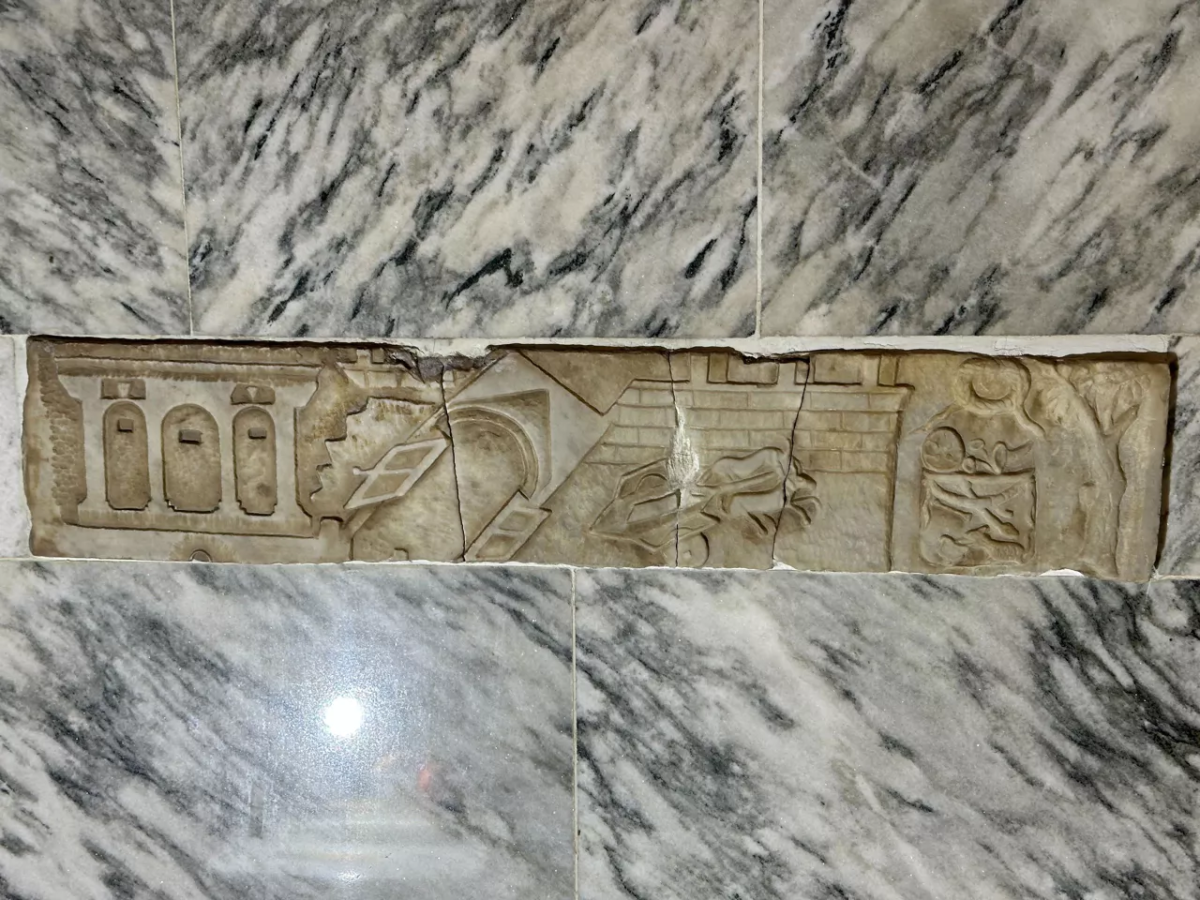
2000-year-old Genuine Pompeii marble relief installed in a wall lining the staircase leading down to the basement in a Belgium home

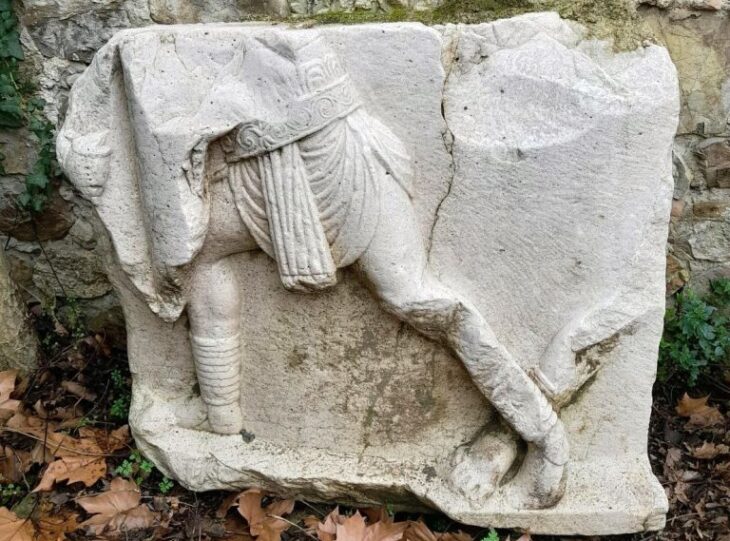
An important marble relief depicting the earthquake of 62 AD, stolen from the ruins of ancient Pompeii in Italy in 1975, was found in a family home in the quiet village of Herzele in Belgium’s East Flanders region.

For 50 years, the ancient marble artifact has been installed in a wall lining the staircase leading down to the basement. The homeowner’s son, Geert de Temmerman, explained that the mini monument had been brought back from Pompeii as a souvenir five decades ago.

On a family vacation to Italy, Geert de Temmerman’s father was offered the artwork by an anonymous man who fled the scene as soon as the deal was over. Not realizing the importance of the object, the family installed it in their house as a decorative feature.

Curiosity about the marble’s worth prompted the family to seek professional assistance as they prepared to sell their home. The Gallo-Roman Museum in Tongeren (Limburg) experts were astounded to discover its authenticity.

The marble relief sculpture, which dates from around 62 C.E., is a narrow strip depicting an earthquake that occurred that same year. Most notably, it depicts the Pompeii gates collapsing. The marble relief had been stolen on July 14th, 1975, from the house of banker L. Caecilius Iucundus where it originally hung above the atrium altar.


📣 Our WhatsApp channel is now LIVE! Stay up-to-date with the latest news and updates, just click here to follow us on WhatsApp and never miss a thing!!



A precious treasure from ancient Pompeii, Italy, that depicts the earthquake of 62 A.D. was recovered from a family’s basement in Belgium. Credit: Des Temmermans

The head of exhibitions at the Gallo-Roman Museum, Bart Demarsin, confirmed that the relief matched another piece depicting the same earthquake.

“It closely corresponds to the original piece that we recognize from the photos,” confirmed Bart Demarsin, the museum’s head of exhibitions, speaking to VRT NWS. “That piece corresponds to a similar piece, which also depicts buildings that collapsed during that earthquake.”

The marble will undergo further research to confirm its authenticity, after which it can be reunited with its companion piece in Pompeii’s Antiquarium.

“It’s the cultural heritage from Pompeii, and it belongs there,” said An Christiaens, deputy mayor of culture for the local city of Tongeren.

Local police opened an investigation into how this pilfered treasure ended up in a Belgian home after the artifact was identified. Meanwhile, the family expressed hope for potential compensation, citing the long-term preservation of the artifact.

Cover Photo: Des Temmermans
Related Articles

Scientists discover 4 new Nazca Geoglyphs using AI deep learning

4 June 2023

4 June 2023

Scientists from Japan used AI deep learning to discover new geoglyphs in the Arid Peruvian coastal plain, in the northern...

New Study reveals how England’s ‘White Queen’ worshipped a disembowelled saint at the Chapel of St Erasmus

5 December 2022

5 December 2022

A new study reveals the story of how England’s “White Queen”, Elizabeth Woodville, wife of Edward IV, once worshipped at...

1st Century BCE Medusa Mask Mold Discovered in Ancient Finziade, Sicily

24 January 2025

24 January 2025

At the Finziade archaeological site in the Sicilian town of Licata, archaeologists have discovered a mask mold that could represent...

“No Easy Way from Earth to the Stars”: Malta’s Prehistoric Temples (3800–2400 BCE) May Have Served as Celestial Navigation Schools

26 June 2025

26 June 2025

A new open-access study published in Archaeological and Anthropological Sciences has reignited the debate surrounding the purpose and cosmic alignment...

First in Anatolian Archaeology, a 2,600-year-old Sacred Room and Stone Symbolizing the Goddess Kubaba Discovered at Oluz Höyük

29 November 2024

29 November 2024

Archaeologists have discovered a sacred room and stone from the Phrygian period, dating back 2,600 years, during excavations at the...

2,700-year-old bronze figurine found in Germany’s Tollence River: goddess or weight?

9 April 2022

9 April 2022

A Bronze Age female figurine discovered in the Tollense River in northern Germany may have been a goddess, part of...

Archaeologists find new clues about North Carolina’s ‘Lost Colony’ from the 16th century

11 May 2024

11 May 2024

Archaeologists from The First Colony Foundation have yielded a tantalizing clue about the fate of the Lost Colony, the settlers...

5500-year-old city gate unearthed in Israel -the earliest known in the Land of Israel-

15 August 2023

15 August 2023

The Israel Antiquities Authority announced on Tuesday that archaeologists have discovered the earliest known ancient gate in the land of...

Maya city Tikal put today’s urban gardens to shame

26 June 2021

26 June 2021

The Maya civilization was known for its achievements in art, architecture, mathematics, astronomy, and calendar systems. Tikal, the ancient Maya...

Inscriptions That Could Change the History of Turkish Migration to Anatolia Are Disappearing: Esatlı Kaya Inscriptions

30 March 2025

30 March 2025

Researchers made a significant discovery during field research conducted in 1994 in Esatlı village, Mesudiye, Ordu. They introduced a series...

Archaeologists Discovered 8,200-year-old Eyeliner in Türkiye’s Yeşilova Höyük

16 September 2024

16 September 2024

During the archaeological excavations in Yeşilova Höyük (Yeşilova Mound) in Bornova district of Izmir, an 8,200-year-old kohl made of stone...

Infinite Embrace: New research sheds light on Bronze Age family relationships that link Britain to Luxembourg

30 January 2024

30 January 2024

A new study of early Bronze Age examples from Luxembourg and Britain, led by researchers from the universities of Mainz...

Roman soldier’s 1,900-year-old payslip uncovered in Masada

16 February 2023

16 February 2023

During excavations at Masada, archaeologists from the Israel Antiquities (IAA) uncovered a papyrus payslip dated to 72 BC belonging to...

2,700-Year-Old Rare Bronze Knives from the Early Saka Period Unearthed in Kazakhstan

17 July 2025

17 July 2025

In a remarkable archaeological breakthrough, researchers and students from Margulan University have unearthed two rare bronze knives dating back over...

3500-year-old Ritual Table with All Its Ceramic Dishware Found in Azerbaijan

12 July 2024

12 July 2024

A joint team of Italian and Azerbaijani archaeologists has discovered a 3500-year-old ritual table with the ceramic tableware still in...