
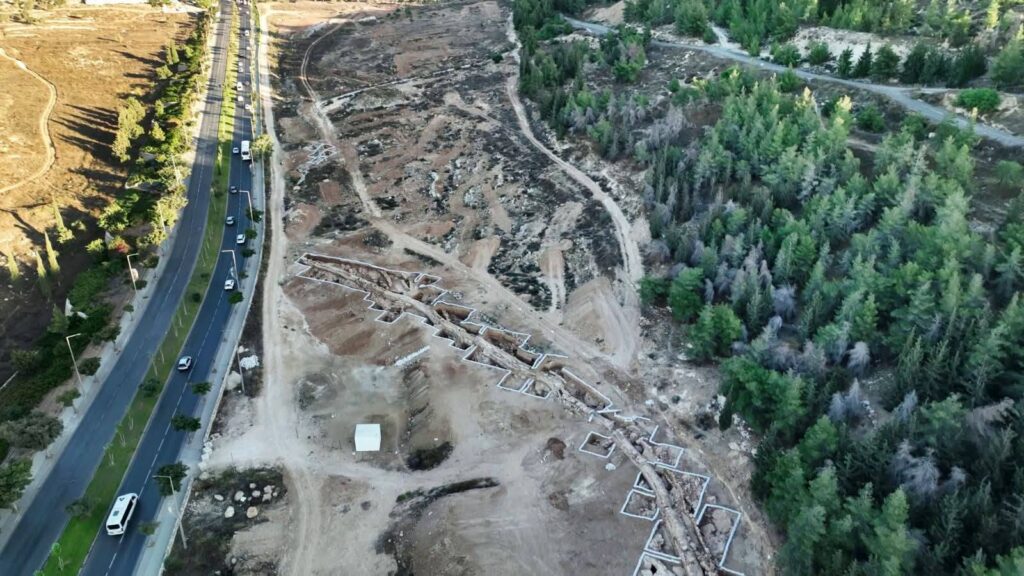
Archaeologists have uncovered a striking 300-meter stretch of a 2,000-year-old aqueduct that once carried water to Jerusalem. Built during the time of the Hasmonean kings, the system moved spring water more than 21 kilometers across hilly terrain using nothing but gravity and a carefully calculated slope.
The Israel Antiquities Authority (IAA) announced the find near Kibbutz Ramat Rachel, just south of the city. The section came to light during excavations ahead of a new residential development.
The aqueduct carried water from Solomon’s Pools, south of Bethlehem, toward the Temple Mount in Jerusalem. Its builders achieved such precision that the system remained in intermittent use until approximately a century ago, surviving successive periods of political and technological change.
An Engineering Achievement of the Hasmonean Kings
The Hasmonean dynasty ruled Judea during the final centuries BCE, a period when Jerusalem developed as a major political and religious center. Supplying the city with sufficient water required infrastructure capable of transporting spring water from sources well beyond its immediate surroundings.
The Lower Aqueduct offered an ambitious solution, and what made the project so impressive was the precision of its slope. The channel drops only about one meter for every kilometer of its length. Without pumps, that gentle, steady slope was essential to keep the water flowing. A miscalculation anywhere along the route could have stopped the entire system.
Dr. Benyamin Storchan, Gil Freid, and Rotem Cohen described the aqueduct as an impressive engineering undertaking probably constructed under the Hasmonean kings. Its careful planning is one reason it remained in intermittent use until roughly a hundred years ago.
The builders also recognized that constructing the aqueduct was only part of the challenge. They incorporated access points along its course, allowing maintenance workers to clear blockages and keep water flowing through the channel.
A Water System That Survived for Centuries
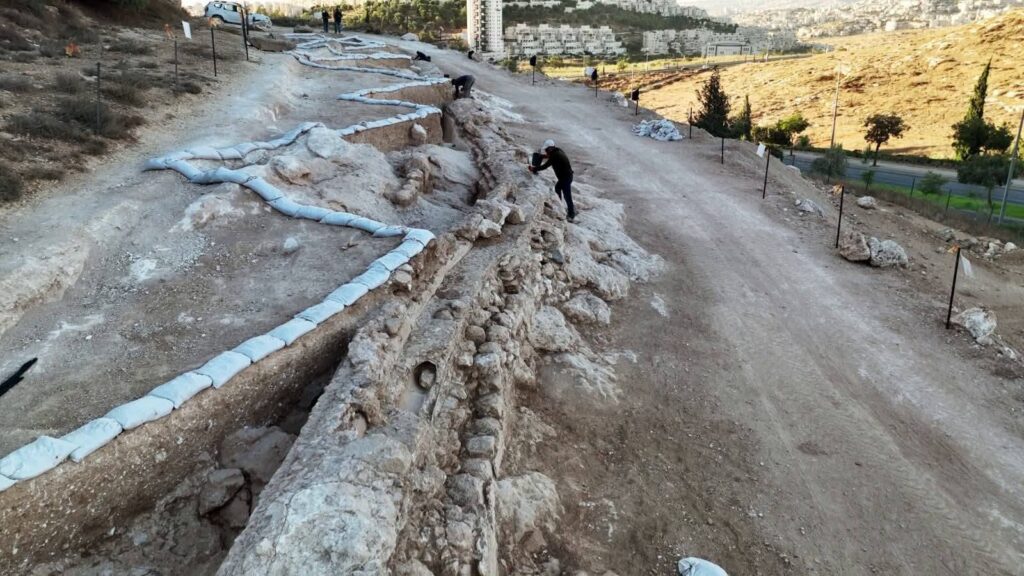
The newly exposed remains show that the aqueduct was repaired and adapted over many centuries. In its original form, water ran through a plaster-lined channel designed to prevent leaks.
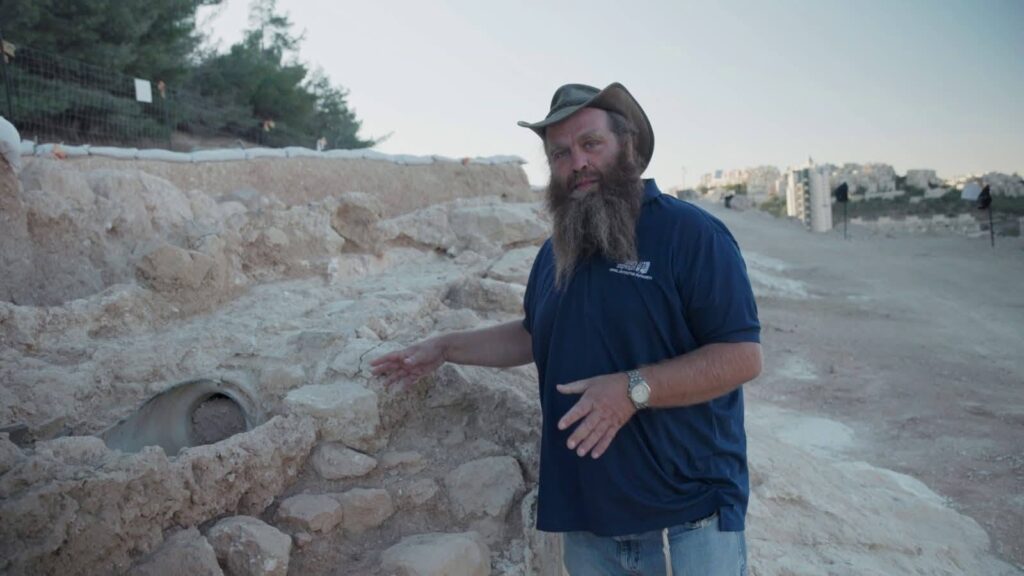
About 500 years ago, during the Ottoman period, ceramic pipes were installed inside the old channel. Workers also applied a fresh layer of plaster to the outer wall and pressed small stones into the surface before it set—a distinctive finishing touch still visible today. This distinctive treatment became a recognizable feature along the watercourse.
These alterations reveal the continuing importance of the aqueduct to Jerusalem’s water supply. Although its operation was not uninterrupted, successive generations invested in repairs and modifications, extending the useful life of an engineering project conceived nearly two millennia earlier.
The system’s endurance also offers a broader insight into ancient infrastructure. The original builders could not have imagined that people living nearly two thousand years later would still rely on the same carefully planned route.
An Ancient Aqueduct in a Modern Neighborhood
The discovery was made during work funded by the Israel Land Authority ahead of construction south of Ramat Rachel. Instead of removing the remains, authorities plan to preserve the exposed section and incorporate it into the main entrance of the new neighborhood.
Dr. Amit Re’em, the IAA’s Jerusalem District Archaeologist, called the aqueduct an engineering marvel, noting the scale of planning and labor it would have required even with modern tools. The IAA also hopes to create a continuous archaeological park that would allow visitors to follow the ancient watercourse from southern Jerusalem toward the Old City.
The new findings will be presented at the 19th New Studies in the Archaeology of Jerusalem and Its Region conference. For archaeologists, the 300-meter stretch offers another chance to study how Jerusalem’s ancient water network was built and maintained. For the public, the preserved remains may soon provide a closer look at the quiet precision that once brought water into the city without a single pump.
