
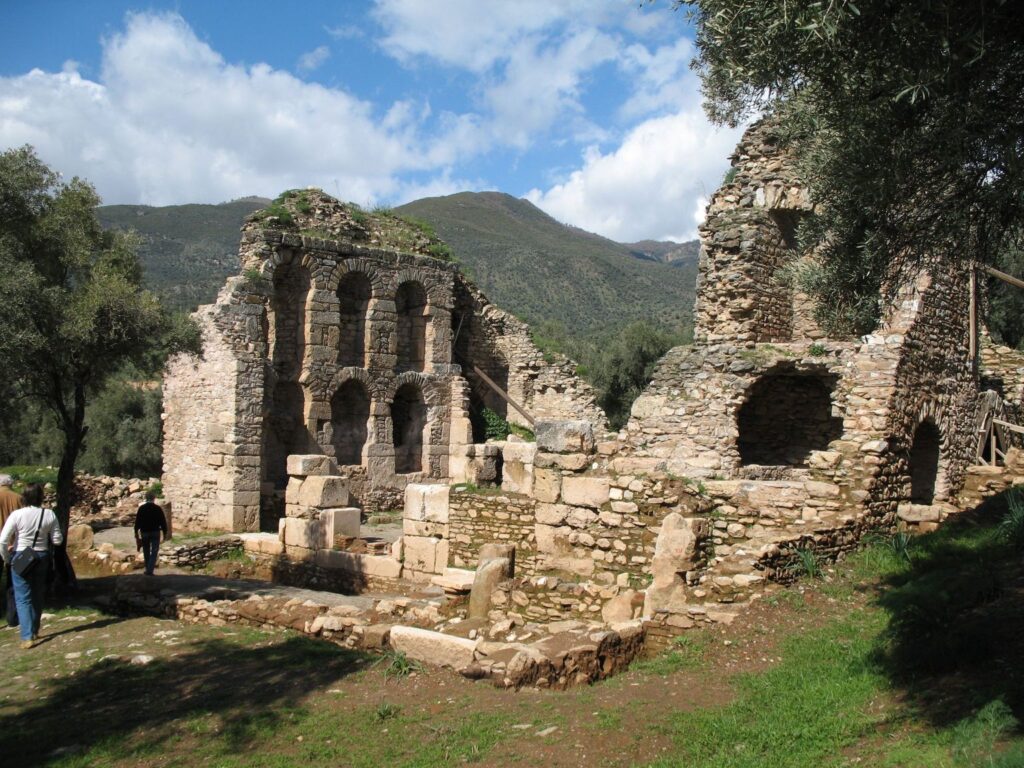
Nysa, one of the most intellectually vibrant cities of Roman Asia Minor, has yielded a new architectural discovery that deepens our understanding of how guaranteed access to knowledge was physically organized in antiquity. Archaeologists have uncovered a 1,800-year-old stone staircase that once provided direct passage from the city’s main street to its monumental library—considered one of the best-preserved library buildings in western Anatolia.
The newly revealed staircase is not a minor architectural detail. Instead, it clarifies how the library was integrated into Nysa’s urban fabric, physically and symbolically linking the daily flow of the city with an institution dedicated to learning, education, and elite culture.
A forgotten route from street to scholarship
The excavation is being carried out under the direction of Prof. Dr. Serdar Hakan Öztaner from Ankara University’s Department of Archaeology, within the framework of Türkiye’s national “Heritage for the Future” program. Since 2024, the team has focused on the main colonnaded street extending from the city’s central bridge toward the sacred zone of Akharaka.
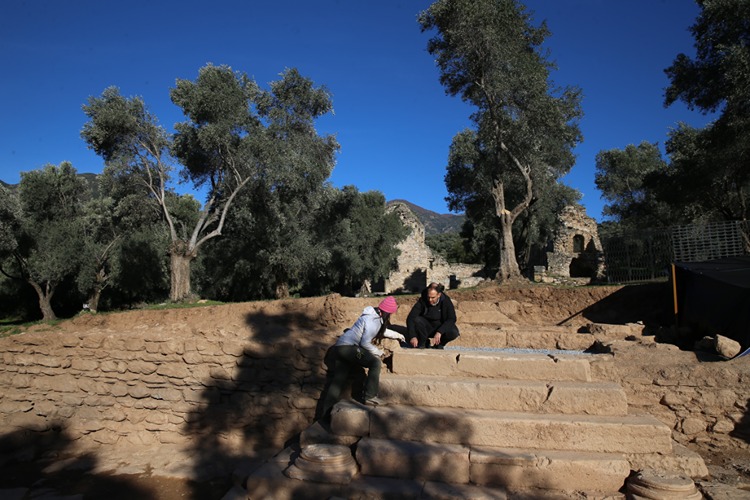
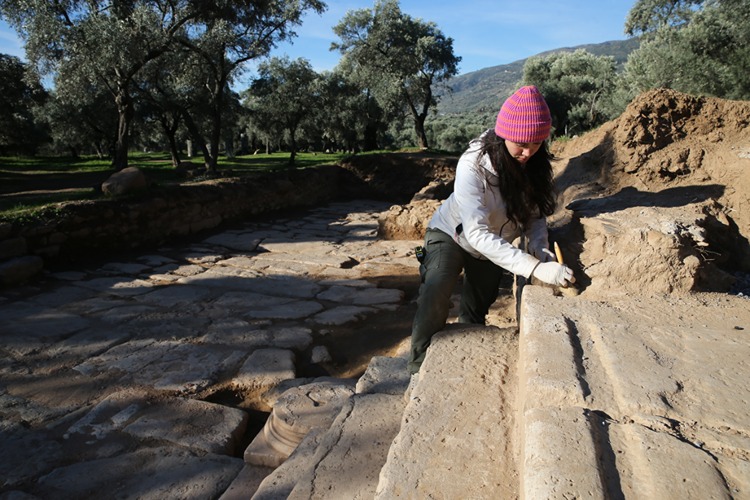
During the 2025 season, excavations reached the axial alignment of the library complex. At this point, archaeologists uncovered a staircase rising from the street level—resolving a long-standing question about how visitors negotiated the roughly two-meter height difference between the city’s main artery and the elevated library precinct.
According to Prof. Dr. Öztaner, the staircase dates to approximately the mid-2nd century AD and consists of five carefully constructed steps leading to a marble-paved forecourt directly in front of the library. This architectural solution demonstrates deliberate planning: the ascent was meant to be visible, ceremonial, and central rather than hidden or secondary.
The Nysa Library and Roman intellectual culture
Archaeological evidence suggests that the library was constructed around AD 130, a period marked by intense architectural patronage across Roman Asia Minor. The building contained 16 built-in book cupboards, indicating a substantial collection of scrolls and manuscripts, including literary, philosophical, and scientific texts.
Scholars have long noted that the library of Nysa was built shortly after the famous Celsus Library, reflecting a regional competition among cities to assert cultural prestige through monumental learning spaces. While smaller than its Ephesian counterpart, the Nysa Library stands out for its remarkable state of preservation, making it a key reference point for the study of Roman libraries.
The newly discovered staircase confirms that the library was not isolated from daily urban life. Instead, it occupied a central position within the city’s movement network, reinforcing the idea that education and public knowledge were integral to civic identity.
A city shaped by learning and landscape
Founded in the Hellenistic period, Nysa boasts a continuous history spanning more than 2,300 years. The city was uniquely built on both sides of a deep ravine, connected by bridges and terraces—an arrangement that earned it the ancient epithet “the twin city.”
Nysa’s reputation as a center of education is firmly grounded in ancient literary sources. The renowned geographer Strabo, author of Geographica, received part of his education in Nysa. In his writings, Strabo described the city as a place distinguished by its schools and intellectual atmosphere, placing it among the leading educational centers of the Roman East.
Monumental structures such as the theater, gymnasium complex, stadion, bouleuterion, agora, and wide colonnaded streets further underscore Nysa’s prominence within Roman Anatolia.
Akharaka and the sacred dimension of the city
Beyond its urban core, Nysa was closely connected to the sanctuary of Akharaka, one of the most intriguing sacred sites in the region. Known in antiquity for its chthonic associations and healing rituals, Akharaka attracted pilgrims seeking cures through dream incubation and divine intervention.
Ancient sources describe a sacred cave emitting vapors believed to possess therapeutic properties. The main street linking Nysa to Akharaka—now partially excavated—highlights the city’s integration of intellectual life, religious practice, and civic movement.
Why the staircase matters
Although modest in size, the newly uncovered staircase carries disproportionate significance. It provides concrete evidence of how Roman urban planners managed elevation, movement, and visibility within complex cityscapes. More importantly, it illustrates how access to knowledge was carefully staged: ascending from the street to the library was both a physical transition and a symbolic act.
For modern visitors, the staircase restores an authentic experience of ancient Nysa—allowing them to follow the same route once taken by students, scholars, and citizens nearly two millennia ago. As excavations continue, Nysa is increasingly reaffirming its status as a key site for understanding the architecture of learning in the ancient Mediterranean world.
Cover Image Credit: Public Domain
