
7 June 2026 The Future is the Product of the Past

1600-Year-Old Rare Roman Glass Diatreta with Gladiator Scene Unearthed in Doclea, Montenegro

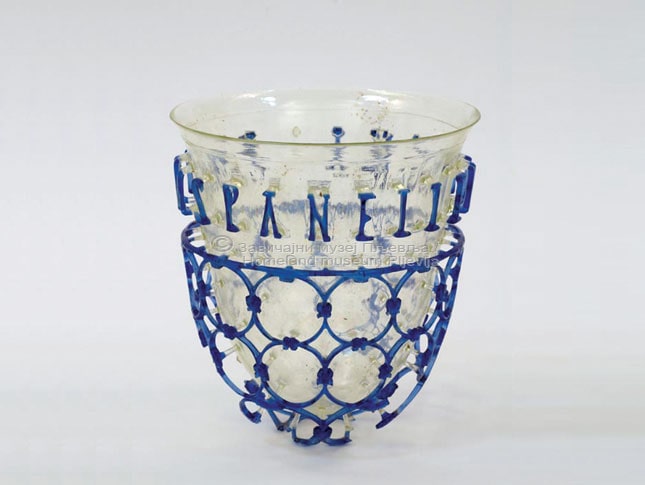
An extraordinary archaeological discovery has been made in the ancient Roman city of Doclea, located near Podgorica, Montenegro. During recent excavations of the city’s western necropolis at Koshturnica, archaeologists uncovered the richly furnished tomb of a high-status Roman woman, dating back approximately 1600 years. Among the many grave goods was a rare Roman glass vessel known as a diatreta, adorned with an unprecedented gladiator scene, making it one of the most significant finds of its kind in the region.

The excavations are being conducted under the leadership of archaeologist Miloš Živanović.

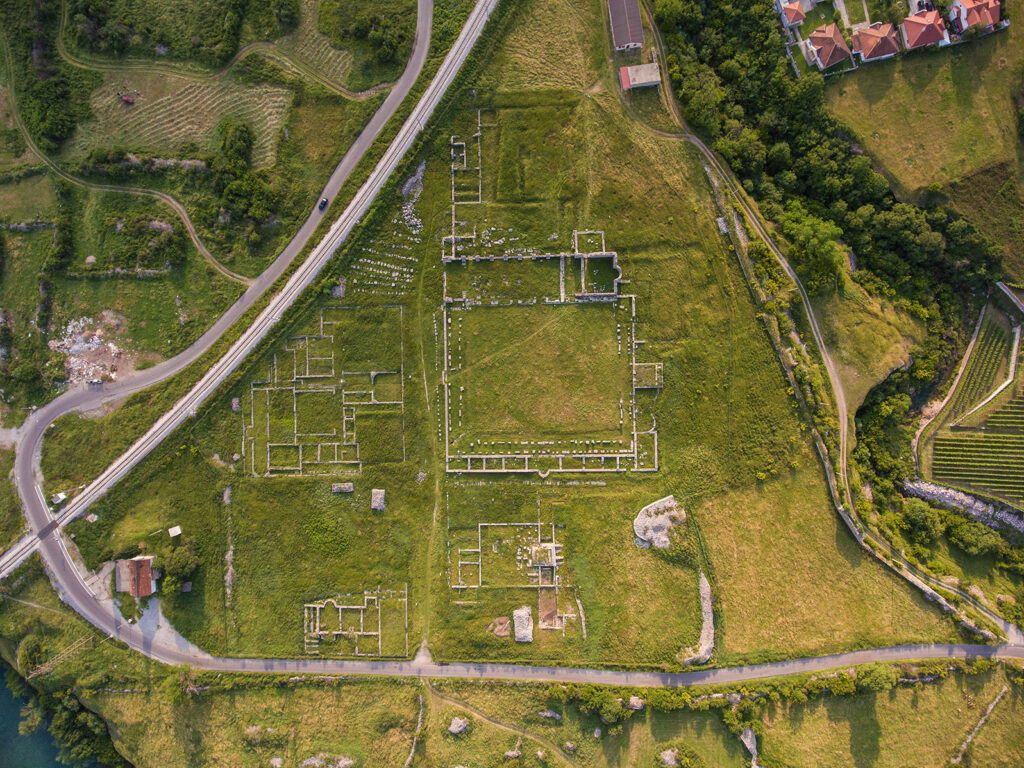
Doclea, also known as Docleia or Dioclea (known as Duklji in Montenegrin), was founded in the 1st century AD and flourished as an important urban, cultural, and economic center within the Roman province of Dalmatia. The city thrived until the early 7th century, when it was eventually abandoned. Its strategic location near trade routes, advanced urban planning, and impressive public architecture—such as forums, temples, and bath complexes—make it one of the most significant archaeological sites in Montenegro.
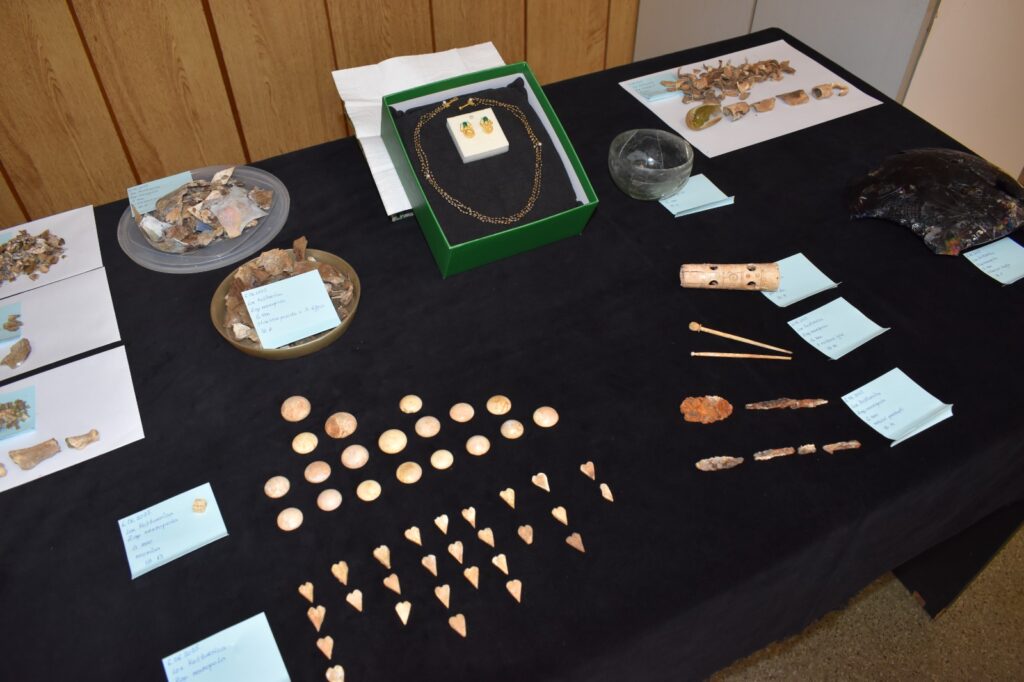
Among the finds were gold earrings, a necklace, bone tools, game pieces, and notably, eight glass vessels. Courtesy of archaeologist Miloš Živanović.

For the past three years, systematic excavations have been taking place at Doclea’s western necropolis, in an area known as Koshturnica. More than 180 graves have been explored, revealing an abundance of ceramics, glassware, jewelry, tools, and coins. These findings reflect the social status and cultural richness of ancient Doclea’s residents.

This year’s highlight was the discovery of the tomb of a Roman woman, dated to the 4th century AD, buried with luxurious grave goods. These included gold earrings, a necklace, bone tools, game pieces, and notably, eight glass vessels. Among them was the centerpiece: a diatreta, a type of elaborately decorated Roman glass.


📣 Our WhatsApp channel is now LIVE! Stay up-to-date with the latest news and updates, just click here to follow us on WhatsApp and never miss a thing!!


According to Živanović, “The grave goods include two gold earrings with green glass beads, and a necklace made of gold and jet beads.” He added, “Eight glass vessels were discovered in total, two of which are particularly notable. One is a finely crafted dark glass bowl or plate, while the other is a rare diatreta.”
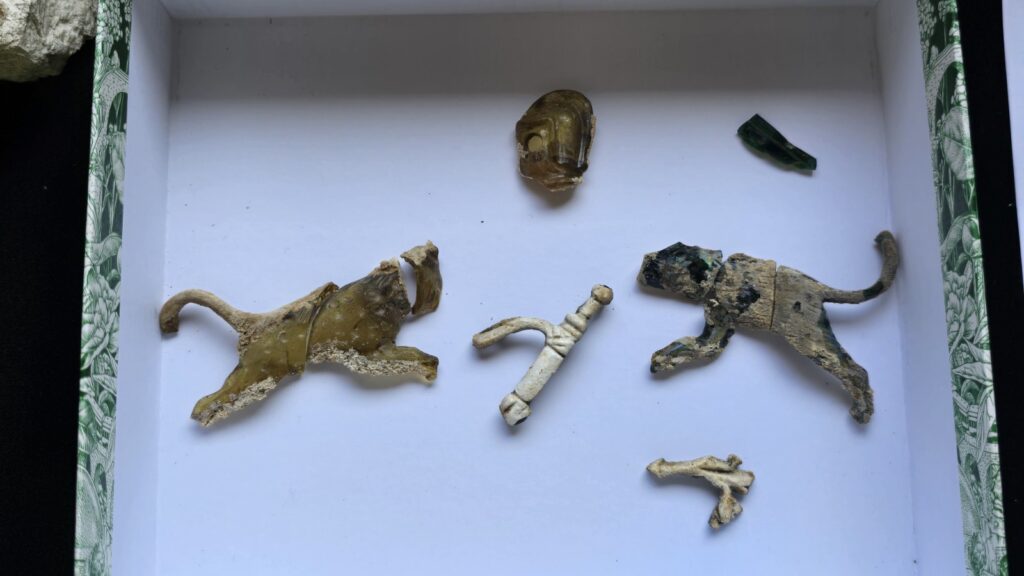
What makes this particular find exceptional is the depiction of a gladiatorial scene — specifically, a venator (wild beast hunter) fighting leopards. Courtesy of archaeologist Miloš Živanović.

Diatretae are extremely rare luxury artifacts known for their intricate openwork “net” design, often featuring inscriptions or figural representations. What makes this particular find exceptional is the depiction of a gladiatorial scene, specifically a venator (wild beast hunter) fighting leopards. No other examples of this type have been discovered to date, making this a unique artifact of international significance.

“We can proudly say that this is the second diatreta found in Montenegro, the first being in Pljevlja. Unfortunately, this one is not fully preserved, and it will require extensive conservation. We hope to recover its complete form,” he said in a statement to Arkeonews.

“Our diatreta is extremely rare—rarer even than the one in Pljevlja—because it is figural. The net of the vessel features a battle scene with wild feline animals, likely cheetahs, centered around a gladiator – a venator–fighting them. The vessel is made in two colors: yellow and green.”
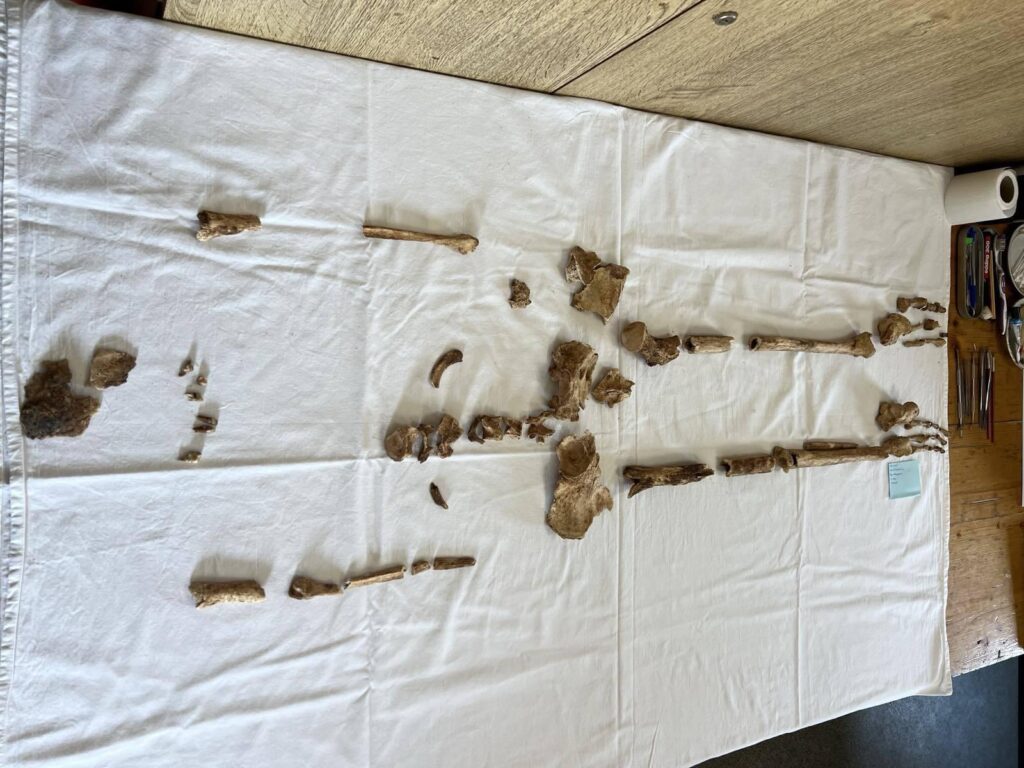
Although the bones are poorly preserved, current analysis suggests that the woman was exceptionally tall, which is unusual for Doclea in the 4th century. Courtesy of archaeologist Miloš Živanović.

Although the newly found diatreta is not fully preserved, the surviving fragments convey both technical mastery and artistic symbolism.

He also stated, “We found a container (pyxis) that held needles and spatulas, a board game set, and various types of vessels such as balsamaria, cups, and jugs—all part of the grave inventory.”

Commenting on the remains, Živanović noted, “Although the bones are poorly preserved, current analysis suggests that the woman was exceptionally tall, which is unusual for Doclea in the 4th century. All the findings indicate she was a prominent individual of her time.”
This remarkable discovery not only highlights the opulence of Doclea’s Roman elite but also represents a significant contribution to the study of ancient Roman glassmaking and funerary practices.

Cover Image Credit: Aerial view of the ancient city of Doclea. Public Domain

Related Articles

‘Nano lime’ protects Nemrut: Throne of the Gods

24 October 2023

24 October 2023

Last year, “nano lime” was filled with syringes to protect the tiny cracks on the large stone statues on Mount...

Tutankhamun of Kazakhstan, “Golden Man”

1 August 2024

1 August 2024

The Golden Man, the main symbol of Kazakhstan’s independence, is a warrior’s costume from about the 5th century BC that...

Denisovans or Homo Sapiens: Who Were the First to Settle Permanently on the Tibetan Plateau?

8 December 2021

8 December 2021

The Tibetan Plateau has long been considered one of the last places to be populated by people in their migration...

Arrowhead from the Biblical Battle Discovered in the Hometown of the Giant Goliath’s

30 May 2021

30 May 2021

A bone arrowhead discovered in the ancient Philistine city of Gath might have been used fired off by the city’s...

Ushabti figurines on display at Izmir Archeology Museum

18 September 2021

18 September 2021

The 2,700-year-old “Ushabti” statuettes, discovered in archaeological digs in western Turkey and used in Egyptian burial ceremonies, are being shown...

Otto the Great’s Tomb Marble Did Not Come from Italy or Greece, New Research Reveals

19 December 2025

19 December 2025

A major archaeological discovery in Germany is reshaping long-held assumptions about one of Europe’s most iconic imperial monuments. The tomb...

7,000-Year-Old Alutiiq Villages Discovered on Alaska’s Shuyak Island

3 July 2025

3 July 2025

A recent archaeological survey led by the Alutiiq Museum has revealed significant discoveries on Shuyak Island, part of the Kodiak...

Rare clay figurine found in Italian Cave dating back 7000 years

26 July 2023

26 July 2023

Archaeologists from Sapienza University of Rome discovered a figure with female features in the Battifratta cave, near Poggio Nativo in...

Environmentalists react to the rehabilitation works in the Assos ancient port

2 October 2021

2 October 2021

Among the continuing landscaping and restoration works at the historic city of Assos in the northern province of Canakkale, a...

Turkey discovers 11 new major hills near famed Gobeklitepe “Potbelly Hill”

28 June 2021

28 June 2021

Turkey reported on Sunday the discovery of 11 new hills in the vicinity of the renowned ancient site of Gobeklitepe...

Greek Inscription Found in Great Mosque of Homs Reveals Lost Temple of the Sun of Emperor Elagabalus

23 February 2026

23 February 2026

A newly analyzed Greek inscription discovered inside the Great Mosque of Homs in Homs, Syria, is reshaping scholarly debate over...

Hundreds of skeletons found on Welsh beach

4 July 2021

4 July 2021

Archaeologists found the burial site of women and children just below the surface of the sand dunes on Whitesands Bay...

Ancient “Tourist Graffiti” Found in Egypt: Indian Traveler Left His Mark in the Valley of the Kings 2,000 Years Ago

11 March 2026

11 March 2026

Archaeologists studying inscriptions in Egypt’s famous Valley of the Kings have uncovered fascinating evidence that travelers from India visited the...

Medallion of Emperor Caracalla Minted in Pergamon Found in Roman Tombs in Bulgaria

13 February 2024

13 February 2024

One of the valuable discoveries from the Roman tombs discovered near the village of Nova Varbovka in Strazhitsa municipality in...

New Discoveries in Nineveh: Archaeologists Unearth Fifteen Lamassu and Stunning Reliefs in Ancient Assyrian Palace

6 October 2025

6 October 2025

Just weeks after the September 21 announcement of the “Colossal Assyrian Winged Bull Unearthed in Iraq: Largest Ever at Six...