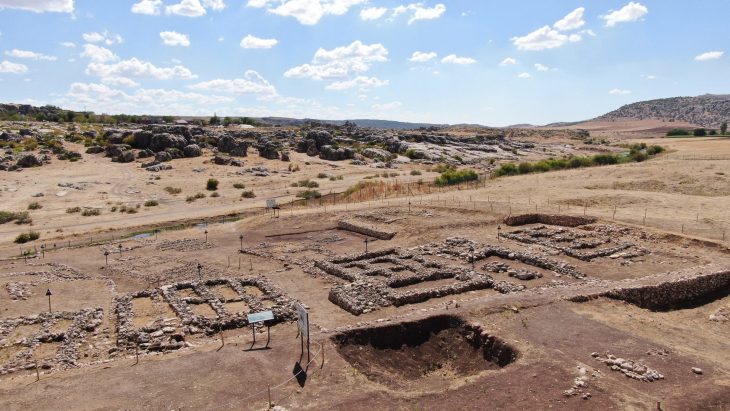
New insights reported by Science Norway suggest that a thousand-strong army—possibly from Norway—may have crossed into Denmark around AD 205, potentially on its way to serve the Roman Empire as mercenaries.
The theory, advanced by archaeologist Dagfinn Skre of the University of Oslo, reframes a dramatic episode from around AD 205—a battle in eastern Jutland, Denmark, whose archaeological remains continue to reshape how historians understand Scandinavia’s relationship with Rome.
A Battlefield Frozen in a Bog
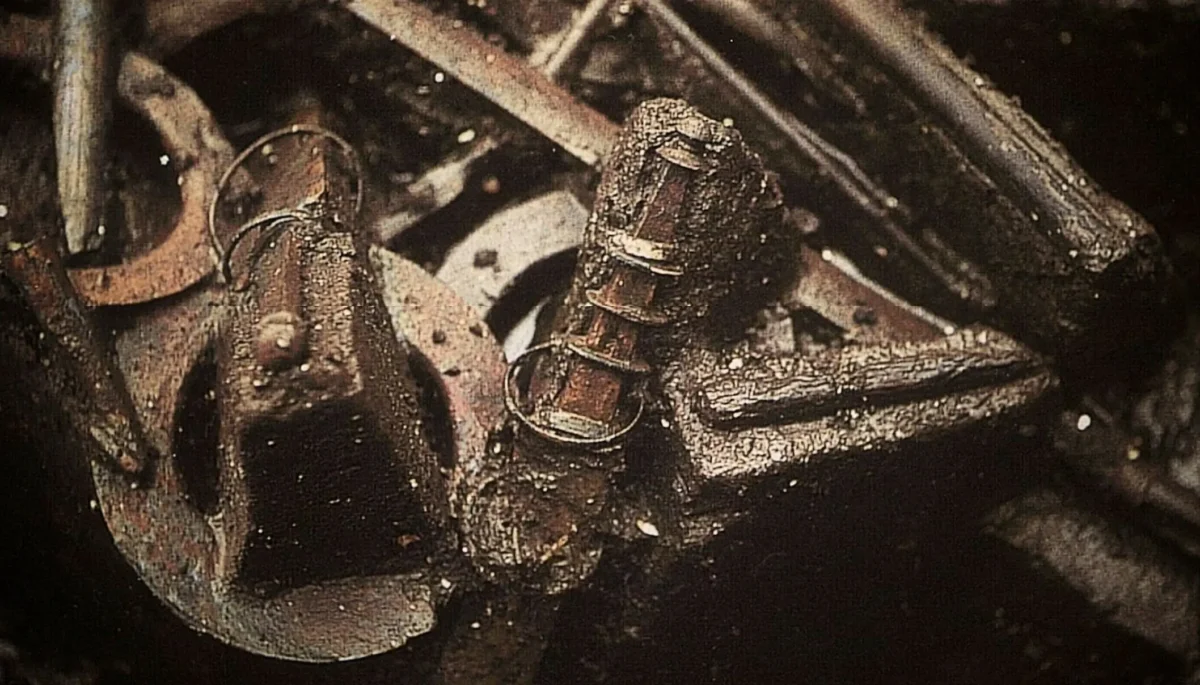
Few archaeological discoveries in Northern Europe rival the scale of the finds at Illerup Ådal in Denmark. Over 15,000 artifacts have already been recovered from the site, with researchers estimating that as many as 20,000 more objects may still lie buried beneath the bog.
The objects tell a vivid story. Weapons—swords, spears, shields—along with belts, horse gear, and personal belongings were deliberately destroyed and deposited in water. This was not random disposal, but a ritual offering made by the victors after a decisive battle.
The defeated army, archaeologists believe, may have consisted of around 1,000 men, transported across the sea in what could have been more than 50 ships. The sheer scale suggests a highly organized force, not a loose tribal warband.
📣 Our WhatsApp channel is now LIVE! Stay up-to-date with the latest news and updates, just click here to follow us on WhatsApp and never miss a thing!!
Clues Pointing Toward Norway
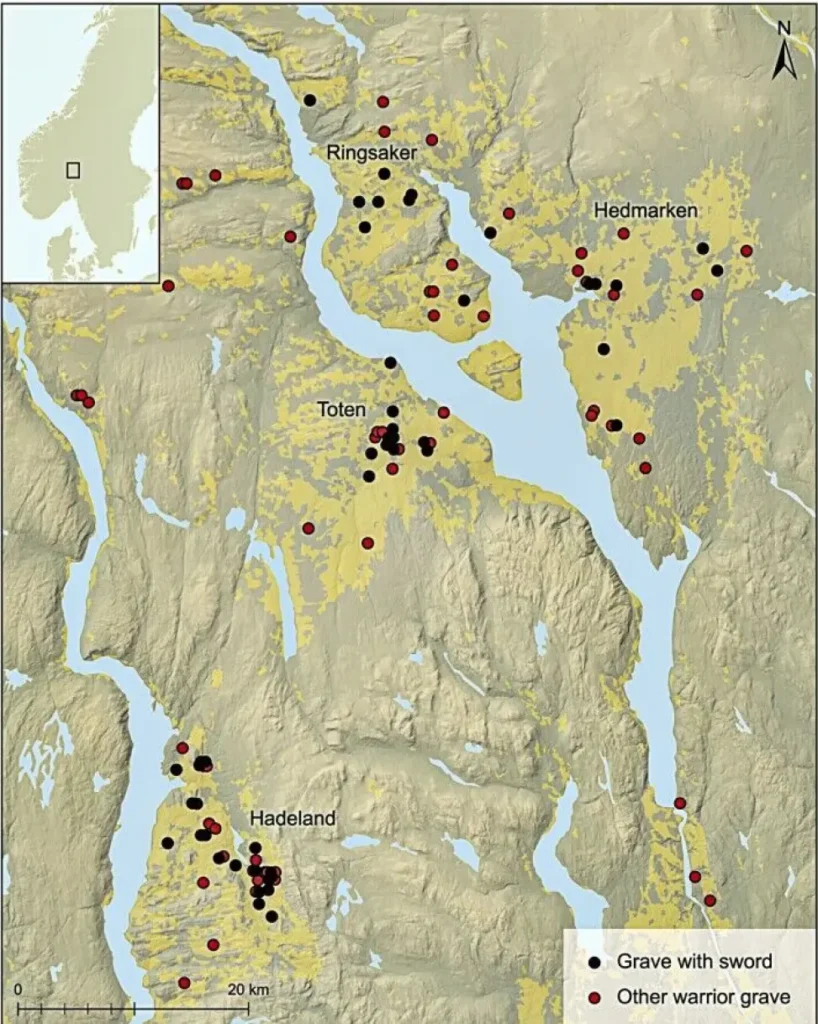
What makes this army particularly intriguing is the growing body of evidence hinting at a Norwegian origin.
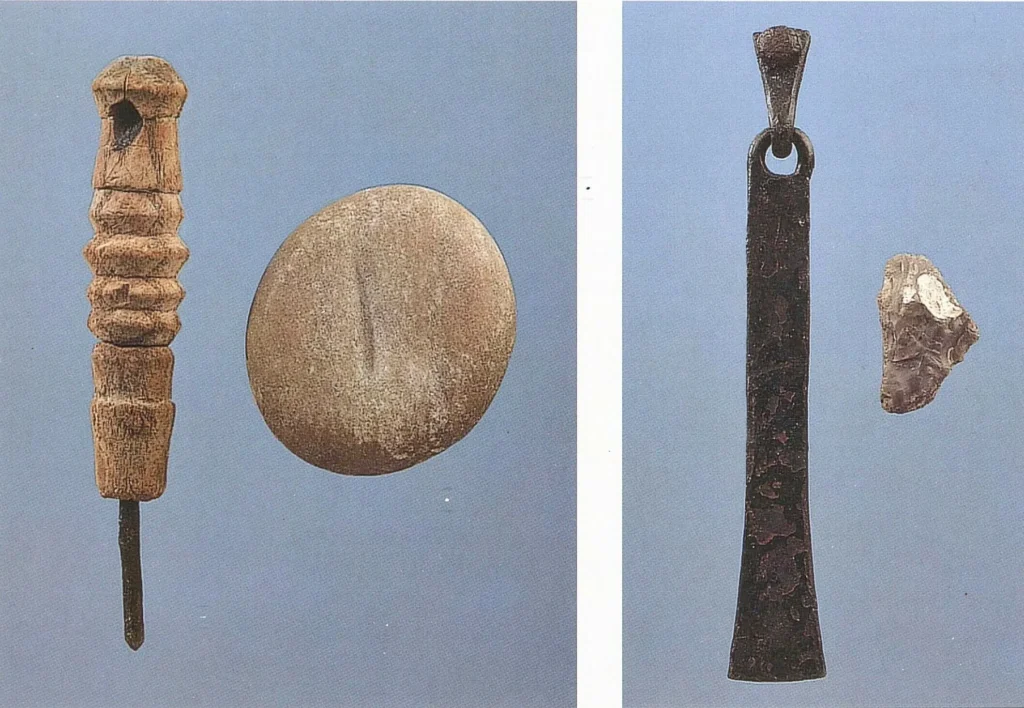
Among the finds are distinctive combs crafted from reindeer and moose antler, as well as fire-starting tools typical of Norway. Even more striking are inscriptions—some of the oldest known runes—etched into weapons. These likely represent personal names, including Lagutewaz, Gaups, Nithijo, and Swarta.
Such details suggest not only identity, but geography.
“These items vary regionally,” Skre explains. “And many of them align closely with what we know from Norway.”
A Journey Toward Rome?
The most provocative aspect of Skre’s interpretation is not where the army came from—but where it was going.
Around the late 2nd century AD, the Roman Empire faced mounting pressure along its northern frontiers, particularly along the Danube and Rhine. To bolster its defenses, Rome increasingly relied on Germanic auxiliaries—foreign mercenaries recruited from beyond imperial borders.
Skre argues that this Scandinavian army may have been part of that system.
“All the swords and coins they carried were Roman,” he notes. “Much suggests they were heading south to serve as mercenaries.”
From eastern Jutland, the Roman frontier lay roughly 650 kilometers away—a journey that could take about a month on foot. But sustaining such a large force required enormous resources. The army would have needed over a ton of grain per day, likely forcing them to seize supplies along the way.
This, in turn, may have triggered conflict with local populations in Jutland—culminating in a catastrophic defeat.
A Turning Point in Scandinavian Society
Skre’s broader argument extends beyond a single battle. He believes that around AD 180, Scandinavian societies—particularly in Norway—underwent a profound transformation.
Archaeological evidence supports this shift. From this period onward, we see:
The emergence of large burial mounds filled with weapons
The construction of imposing wooden halls, possibly inspired by Roman basilicas
A surge in iron production and long-distance trade
These developments suggest increasingly hierarchical and militarized societies.
Returning mercenaries, enriched by Roman pay and experience, may have played a key role in driving these changes. Their influence, Skre argues, echoes forward into later centuries—from the Viking Age to the medieval period—when Scandinavian warriors continued to serve abroad, including in the Byzantine Empire.
Not All Scholars Agree
Despite the compelling narrative, the Norwegian origin theory remains contested.
Archaeologist Andres Minos Dobat of Aarhus University points to strontium isotope analysis conducted on horse remains found at the site. These tests suggest the animals likely came from regions closer to Denmark or southern Sweden—not Norway.
Since these were specialized warhorses, Dobat argues, they were unlikely to have been casually traded or captured.
“If the horses are not Norwegian,” he notes, “that raises serious questions about the origin of the army itself.”
This scientific evidence complicates the picture, highlighting the ongoing debate within the archaeological community.
A Connected Northern Europe
Whether or not the Illerup army came from Norway, one conclusion is becoming increasingly difficult to ignore: Scandinavia was far more connected to the Roman world than once believed.
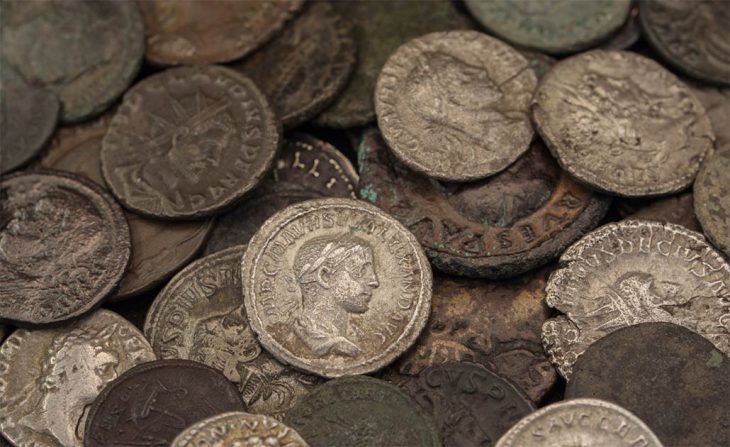
Roman coins—particularly silver denarii from the late 2nd century—have been found in growing numbers across Norway and Denmark. Many correspond closely to the wages of Roman soldiers.
At the same time, hundreds of Roman-style weapons have been unearthed in Scandinavian graves, often buried with individuals equipped like members of a Roman unit.
“In Norway, we actually find more Roman objects than in many other parts of Germania,” Skre observes. “This was not a remote periphery—it was part of a wider network.”
![“NITHIJO TAWIDE” (“Nithijo made [this]”) is carved on a shield handle from Illerup Ådal—considered the oldest known runic sentence. Credit: Preben Delholm / Moesgård Museum](https://arkeonews.net/wp-content/uploads/2026/03/NITHIJO-TAWIDE.webp)
A Catastrophic Defeat, A Lasting Legacy
The battle in Jutland ended in disaster for the defeated army. Their weapons, valuables, and personal belongings were stripped, destroyed, and sacrificed to the gods.
Yet paradoxically, this act of ritual destruction preserved the story.
Today, the Illerup Ådal finds stand as one of the most significant archaeological windows into Iron Age warfare—and into a moment when Scandinavia was already intertwined with the Roman world in ways that continue to surprise researchers.
Whether as mercenaries, traders, or cultural intermediaries, the people of the north were not isolated. They were moving, adapting, and shaping the early foundations of what would later become the Viking world.
And beneath the Danish bog, much of that story—perhaps 60 percent of it—still remains undiscovered.
Cover Image Credit: Some of the objects as they were found in the bog. Jørgen Ilkjær / Moesgård Museum