
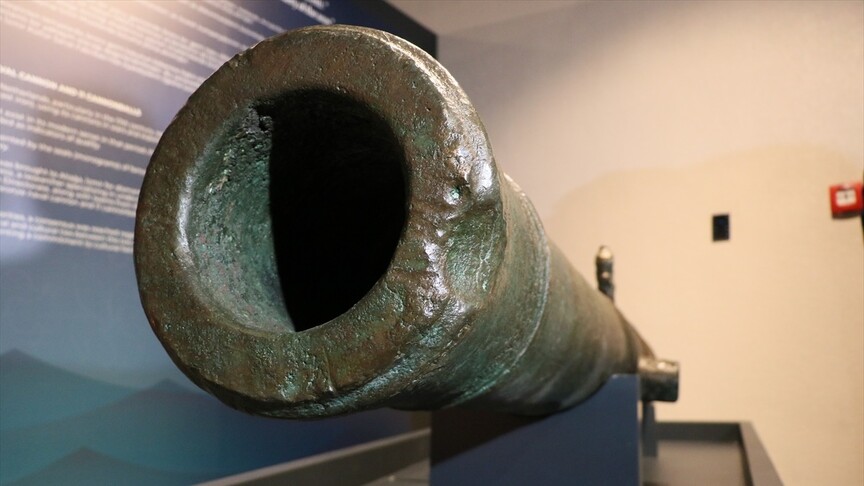
A routine shipbreaking operation in İzmir has led to an extraordinary historical discovery: a 17th-century Dutch bronze ship cannon and 11 cannonballs, hidden for centuries inside a decommissioned vessel. The unexpected find, uncovered in 2025, is now shedding new light on maritime history and international cultural ties.
The discovery was made during the dismantling of a ship brought to İzmir for scrapping. Workers came across the cannon in an unlikely location—the ship’s restaurant section—raising immediate suspicion about its historical value. Authorities were alerted, and experts from the İzmir Museum Directorate quickly intervened to secure the artifacts.
Initial examinations revealed that the cannon was not an ordinary maritime object but a historically significant weapon. Detailed analysis later confirmed that it originated in the Netherlands and dates back to the early 17th century, a time when Dutch naval forces dominated global trade routes and maritime warfare.
The cannon, made of bronze and accompanied by 11 cannonballs, is believed to have been part of a larger naval arsenal. How it ended up hidden inside a modern vessel remains unclear, adding an element of mystery to the discovery. Experts suggest that it may have been transported, repurposed, or even preserved unknowingly over centuries.
Following the identification of its origin, Turkish authorities initiated contact with officials in the Netherlands to determine the next steps. The discussions focused on whether the artifacts should be returned or displayed in Turkey as part of a shared cultural narrative.
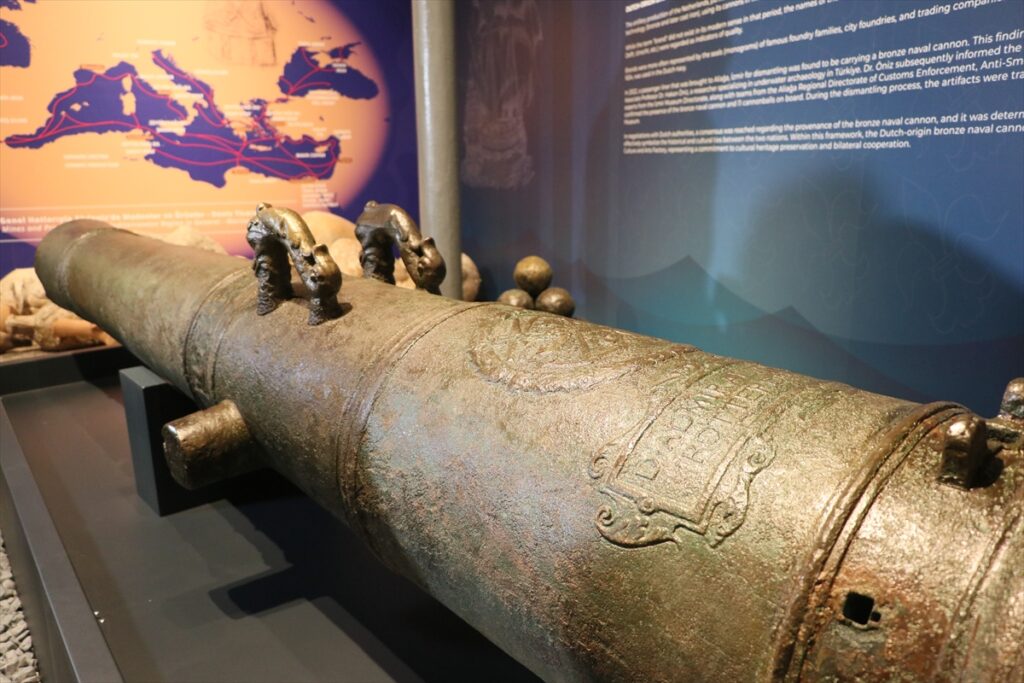
After diplomatic talks, both sides agreed that the cannon and cannonballs would remain in Türkiye and be exhibited in İzmir. Officials highlighted that this decision reflects not only mutual trust but also the longstanding relationship between the two nations.
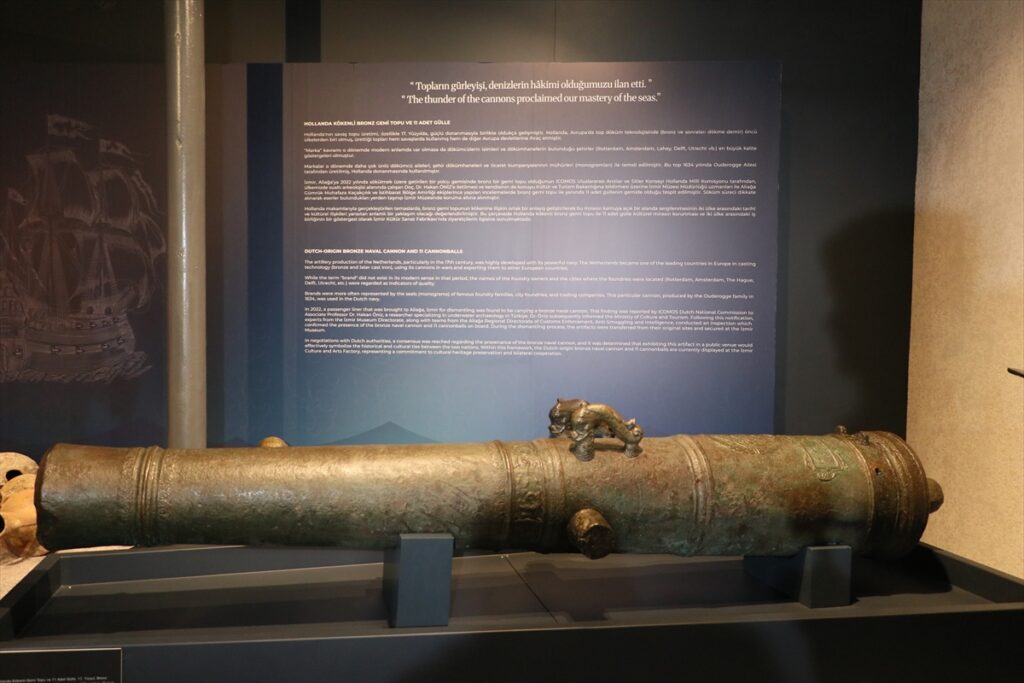
The artifacts were officially unveiled at the İzmir Culture and Arts Factory, in a special exhibition titled “Power from the Sea.” The opening ceremony was attended by key figures, including Türkiye’s Director General of Cultural Heritage and Museums, Birol İnceciköz, and the Netherlands’ Ambassador to Ankara, Joep Wijnands.
Speaking to reporters, İnceciköz emphasized the importance of rapid response in protecting cultural heritage. He noted that museum teams acted immediately upon receiving the report from the shipbreaking site, ensuring the safe recovery of the artifacts.
He also underlined Türkiye’s ongoing efforts to reclaim and preserve cultural assets, stating that international cooperation plays a crucial role in safeguarding historical objects. “We had constructive discussions with our Dutch counterparts,” he said. “Together, we decided that exhibiting the artifact in Turkey would be a meaningful outcome for both countries.”
Ambassador Wijnands expressed confidence in Türkiye’s preservation efforts and described the discovery as a symbol of cooperation. He pointed out that the Netherlands and Türkiye share a 400-year history of diplomatic relations, and this event adds another positive chapter to that legacy.
“This is a remarkable example of cultural solidarity,” Wijnands said. “It is truly fascinating that such a historic object was found in this way, hidden within a ship.”
Now open to the public, the exhibition offers visitors a rare opportunity to witness a genuine artifact from the golden age of naval exploration. The cannon stands not only as a piece of military history but also as a reminder of the complex journeys objects can take across time and borders.
This unexpected discovery in İzmir highlights how even routine industrial activities can uncover invaluable pieces of the past—turning an ordinary day at a shipbreaking yard into a moment of global historical significance.
Cover Image Credit: Mustafa Güngör – AA
