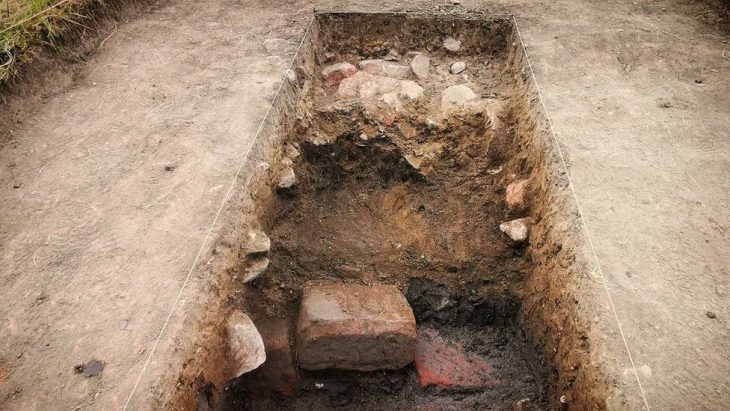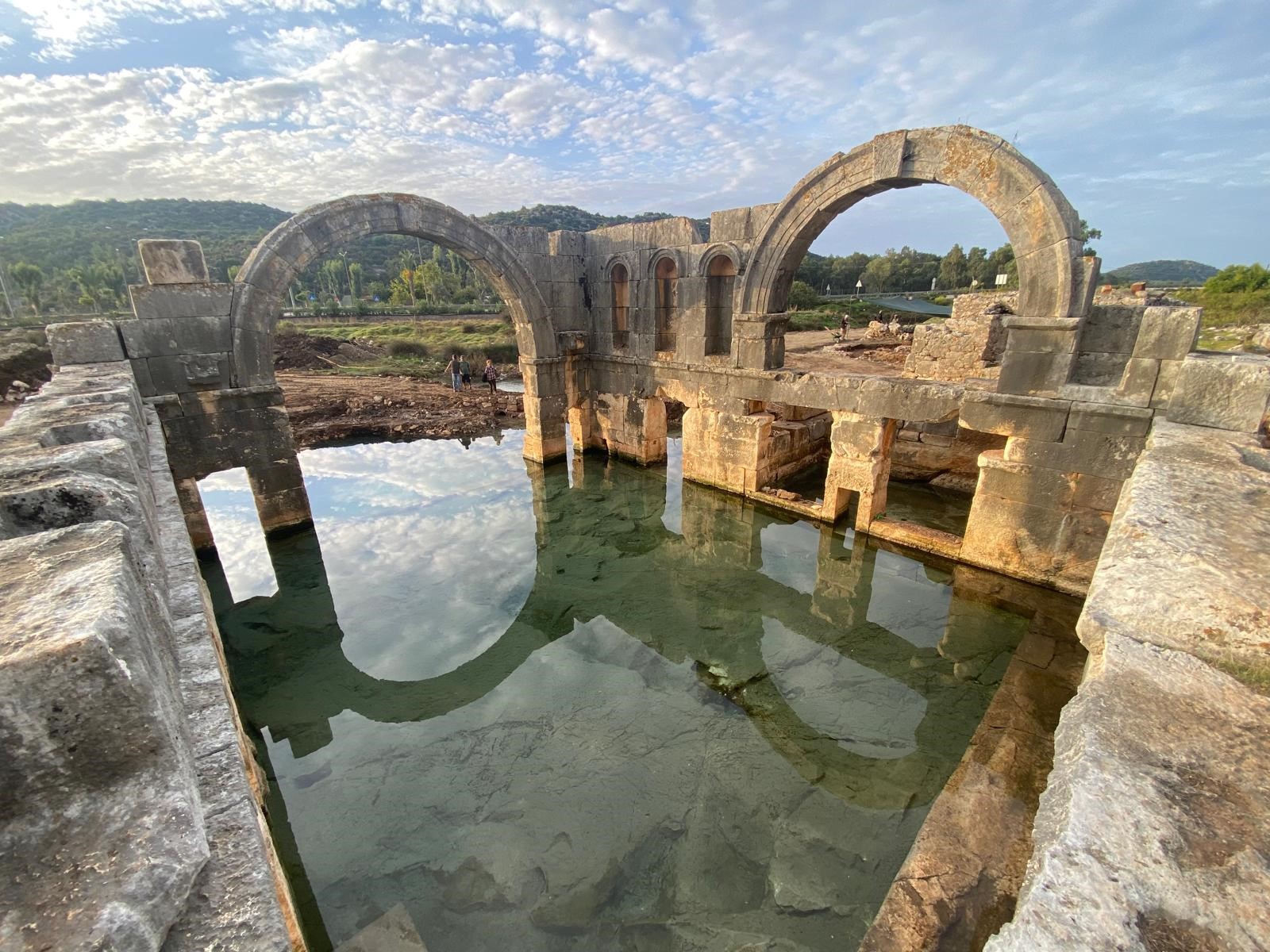
Archaeologists in southern Türkiye have uncovered an extraordinary 1,850-year-old Roman thermal structure in the ancient city of Myra, a discovery experts describe as unparalleled in the region. The rare complex, located in the Demre district of Antalya, is shedding new light on Roman-era healing practices and water-based architecture.
The structure, dating back to the 2nd century AD, was built directly over an active thermal water source rich in minerals such as magnesium, iron, sulfur, and phosphorus. Excavations are being conducted under challenging conditions, as the site is constantly filled with water and mud from the still-active springs beneath it.
A Discovery 15 Years in the Making
According to Prof. Dr. Nevzat Çevik, head of the Myra excavations, the site had been known to scholars for years but remained untouched due to modern industrial buildings surrounding it.
“This structure has been on our radar since we began excavations in 2009,” Çevik said. “However, I made it clear that we would not start digging until the nearby industrial zone was completely removed. I waited 15 years for that moment.”
In 2025, local authorities finally cleared the area, allowing archaeologists to begin excavations as part of Türkiye’s “Heritage for the Future” initiative led by the Ministry of Culture and Tourism.
📣 Our WhatsApp channel is now LIVE! Stay up-to-date with the latest news and updates, just click here to follow us on WhatsApp and never miss a thing!!
Not a Bath, Not a Fountain — A One-of-a-Kind Thermal Complex
For decades, the structure had been identified in academic literature as a nymphaion, a monumental fountain common in Roman cities. However, ongoing excavations revealed that this classification was incorrect.
“When the full plan emerged, we realized this was neither a Roman bath nor a classical nymphaion,” Çevik explained. “It is a completely original type of Roman thermal structure, designed directly around a healing water source. There is nothing like it in this region.”
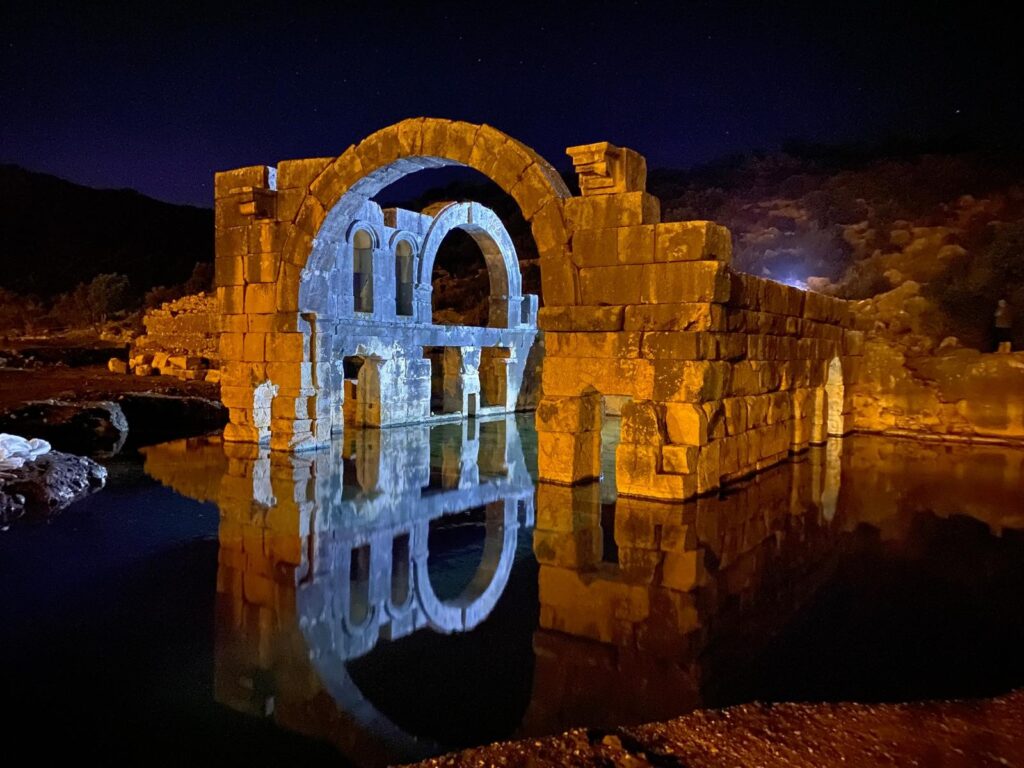
The complex includes cisterns, water channels, arches, and interconnected spaces that functioned together as a holistic healing center rather than a conventional bathing facility.
Excavation Under Water: A Constant Battle with Nature
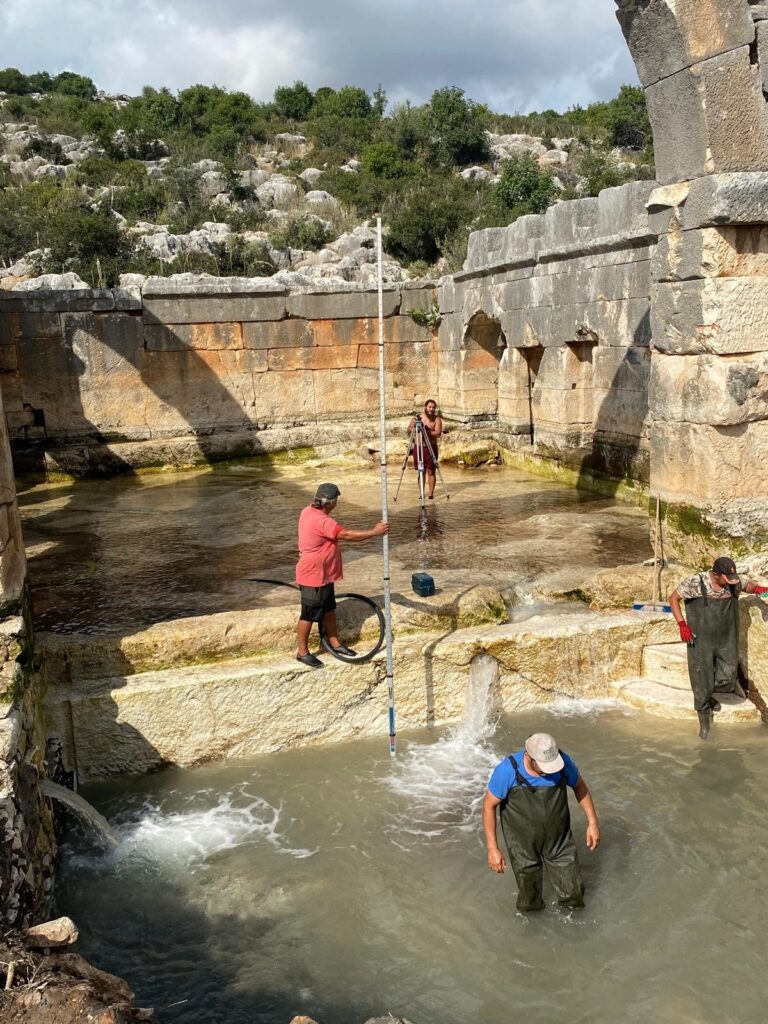
The excavation team faces extreme conditions. As soil layers are removed, thermal water immediately rises from multiple points, flooding the site.
“We pump water out every day, excavate, and by night the area fills up again,” said Çevik. “In the morning, we start over. This cycle has continued throughout the excavation.”
To protect the ancient mudbrick walls and prevent surface water from re-entering the site, a 2.5-meter-high protective barrier wall has been constructed around the structure.
Despite the difficulties, archaeologists have successfully revealed two pools, one large and one small. Evidence shows that both were once lined with marble, some of which remains in situ today.
The Ancient Source of Demre’s Healing Waters
The discovery also confirms the ancient origins of the “Burguç” waters, long used by locals for their perceived healing properties.
“People in Demre still visit the Burguç pools for health benefits,” Çevik said. “This structure is the original source of those waters. The same mineral-rich thermal spring was valued in Roman times, just as it is today.”
The water maintains a constant temperature of 16.5°C year-round, offering relief even during Demre’s scorching summer temperatures, which can exceed 40°C.
Safety First: Public Access Not Yet Allowed
Due to varying water depths and ongoing excavation risks, the site is currently closed to the public and surrounded by fencing.
“This area is dangerous in its current state,” Çevik warned. “Any future public use will depend entirely on careful planning and official approval. Our priority right now is preservation and sustainability.”
Plans include the creation of viewing paths, observation terraces, and protective infrastructure to allow visitors to safely experience the site without damaging it.
Toward a New Archaeological Park in Antalya
Once excavations are completed, the thermal complex is expected to become part of a larger archaeopark, integrated with Myra Ancient City, Andriake Harbor, and the Lycia Civilizations Museum.
The project aims to transform Demre into a major cultural destination, highlighting the region’s rich heritage of water architecture and ancient healing traditions.
Excavations are set to continue into next year, with researchers already identifying additional Roman water-related structures nearby, including a bathhouse. These findings suggest the area once served as a major thermal and hydraulic center in antiquity.
As Prof. Dr. Çevik emphasized, “We are not just uncovering a building—we are rediscovering an ancient tradition of health, water, and architecture that has survived beneath the surface for nearly two millennia.”
Cover Image Credit: İHA