Aberystwyth scholars unite fragments of language to reveal the forgotten linguistic landscape of the Celtic world
For centuries, the ancient Celtic languages of Britain and Ireland have survived only in fragments: a place name carved into stone, a personal name preserved by a Roman historian, a cryptic inscription etched in the Ogham alphabet along a windswept coastline. Now, for the first time, these scattered traces are being brought together in a single scholarly work. Academics at Aberystwyth University in Wales have begun compiling the first complete dictionary of the ancient Celtic languages of Britain and Ireland, a project that promises to reshape how we understand the linguistic and cultural history of these islands.
Reconstructing Languages Lost to Time
The dictionary focuses on the Celtic languages spoken in Britain and Ireland before and during the Roman period, up to around the year 500. These early languages form the foundation of the modern Celtic tongues still spoken today, including Welsh, Irish, Scottish Gaelic, Manx, Breton and Cornish. While these modern languages have evolved in different directions over the centuries, they remain connected by deep linguistic roots that stretch back into prehistory.
Even today, echoes of this shared past can be heard. The Welsh word “môr” and the Old Irish “muir,” both meaning sea, reflect an ancient common element also found in early British place names such as Moridunum, now Carmarthen, and Morikambe, modern Morecambe. Such similarities hint at a once interconnected Celtic-speaking world spanning the Irish Sea, long before political borders divided it.
A Landmark Project at Aberystwyth University
The ambitious project is led by Dr Simon Rodway, Senior Lecturer in the Department of Welsh and Celtic Studies at Aberystwyth University. Funded by a three-year research grant from the Leverhulme Trust, the work brings together expertise in historical linguistics, Celtic studies and early medieval history.
📣 Our WhatsApp channel is now LIVE! Stay up-to-date with the latest news and updates, just click here to follow us on WhatsApp and never miss a thing!!
Dr Rodway describes the project as a milestone for Celtic scholarship. Never before, he explains, have the diverse sources for Britain and Ireland’s ancient Celtic languages been assembled in a way that allows for systematic comparison. By placing early linguistic evidence alongside the much richer medieval and modern records of Celtic languages, the dictionary will make it possible to trace how words, sounds and meanings changed over time.
From Roman Texts to Ogham Stones
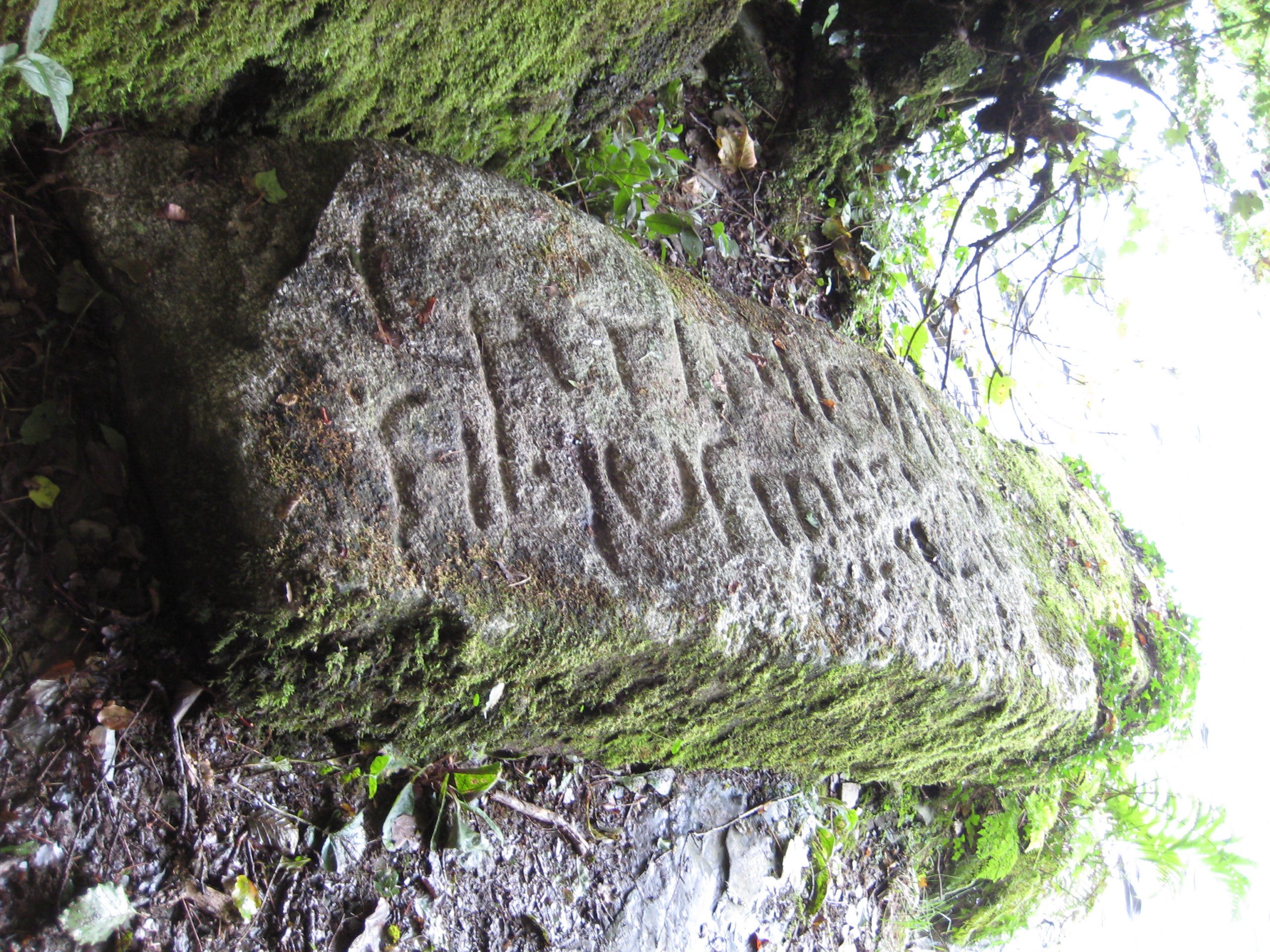
The evidence used in the dictionary is as varied as it is rare. Much of it comes from Greek and Latin texts, where Roman and classical authors recorded Celtic place names and personal names, often preserving sounds that later disappeared from the spoken languages. Additional material comes from a small number of Celtic inscriptions found in Roman Britain, as well as from Ogham inscriptions carved into stone in Ireland and western Britain.
Ogham, an early alphabet consisting of straight lines cut along the edge of stone, represents one of the earliest written forms of Celtic languages. Although brief and often enigmatic, these inscriptions provide invaluable clues about pronunciation, naming practices and regional variation in the early Celtic-speaking world.
Beyond Celtic: A Multilingual Prehistoric Landscape
One of the most intriguing aspects of the project is its exploration of languages that predate or existed alongside Celtic in Britain and Ireland. Archaeological and genetic evidence suggests that non-Celtic languages were spoken on these islands before the arrival of Celtic speech, and possibly continued to coexist with it for centuries.
Direct evidence for these lost languages, however, remains elusive. Dr Rodway notes that theories about them range from cautious academic reconstructions to highly speculative ideas. By collecting and evaluating all available linguistic evidence in one place, the dictionary aims to separate credible hypotheses from unfounded speculation, offering a clearer picture of the islands’ earliest linguistic landscape.
Why Celtic Languages Matter Today
Celtic languages belong to one of the oldest surviving language families in Europe. Their roots lie deep in prehistory, yet they continue to shape cultural identity in regions such as Wales, Ireland, Scotland and Brittany. Understanding their ancient forms is not only a matter of linguistic curiosity but also a key to interpreting historical migration, trade networks and cultural exchange.
Place names alone reveal how early communities understood their environment, marking rivers, hills and coastlines with words that have endured for millennia. Personal names recorded in ancient sources shed light on social structures, beliefs and connections across regions. By decoding these linguistic traces, researchers can better understand how ancient societies interacted long before written histories became common.
A Resource for Scholars Across Disciplines
The impact of the dictionary is expected to extend far beyond linguistics. Historians, archaeologists and archaeo-geneticists will be able to use its findings to support and refine their own research. Linguistic evidence often provides crucial context for archaeological discoveries, helping to identify cultural boundaries or population movements that material remains alone cannot explain.
As Aberystwyth University builds on its long tradition of Celtic scholarship, the project reinforces the institution’s role as a leading center for the study of ancient languages. By giving voice to languages long silent, the dictionary does more than catalogue words. It reconnects modern readers with the complex, multilingual world of Britain and Ireland’s distant past, reminding us that today’s cultural landscapes are shaped by histories far older than they appear.
Cover Image Credit: Aberystwyth University