27 January 2026 The Future is the Product of the Past

Rare Sealed Medieval Reliquary Cross Discovered at Lystra Ancient City in Central Türkiye

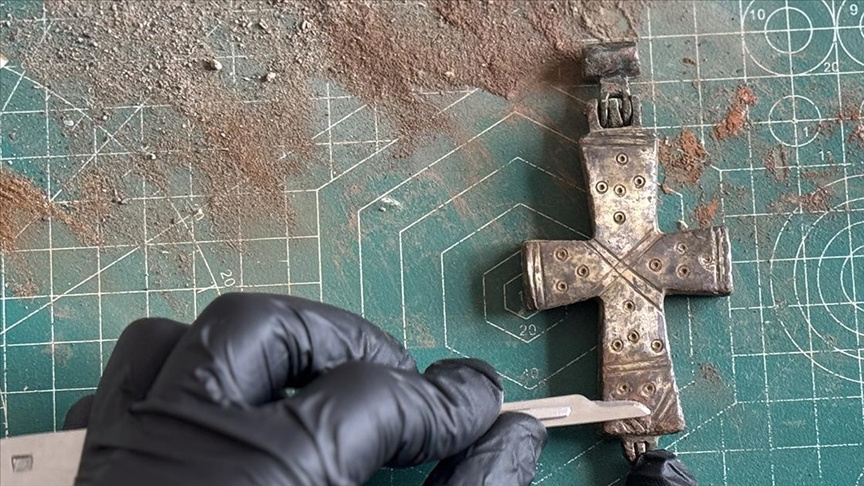
Archaeologists excavating the ancient city of Lystra in central Türkiye have restored a rare medieval bronze reliquary cross discovered intact and permanently sealed, offering valuable insight into early Christian devotional practices in Anatolia. The cross, dated to between the 9th and 11th centuries, was uncovered in a church-associated burial area and is considered exceptional due to its preserved condition.

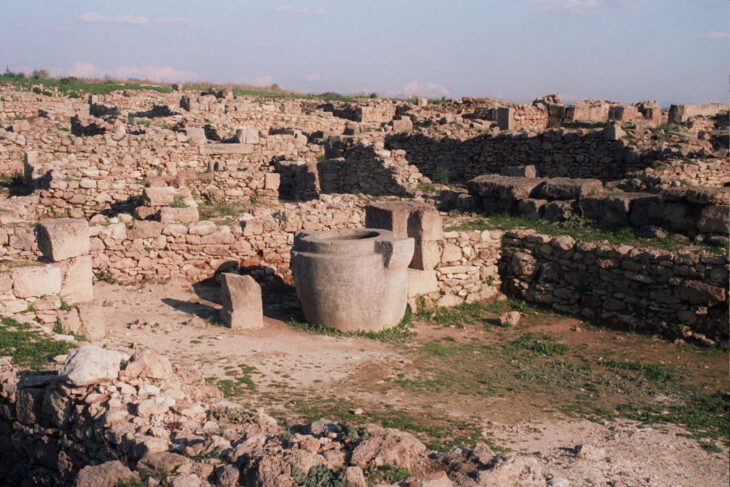
The discovery was made at Lystra, located in the Meram district of Konya province, a site historically associated with the missionary journeys of Saint Paul. According to Christian tradition, St. Paul visited Lystra during his first journey in the 1st century CE, making the city an important early center for the spread of Christianity in Asia Minor.

The bronze cross consists of two fitted plates joined by a riveting technique, forming a permanently sealed reliquary. Unlike most known examples, which are often found broken or deliberately opened, this cross was discovered exactly as it was manufactured centuries ago. Archaeologists involved in the excavation say this makes the artifact particularly valuable for understanding medieval religious craftsmanship.

Excavation director İlker Mete Mimiroğlu of Necmettin Erbakan University stated that while multiple reliquary crosses have been recovered at Lystra, nearly all were damaged. “This example stood out because it was found completely sealed,” he noted, adding that the cross was carefully cleaned and stabilized rather than opened, to prevent irreversible damage.

Reliquary crosses were widely used in the Byzantine world and medieval Christian communities. Typically worn on the chest or placed in graves, they were designed to contain sacred items such as fragments of saints’ bones, pieces of cloth believed to have touched holy figures, or small portions of the True Cross. These objects were thought to provide spiritual protection, healing, and divine favor to the wearer or the deceased.


📣 Our WhatsApp channel is now LIVE! Stay up-to-date with the latest news and updates, just click here to follow us on WhatsApp and never miss a thing!!


In many cases, reliquary crosses were intentionally sealed during production and never meant to be reopened. The sealing itself symbolized the sanctity of the contents and the permanence of faith. Scholars believe that permanently sealed reliquaries like the Lystra example were often created for burial contexts, reinforcing beliefs about protection in the afterlife.
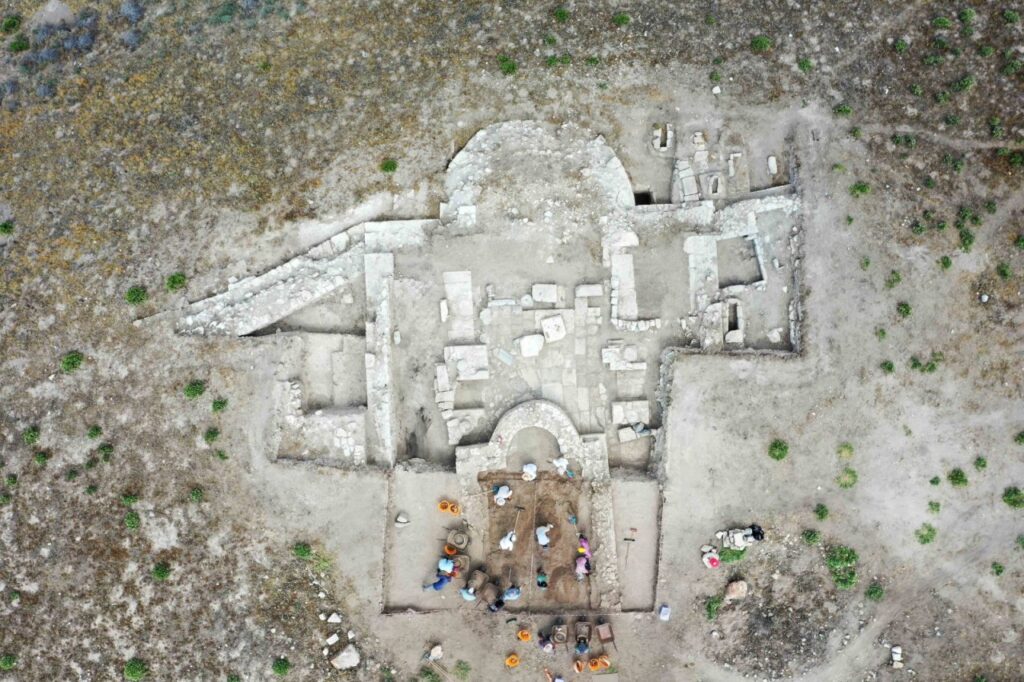
Founded as a Roman colony during the reign of Emperor Augustus, Lystra became one of the most prominent cities of the Lycaonia region. It gained everlasting fame when St. Paul and his companion Barnabas arrived here in the first century CE during their missionary journeys. Credit: İHA

Although a small gap in the cross allowed archaeologists to visually inspect its interior, no clearly identifiable relic was observed. A piece of fabric resembling a burial shroud was visible near the opening, suggesting the cross may once have held a sacred object wrapped in cloth, a common practice in medieval Christian ritual.

The cross is decorated with simple geometric motifs, consistent with regional Byzantine metalwork of the Middle Ages. Its modest design suggests it may have belonged to a cleric or a devout member of the local Christian community rather than an elite figure.

Lystra itself holds deep historical and religious significance. Founded as a Roman colony, the city flourished during the early imperial period and later became part of the Byzantine world. In Christian tradition, Lystra is remembered as the place where St. Paul healed a crippled man and was subsequently stoned by hostile crowds, surviving and continuing his mission. The city later became a bishopric, underscoring its long-standing religious role.

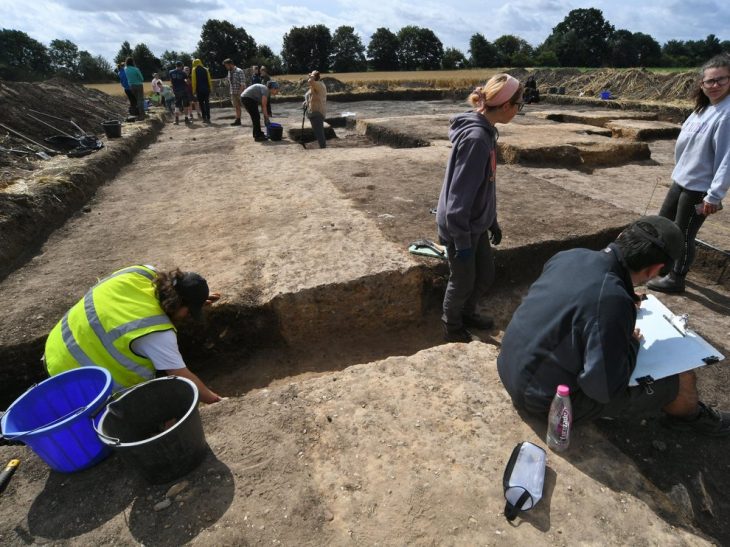
Archaeological excavations at Lystra have revealed churches, burials, inscriptions, and everyday objects that document the city’s transformation from a Roman settlement into a Christian center. The presence of multiple reliquary crosses at the site highlights the strength of Christian belief in the region during the medieval period.

Excavations at Lystra are being conducted under the supervision of Necmettin Erbakan University with the support of Türkiye’s Ministry of Culture and Tourism and local authorities. Researchers hope that continued work will further illuminate how faith, craftsmanship, and daily life intersected in central Anatolia during the Byzantine era.

The sealed reliquary cross now stands as a rare and powerful symbol of medieval Christian devotion—one that has survived untouched for nearly a thousand years beneath the soil of Lystra.

Cover Image Credit: AA

Related Articles

Roman soldier’s 1,900-year-old payslip uncovered in Masada

16 February 2023

16 February 2023

During excavations at Masada, archaeologists from the Israel Antiquities (IAA) uncovered a papyrus payslip dated to 72 BC belonging to...

New discoveries announced at Sanxingdui Ruins

20 March 2021

20 March 2021

Chinese archaeologists announced on Saturday that some new major discoveries have been made at the legendary Sanxingdui site in southwestern...

Thousand-Year-Old Christian Viking-era Graves Found in Sweden

28 June 2021

28 June 2021

Seven Christian tombs dating to the Viking Age have been found at Sigtuna. According to archaeologists, the tombs date to...

Croatian Team Finds a Way to Effectively and Permanently Preserve Stuka Aircraft Wreck Under the Sea

11 December 2024

11 December 2024

 The ICUA Zadar team of conservators and archaeologists carried out in situ underwater conservation of the wreckage of the Junkers...

The 2000-year-old origin mystery of the Etruscans solved

25 September 2021

25 September 2021

A genetic analysis of DNA taken from ancient skeletons appears to have answered a conundrum that has captivated researchers for...

8,500-year-old marble statuette found in Çatalhöyük

28 December 2021

28 December 2021

In the 29th season of the excavations in Çatalhöyük, one of the first urbanization models in Anatolia, in the Çumra...

Lost 4,000-Year-Old Bronze Age Settlement Uncovered at Khaybar Oasis in Northern Saudi Arabia

31 October 2024

31 October 2024

A team of archaeologists led by Guillaume Charloux of France’s National Center for Scientific Research (CNRS) announced Wednesday the discovery...

Fossil found at the edge of the Tibetan Plateau reveals an owl active during the day 6 million years ago

29 March 2022

29 March 2022

The incredibly well-preserved fossil skeleton of an extinct owl that lived was discovered on the edge of the Tibetan Plateau,...

From Arnhem to Oldenburg: Nazi-Looted Artifacts Found in Oldenburg Museum Colection

30 August 2025

30 August 2025

A remarkable discovery at the Landesmuseum Natur und Mensch in Oldenburg has shed new light on the dark history of...

2-Meter-Long Stone Block Found at 12,000-Year-Old Boncuklu Tarla Site in Southeastern Türkiye

18 December 2024

18 December 2024

A remarkable 2-meter by 20-centimeter processed stone block was discovered during the archaeological excavations at Boncuklu Tarla (Beaded Field), which...

Sicilian Seas Yield Rare Roman Helmet from 241 BC Naval Clash

5 September 2025

5 September 2025

In a remarkable underwater archaeological recovery that highlights Sicily’s rich cultural heritage, a bronze Montefortino‐type helmet was retrieved from the...

When Stones Speak of Faith: The Most Significant Religious Archaeological Discoveries of the Last Decade

13 July 2025

13 July 2025

In a world where ancient faith still echoes beneath our feet, the most significant religious archaeological discoveries of the last...

Human history in one click: Database with 2,400 prehistoric sites

10 August 2023

10 August 2023

The role of culture in human spread: Digital data collection contains 150 years of research. Human history in one click:...

A 1,500-Year-Old Roman Settlement Discovered in Bulgaria

21 March 2025

21 March 2025

In a remarkable turn of events, a team of archaeologists conducting preliminary excavations ahead of a transit gas pipeline project...

In Lviv, Ukraine, a secret room where Jews were hiding in city sewers during the Nazi Holocaust has been unearthed

7 November 2021

7 November 2021

In the western Ukrainian city of Lviv, diggers have uncovered new hiding spots in underground sewers where some Jews managed...

Comments
Leave a Reply

Your email address will not be published. Required fields are marked *