
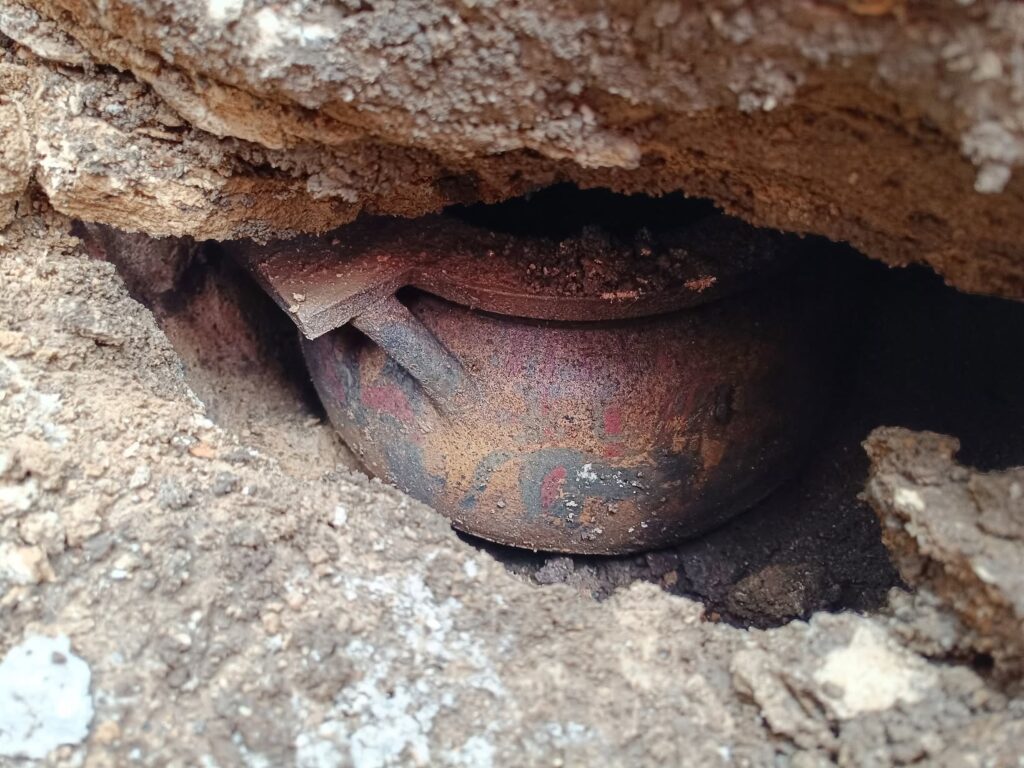
A rare funerary structure dating to the early 6th century BCE has been uncovered at Pontecagnano Faiano in southern Italy, where archaeologists discovered a Corinthian krater used as an urn for the cremated remains of a high-status individual.
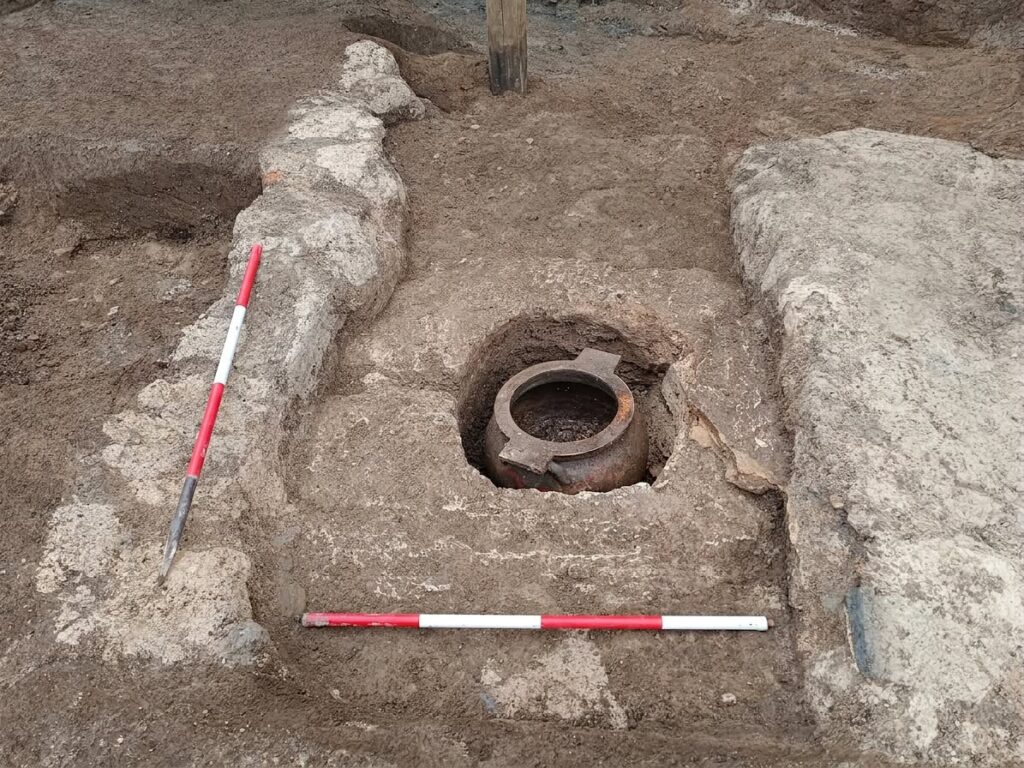
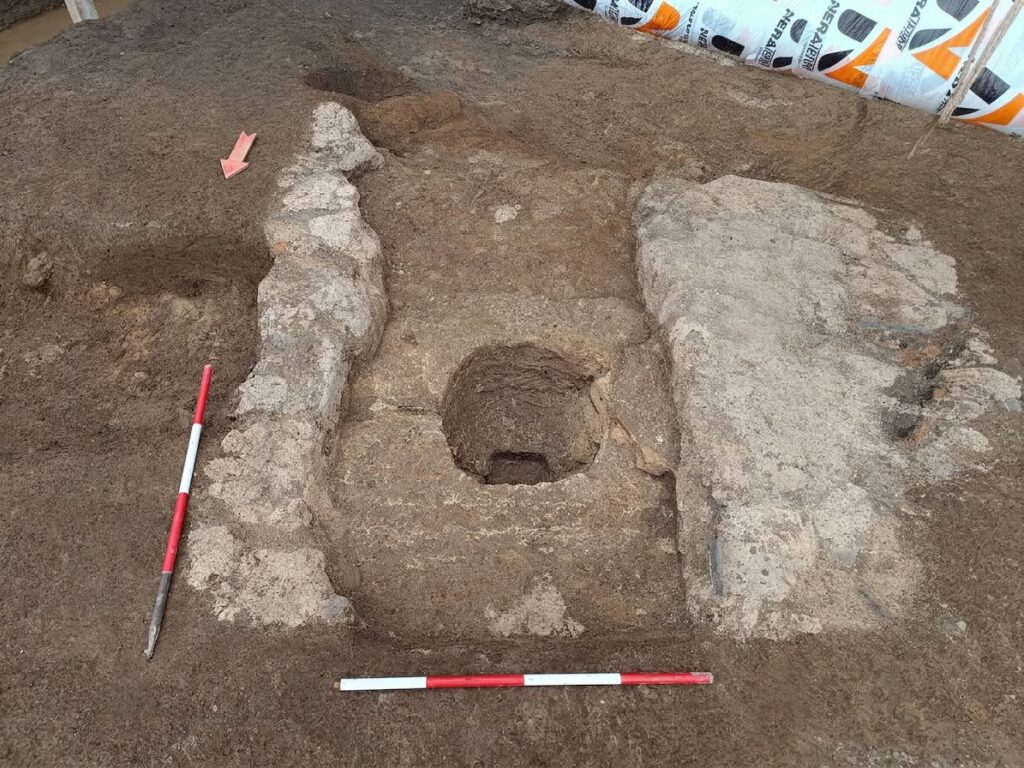
The burial, known as Tomb 10188, is particularly unusual because the imported Greek vessel was placed inside a cube-shaped structure built from travertine blocks and sealed with a stone slab. Only two other burials of this type were previously known from Pontecagnano, making the new discovery an exceptional addition to the archaeology of the ancient Etruscan center.
The tomb was found during preventive archaeological investigations carried out ahead of the construction of a private building complex in the modern town of Pontecagnano Faiano, in the province of Salerno. The excavations revealed another section of the western necropolis, including four graves dating to the first half of the 6th century BCE.
A Corinthian krater became a funerary urn
At the center of the discovery is a figured krater manufactured in Corinth, one of the major pottery-producing centers of the ancient Greek world. Rather than serving its original function as a vessel associated with the mixing and serving of wine, the krater was reused to contain the cremated bones of the deceased.
Its placement was equally distinctive. Archaeologists found the vessel protected inside a carefully constructed quadrangular enclosure of travertine blocks, closed at the top by a covering slab.
This form of burial, commonly described as a “cube tomb,” is well documented in northern Campania but is extremely rare at Pontecagnano. Before the latest excavation, only two examples—Tomb 1840 and Tomb 9954—were known from the site. Both are now displayed at the National Archaeological Museum “Gli Etruschi di frontiera” in Pontecagnano.
A burial designed to display status
According to the Soprintendenza Archeologia, Belle Arti e Paesaggio di Salerno e Avellino, several elements suggest that Tomb 10188 belonged to a prominent member of the local community.
The elaborate stone structure, cremation ritual, and use of a large imported krater all point toward a burial intended to communicate social position. The vessel itself carried particular meaning. In the ancient Mediterranean world, kraters were central to the symposium, the communal drinking ritual closely associated with elite social identity and status.
Its figured decoration and Corinthian origin add another layer to the burial. The krater had reached Pontecagnano through Mediterranean exchange networks linking the Etruscan communities of Campania with the Greek world.
Pontecagnano and the Mediterranean world
Pontecagnano was one of the most important Etruscan settlements in Campania, and its extensive cemeteries have provided archaeologists with evidence of the community’s wealth, funerary customs and long-distance connections.
Imported ceramics and other luxury objects found in the necropolis show that local elites participated in cultural and commercial networks extending across the Mediterranean. Tomb 10188 offers an unusually clear example of how foreign objects could acquire new meanings when incorporated into local burial traditions.
The Corinthian krater was not simply deposited as a prestigious grave good. It became the container for the deceased themselves, transforming an object associated with elite drinking culture into the central element of the funerary ritual.
One of only three known examples at the site
Parts of the newly excavated cemetery had been damaged by a modern drainage system, but the survival of Tomb 10188 has provided archaeologists with one of the rarest burial types known from Pontecagnano.
The finds have now been transferred to the National Archaeological Museum “Gli Etruschi di frontiera,” where they are undergoing preliminary study and conservation. According to the archaeological authorities, the newly discovered material is expected to be presented to the public in the near future.
Soprintendenza Archeologia Belle Arti e Paesaggio di Salerno e Avellino
