A small bronze fragment discovered in northeastern Germany could represent the oldest known handheld firearm in the country, potentially reshaping historians’ understanding of early gunpowder weapons in medieval Europe.
Archaeologists say the artifact, known as the “Kletzke Handrohr,” may date back to around 1390, which would make it older than the currently recognized earliest handgun in Europe. The discovery has sparked excitement among historians and archaeologists studying the early adoption of firearms.
Discovery Presented to Experts
The find was officially presented on February 27 by district archaeologist Torsten Geue during the annual conference of Brandenburg’s state archaeology authorities in Brandenburg an der Havel.
Local officials in the district of Prignitz described the object as a discovery that could “rewrite the history of medieval weapon use in Brandenburg.”
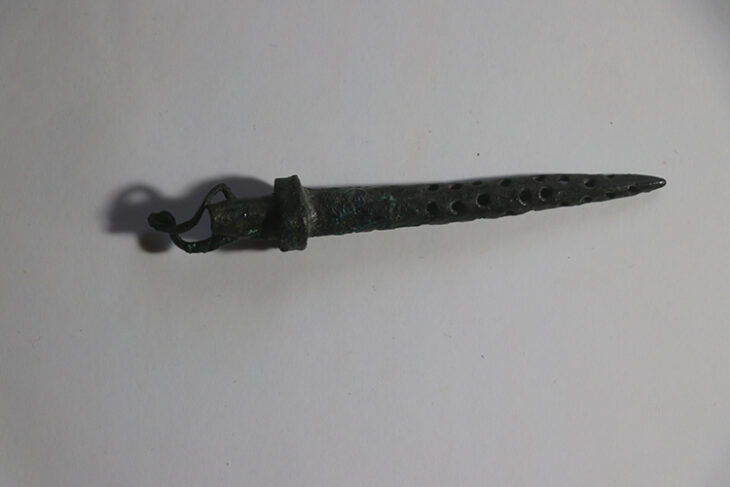
The artifact itself is a roughly six-centimeter-long bronze fragment, decorated and believed to be part of a very early handheld firearm. It was discovered in 2023 by volunteer heritage protector Matthias Dasse during a systematic field survey organized by the local monument protection authority.
📣 Our WhatsApp channel is now LIVE! Stay up-to-date with the latest news and updates, just click here to follow us on WhatsApp and never miss a thing!!
After initial examinations, heritage authority head Gordon Thalmann identified the bronze casting as the front section of an early hand cannon, one of the earliest types of portable gunpowder weapons.
Potentially Older Than Europe’s Oldest Known Handgun
What makes the discovery particularly significant is its possible age.
Currently, the earliest securely dated handgun in Europe is the Tannenbergbüchse, which dates to 1399 and is preserved in the Germanisches Nationalmuseum in Nuremberg.
However, researchers believe the Kletzke fragment likely dates to around 1390, potentially making it the earliest archaeological evidence of portable gunpowder weapons in Germany.
If the dating is confirmed, it would push back the timeline for the use of hand-held firearms in the region by nearly a decade.
Link to a Medieval Siege
Historians believe the weapon fragment may be connected to the siege of Kletzke Castle in 1390, a military conflict recorded in medieval chronicles.
At the time, forces led by the dukes Henry I of Brunswick-Lüneburg and Eric IV of Saxe-Lauenburg launched a campaign against the influential Quitzow family. The family had received the Kletzke estate in 1375 from Charles IV, Holy Roman Emperor.
Historical accounts of the siege come from the Franciscan chronicler Detmar of Lübeck, whose writings describe the late-14th-century conflict.
Modern researchers revisited these records in 2023, with historian Clemens Bergstedt and archaeologist Gordon Thalmann analyzing the medieval texts alongside new archaeological evidence.
Archaeological Evidence of Conflict
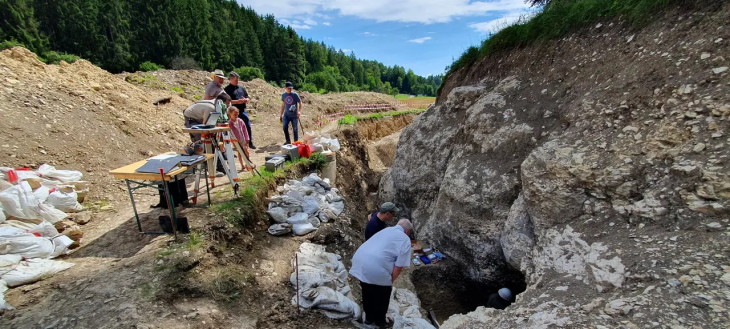
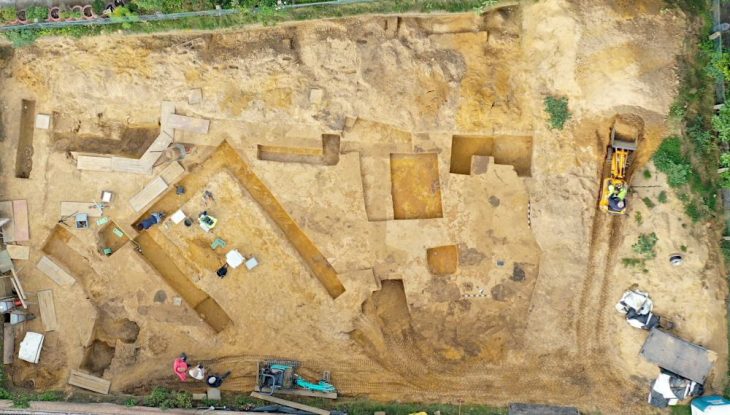
Further excavations conducted in 2024 and 2025 have strengthened the theory that significant military clashes took place in the area.
Archaeological teams from the Young Archaeologists Prignitz group and the HTW Berlin—led by archaeologist Thomas Schenk—have uncovered numerous artifacts and structural remains consistent with battlefield activity.
These discoveries support historical accounts of a siege and provide additional context for the firearm fragment.
Experts Call the Find “Spectacular”
According to medieval archaeologist Christof Krauskopf from the Brandenburg State Office for Monument Preservation and Archaeological State Museum, the discovery could be groundbreaking.
“If this handgun is indeed connected to the 1390 siege, it would be spectacular for Brandenburg,” Krauskopf said. “From this period we previously had no written or archaeological evidence for the use of firearms here—only general assumptions.”
However, he noted that the weapon was likely not manufactured locally. If it originated from the siege camp, it may have been brought to the region by outside forces.
Further Research Planned
Archaeologists plan to continue excavations in Kletzke under the supervision of the Brandenburg heritage authority.
Researchers also hope to develop the site as an archaeological and tourism destination, allowing visitors to explore an important chapter of Brandenburg’s medieval history.
If future analysis confirms the artifact’s age and origin, the Kletzke Handrohr could become one of the most significant early firearm discoveries in Europe, offering new insights into how gunpowder weapons spread across the continent in the late Middle Ages.
Cover Image Credit: Landkreis Prignitz