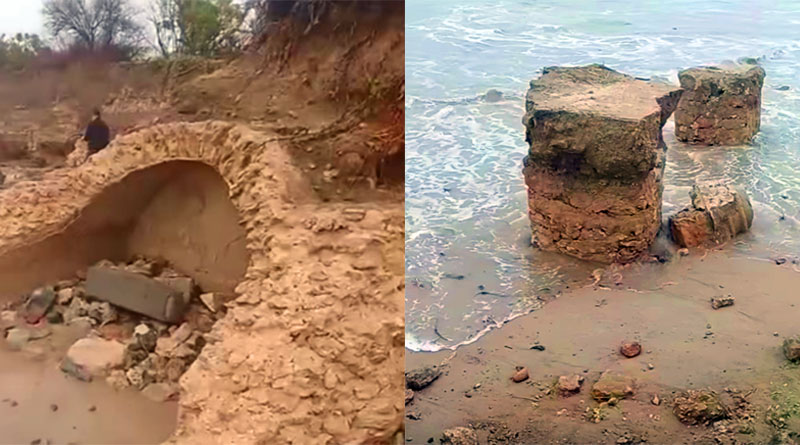
A violent storm surge in Nabeul, Tunisia, exposed ancient stone ruins along the coast, sparking speculation that the lost Punic-Roman city of Neapolis may be resurfacing.
The violent passage of Storm Harry across Tunisia between Monday night and Tuesday, January 20, 2026, left behind scenes of destruction, flooding, and coastal damage. Yet amid the chaos, the storm delivered an extraordinary and unexpected revelation: what may be long-lost remnants of the ancient city of Neapolis, suddenly exposed along the beaches of Nabeul.
Storm Harry, marked by unusually powerful winds and intense atmospheric pressure, triggered a dramatic rise in sea levels along the Cap Bon peninsula. This phenomenon, known as a storm surge, pushed seawater several meters inland, flooding roads, damaging homes, and accelerating coastal erosion. When the waters finally receded, large sections of beach had been stripped of sand, revealing what appeared to be worked stone structures beneath.
In the Sidi Mahrsi area of Nabeul, residents began noticing columns, carved stone blocks, and fragments of walls protruding from the exposed shoreline. Videos and photographs rapidly circulated on social media, sparking amazement and debate. To many observers, the remains bore a striking resemblance to ancient architectural elements rather than modern debris.
Speculation quickly turned toward Neapolis, the ancient city that once stood in the region. Founded as a Punic settlement and later flourishing under Roman rule, Neapolis was an important coastal city renowned for its production of garum, the fermented fish sauce prized across the Roman Empire. Archaeological research over the past decades has shown that Neapolis was a prosperous urban center, complete with streets, baths, and industrial facilities, before part of the city disappeared beneath the sea.
📣 Our WhatsApp channel is now LIVE! Stay up-to-date with the latest news and updates, just click here to follow us on WhatsApp and never miss a thing!!
Historians believe Neapolis suffered catastrophic damage in the 4th century AD, when a massive earthquake in the eastern Mediterranean triggered a tsunami that struck the North African coast. Ancient texts describe widespread devastation across the region, and underwater surveys conducted in recent years have confirmed the existence of submerged ruins off the coast of Nabeul. These discoveries included streets, walls, and vats used for fish processing, preserved under layers of sediment.
What makes the aftermath of Storm Harry remarkable is the possibility that sections of this lost city may now be visible on land, rather than underwater. While erosion regularly reshapes coastlines, it is rare for storms to uncover archaeological remains so clearly that they can be observed by the public without excavation.
Experts urge caution. As of now, there has been no official confirmation that the newly exposed structures belong to Neapolis. Specialists from Tunisia’s National Heritage Institute are expected to conduct on-site assessments to document the remains, determine their age, and evaluate their historical significance. It is also possible that the structures belong to later periods of coastal occupation, reused materials, or defensive installations linked to the long maritime history of the region.
Regardless of the outcome, the event highlights the fragile relationship between climate, heritage, and coastal landscapes. Rising sea levels, stronger storms, and accelerated erosion are increasingly reshaping Mediterranean shorelines, sometimes destroying archaeological sites—but occasionally revealing them. Storm Harry stands as a powerful reminder that much of human history remains hidden just beneath the surface, vulnerable to both natural forces and neglect.
For the residents of Nabeul, the storm has offered a rare and humbling encounter with their city’s deep past. Between climate drama and archaeological intrigue, the sands of Cap Bon have briefly opened a window into antiquity—one that now demands careful study and preservation before it disappears once more beneath the waves.
Cover Image Credit: Screenshots from the shared videos