High above the forests of Germany’s Sauerland region, a dramatic cluster of volcanic rock formations has long stirred curiosity among hikers, historians, and archaeologists alike. Now, a remarkable discovery on one of these towering cliffs suggests that the site may once have been a sacred place where Iron Age communities carried out mysterious rituals more than 2,000 years ago.
Archaeologists from the LWL Archaeology for Westphalia have uncovered compelling new evidence that the imposing rock formation known as Bruchhauser Steine played a significant spiritual role during the Iron Age. The findings, resulting from excavations conducted in 2025, shed fresh light on how ancient communities interacted with dramatic landscapes they may have considered gateways to the divine.
A Landmark in the Landscape
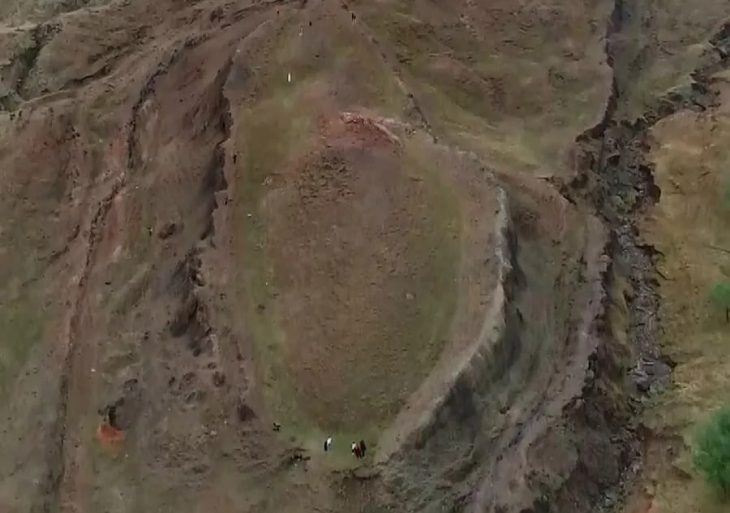
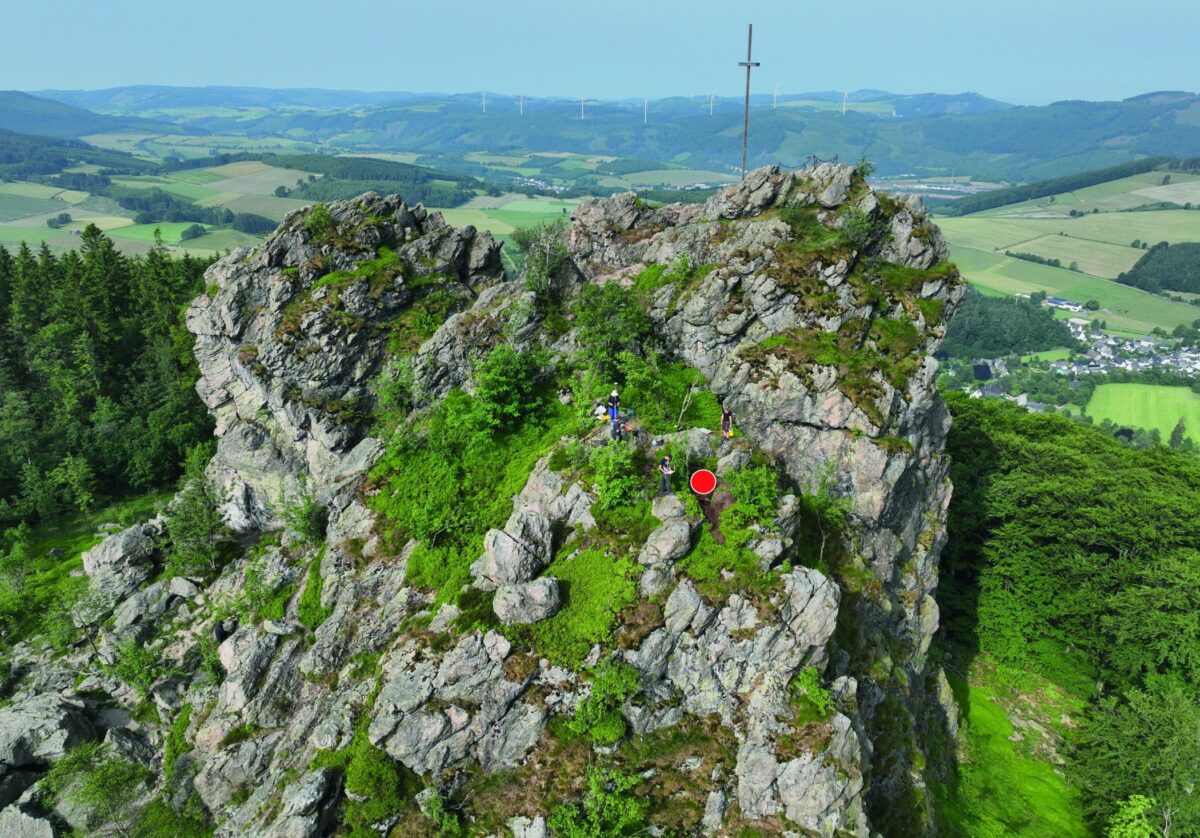
Located near the town of Olsberg in the Sauerland region of western Germany, the Bruchhauser Steine consists of four massive volcanic porphyry rocks rising up to nearly 100 meters above the surrounding hills. Today the site is known as a hiking destination and geological curiosity, but it is also recognized as an important archaeological monument.
During the Iron Age, roughly between the 5th and 3rd centuries BCE, the striking rock formation was encircled by fortifications forming what archaeologists call a “hillfort.” For decades, however, researchers struggled to understand why ancient people invested so much effort into securing such an exposed and weather-beaten location.
“There are no signs that people lived here permanently,” explained archaeologist Manuel Zeiler, who led the recent investigation. The summit’s harsh conditions, strong winds and distance from known settlement areas along the ancient Hellweg trade route made it an unlikely place for habitation.
📣 Our WhatsApp channel is now LIVE! Stay up-to-date with the latest news and updates, just click here to follow us on WhatsApp and never miss a thing!!
The fortifications therefore remained an archaeological puzzle—until now.
Credit: LWL Archaeology for Westphalia / T. Poggel
Two Axes on a Cliff
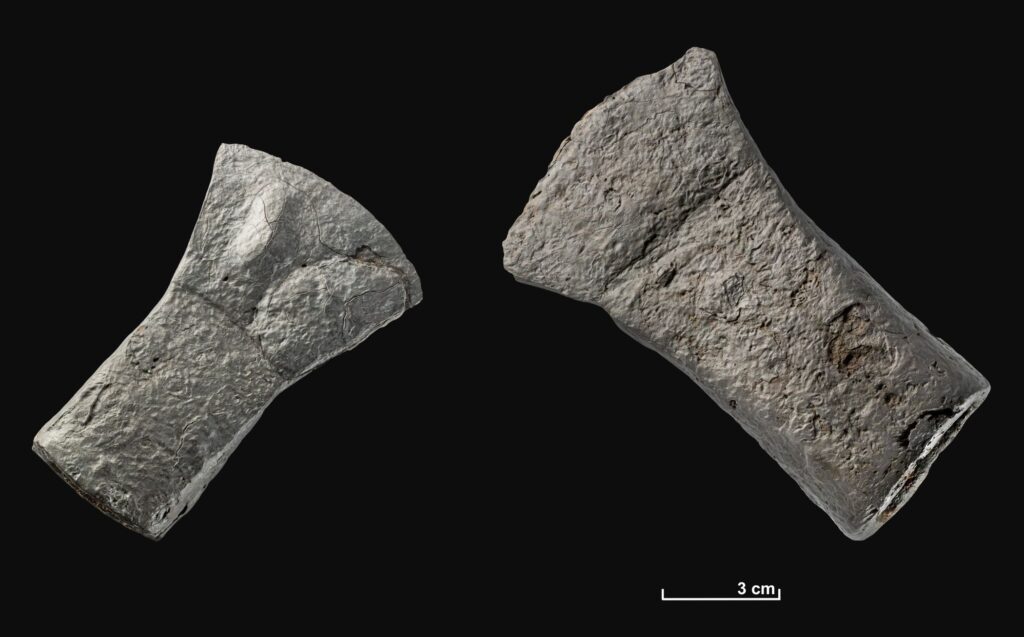
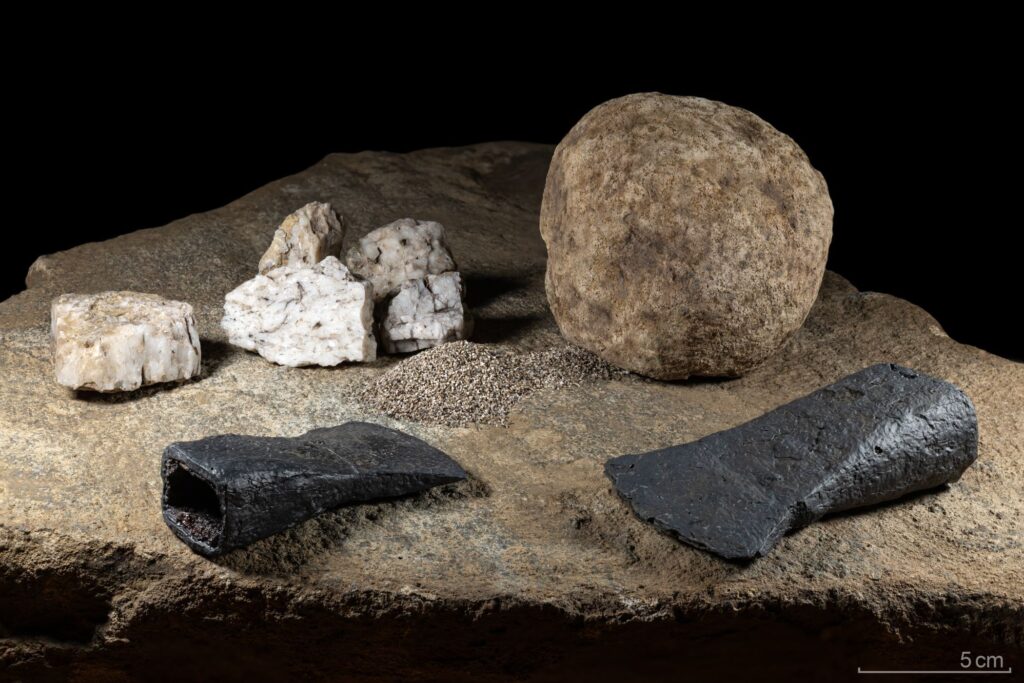
The breakthrough came when local researcher Matthias Dickhaus, working with an official metal detector permit, discovered two heavily corroded iron axe heads just beneath the soil on a rocky ledge of the Feldstein, one of the four main rock pillars.
What immediately caught his attention was their unusual arrangement. The blades had been deliberately positioned at a right angle to each other, an alignment that appeared far too precise to be accidental.
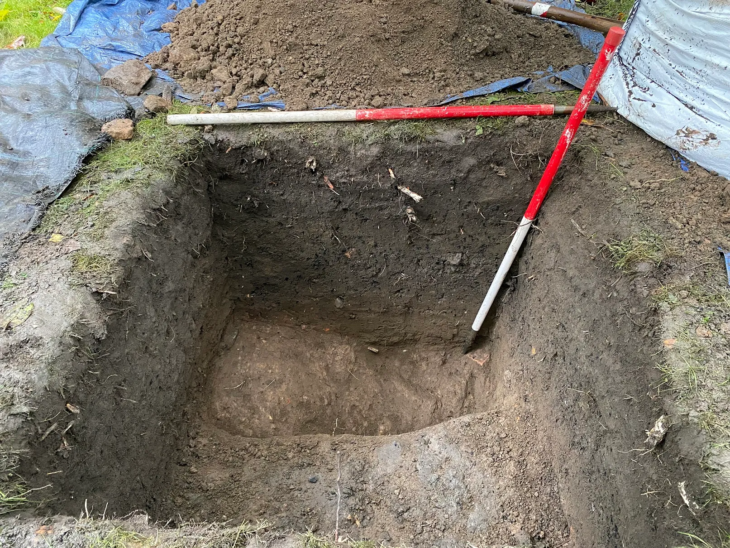
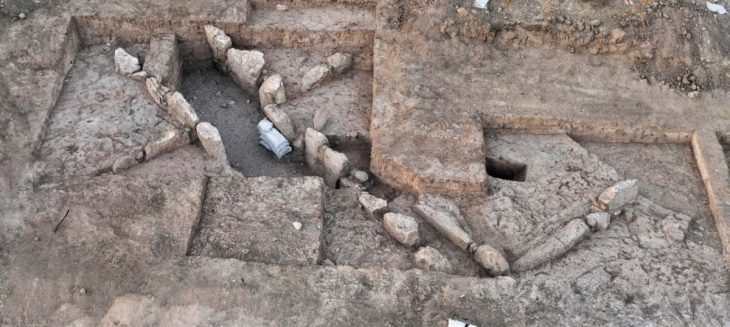
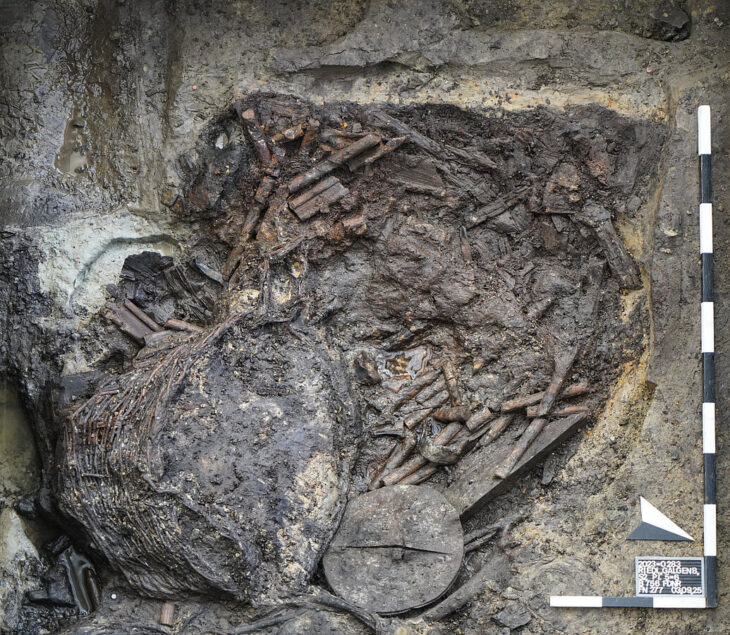
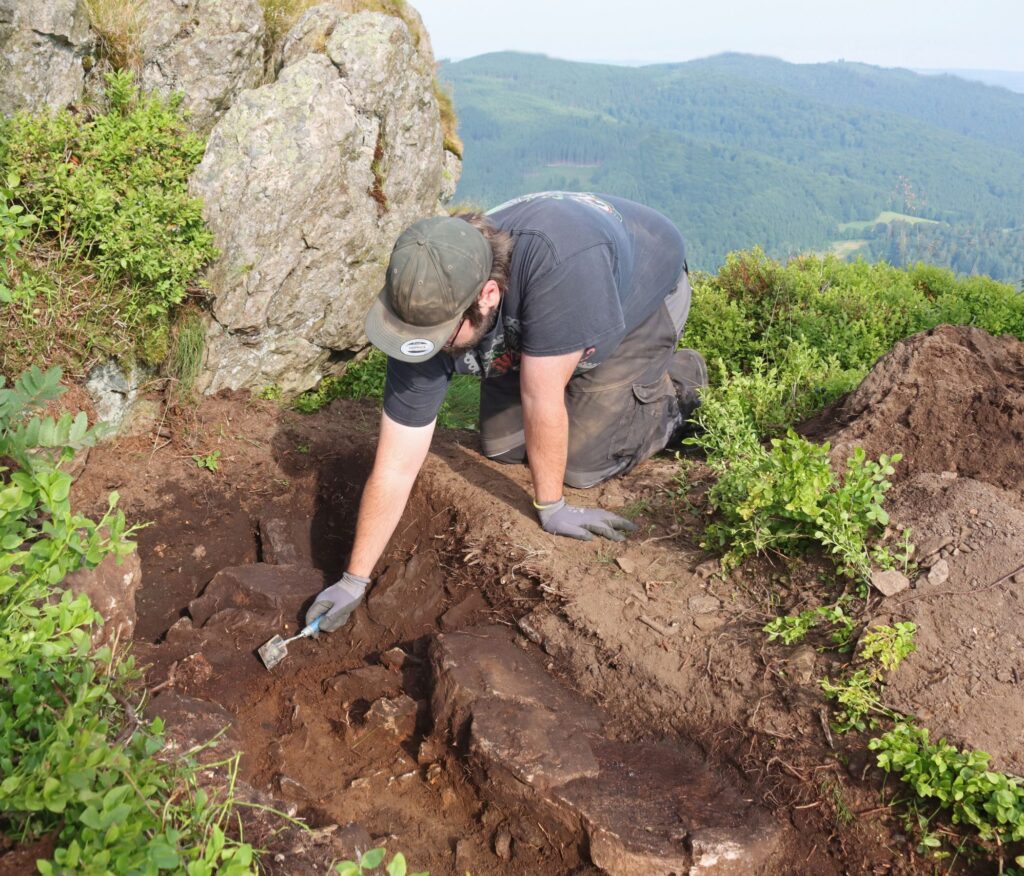
When archaeologists began excavating the spot, they uncovered an even more intriguing scene beneath the axes: a shallow pit cut directly into the rock.
Inside the filled cavity were fragments of crushed quartz, a stone slab and a hammerstone—tools that had apparently been used to break the mineral into fine pieces. The pit had then been carefully refilled, sealing the materials inside.
To archaeologists, the sequence of actions was unmistakable.
“This was not an everyday activity,” Zeiler said. “People climbed up to this exposed rock, mined quartz from the stone, crushed it into small fragments, filled the pit again, and then deposited the axes above it. Everything suggests a deliberate ritual.”
A Symbolic “Wound in the Mountain”
The process appears to have followed a ritual logic. Quartz was extracted from the bedrock, crushed on the slab using the hammerstone, and the pit was later sealed again—as if to close what researchers describe metaphorically as a “wound in the mountain.”
Only after the cavity was filled did participants place the two axes on the surface, possibly as a final symbolic gesture marking the completion of the ritual.
The location of the activity makes the discovery even more extraordinary. Quartz could have been extracted much more easily at the base of the rock formation. Instead, ancient people chose to perform this laborious task on a high, windswept cliff.
For researchers, the implication is clear: the place itself mattered.
Close to the “Otherworld”
According to the research team, the elevated setting may have been perceived as a liminal space—an area closer to the supernatural realm. In Celtic mythology, such places were sometimes seen as thresholds to the “Otherworld,” a spiritual dimension inhabited by gods or ancestral spirits.
“It is possible that quartz taken from this elevated place had special significance,” Zeiler explained. “Sites like this may have been understood as points of contact between the human world and the realm of the divine.”
Archaeologists are familiar with similar phenomena elsewhere in Europe. Mountain summits, caves, and remote natural formations often served as ritual locations where communities conducted offerings or symbolic acts in honor of supernatural forces.
The Bruchhauser Steine may now join that list.
Clues from Earlier Finds
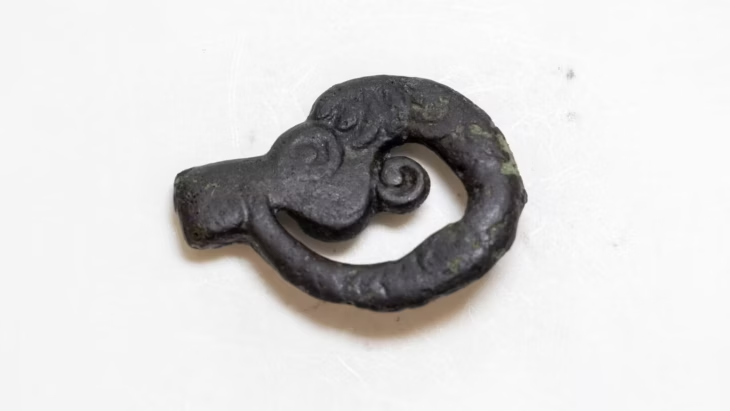
Hints that the rock formation might have served a ceremonial function had emerged before. In 2013, archaeologists discovered a fragment of an arm ring and a deliberately damaged spearhead at the site—objects believed to have been ritually deposited during the Iron Age.
But the newly discovered axes and quartz pit provide the clearest evidence yet that ritual activity took place on the rocks themselves.
The findings also raise intriguing questions about the role of quartz in Iron Age culture. The mineral was sometimes mixed into clay used for handmade pottery, helping vessels withstand high temperatures during firing.
However, researchers now wonder whether quartz from the Feldstein had a more symbolic function.
“It is conceivable that quartz from this specific location was used in special or ritual vessels,” said chief archaeologist Sandra Peternek. If true, the material would have carried meaning far beyond its practical properties.
A New Chapter for an Ancient Site
Today, the discovery adds another layer of fascination to a place that has captivated visitors for centuries. The Bruchhauser Steine, already celebrated as one of Germany’s most striking natural monuments, are revealing themselves as a cultural landmark shaped by human beliefs thousands of years ago.
To share the new findings with the public, the local foundation responsible for preserving the site plans to display several artifacts—including the stone slab, hammerstone and fragments of crushed quartz—in a new exhibit at the visitor center.
The original iron axes, due to conservation concerns, will be represented by replicas.
Together, these objects form part of an archaeological puzzle that is slowly bringing the ancient story of the Bruchhauser Steine into focus.
And on a windswept cliff where Iron Age people once labored over stone and ritual, the rocks are finally beginning to reveal their secrets.
Landschaftsverband Westfalen-Lippe (LWL)
Cover Image Credit: View of the Feldstein rock from the southeast. The archaeological discovery site is marked by the red dot. LWL Archaeology for Westphalia / F. Geldsetzer