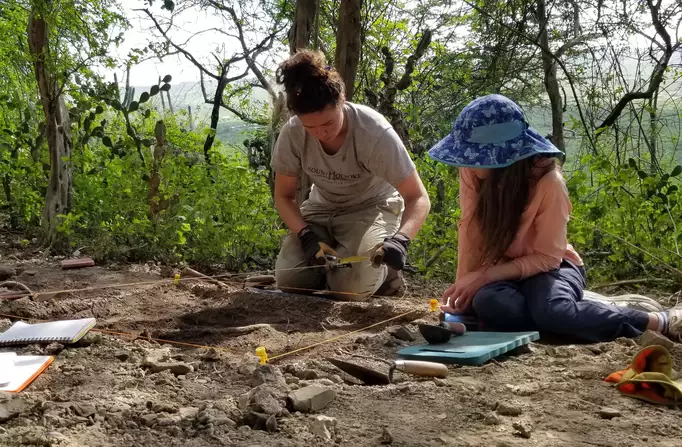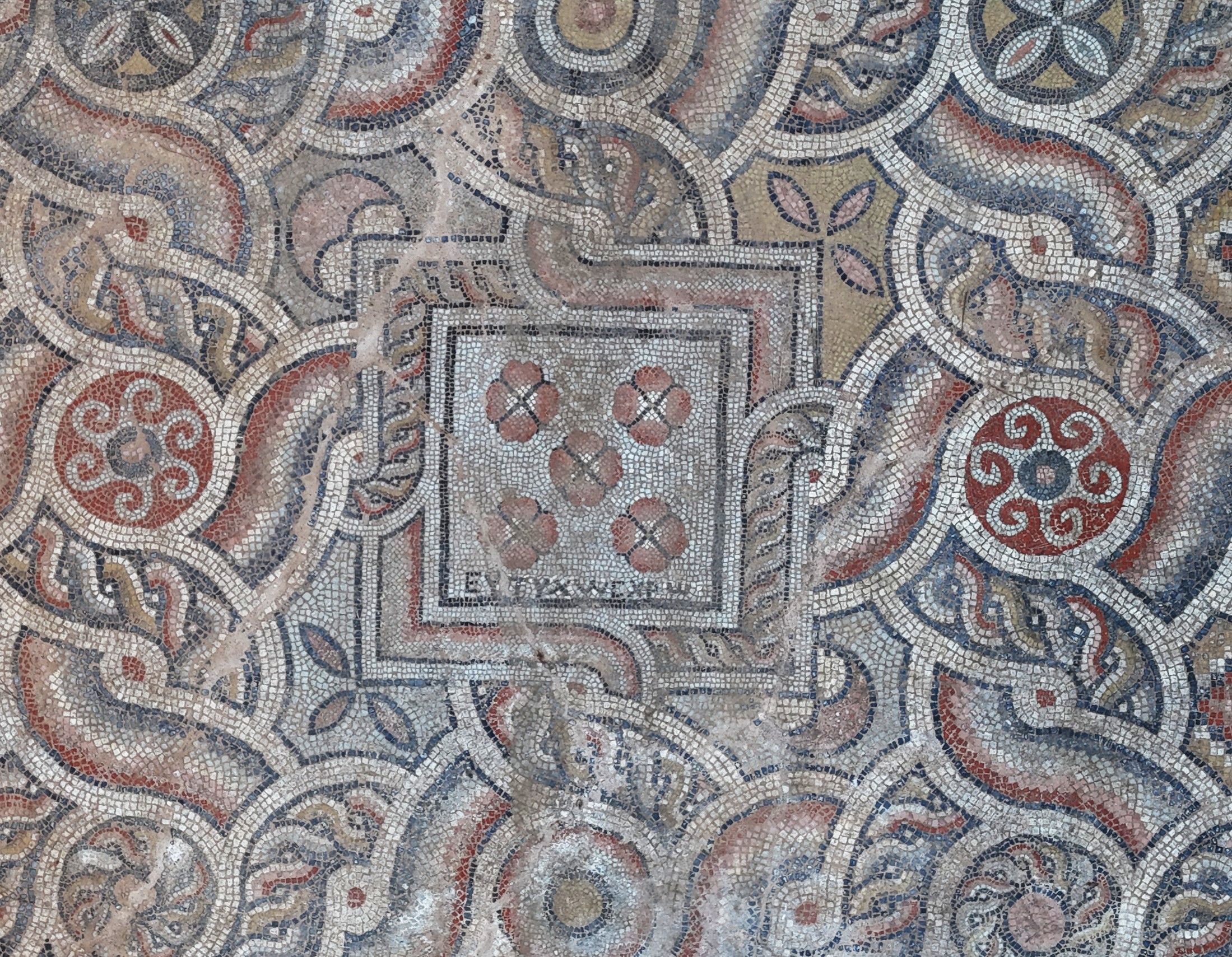
Archaeologists working in the ancient city of Syedra, located near Alanya on Türkiye’s Mediterranean coast, have uncovered a remarkably well-preserved mosaic floor dating back approximately 1,500 years. The mosaic, featuring geometric and floral motifs along with two intriguing Greek inscriptions, has drawn attention for its surprisingly playful messages: “Use it with joy” and a phrase roughly translating to “May the envious burst with jealousy.”
The discovery was made during ongoing excavations conducted under the supervision of Türkiye’s Ministry of Culture and Tourism and the General Directorate of Cultural Heritage and Museums. The project is part of the nationwide “Heritage for the Future” initiative aimed at protecting and studying important archaeological sites across the country.
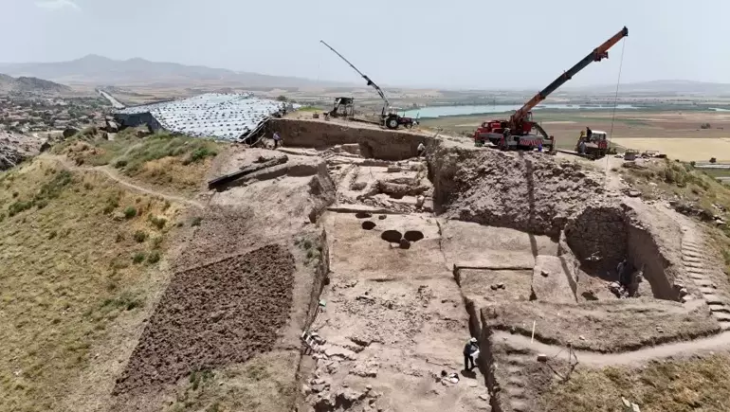
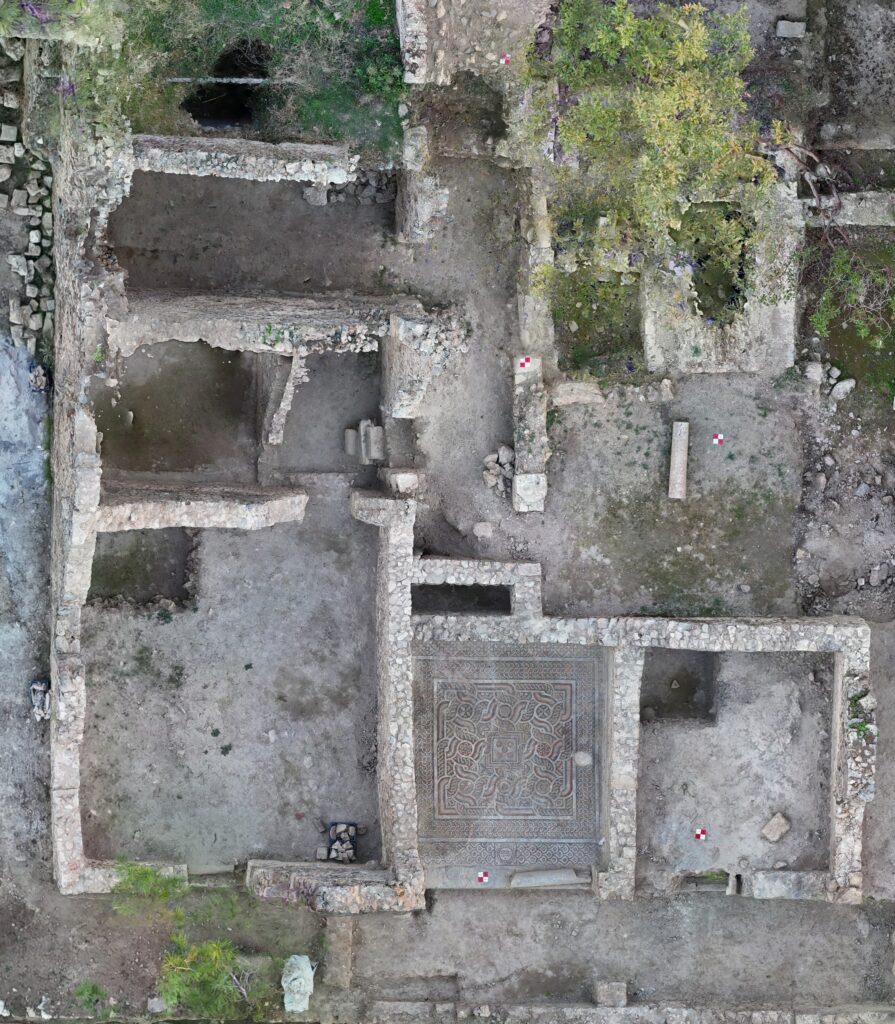
According to Associate Professor Dr. Ertuğ Ergürer, a faculty member at Alanya Alaaddin Keykubat University’s Faculty of Tourism and the head of the Syedra excavation team, the mosaic was found in a large residential structure within the ancient city.
“We have been conducting excavations in what appears to be a substantial domestic complex,” Ergürer explained. “The building underwent continuous modifications and remained in use from the 2nd century AD until around the 7th century AD, reflecting several phases of occupation and architectural change.”
The newly uncovered mosaic measures approximately 4.5 by 4.5 meters and is believed to date to the 5th or 6th century AD. Located in the entrance section of the building, the floor decoration is exceptionally well preserved.
📣 Our WhatsApp channel is now LIVE! Stay up-to-date with the latest news and updates, just click here to follow us on WhatsApp and never miss a thing!!
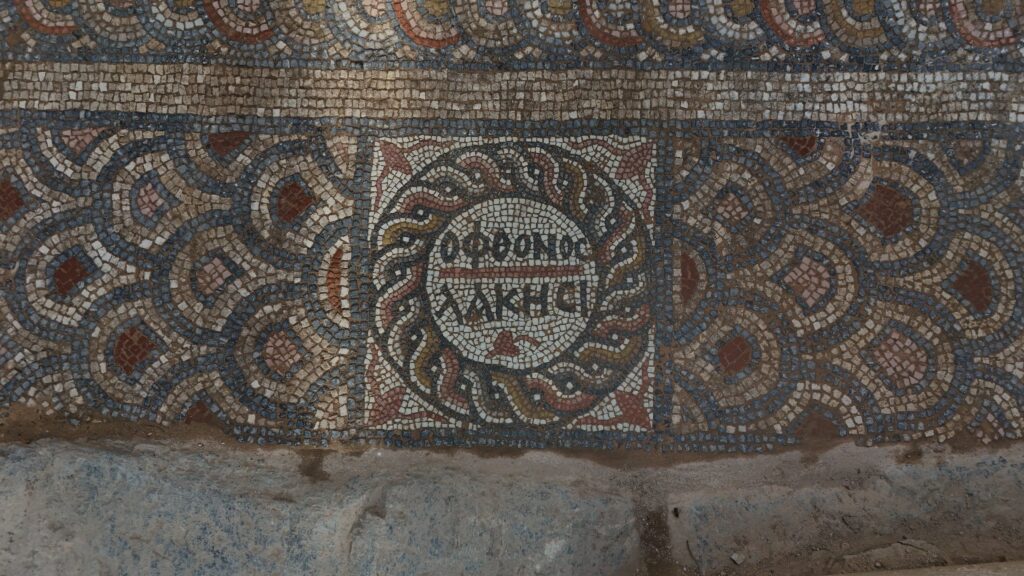
“The mosaic features a combination of geometric patterns, vegetal motifs, and two Greek inscriptions,” Ergürer said. “The inscription in the central panel conveys a welcoming phrase similar to ‘Use it with joy,’ while another inscription on the southern panel expresses a sentiment that can be interpreted as ‘Let those who envy burst with jealousy.’”
Such messages were not uncommon in late antique domestic mosaics, where inscriptions sometimes served as expressions of hospitality, pride in ownership, or humorous protection against ill-will. In this case, the combination of warm hospitality and playful defiance offers a glimpse into the personality and social attitudes of the building’s ancient residents.
Following the discovery, conservation and restoration work in the area was completed to ensure the mosaic’s long-term preservation.
The Historical Importance of Syedra
Perched on a hill approximately 20 kilometers east of Alanya, Syedra is one of the most fascinating yet lesser-known ancient cities along Turkey’s Mediterranean coast. Founded during the Hellenistic period and flourishing under Roman rule, the city became an important regional center between the 1st century BC and the 7th century AD.
Archaeological remains at the site include city walls, streets, baths, cisterns, temples, a council building, and an impressive colonnaded avenue. One of Syedra’s most notable features is its sophisticated water management system, including large rock-cut cisterns designed to collect rainwater in an area where freshwater sources were limited.
Historical sources suggest that Syedra was active in regional politics and trade. Coins minted in the city during the Roman period indicate a thriving urban community with strong ties to the broader Mediterranean world.
The city also gained recognition in antiquity when Roman Emperor Septimius Severus reportedly rewarded its citizens for resisting pirates who threatened the region’s coastal settlements.
Today, Syedra’s elevated location offers panoramic views of the Mediterranean Sea and the Taurus Mountains, making it not only an important archaeological site but also a visually striking destination.
A Window into Daily Life in Late Antiquity
Discoveries such as the newly uncovered mosaic provide valuable insight into everyday life during the late Roman and early Byzantine periods. Unlike monumental structures such as temples or theaters, residential buildings reveal how ordinary people lived, decorated their homes, and expressed their cultural identity.
The witty inscriptions preserved in the Syedra mosaic show that even 1,500 years ago, homeowners used humor and hospitality to greet visitors and subtly ward off envy.
As excavations continue under the Heritage for the Future project, archaeologists expect further discoveries that will shed light on Syedra’s long and dynamic history—offering new perspectives on life in one of the Mediterranean’s enduring ancient cities.
Cover Image Credit: General Directorate of Cultural Heritage and Museums