Archaeologists in southern India have uncovered what is now believed to be the longest Iron Age iron spear ever found in the country, a discovery that could significantly reshape understanding of early metallurgical technology in the Indian subcontinent.
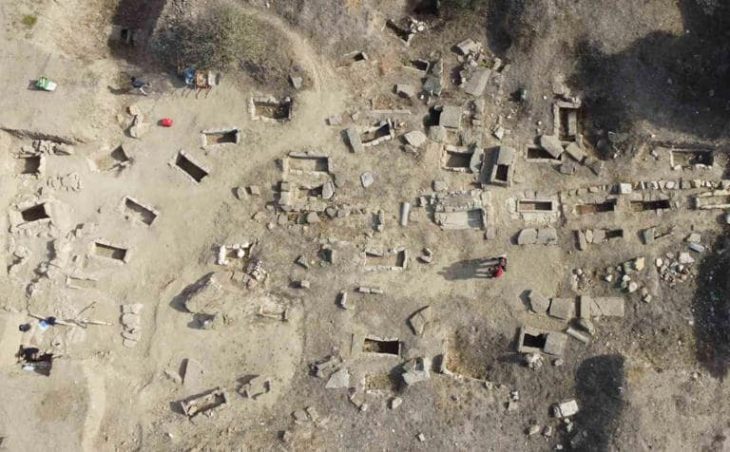
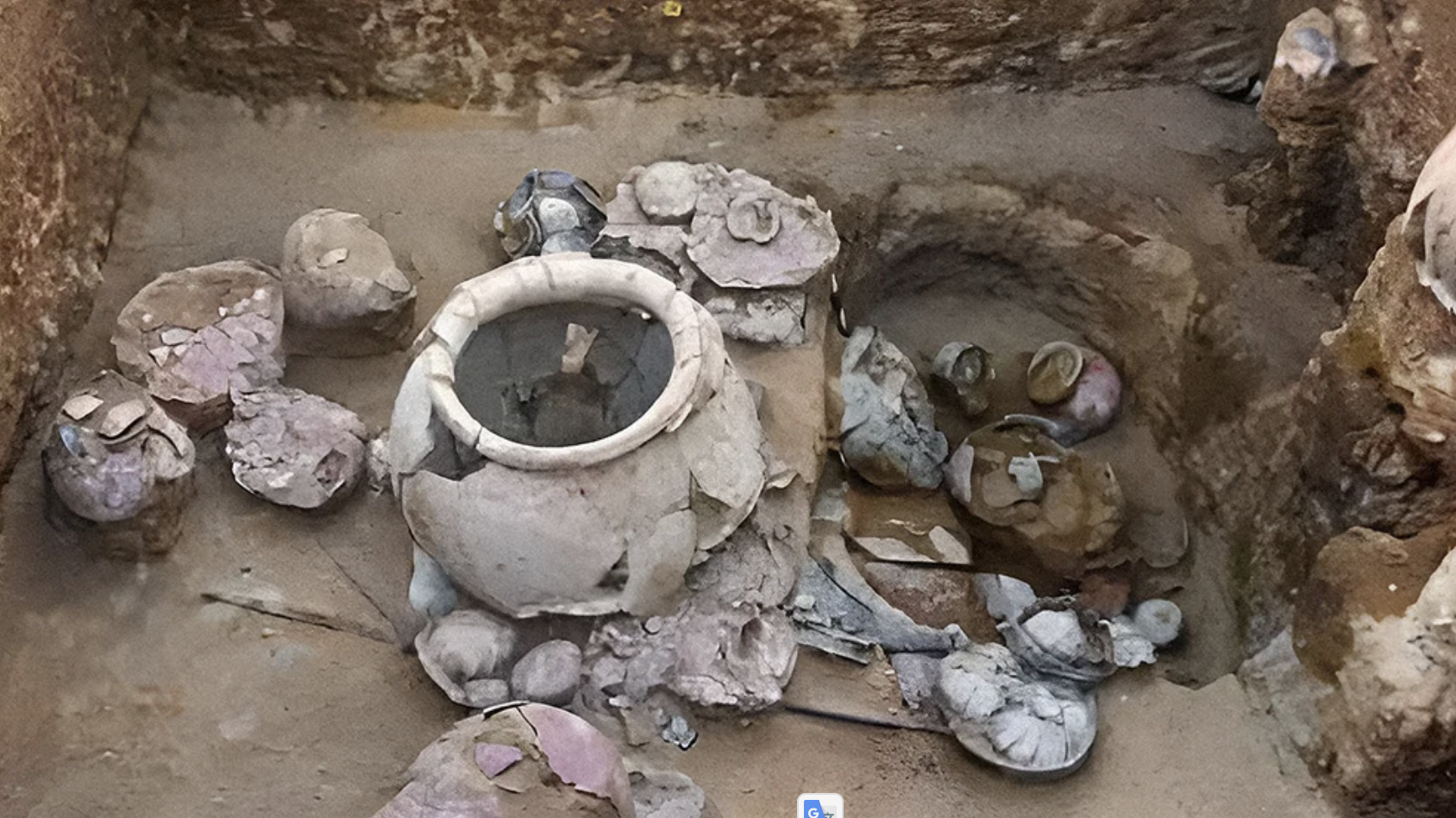
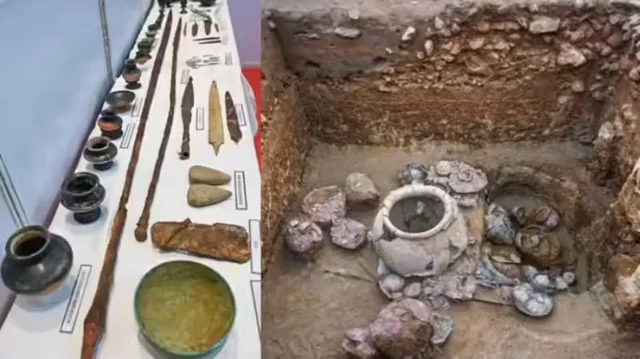
The spear, measuring nearly 2.5 meters (over 8 feet) in length, was excavated at an Iron Age burial site in the Indian state of Tamil Nadu. Found alongside a second, slightly shorter spear placed in a cross-like arrangement, the artifact was discovered near a burial urn that also contained gold objects, indicating the high social status of the individual interred.
According to experts, the spear may have served both practical and symbolic purposes. While it could have been used by ancient warriors to protect livestock or property, scholars suggest its extraordinary size points to a ceremonial role, possibly crafted for a chieftain or elite leader and buried as a symbol of authority and power.
A Breakthrough for Iron Age Studies in India
The discovery was first reported by The Times of India and has drawn attention from archaeologists and historians nationwide. Excavation director K. Vasanthakumar noted that one end of the longer spear is slightly rounded, a design feature that would have improved grip and handling—evidence of advanced functional design.
Iron Age specialist Professor Vibha Tripathi from Banaras Hindu University emphasized that weapons are frequently found in such burials, reinforcing the idea that the spear belonged to a warrior elite. “Daggers, swords, knives, and spears are commonly associated with Iron Age graves,” she explained, adding that the exceptional preservation of the iron is particularly noteworthy.
📣 Our WhatsApp channel is now LIVE! Stay up-to-date with the latest news and updates, just click here to follow us on WhatsApp and never miss a thing!!
Why Tamil Nadu Preserves Iron So Well
One of the most remarkable aspects of the find is its condition. Unlike iron artifacts found in wetter regions such as the Gangetic plains—where corrosion often leaves only faint impressions—Tamil Nadu’s soil chemistry and climate help preserve metal objects far more effectively.
This preservation has allowed researchers to analyze early ironworking techniques in greater detail, offering rare physical evidence of technological capabilities that were previously inferred only through fragments or indirect data.
Mastery of High-Temperature Metallurgy
Producing iron requires temperatures between 1,200 and 1,500 degrees Celsius, a technological challenge even by ancient standards. Former Deccan College professor R. K. Mohanty believes the spear was likely custom-made, possibly for ceremonial display. “Its scale alone suggests it was designed to demonstrate the elevated status of the buried individual,” he said.
Even more striking is the growing consensus that iron production in Tamil Nadu may date back as early as 3000–2500 BCE, much earlier than previously assumed. Academic advisor K. Rajan from the Tamil Nadu Department of Archaeology described the find as a “technological achievement of its time,” underscoring the region’s early innovation.
Tamil Nadu’s Deep Metalworking Tradition
Beyond this single discovery, Tamil Nadu has long been recognized as a center of advanced ancient metalworking. Tamil Nadu’s importance in early ironworking is further supported by earlier finds in the region. Archaeological evidence from sites such as Adichanallur, Kodumanal, and Keeladi points to sophisticated knowledge of iron smelting, forging, alloying, and tool-making.
Archaeological evidence from nearby sites has produced dates as early as 3345 BCE, suggesting that iron technology was developing in southern India far earlier than once believed.
Ancient Tamil smiths were skilled not only in iron but also in steel production, including early forms of high-carbon steel comparable to the famed wootz steel that later gained international renown. Techniques such as controlled heating, repeated hammering, and quenching were used to enhance durability and sharpness—methods that would influence metalworking traditions across South Asia.
These skills were not limited to weapons. Agricultural tools, domestic implements, and trade goods made of iron played a vital role in economic expansion and social organization in early Tamil societies.
Next Steps: Scientific Analysis and Statewide Iron Age Research
Archaeologists are now calling for expanded, interdisciplinary research. The Tamil Nadu Department of Archaeology has announced plans to collaborate with the Indian Institute of Technology (IIT) Gandhinagar to conduct metallurgical studies across multiple Iron Age sites in the state over the next two years.
Researchers hope these studies will map the evolution of iron technology, establish more precise dating, and place Tamil Nadu firmly on the global archaeological map as one of the world’s earliest centers of advanced ironworking.
As investigations continue, the newly discovered spear stands not only as a weapon, but as a powerful reminder of India’s deep technological heritage—and Tamil Nadu’s central role in shaping it.
Cover Image Credit: Banaras Hindu University