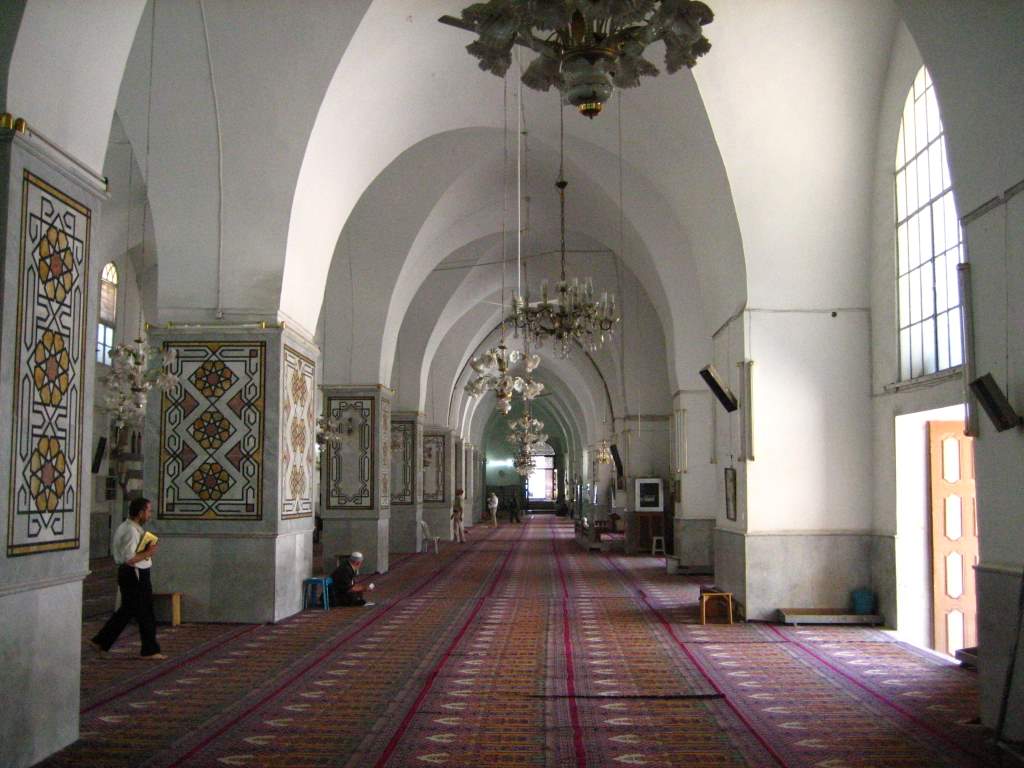
A newly analyzed Greek inscription discovered inside the Great Mosque of Homs in Homs, Syria, is reshaping scholarly debate over the long-lost Temple of the Sun in ancient Emesa and its connection to the Roman emperor Elagabalus.
The inscription, uncovered during restoration work, provides compelling new evidence that the mosque may stand directly atop the pagan sanctuary dedicated to the solar deity worshiped by the emperor himself.
Greek Inscription Discovered Beneath Mosque Column
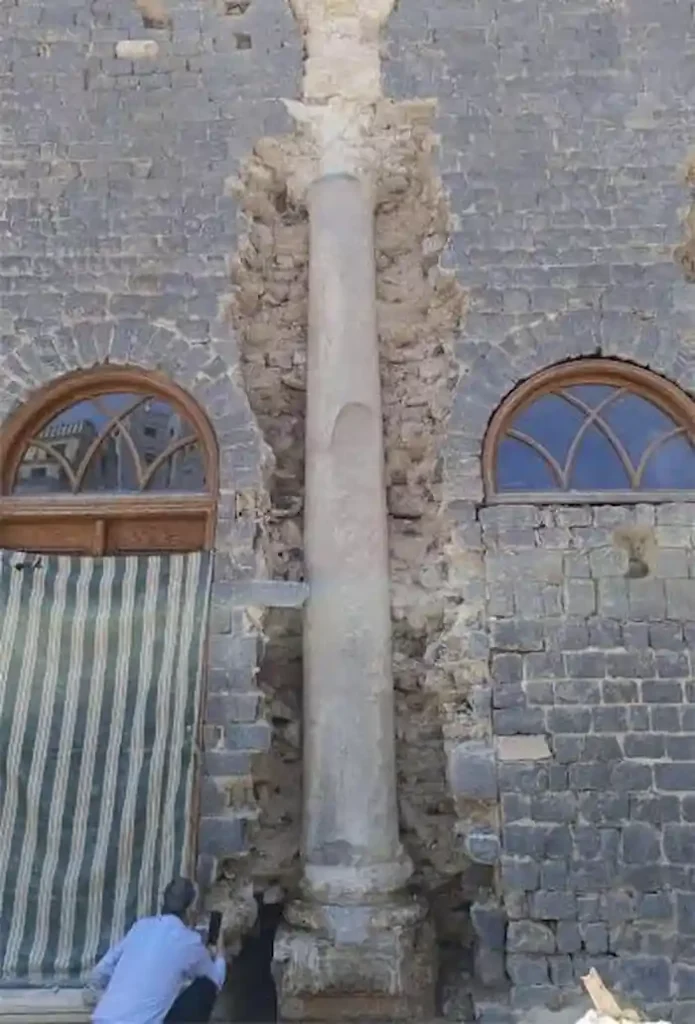
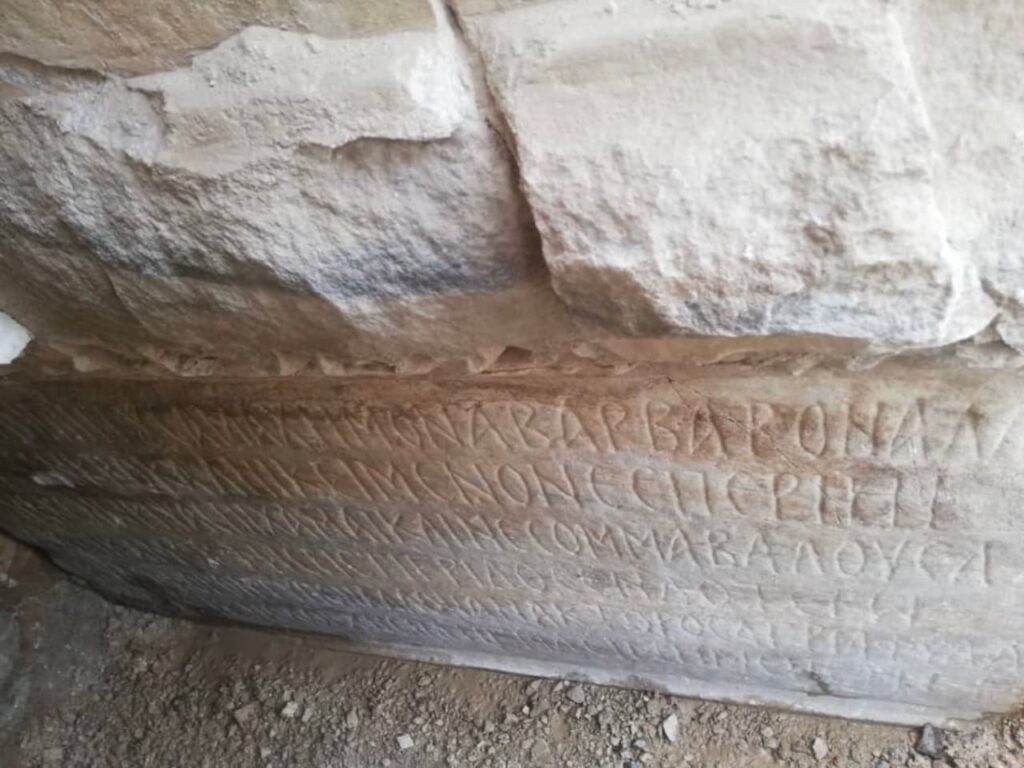
The discovery was made during restoration efforts in 2016, when workers identified a Greek inscription carved into the granite base of a column beneath the mosque’s floor. Measuring roughly one meter by one meter, the base contains a 75-centimeter inscribed panel framed by decorative elements. Though instability in Syria delayed full academic analysis, the inscription has now been studied in detail and published in the archaeology journal Shedet.
The mosque, located in modern-day Homs—known in antiquity as Emesa—has long been suspected of occupying the site of the city’s principal pagan temple. Emesa served as the capital of a Roman province and was renowned for its religious significance, particularly its solar cult centered on the deity Elagabalus.
According to Professor Maamoun Saleh Abdulkarim of the University of Sharjah, the inscription’s tone is heroic and militaristic, describing a powerful ruler likened to wind, storm, and leopard—imagery consistent with royal dedications of the Roman period. The symmetrical, formal Greek lettering is arranged in straight horizontal lines beneath an ornamental border, typical of commemorative inscriptions.
📣 Our WhatsApp channel is now LIVE! Stay up-to-date with the latest news and updates, just click here to follow us on WhatsApp and never miss a thing!!
Shedding Light on the Temple of the Sun
For decades, historians have debated whether the rectangular structure of the Great Mosque conceals the remains of the Temple of the Sun. While literary references and circumstantial architectural evidence suggested a connection, no conclusive proof had emerged—until now.
The newly analyzed inscription may provide that missing link. Although the text contains grammatical irregularities—common in Roman Syria, where Aramaic predominated over Greek—it appears to date to the Roman imperial period. Its placement as part of a column base strongly suggests it originally belonged to a monumental pagan structure.
If confirmed, this finding would reinforce the theory of religious continuity at the site: from pagan sanctuary to Christian church to Islamic mosque. Tradition already holds that the mosque was built over a church dedicated to John the Baptist, constructed centuries after the decline of pagan worship.
The study argues that religious transformation in Emesa occurred not through abrupt destruction but through architectural superimposition and reinterpretation. Sacred space was preserved and adapted rather than erased—a pattern seen across the Near East.
Who Was Emperor Elagabalus?
The inscription’s potential link to Elagabalus adds an extraordinary imperial dimension to the discovery. Born in Emesa around 203 CE as Varius Avitus Bassianus, Elagabalus was the hereditary high priest of the city’s solar cult before ascending to the Roman throne in 218 CE at just fourteen years old.
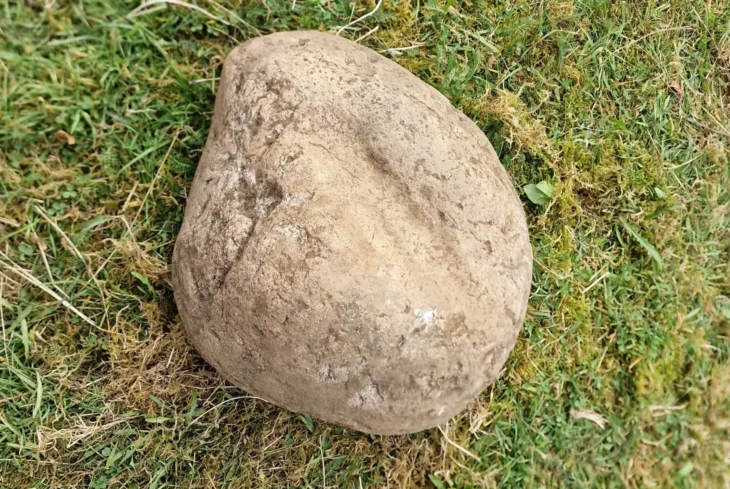
As emperor, Elagabalus attempted to elevate his native Syrian sun god—known locally as Elagabal—to supreme status within the Roman pantheon. He transported a sacred black stone, believed to embody the deity, from Emesa to Rome and installed it in a newly constructed temple on the Palatine Hill.
His religious reforms, however, were controversial. Roman elites resisted his efforts to prioritize a foreign eastern deity over traditional Roman gods such as Jupiter. His reign was marked by political instability, religious experimentation, and growing opposition within the Praetorian Guard. In 222 CE, at age eighteen, he was assassinated, and many of his reforms were reversed.
Despite his brief rule, Elagabalus remains one of Rome’s most enigmatic emperors. Ancient sources often portrayed him as eccentric and scandalous, though modern historians increasingly question these accounts as exaggerated propaganda following his downfall.
Emesa’s Layered Religious Identity
The Roman identity of Emesa was deeply intertwined with the cult of Elagabalus. The Temple of the Sun functioned as the focal point of civic life, hosting seasonal festivals and reinforcing the political power of the priestly elite. The high priesthood’s influence was so substantial that it propelled one of its members to the imperial throne.
By the fourth century, however, Christianity spread widely across Syria, gradually reshaping the city’s religious landscape. Paganism and Christianity coexisted for generations before Christianity became dominant. Centuries later, following the Islamic conquest, many Christian sites were converted into mosques, reflecting another phase of transformation rather than complete rupture.
The Great Mosque of Homs thus embodies three major religious epochs: paganism, Christianity, an d Islam. This continuity illustrates how urban identity in the Near East evolved through adaptation and reinterpretation of sacred architecture.
A Breakthrough in Near Eastern Archaeology
Professor Abdulkarim emphasizes that the inscription represents a significant step toward resolving a century-old scholarly dispute over the exact location of the Temple of the Sun. While further inscriptions and archaeological data are needed, this find strengthens the hypothesis that the mosque occupies the precise site of Emesa’s most important pagan sanctuary.
The discovery underscores the importance of interdisciplinary collaboration between archaeology, epigraphy, architectural history, and heritage conservation. Each new Roman-era inscription uncovered in Homs will deepen understanding of how sacred spaces were transformed over time.
Ultimately, Emesa did not erase its past—it layered it. The Temple of the Sun dedicated to Elagabalus may have endured not only in memory but in stone, forming the architectural foundation for successive religious communities. The Great Mosque of Homs now stands not merely as an Islamic monument, but as a testament to nearly two millennia of spiritual evolution in one of Syria’s most historically complex cities.
Maamoun Saleh Abdulkarim (2026), “Religious Transformation in the City of Emesa, Syria: From Paganism to Christianity During the Roman and Early-Byzantine Periods”, Shedet, 15, 82-98. doi: 10.21608/shedet.2025.392640.1307
Cover Image Credit: Great Mosque of Homs – Public Domain