
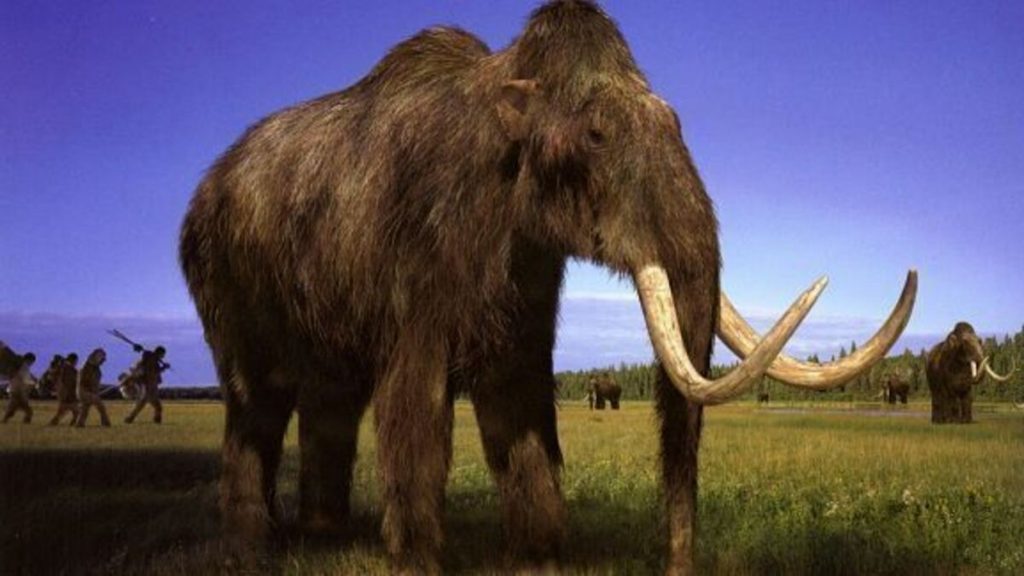
A 12,000-year-old woolly mammoth tusk was discovered beneath the street by crews rerouting a gas line in Corvallis, Oregon.
“Whenever doing this type of work, our crews are very careful to keep any eye out for any type of materials they may find while working that could be fragile or historic,” a spokeswoman for NW Natural, the gas company doing the work, told the Corvallis Gazette-Times. “As is our protocol, we stopped work immediately.”
Excavation work is being carried out for the city government as part of the waterline and stormwater canal project in the area. The company contacted officials from Corvallis, who brought in Loren Davis, an anthropology professor at Oregon State University, who was a professor of anthropology who studied archaeological sites in western North America during the Pleistocene era more than 12,000 years ago.
Davis said the mammoth that coexisted with the early humans was likely to be buried during the Great Missoula Floods of the Pleistocene Era. The tusk is about 6 feet below ground level and extends up to the wall of the construction trench, meaning more of the animal’s body may be hidden underground.
The exact reason it ended up there is “a bit of a mystery,” Davis said. “The world was changing structure to a post-glacial one. People also were present. There might have been environmental factors as well as hunting pressure. It could be lots of things.”
Construction teams have discovered the bone remains of a woolly mammoth for the second time in five years. While building on the Reser Stadium expansion at Oregon State University in 2016, workers discovered a complete upper leg bone.
Mammoths were not only hunted for food, but their bones and tusks were utilized to build tools, shelters, and art.
