
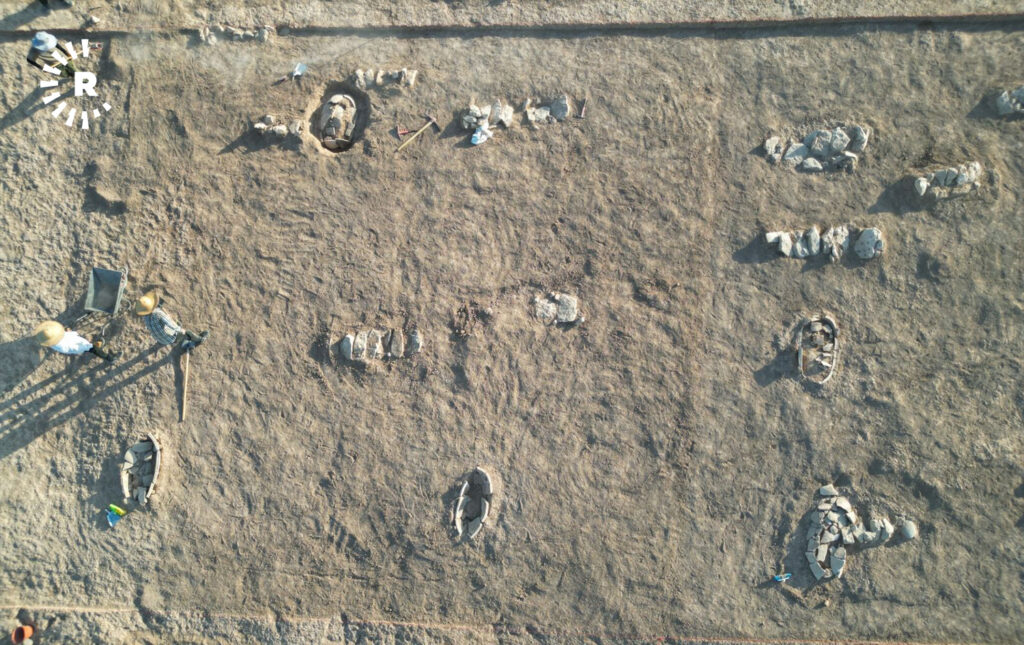
Severe drought conditions in northern Iraq have uncovered a remarkable archaeological treasure. The discovery, revealed as water levels at the Mosul Dam dramatically receded, has unearthed the remains of a lost Hellenistic-era city and a sprawling cemetery containing at least 40 ancient graves.
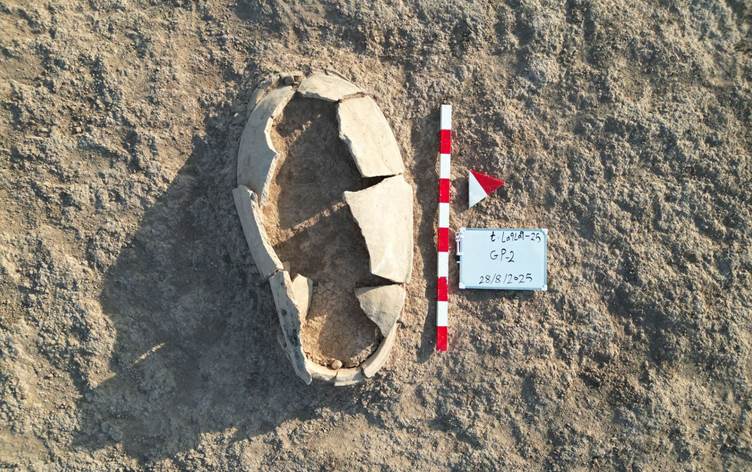
According to a report by Karwan Faidhi Dri for Rudaw, a Kurdish archaeological team in Duhok province has made a remarkable discovery after the waters of Iraq’s largest dam receded. The excavation team has uncovered at least 40 ancient ceramic graves and the remains of a once-thriving city, shedding new light on the history of northern Mesopotamia.
A Lost City Reemerges from the Waters
The discovery was made in Duhok province’s Semel district, near the old village of Khanke, which has long been submerged beneath the dam’s waters. According to Bekas Brifkani, head of Duhok’s Antiquities and Heritage Department, the graves are believed to date back to the Hellenistic period (323 BCE – 31 BCE), an era marked by Greek cultural influence following the campaigns of Alexander the Great.
“We discovered a main city along with a cemetery. This is the first time graves of this type and size have been found in the area,” Brifkani told Rudaw. “So far, we have uncovered nearly 40 ceramic graves, which date back thousands of years. Pottery and other artifacts have also been found.”
The excavation site only resurfaced about ten days ago, when declining water levels exposed long-hidden structures. Since then, the 14-member Kurdish team has been working independently to document and excavate the fragile remains.
Drought and History Collide
The Mosul Dam, constructed on the Tigris River in the 1980s, submerged more than 80 villages, schools, and ancient settlements. While the dam is crucial for agriculture, electricity generation, and water storage—it can hold up to 11 billion cubic meters of water—the flooding erased entire communities and cultural landmarks.
Water levels at the dam have dropped only three times in the past half-century: in 2017, 2023, and again this year. Severe drought conditions, combined with reduced water flows from upstream countries, have contributed to the latest dramatic decline.
Each time the waters recede, history resurfaces. In 2023, an old Yazidi (Ezidi) village reappeared after being submerged for nearly four decades. More recently, a Yazidi grave from 1961 was revealed along the Tigris River. Earlier this year, a long-lost school building in Khanke also emerged from the waters.
Who Are the Yazidis (Ezidis)?
The Yazidis, or Ezidis, are an ethno-religious minority indigenous to northern Mesopotamia, particularly in Iraq’s Nineveh province and the broader Kurdistan Region. Their faith is monotheistic and deeply rooted in ancient Mesopotamian traditions, incorporating elements of Zoroastrianism, Christianity, and Islam. Central to Yazidi belief is the reverence of Melek Taus, the Peacock Angel, who symbolizes divine light and guidance.
For centuries, the Yazidis have endured waves of persecution, including massacres and forced displacement. Despite this, they have preserved their traditions, shrines, and sacred sites, many of which are located near Mount Sinjar and other areas close to the Mosul Dam. The resurfacing of Yazidi graves and villages highlights not only the environmental impact of water management but also the resilience of a people whose history is inseparably tied to the land.
Archaeology Beneath the Waters
Since the construction of the Mosul Dam began in 1981, archaeologists have been racing against time to record submerged sites. “After the construction of Mosul Dam in 1986, a large number of archaeological sites were submerged,” Brifkani explained. “We have been monitoring the water levels since 2018, when the first major drop exposed ancient remains. This new discovery continues that work.”
The graves uncovered are particularly significant because they expand knowledge of the Hellenistic period in the region, a time when local Mesopotamian cultures interacted with Greek settlers and rulers. Such finds may help historians better understand how trade, culture, and governance developed in northern Iraq thousands of years ago.
A Future Balancing Water and Heritage
The Mosul Dam remains a vital lifeline for Iraq, producing around 580 megawatts of hydropower per day and supplying water for millions. Yet the archaeological discoveries now emerging raise questions about the balance between infrastructure development, environmental sustainability, and cultural preservation.
For now, Kurdish archaeologists continue their excavation, documenting what the waters have hidden for nearly four decades. As the Tigris River ebbs and flows, it continues to reveal fragments of civilizations long thought lost—reminders of Iraq’s role as a cradle of history.
Cover Image Credit: Aerial view of a cemetery recently found by archeologists near Mosul Dam. Duhok’s Antiquities and Heritage Department.
