A shattered stone carving once displayed in the palace of the Assyrian king Sennacherib may have preserved the earliest known depiction of Jerusalem, according to new research that has sparked debate among historians and archaeologists.
The bas-relief, which originally adorned the throne room of Sennacherib’s palace in ancient Nineveh, near modern Mosul in Iraq, was among thousands of priceless artifacts destroyed by Islamic State (ISIS) militants in 2016. Yet photographs, drawings, and earlier archaeological documentation have allowed scholars to revisit the imagery and propose a striking reinterpretation.
A recent study argues that the relief may depict Jerusalem during the Assyrian campaign of 701 BCE, potentially pushing back the earliest known visual representation of the city by more than a millennium.
The findings were widely discussed following coverage in The Times of Israel, which highlighted the significance—and controversy—surrounding the new interpretation.
A Lost Relief From Sennacherib’s Throne Room
Sennacherib, who ruled the Neo-Assyrian Empire from 705 to 681 BCE, commissioned elaborate stone reliefs throughout his vast palace complex at Nineveh. These carvings illustrated military campaigns across the Near East and served as powerful propaganda celebrating Assyrian imperial dominance.
📣 Our WhatsApp channel is now LIVE! Stay up-to-date with the latest news and updates, just click here to follow us on WhatsApp and never miss a thing!!
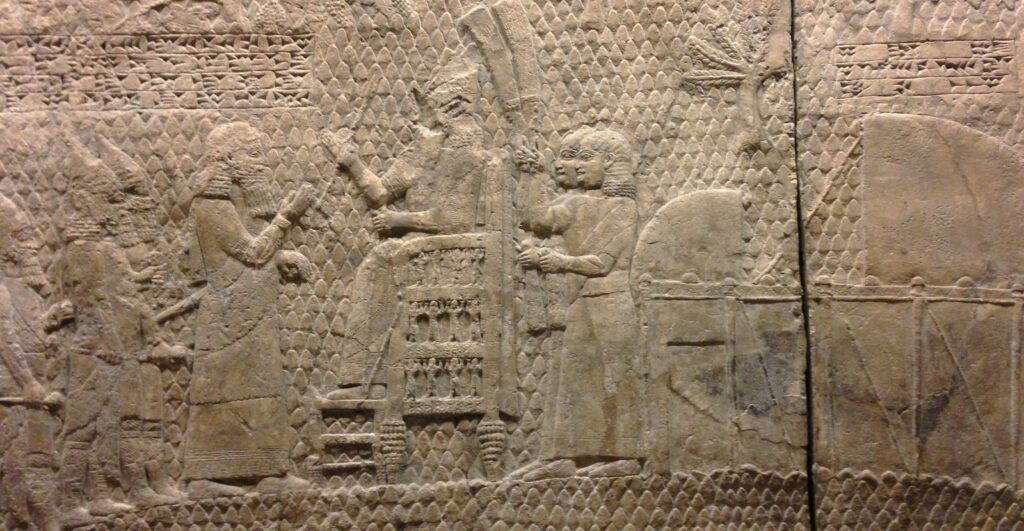
The king’s throne room alone once contained at least 33 carved panels depicting victories and sieges across Phoenicia, Philistia, and the Kingdom of Judah.
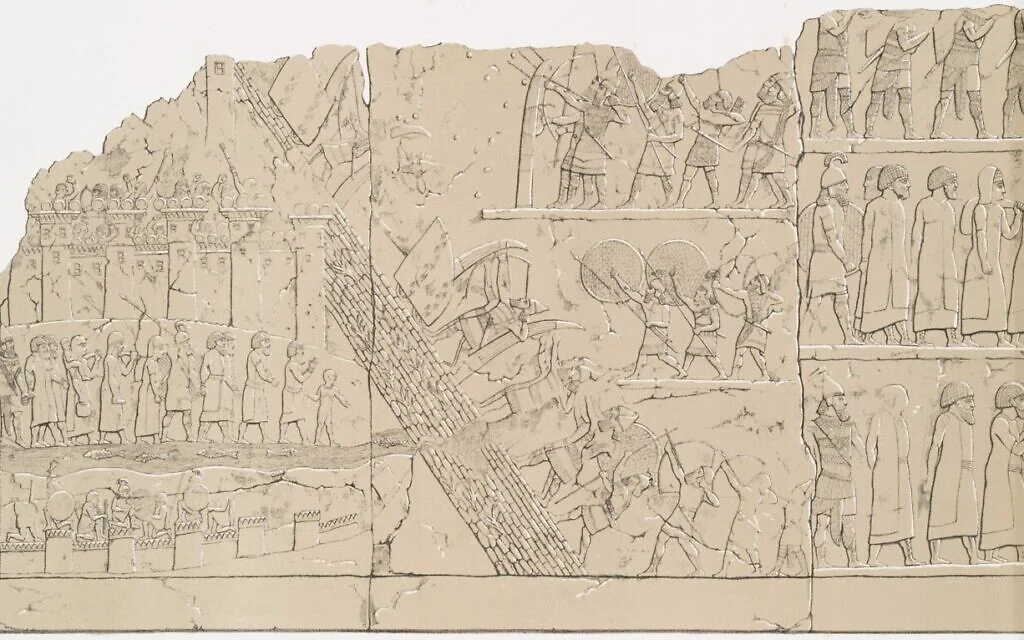
Many of these reliefs were excavated by British archaeologists during the nineteenth century. Several were transported to London, where they remain in the collections of the British Museum, including the famous reliefs showing the destruction of the Judean city of Lachish.
However, not all carvings survived. Some remained in Iraq, including a relief known to scholars as “Slab 28.” This panel was largely overlooked for decades and ultimately destroyed during the Islamic State’s campaign to eradicate ancient cultural heritage across northern Iraq.
Ironically, the destruction has prompted renewed scrutiny of surviving photographs and drawings of the slab.
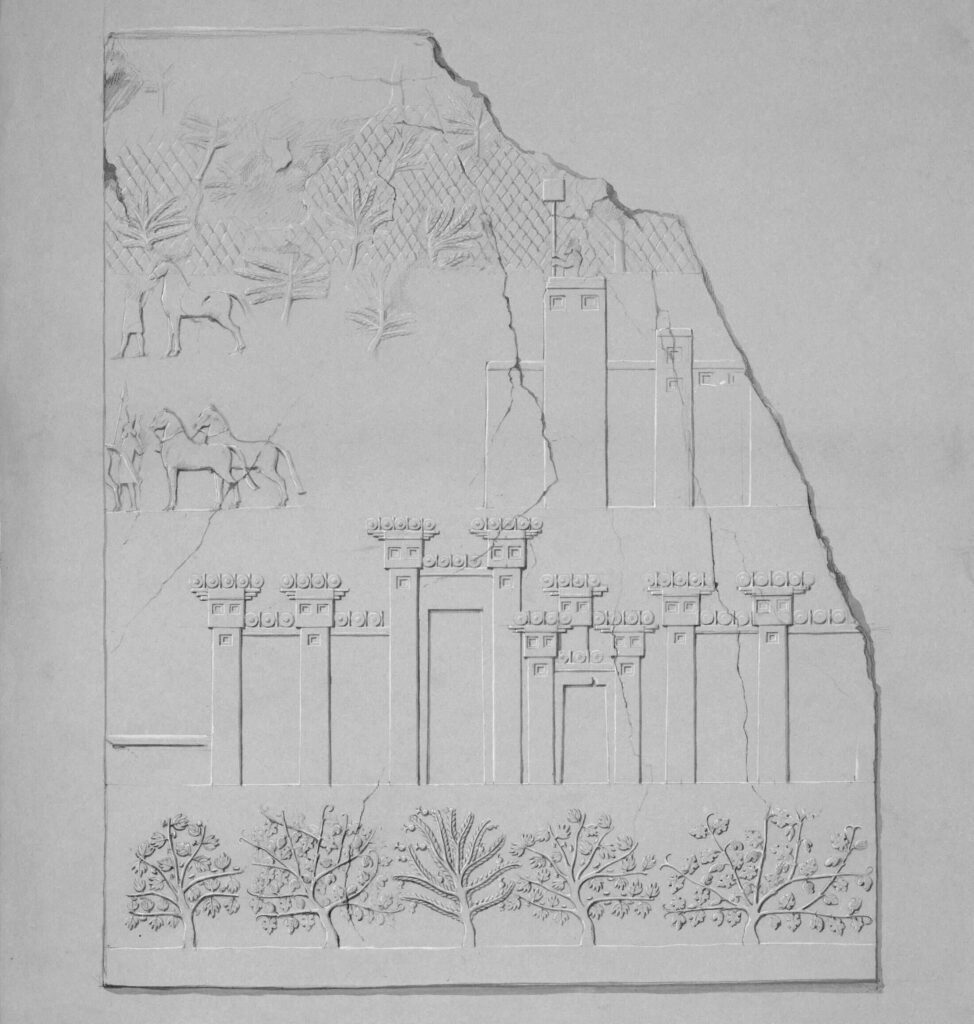
A Radical Reinterpretation
The new interpretation comes from researcher Stephen Compton of the University of South Africa, who reexamined historic images of the relief before its destruction.
Compton argues that the carving does not depict the Philistine city of Eltekeh, as long assumed, but instead represents Jerusalem during Sennacherib’s siege in 701 BCE.
If correct, this would make the relief the oldest known visual representation of Jerusalem, predating the famous Madaba Map—a sixth-century Byzantine mosaic in Jordan—by roughly 1,200 years.
Several features of the relief support Compton’s hypothesis.
Unlike typical Assyrian siege scenes that depict cities being burned and looted, the city in Slab 28 appears intact and orderly, surrounded by the Assyrian army but not destroyed.
This detail closely matches historical accounts of Sennacherib’s campaign.
Assyrian inscriptions record that the king trapped Hezekiah of Judah inside Jerusalem but did not capture the city itself. In the Assyrian annals, Sennacherib famously boasts that he “shut up Hezekiah in Jerusalem like a bird in a cage.”
Biblical sources similarly describe a siege that ultimately ended without Jerusalem being conquered.
According to Compton, the relief also includes a solitary figure standing atop a building, holding what appears to be a royal standard—a symbol often associated with kingship.
He suggests this figure may represent King Hezekiah, the ruler of Judah during the Assyrian invasion.
Architectural Clues
The relief’s architectural details provide further support for the Jerusalem interpretation.
Compton notes the presence of distinctive corbelled towers, structures whose upper levels extend outward beyond their base. This unusual design appears in only a few Assyrian reliefs, including those depicting the Judean city of Lachish.
If the same architectural style appears in multiple scenes connected to Judah, Compton argues, it strengthens the possibility that Slab 28 also portrays a Judean city—potentially Jerusalem itself.
The layout of the scene also appears to show a large open space between the city wall and a major building, which Compton interprets as the dry moat separating the Temple Mount from the City of David.
This perspective would match the northern approach taken by the Assyrian army during the campaign.
Scholars Remain Skeptical
Not all experts are convinced by this reinterpretation.
Assyriologist Prof. Danel Kahn of the University of Haifa has publicly rejected Compton’s conclusions. In comments reported by The Times of Israel, Kahn argued that the landscape shown in the relief resembles the lowland plains of Philistia, not the mountainous terrain surrounding Jerusalem.
Instead, Kahn believes the relief likely represents Ekron, another Philistine city whose ruler was restored to power by Sennacherib after supporting Assyria.
Kahn also notes that the relief appears on the same wall as scenes depicting a battle between Assyrian forces and Egyptian troops near Eltekeh, suggesting the city portrayed should be located in the same region.
Other scholars remain unconvinced as well. German Assyriologist Stefan Maul of Heidelberg University has stated that he finds the arguments identifying the relief as Jerusalem unpersuasive.
The debate illustrates the challenges of interpreting ancient art—especially when the original artifact has been destroyed.
Reconstructing What ISIS Destroyed
Today, archaeologists are working to reconstruct fragments of the destroyed reliefs from Nineveh.
Since the defeat of Islamic State forces in Mosul in 2017, international teams have been carefully documenting and preserving what remains of the palace.
Researchers have recovered thousands of fragments, including more than 8,500 large pieces and over 10,000 smaller fragments from the shattered carvings.
Reconstruction is slow and painstaking. Each fragment must be cleaned, measured, catalogued, and stored before attempts can be made to reassemble portions of the reliefs.
Despite the immense damage, archaeologists believe the effort is essential.
The destruction of Nineveh’s reliefs was intended to erase the region’s ancient heritage. Reconstructing the fragments ensures that the historical record—and the civilizations that created it—will endure.
A Debate That May Continue for Years
Whether Slab 28 truly depicts Jerusalem may remain unresolved for years to come.
Yet the debate highlights the extraordinary historical value of Assyrian palace reliefs, which combine imperial propaganda with remarkably detailed depictions of cities, architecture, and warfare in the ancient Near East.
If Compton’s interpretation ultimately proves correct, the destroyed relief from Nineveh would represent the earliest known visual depiction of Jerusalem, offering a rare glimpse into how the Assyrians themselves viewed one of the most significant cities in biblical history.
For now, the shattered stone panel continues to provoke discussion—reminding scholars how much knowledge can still emerge from artifacts long thought lost.
Armstrong Institute of Biblical Archaeology
Cover Image Credit: Photo of Slab 28 taken by John M. Russell in 1990. John M. Russell