31 December 2025 The Future is the Product of the Past

China’s construction of the first archaeological museum which will house the famous Terracotta Warriors has been completed

Construction of the first archaeological museum in China’s northwestern province of Shaanxi, which will house the famous Terracotta Warriors, was officially completed on Saturday.

The museum is scheduled to open to the public in 2022, according to the Shaanxi Academy of Archeology’s press release on Saturday.

With an indoor exhibition area of 5,800 square meters and an outdoor exhibition area of 10,000 square meters, the museum will have on display a total of 5,212 cultural relics, all unearthed from archaeological sites in the province.

The museum focuses on the research results of archaeological excavations in Shaanxi Province over the past century and the more than 200,000 cultural relics that have been unearthed, aiming to introduce Chinese history and the spirit of the Chinese nation to the world.
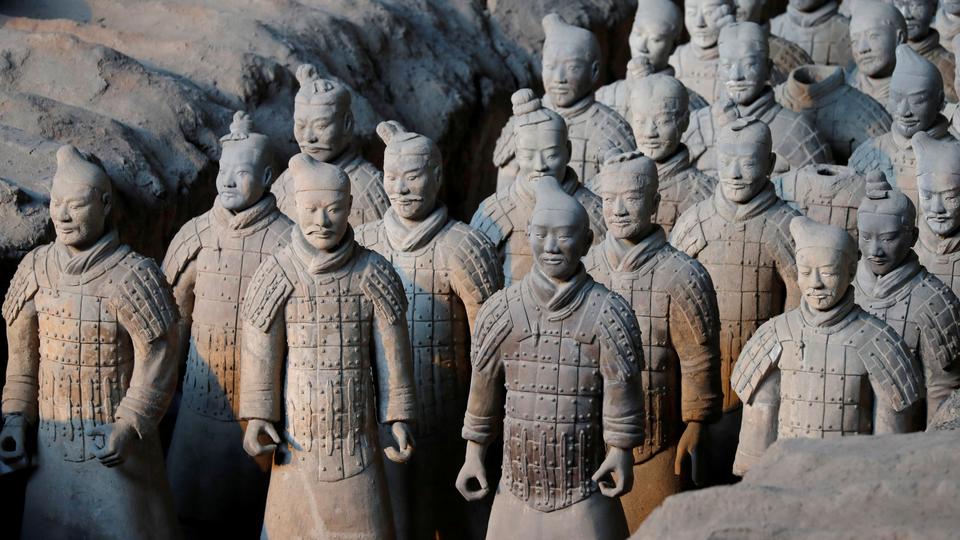
The famous Terracotta Warriors
The famous Terracotta Warriors. Photo: Xinhua

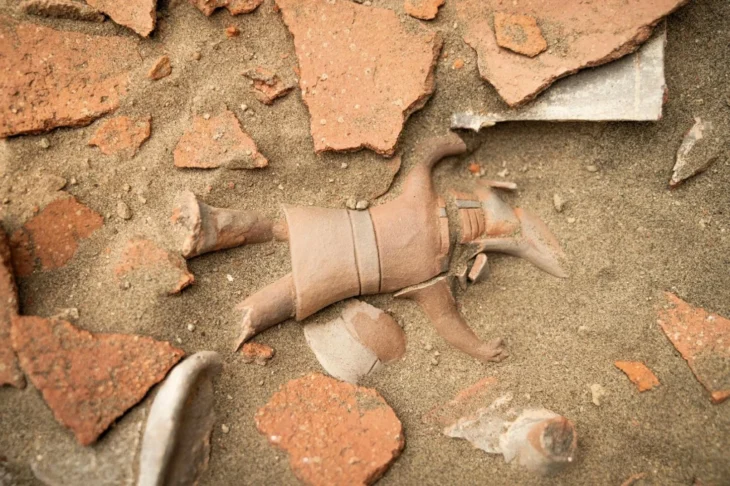
Pottery figurines from the Mausoleum of Emperor Wen of Han from the Western Zhou Dynasty (1046 BC-771 BC), the epitaph of famed calligrapher Yan Zhenqing from the Tang Dynasty (618-907), and the stone carvings at the Neolithic City of Shimao will be presented to the public for the first time, according to a report from CCTV.


📣 Our WhatsApp channel is now LIVE! Stay up-to-date with the latest news and updates, just click here to follow us on WhatsApp and never miss a thing!!


Media reported that many of the displayed relics have been restored and are being protected using new techniques and advanced technology. For example, wooden figurines from the Zhou Dynasty (1046BC-771BC) were able to be excavated in whole through the use of liquid gypsum, a soil conditioner. This method was also used to move the chariot and horse pits of the Western Zhou Dynasty (1046 BC-771 BC) and the mural tombs of the Yuan Dynasty (1271-1368) to the museum as complete “packages.”
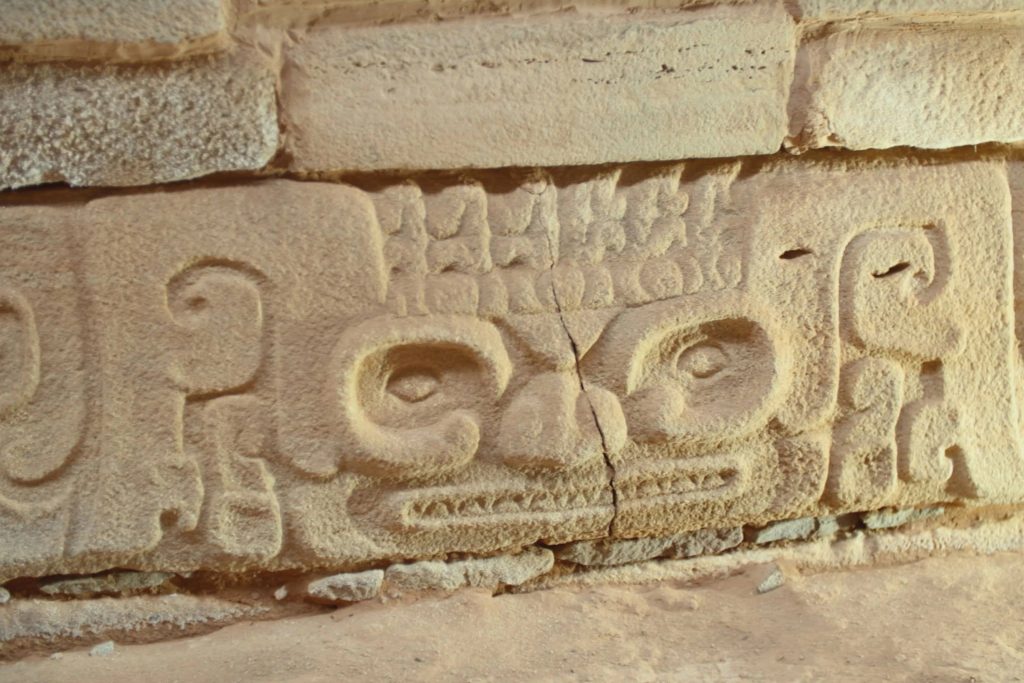
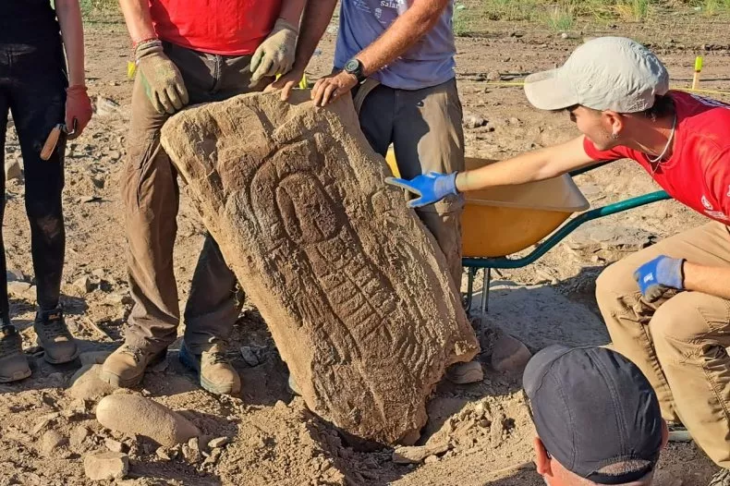
Stone carvings found in the Neolithic city of Shimao.
Stone carvings found in the Neolithic city of Shimao. Photo: Xinhua

According to Sun Zhouyong, head of the Shaanxi Academy of Archaeology, the museum displays will follow the development of Chinese archaeology, with cultural relics exhibited together with background on the sites where they were unearthed, as well as archaeological interpretations to offer visitors a glimpse of the field.

Xi’an City, Shaanxi Province invested 315 million yuan to build China’s first archaeological museum – the Shaanxi Archaeological Museum, which will be located west of the Xiangji Temple in Changan District.
Related Articles

Archaeologists Use Song to Unveil the Legendary End of West Africa’s Kaabu Kingdom

19 March 2025

19 March 2025

As the archaeological discoveries at Kansala, located in present-day Guinea-Bissau, reveal the tangible remnants of the once-mighty Kaabu Kingdom, the...

Oldest Aboriginal pottery discovered in Far North Queensland

10 April 2024

10 April 2024

More than 2000 years ago, Aboriginal Australians were producing ceramics on a secluded island about 35 kilometers off the coast...

Vindolanda marks the 1900th anniversary of Hadrian’s Wall with an altar discovery

9 February 2022

9 February 2022

The excavation season hasn’t started yet, but the Vindolanda Roman fort has kicked off Hadrian’s Wall’s 1900th anniversary year with...

Sacred Seduction: Kamasutra Feminism and the Legacy of Ancient Erotic Temples

8 April 2025

8 April 2025

For many, the Kamasutra is merely a name linked to condom brands and erotic chocolates, often dismissed as just a...

Otto the Great’s Tomb Marble Did Not Come from Italy or Greece, New Research Reveals

19 December 2025

19 December 2025

A major archaeological discovery in Germany is reshaping long-held assumptions about one of Europe’s most iconic imperial monuments. The tomb...

From Türkiye to Iraq: Returning 6,000-Year-Old Cuneiform Tablets That Unlock Ancient Mesopotamia

2 July 2025

2 July 2025

Türkiye has made a significant contribution to cultural diplomacy and historical justice by returning six ancient cuneiform clay tablets to...

Silver coins found near the ruins of the medieval monastery in Holy island

10 November 2021

10 November 2021

Archaeologists have discovered a silver coin on Lindisfarne, known as Holy Island, in the northeast of England. Dig Ventures is...

1,600-year-old Roman-era wine shop unearthed in Greece

29 January 2024

29 January 2024

A team led by Scott Gallimore of Wilfrid Laurier University and Martin Wells of Austin College discovered a 1,600-year-old Roman-era...

2500 Years of Animal Love in Termessos Ancient City

8 February 2021

8 February 2021

We are witnessing more and more of the unscrupulousness, cruelty and torture inflicted on our animal friends every day.These news...

Rare Ancient Stamps Found in Falster May Show Way to an Unknown King’s Home

27 July 2023

27 July 2023

In the center of Falster, southeast of Denmark, a man with a metal detector has made an important discovery. The...

Türkiye’s Neolithic Settlement Çayönü Hill Discovered New Tombs from Early Bronze Age

4 September 2023

4 September 2023

Archaeologists have unearthed 5 more tombs dating to the Early Bronze Age during the recent excavations on Çayönü Hill in...

Remains of a Roman stylobate found in Montenegro

19 July 2023

19 July 2023

In ancient Rhizon (Risan) in Montenegro, remains of a Roman stylobate (a shared base for multiple columns) were uncovered. In...

Britain’s Largest Iron Age Gold Coin Hoard: A Possible Tribute to Julius Caesar?

16 May 2025

16 May 2025

In a stunning revelation, British authorities have recently announced the discovery of an unparalleled Iron Age coin hoard, a singular...

Smiling Medusa Found in Queen Amastris’s City: A Rare Discovery in Northern Türkiye

9 December 2025

9 December 2025

Archaeologists working in the ancient city of Amastris, located in the modern-day town of Amasra in Türkiye’s Bartın province, have...

New Archaeological Discoveries in Abu Dhabi shed light on Umm an-Nar Bronze Age culture (2700-2000 BCE)

1 February 2024

1 February 2024

New findings demonstrate the resilience and inventiveness of local Bronze Age societies (Umm an-Nar Bronze Age culture), as well as...