17 January 2026 The Future is the Product of the Past

Centuries-old boardwalk discovered

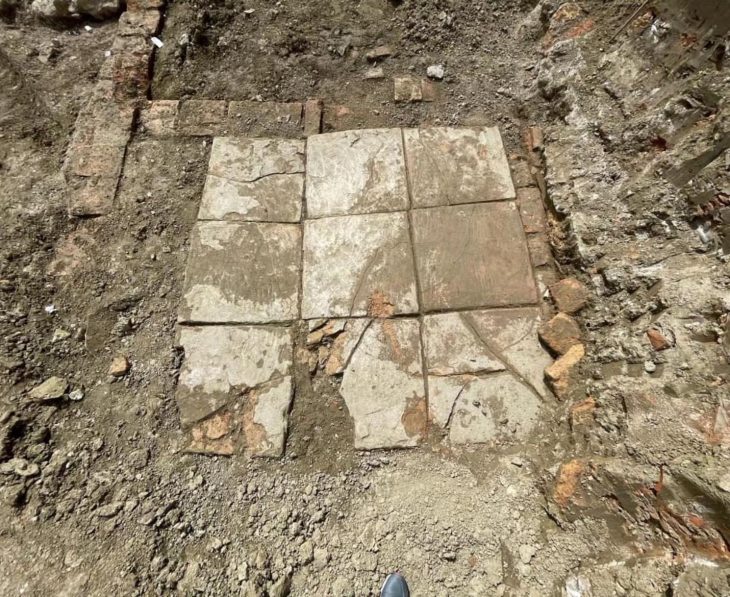
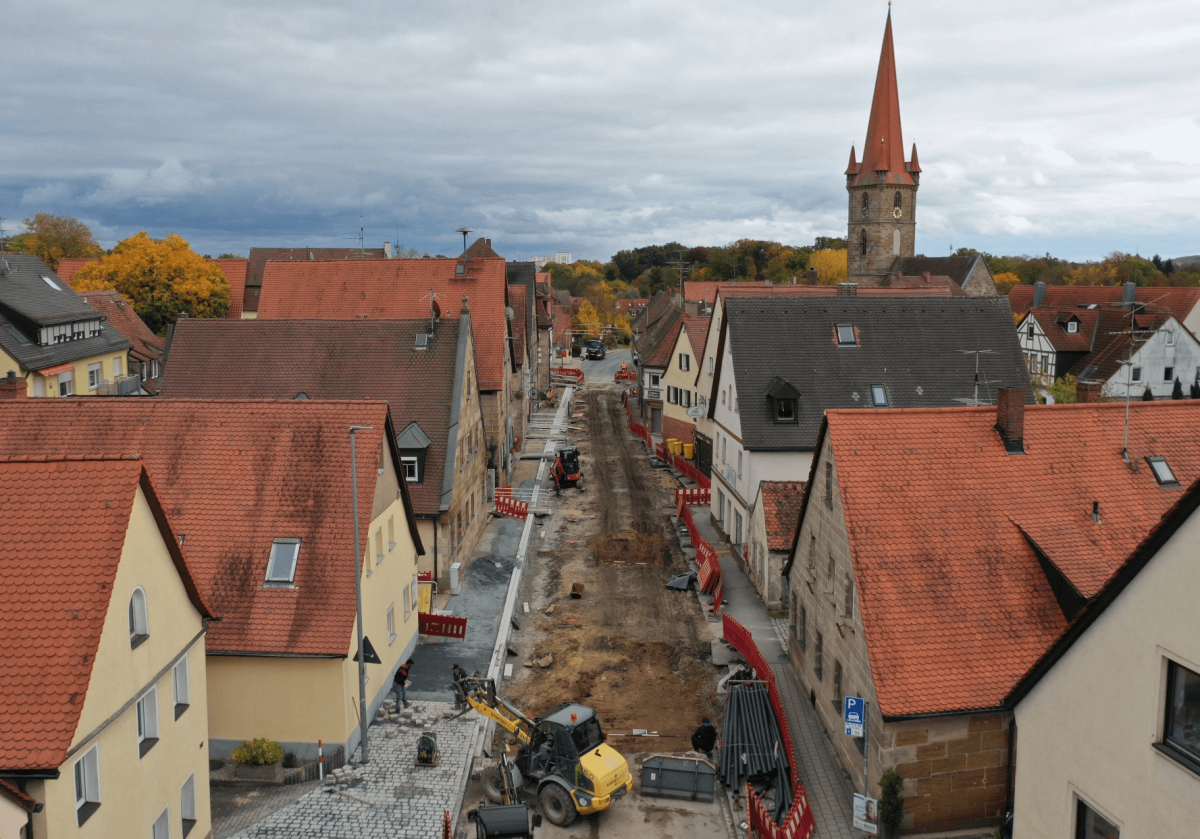
During construction work in November 2023, road construction workers in Fürth came across an archaeological sensation: a centuries-old boardwalk under Würzburger Straße in the Burgfarrnbach district.

This historic path, on which the Franks of the early modern period once drove their carts, is now being uncovered piece by piece and provides insights into the rich history of Middle Franconia, Germany.

During road construction work in the Burgfarrnbach district of Fürth, the remains of a historic trade route from Nuremberg to Frankfurt came to light, reports the Bavarian State Office for monument preservation. Bit by bit, the archaeologists are now uncovering the heavy wooden planks that once fortified the centuries-old path and are hoping for further finds.

It is common knowledge that a large number of European cities and settlement structures have a fascinating past. But archaeology frequently lacks access to historical remnants because of modern development. But sometimes opportunities present themselves; in this instance, for example, the archaeological findings were also the result of construction work.

Underneath the present paving, workers renovating Würzburger Straße in the Fürth district of Burgfarrnbach discovered some unusual structures last November. This led to the current archaeological investigation, the findings of which are now being reported on by the Bavarian State Office for Monument Preservation (BLfD).


📣 Our WhatsApp channel is now LIVE! Stay up-to-date with the latest news and updates, just click here to follow us on WhatsApp and never miss a thing!!
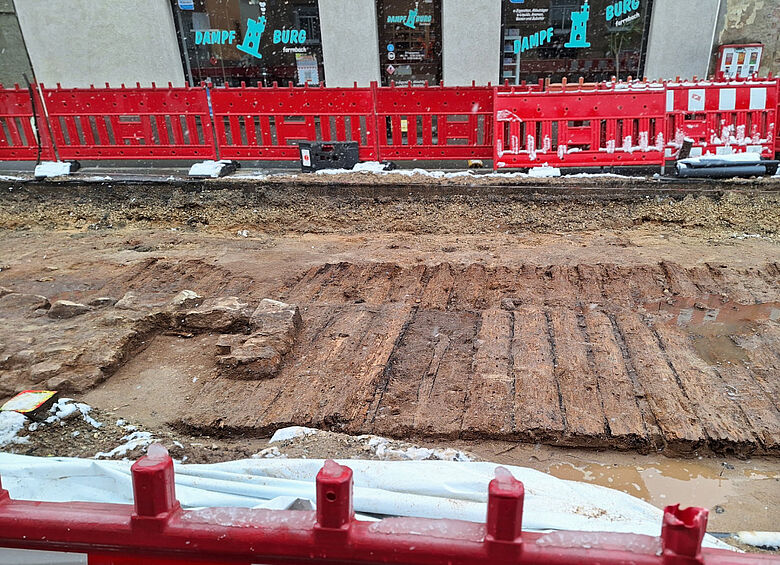


Photo: © Bavarian State Office for Monument Preservation

The archaeologists discovered the hundreds of years old remains of a boardwalk, which is now being uncovered for meters further.

The community chronicle from 1592 provides the first references to the Bohlenweg, which was once the town thoroughfare and represented an important long-distance route between Nuremberg and Frankfurt. It says that the residents were asked to maintain the path and, where necessary, repair it. Dendrochronological dating of pine planks recovered during the current excavations revealed that they were felled in 1773.

In 1790, the people of Fürth were treated to a very special spectacle: on September 27th, a procession with noble carriages and horses paraded through Burgfarrnbach to ceremoniously accompany the valuable imperial jewels such as the imperial crown and the Holy Lance – the treasure of the German emperors and kings. By this time at the latest, the wooden plank road must have been developed into a paved road based on the Berlin model.

With every plank uncovered, fascinating relics emerge, offering an insight into everyday life in past centuries. Buttons, horseshoes and even a silver coin from the early modern period have already been discovered. While experts continue to work on recovering a particularly well-preserved part of the path and preserving it for research and presentation purposes, the exposure of the boardwalk will add an important chapter to the history of Middle Franconia.

BLfD

Cover Photo: Drone view of the excavation on Würzburger Straße in the Burgfarrnbach district of Fürth. © Bavarian State Office for Monument Preservation
Related Articles

Archaeologists uncover Europe’s oldest lakeside stilt village behind a fortress of defensive spikes

11 August 2023

11 August 2023

Under the turquoise waters of Lake Ohrid, the “Pearl of the Balkans” Scientists have uncovered what may be one of...

The Only Known Roman Brewery, Discovered in Central Italy

6 July 2024

6 July 2024

Archaeologists from the University of Macerata have discovered the only brewery from the Roman era found to date on the...

Poland’s largest megalithic cemetery discovered

3 March 2021

3 March 2021

Archaeologists excavated in Poland discovered a large megalithic complex, including dozens of tombs dating back 5,500 years. The site was...

The researchers may have cracked the mystery of da Vinci’s DNA

7 July 2021

7 July 2021

A recent study of Leonardo da Vinci’s family tree indicates that the renowned Renaissance artist, inventor, and anatomist had 14...

Mystery of Knaresborough Roman hoard revealed by Newcastle experts

13 January 2024

13 January 2024

Archaeologists at Newcastle University have investigated one of the most unusual late-Roman metalware ever discovered in the British Isles. Although...

Egypt unearths 2,300-year-old remains of Greco-Roman town in Alexandria

28 August 2021

28 August 2021

An Egyptian archeological team discovered the ruins of a Greco-Roman residential and commercial town in the north coast city of...

“Human evolution” Migration out of Africa was affected by climate constraints.

25 August 2021

25 August 2021

The story of modern man’s migration from Africa still remains unclear in many aspects. Why did people migrate? Is it...

2,000-year-old bamboo slips discovered in Yunnan

31 March 2023

31 March 2023

Thousands of bamboo slips (rectangles tied together to form books) have been discovered at the Hebosuo archaeological site in southwestern...

The sensational second discovery in Croatia: Greek-Illyrian Helmet 2500 years old

16 April 2024

16 April 2024

Archaeologists found a 2500-year-old Greek-Ilyrian helmet during excavations in the Gomila area in the town of Zakotorac on Croatia’s Pelješac...

Digs at Turkey’s Seyitömer mound reveals thousands of artworks

20 March 2022

20 March 2022

Approximately 14,500 artifacts have been unearthed during rescue excavations carried out over 33 years at Seyitömer Mound in Turkey’s western...

Ancient tools discovered in Maryland show the first humans came to America 7,000 years earlier than previously thought

23 May 2024

23 May 2024

When and how humans first settled in the Americas is a subject of considerable controversy. A Smithsonian Institution geologist now...

From the Balkans to Rome: How Bosnia, Serbia, and Kosovo Quietly Strengthened an Empire

14 December 2025

14 December 2025

For centuries, the strength of the Roman Empire has been explained through its armies, its roads, and its conquests. Histories...

1,500-year-old baptistery found in Kadı Castle-Anaia Mound in western Turkey

3 December 2021

3 December 2021

A baptistery, estimated to have been built in the 5th century AD, was unearthed in the Kadı Castle-Anaia Mound in...

3,500-Year-Old Hittite Linen Fabric Exhibited for the First Time

10 March 2025

10 March 2025

A remarkable artifact, a piece of Hittite linen fabric dating back 3,500 years, has been publicly exhibited for the first...

9,300-year-old Gre Filla Mound in southeastern Turkey to be relocated

20 September 2022

20 September 2022

While public criticism continues due to the fact that Gre Filla, known as Diyarbakır’s Göbeklitepe, is under the dam, Diyarbakır...