
7 February 2026 The Future is the Product of the Past

Archaeologists Uncover Sak-Bahlán: The Lost “Land of the White Jaguar,” Last Stronghold of Rebel Maya in Chiapas

Deep in the rainforest of Chiapas, Mexico, archaeologists believe they have uncovered the lost city of Sak-Bahlán, known as the “Land of the White Jaguar” — the final refuge of the last Maya rebels who resisted Spanish conquest for more than a century.

After remaining hidden for over 300 years, the once-mythical city of Sak-Bahlán has likely been rediscovered by an international archaeological team co-directed by Dr. Brent Woodfill (Winthrop University, USA) and Dr. Yuko Shiratori (Rissho University, Japan). The groundbreaking discovery sheds light on the Lakandon-Ch’olti’es, Maya groups who remained independent long after the fall of their capital, Lacam-Tún, in 1586.

GIS Technology Leads the Way

This remarkable find was made possible by Josuhé Lozada Toledo, a researcher from Mexico’s National Institute of Anthropology and History (INAH), who developed a predictive model using Geographic Information Systems (GIS). Lozada based his calculations on historical records, particularly the 17th-century letters of Spanish friar Diego de Rivas, who described the route taken to and from Sak-Bahlán in the 1690s.

De Rivas’ writings described a four-day journey on foot followed by two days by canoe along the Lacantún River, eventually reaching the confluence with the Pasión River. By reconstructing these paths using ArcGIS Pro software, Lozada input various variables — terrain, water bodies, vegetation, and even the average load carried per person — to estimate a realistic search zone.
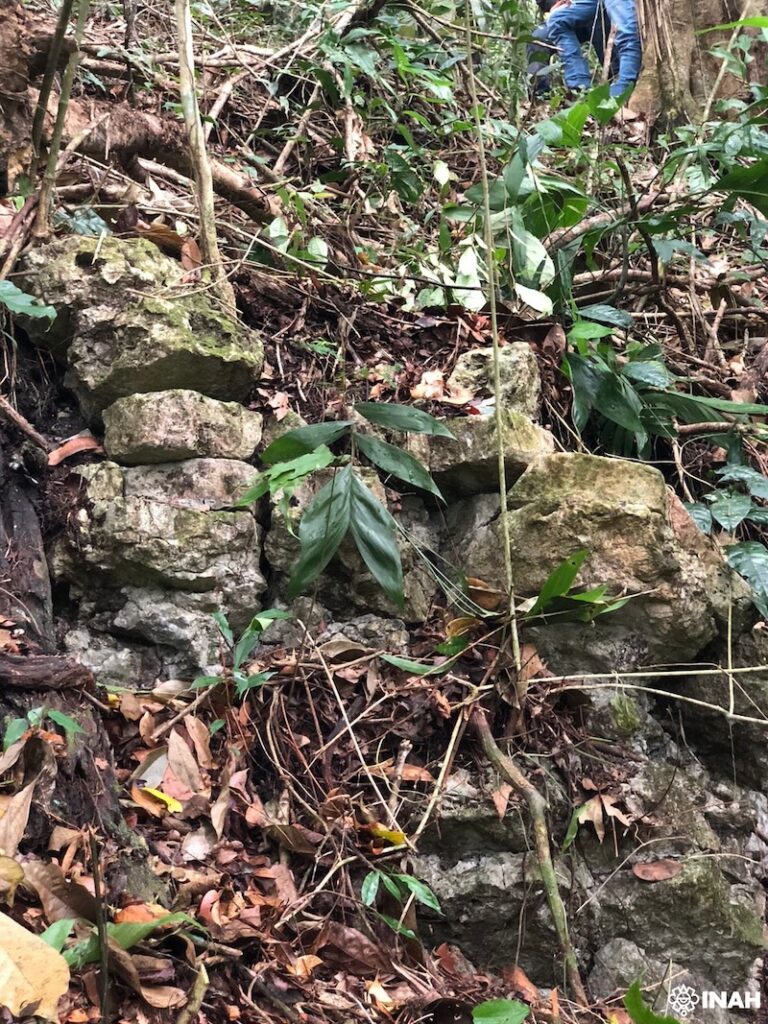
The archaeological project has conducted two field seasons to map the site and build test pits to determine its temporal occupation. Photo: Josuhé Lozada, CINAH Chiapas

Discovery in the Jungle

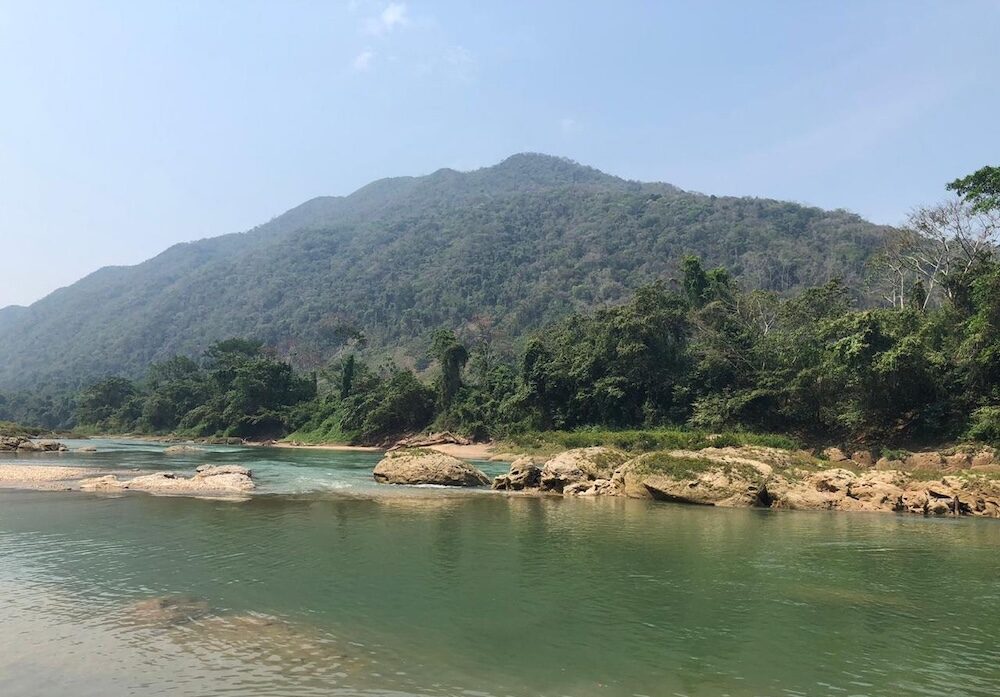
Fieldwork began within this calculated region, located near the Jataté and Ixcán rivers, in the heart of the Montes Azules Biosphere Reserve, near the modern Mexico–Guatemala border. After extensive expeditions that mimicked the hardships of 19th-century exploration — albeit with satellite internet and modern tools — the team located architectural remains consistent with Maya construction and colonial records of Sak-Bahlán.


📣 Our WhatsApp channel is now LIVE! Stay up-to-date with the latest news and updates, just click here to follow us on WhatsApp and never miss a thing!!


“It was the most grueling field experience of my career,” said Lozada, “but in the end, we found archaeological evidence right where the model predicted.”

The site has now been registered as “Sol y Paraíso. Probablemente Sak-Bahlán” in Mexico’s National Registry of Archaeological and Historic Monuments, signaling its significance. The team has already completed two field seasons, mapping the site and conducting preliminary excavations to determine its time of occupation.

The Final Bastion of Resistance

Historically, Sak-Bahlán was the final sanctuary of the rebel Maya who refused to accept Spanish rule. These Lakandon-Ch’olti’es remained isolated in the jungle for 110 years after the fall of Lacam-Tún, preserving their autonomy until 1695 when the Spanish friar Pedro de la Concepción discovered the city. Shortly thereafter, it was subdued and renamed Nuestra Señora de los Dolores (Our Lady of Sorrows). It was abandoned by 1721 and eventually consumed by the jungle.

The discovery has profound implications for understanding Maya resistance, indigenous survival, and post-conquest dynamics in colonial Mesoamerica. As referenced by historian Jan de Vos, who once attempted to locate Sak-Bahlán in a failed 1999 expedition, this site represents the final chapter in the defiance of the last free Maya city.
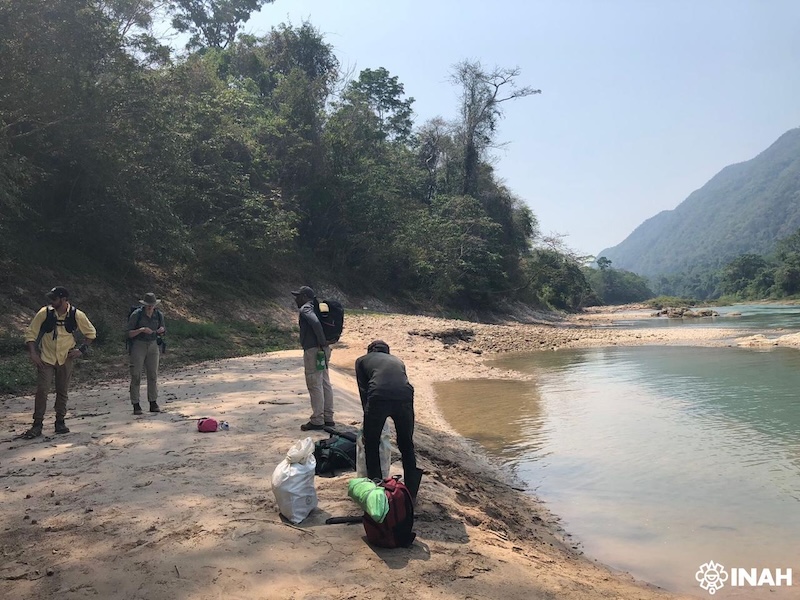
The project, co-directed by experts from Winthrop University (USA) and Rissho University (Japan), also involves INAH (National Institute of Anthropology and History). Photo: Josuhé Lozada, CINAH Chiapas.

Documentary and Future Research

The discovery is also the focus of an upcoming Discovery Channel documentary titled “Discovering the Hidden Mayan City: Sac Balam.” Additional findings and interpretations will be published in the next issue of Chicomoztoc, a peer-reviewed archaeology journal.

With further excavations planned, researchers hope to uncover more clues about the lives of the Lakandon-Ch’olti’es, their resistance to colonization, and the spiritual and political significance of the so-called Land of the White Jaguar.

INAH

Cover Image Credit: The possible last city of the rebel Lacandon Maya in Chiapas, Sak-Bahlán, located. Credit: Josuhé Lozada, CINAH Chiapas.

Related Articles

Polish archaeologists discovered new petroglyphs dating back to the 3rd century in Colorado

14 December 2023

14 December 2023

Archaeologists from the Jagiellonian University, southern Poland, have made a significant discovery of ancient indigenous paintings and carvings in the...

Teymareh Petroglyphs, One of the World’s Largest Rock Art Collections, at Risk of Disappearing Due to Mining Activities

20 August 2024

20 August 2024

Petroglyphs are among the world’s oldest practiced art forms and are as diverse as the wide-ranging cultures and civilizations that...

4,400 Years Old Shaman Snake Staff Found in Finland

29 June 2021

29 June 2021

A very well-preserved 4,400-year-old Shaman Snake Staff made of wood has been found in Finland. The “Snake Staff” found is...

1700-year-old weaving workshop discovered in southeast Turkey

4 December 2021

4 December 2021

Excavations carried out in the ancient city of Perre in the southeastern province of Adıyaman have unearthed a 1,700-year-old weaving...

Excavations at the site in the coastal city of São Luís, Brazil uncovered thousands of artifacts left by ancient peoples up to 9,000 years ago

4 February 2024

4 February 2024

Archaeologists unearthed 43 human skeletons and more than 100,000 artifacts at an excavation site in the coastal city of São...

2,000-Year-Old Roman Hippodrome Discovered Beneath a Former Landfill in Kayseri

24 October 2025

24 October 2025

In a remarkable archaeological breakthrough, researchers in central Türkiye have confirmed the discovery of a 2,000-year-old Roman hippodrome (Roman Circus)...

The first ivory work of art recovered from the World Heritage cave Hohle Fels was believed to be a horse – until archaeologists made a new discovery-

30 July 2023

30 July 2023

For more than 20 years, the first ivory work of art recovered from the World Heritage cave Hohle Fels was...

Mythical Viking stronghold Jomsborg could be on Hangman’s Hill near Wolin, archaeologist say

14 July 2023

14 July 2023

A new hypothesis about the location of the mythical Viking stronghold on Hangman’s Hill near Wolin (West Pomerania) has been...

Ancient Burial Mound May Be Hidden on the Campus of Siberia’s Oldest University

18 January 2026

18 January 2026

Archaeologists from Tomsk State University (TSU), the oldest university in Siberia, have put forward a compelling hypothesis: a medieval burial...

Ancient cooking vessel found in northern Minnesota dates back more than 1,600 years

28 February 2022

28 February 2022

Dating of Ceramic sherds found in 2003 at the Boundary Waters Canoe Area Wilderness in northern Minnesota revealed the vessel...

A huge artificial lake in Sicily is an ancient sacred pool that was aligned with the Stars and used 2,500 years ago, study reveals

17 March 2022

17 March 2022

A sacred freshwater pool on western Sicily’s San Pantaleo Island that dates back some 2,500 years was aligned with the...

New Insights From Researchers About The World’s Longest Aqueduct

11 May 2021

11 May 2021

The Roman Empire’s aqueducts are magnificent specimens of the art of architecture. Although centuries have passed since these aqueducts were...

Archaeologists uncovered a second mosaic in Rutland Roman villa in England

29 November 2022

29 November 2022

Archaeologists report they have uncovered a second mosaic at the site of the 2020 mosaic discovery at the Roman villa...

Neanderthals used glue to make stone tools 40,000 years ago, a new study suggests “Earliest evidence of a multi-component adhesive in Europe”

22 February 2024

22 February 2024

More than 40,000 years ago, Neanderthals in what is now France used a multi-component adhesive to make handles for stone...

New study reveals Dog ancestry can be traced back to two separate wolf populations

30 June 2022

30 June 2022

An international group of geneticists and archaeologists with participation of the University of Potsdam have found that the ancestry of...