14 March 2026 The Future is the Product of the Past

Archaeologists revealed Urartian King Menua second temple in Van excavations

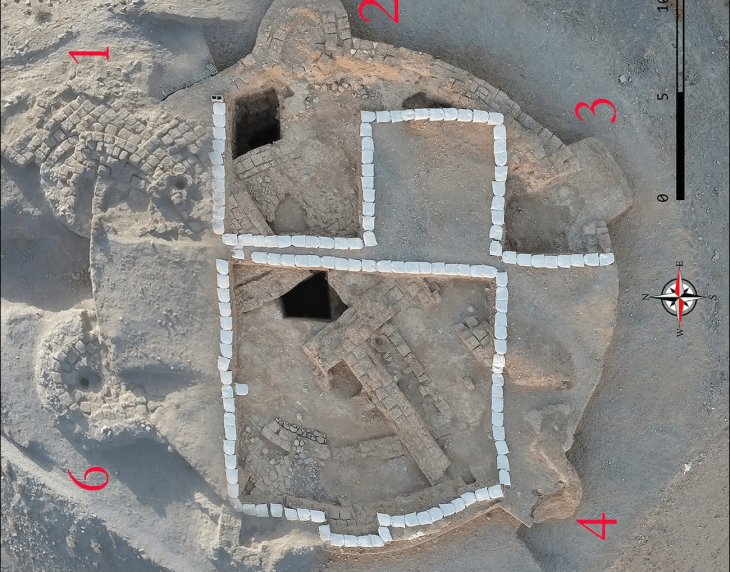
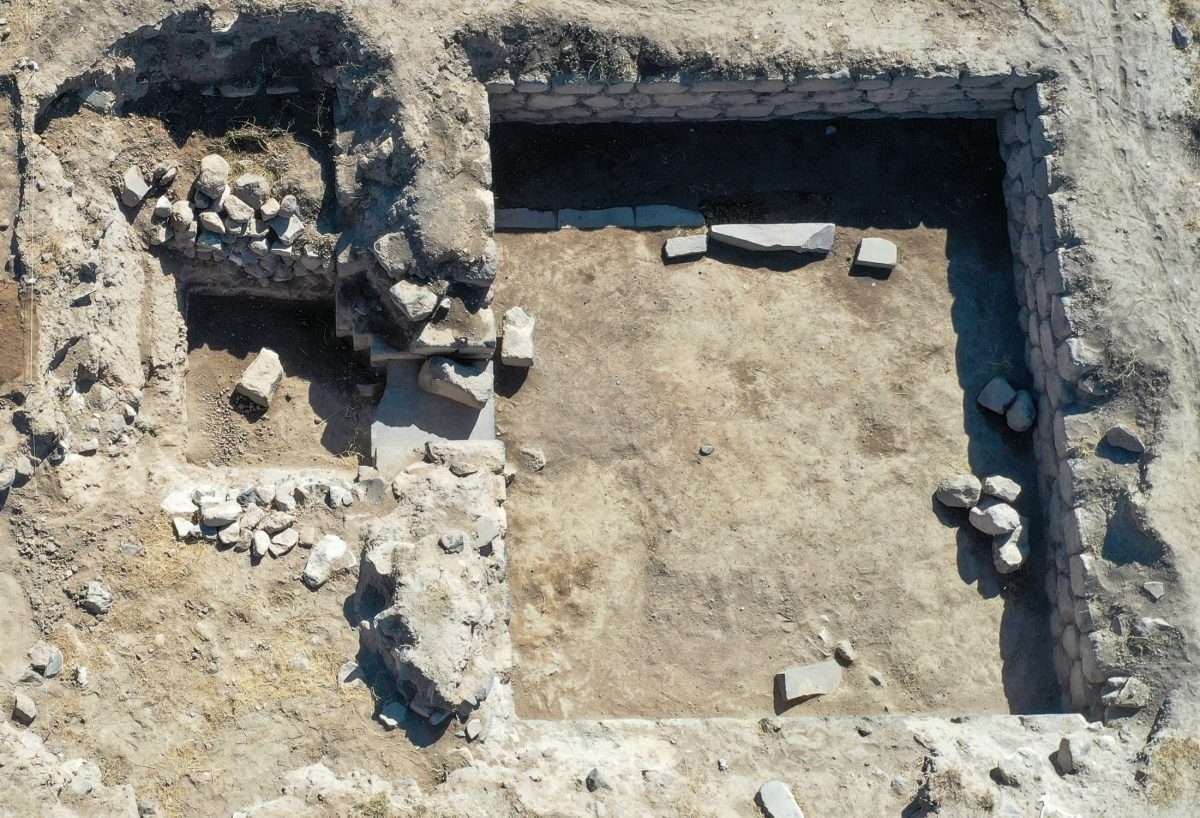
The second temple of King Menua as well as a chamber tomb were unearthed during the excavations carried out this year in the Urartian castle in the Muradiye district of Van, in eastern Turkey.

The discovery was made among the ruins of Körzüt Castle from the 8th century BC. Körzüt is the modern Turkish name of a Urartean fortress situated on a rock spur at the southern end of the Muradiye/Berkri plain, about 3 km north of the modern village of Uluşar (Korsot/Gortsut), in the Muradiye district of Van province in Turkey.

Important discoveries in the castle were made during the excavations carried out by the Van Museum with the permission of the Ministry of Culture and Tourism. The castle was constructed by the Urartian King Menua.

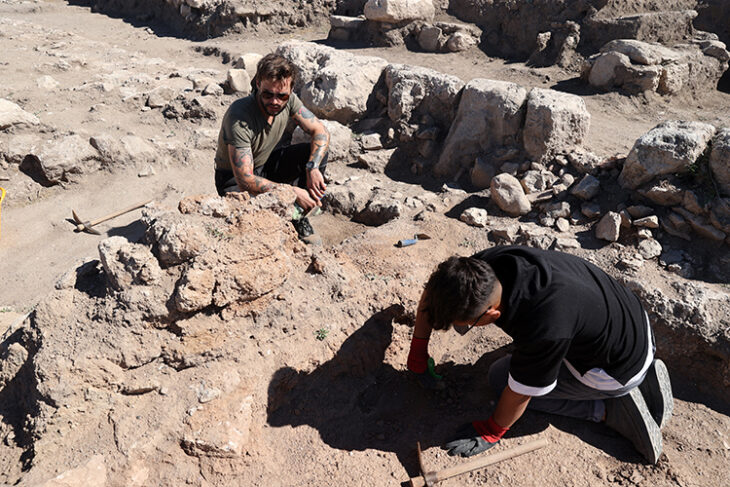
The Muradiye District Governorship and Municipality provided funding, and the archaeological excavations were initiated two months ago under the scientific direction of associate professor of archaeology at Van Yüzüncü Yıl University’s (YYÜ) Faculty of Letters Sabahattin Erdoğan. A second temple without rizalite or corner protrusions, the remains of a masonry chamber tomb constructed using the corbelling technique, pottery fragments, and metal artifacts were all found during the excavations.
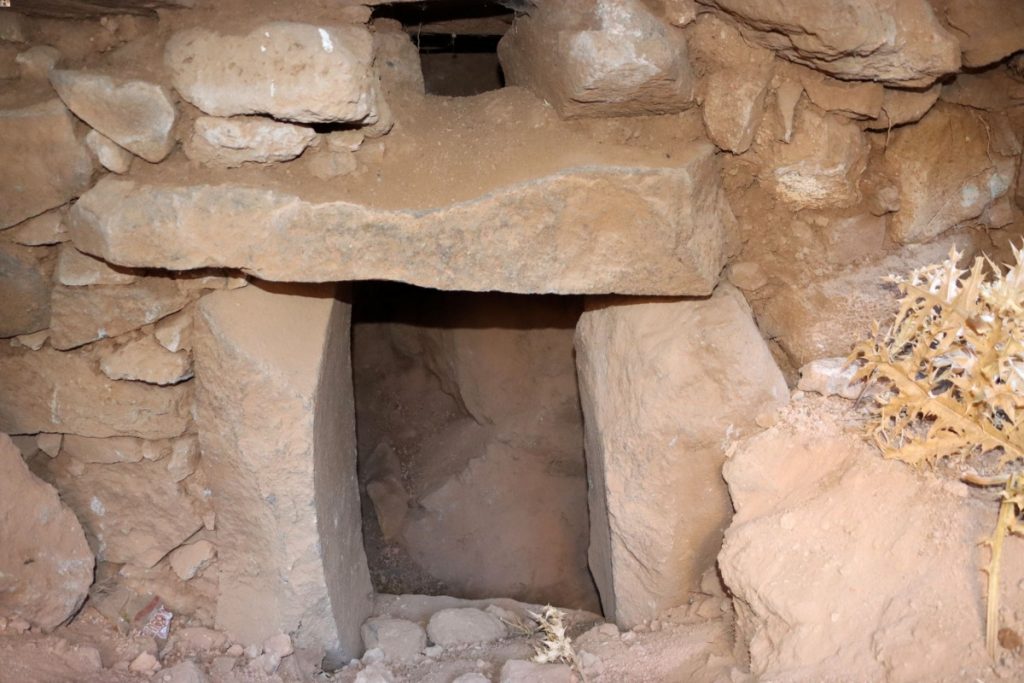
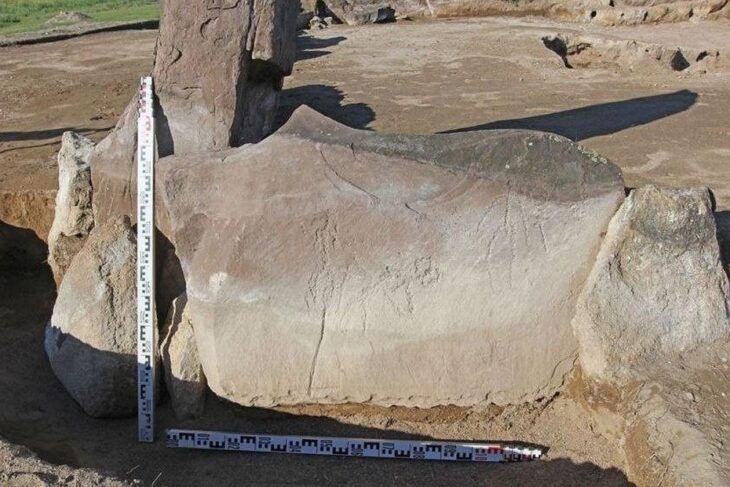
A stone masonry chamber tomb in the ruins of Körzüt Castle, in Van, Turkey. Photo: AA Photo

Erdoğan told Anadolu Agency (AA) that they came across important findings in the area where the castle ruins are located that will shed light on the history of the region. He noted that the finds were from different periods and stated that they had discovered a surprise second temple in the area where the first one was unearthed a while ago.


📣 Our WhatsApp channel is now LIVE! Stay up-to-date with the latest news and updates, just click here to follow us on WhatsApp and never miss a thing!!


Erdoğan said that they stopped the excavations with the onset of winter.

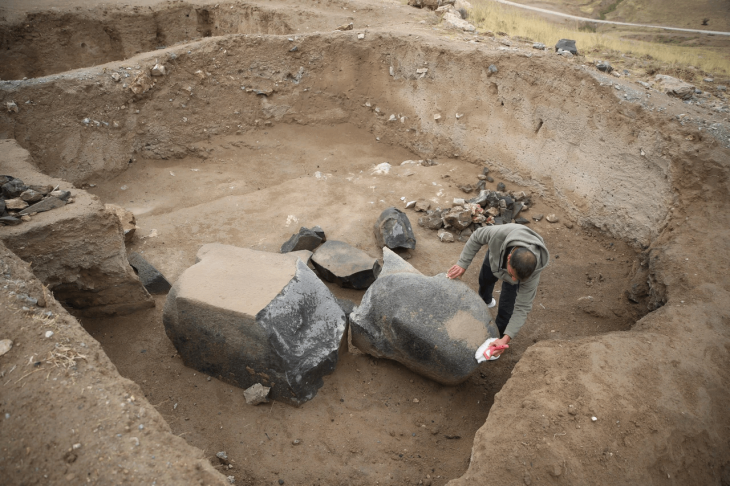
“During the excavations, we unearthed the second temple, which we think was built by King Menua. We came across an important tomb right next to it. A large number of Urartian pottery was unearthed in the area. This is an important place for excavations. There is pottery from the Middle Ages. Then, there is the necropolis just outside the castle, which we consider very important,” Erdoğan said.

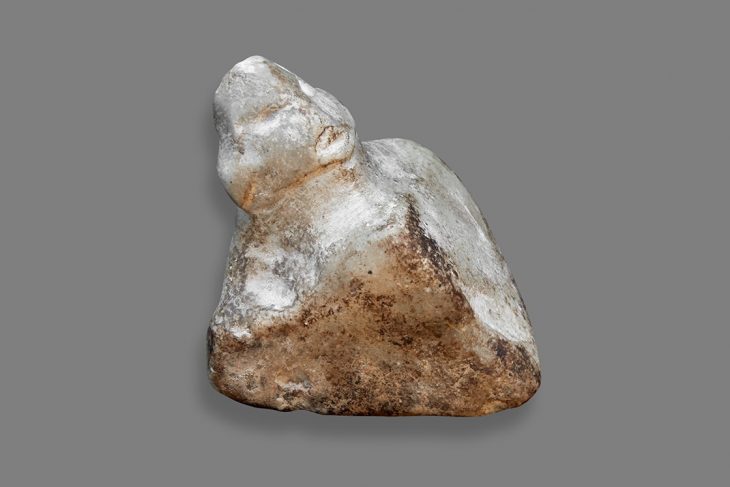
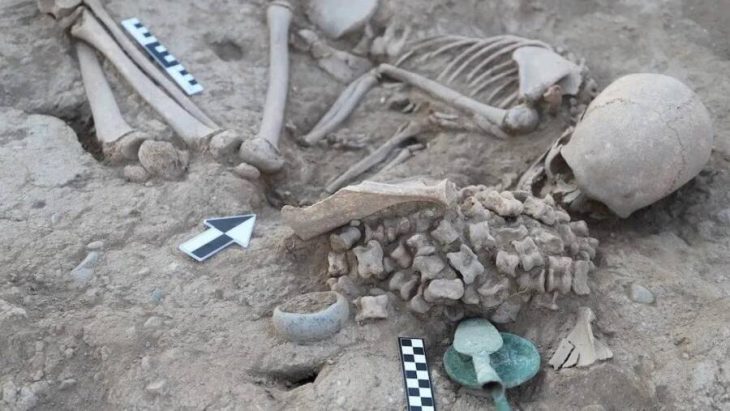
“We encountered various types of tombs here. The most important of these are stone-masonry tombs… Along with many ceramics from the Urartian period, there are pottery findings, metal artifacts and the possessions of dead people (in the excavation site).”

Excavations have been halted for the time being due to unfavorable weather conditions, but will resume next year.
Related Articles

Archeologists Unearth Spectator snacks from the Roman Period in Colosseum

28 November 2022

28 November 2022

An excavation of the Colosseum’s sewer systems has uncovered a selection of spectator snacks from the Roman Period. It appears...

Hungarian Archaeology Student Discovers Rare Bronze Figurines at Roman-Era Brigetio Site

31 July 2025

31 July 2025

A remarkable archaeological discovery emerged this July at the ancient Roman site of Brigetio in Komárom, Hungary. First-year archaeology student...

In the new images, Scotland’s biggest Pictish fort is “reconstructed.’

2 November 2021

2 November 2021

Stunning new reconstructions have revealed how Scotland’s largest known Pictish fort may have looked over one thousand years ago. Three-dimensional...

A Rare Bilingual Inscription Discovered in Saudi Arabia’s Tabuk Province

28 June 2024

28 June 2024

Saudi Arabia’s Heritage Commission announced the discovery of a rare bilingual inscription in the village of Alqan in the Tabuk...

The unknown importance of Göllü Dağ on the route of the first humans’ Transition from Africa to Europe

4 October 2021

4 October 2021

The researches conducted in Göllü Dağ and its surroundings, located within the borders of Niğde province in Central Anatolia, and...

Restoration of the Duomo of Florence has revealed original polychrome paint

1 December 2022

1 December 2022

During the restoration of the Porta dei Cornacchini and the marble cladding of the northern side of Florence’s Duomo, extensive...

Archaeologists have found an intriguing Iron Age “shrine” in the Yorkshire Wolds

19 September 2021

19 September 2021

Archaeologists have discovered an interesting ancient Iron Age “shrine” in the Yorkshire Wolds, which was marked out by meticulously placed...

Cave paintings discovered in western Turkey carry the region’s past back to prehistory

18 December 2021

18 December 2021

During the archaeological survey carried out in and around the ancient city of Alinda in Aydın province in western Turkey,...

Millefiori Glass Plateques From the 5th Century AD Discovered in the Ancient Lycian City of Myra

9 September 2024

9 September 2024

One of the six leading cities of ancient Lycia and the birthplace of Santa Claus (or Sinterklaas in Dutch), the...

Scotland’s oldest tartan discovered in Highlands bog

1 April 2023

1 April 2023

According to new research, a piece of fabric discovered in a bog in the Scottish Highlands may be the oldest...

A Polish-Croatian team discovered Ancient Roman Temple under a Croatian 18th Century church

24 November 2022

24 November 2022

Under an 18th-century church, the Church of St. Daniel in Danilo near Sibenik, Croatia, the foundations of an ancient Roman...

The First Native Americans were Among the First Metal Miners in the World

20 March 2021

20 March 2021

An arrowhead made of pure copper 8,500 years ago dates the history of the copper age to an earlier period,...

Thetford Hoard: Evidence of Continued Paganism in East Anglia Until the 5th Century

25 April 2025

25 April 2025

Recent discoveries from a treasure hoard unearthed in Thetford Forest, East Anglia, reveal compelling evidence that the region remained pagan...

Research Uncovers a Long-Isolated North African Human Lineage in the Central Sahara from Over 7,000 Years Ago

4 April 2025

4 April 2025

A recent study conducted by a team of researchers from the Max Planck Institute for Evolutionary Anthropology, including senior author...

Newly Discovered 200,000-Year-Old Rock Carvings in Marbella: Potentially Among Europe’s Oldest Cave Art

14 March 2025

14 March 2025

Marbella has just made an incredible discovery that could change everything we thought we knew about prehistoric Europe. Archaeologists working...