
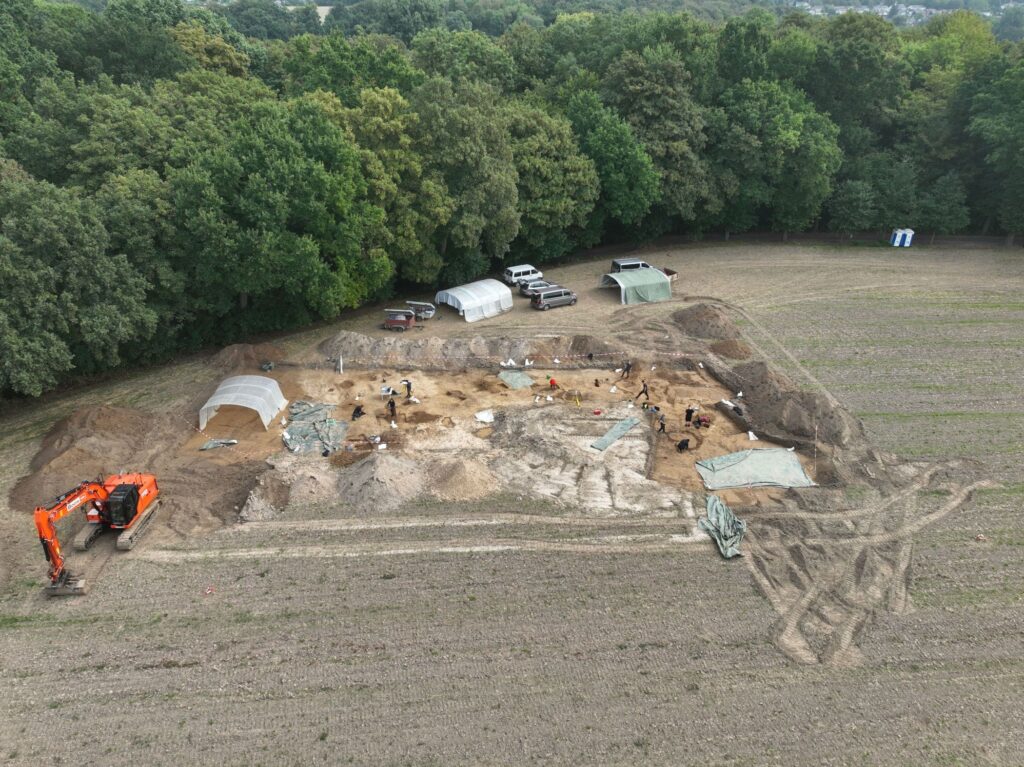
Archaeologists in western Germany have uncovered exceptionally well-preserved workshops dating back nearly 2,000 years, revealing a remarkable industrial activity beyond the borders of the Roman Empire. Discovered in Dortmund, the ancient complex provides rare physical evidence of how Germanic communities melted down and recycled Roman metal objects.
Researchers describe the discovery as an archaeological first of its kind in the western Germanic settlement region. The site, which includes furnaces, hearths, and pottery production facilities, offers an unusual glimpse into the skills and technologies of craftspeople who lived outside Roman rule.
An Ancient Industrial Site Beneath Dortmund
Today, Dortmund is closely associated with Germany’s industrial heritage, particularly its coal mines and steelworks. Yet beneath a field in the city’s western outskirts, archaeologists have discovered evidence that metalworking was already part of the region’s economic life long before the modern factories appeared.
The investigation began with an unexpected find about two years ago, when a farmer ploughing his field brought nearly 2,000-year-old pottery fragments to the surface. Preliminary archaeological examinations suggested that more substantial remains lay beneath the soil, prompting a larger investigation of the area.
WDR
Since mid-August 2026, a team from the Landschaftsverband Westfalen-Lippe (LWL) and Dortmund’s municipal archaeology department has investigated the ancient settlement. The site dates from the first to fifth centuries AD, and excavations have revealed several distinct working areas containing pits, furnaces, and hearths.
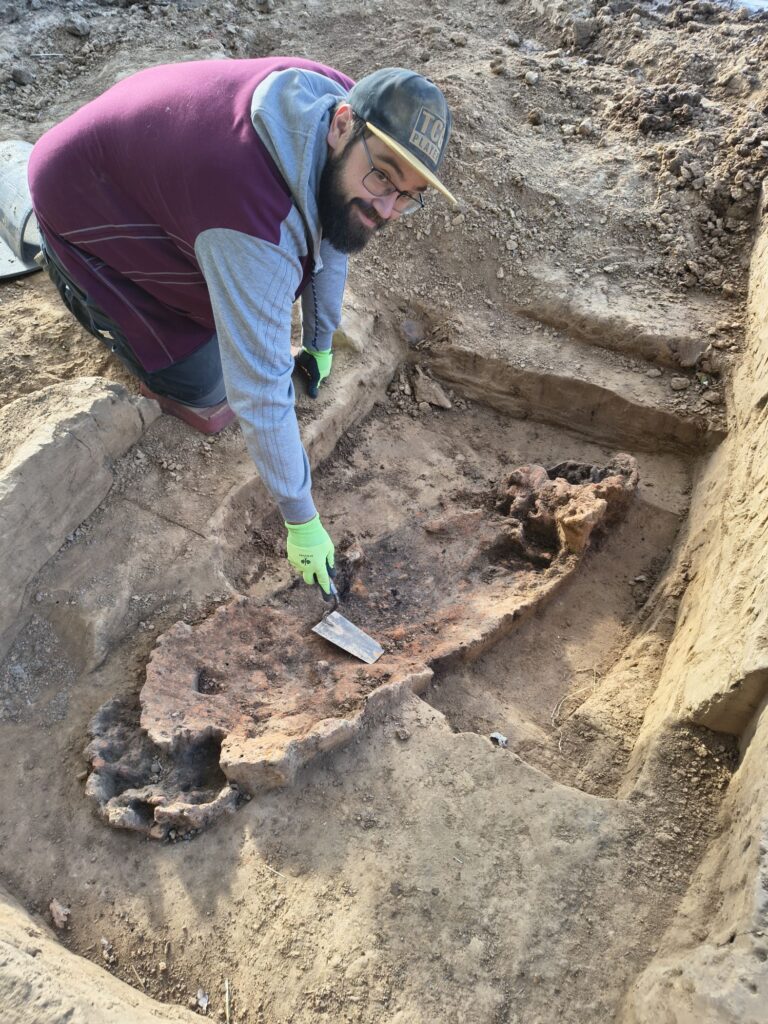
Excavation director Dr. Eva Cichy, of LWL Archaeology’s Olpe branch, described the workshop complex as unprecedented in this form in the western Germanic settlement region. The discovery includes a pottery kiln and remarkably well-preserved metalworking installations, allowing researchers to examine the physical remains of ancient craft production in unusual detail.
Roman Metal Was Given a Second Life Beyond the Empire
The metalworking installations are particularly significant because they provide physical evidence of a practice archaeologists had long suspected but struggled to document. During the later Roman Imperial period, Germanic communities obtained substantial quantities of Roman metal objects through trade or conflict. Rather than simply using these objects in their original form, they also recycled them, recovering valuable metal for further use.
Until now, however, researchers had lacked well-preserved workshop remains that could demonstrate how this recycling took place in the western Germanic settlement region. The Dortmund excavation helps fill that gap, offering an unusually detailed picture of the techniques employed by craftspeople living beyond the Roman Empire’s frontier.
According to city archaeologist Jan Rosbeck, the metalworkers placed Roman scrap inside crucibles and heated them in specially constructed furnaces. These round or oval installations had clay walls, while bellows forced air through openings at the sides to increase and control the temperature. The process allowed craftspeople to melt down existing objects and recover usable material, although archaeologists have not yet established precisely what they produced.
The discovery also sheds light on the economic connections between the Roman world and neighboring Germanic communities. Metal objects that crossed the imperial frontier did not necessarily retain their original purpose; they could become raw materials for local industries. By uncovering the installations where this transformation occurred, archaeologists have gained tangible evidence of a recycling practice that had previously been difficult to trace.
A Rare Pottery Kiln and Evidence of Failed Production
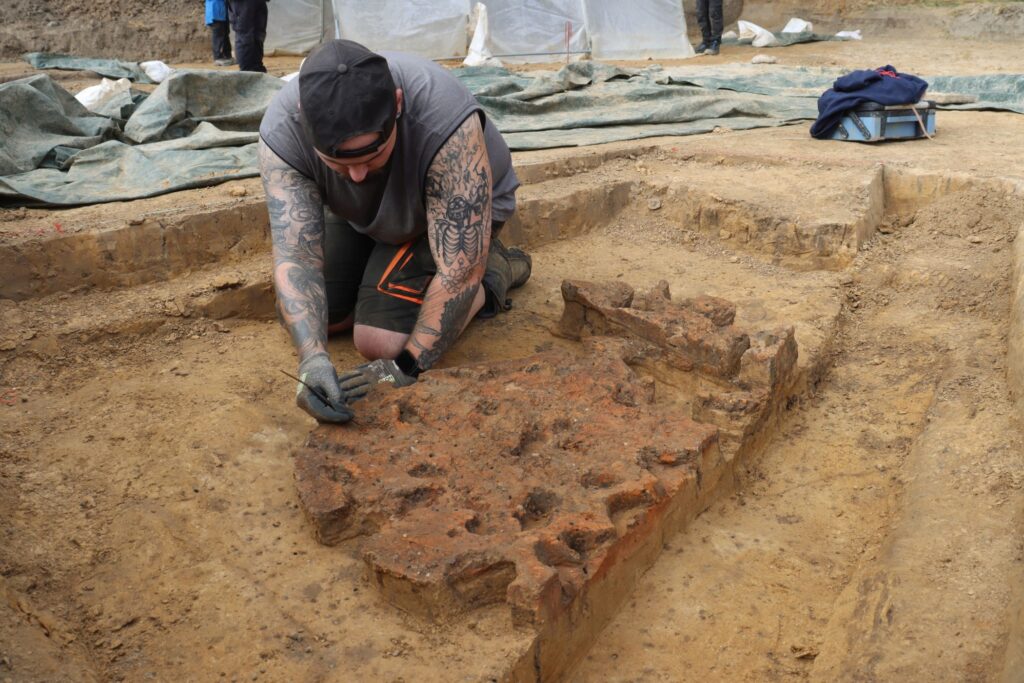
Metalworking was not the settlement’s only craft activity. Archaeologists also uncovered a pottery kiln, adding another important dimension to the discovery and providing evidence of ceramic production at the site.
An earlier investigation in 2024 had identified a well containing Roman pottery fragments and an unusual concentration of ceramic material. Researchers also documented misfired pottery that ancient craftspeople had discarded in a pit near the kiln. These unsuccessful products offer a glimpse into the practical challenges of pottery making, preserving evidence of both the production process and the mistakes that occurred during firing.
The precise types of pottery produced at the site remain uncertain, but the combination of ceramic production and metalworking makes the workshop complex particularly informative. Together, the installations suggest that the settlement supported different specialized crafts, with workers using local facilities to transform raw materials and existing objects into new products.
As the excavation approaches completion, archaeologists are preparing to recover the best-preserved metalworking furnace in its entirety. The team plans to preserve the installation for future public display, allowing visitors to examine a rare surviving example of the technology that Germanic craftspeople employed nearly two millennia ago.
The discovery’s significance extends beyond Dortmund. By revealing how communities outside the Roman Empire recycled metal and produced pottery, the workshops offer new evidence of the technical knowledge and economic activities that shaped everyday life along the empire’s northern frontier.
Landschaftsverband Westfalen-Lippe (LWL) Archaeology for Westphalia
