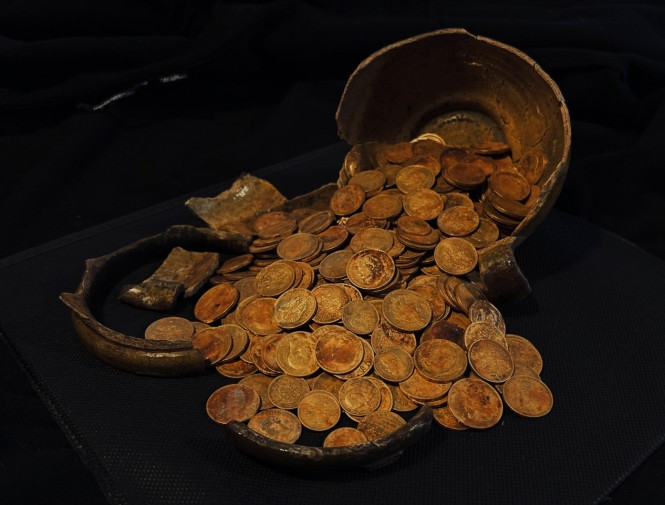
Archaeologists in Russia have uncovered a remarkable treasure: a hoard of 409 gold coins hidden beneath the foundation of a historic house in the city of Torzhok. Researchers believe the coins were buried during the turmoil surrounding the Russian Revolution of 1917, making the discovery one of the most significant archaeological coin finds in recent Russian history.
The treasure was discovered in 2025 during rescue excavations carried out ahead of new construction in the Tver Oblast. The excavation was conducted by specialists from the Institute of Archaeology of the Russian Academy of Sciences in cooperation with the All‑Russian Historical and Ethnographic Museum.
A Hidden Hoard Beneath an Old Foundation
The archaeological dig covered an area of approximately 252 square meters on Sadovaya Street in Torzhok’s historic left-bank district. The site lies just 60 meters west of the former Dmitrievskaya Church, a landmark that was destroyed in the early 1930s.
In the center of the excavation area, archaeologists examined the stone foundation of a wooden house that had been destroyed during the World War II and later rebuilt after the war.
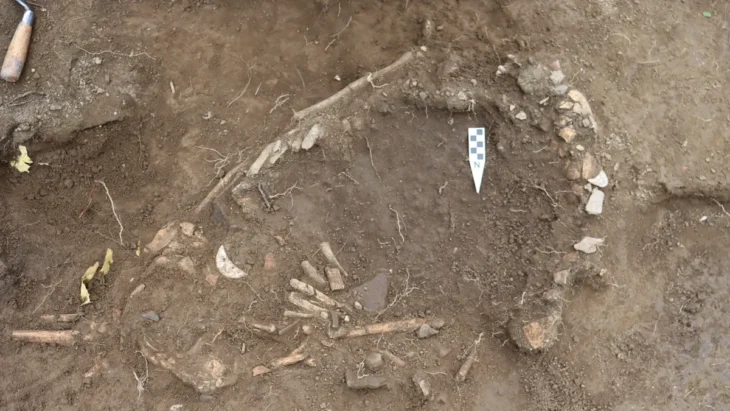
While dismantling part of the foundation of an extension to the house, researchers made an extraordinary discovery. A clay vessel hidden beneath the stones had broken open, spilling hundreds of gold coins.
📣 Our WhatsApp channel is now LIVE! Stay up-to-date with the latest news and updates, just click here to follow us on WhatsApp and never miss a thing!!
According to archaeologists, the coins had originally been stored in a small ceramic pot known as a “kandyushka,” a vessel shaped like a cup or small jar with a narrow neck and rounded handle. The container was coated with a brown-yellow glaze, and fragments of the pottery helped specialists identify its type and historical context.
Coins Dating Back to the Russian Empire
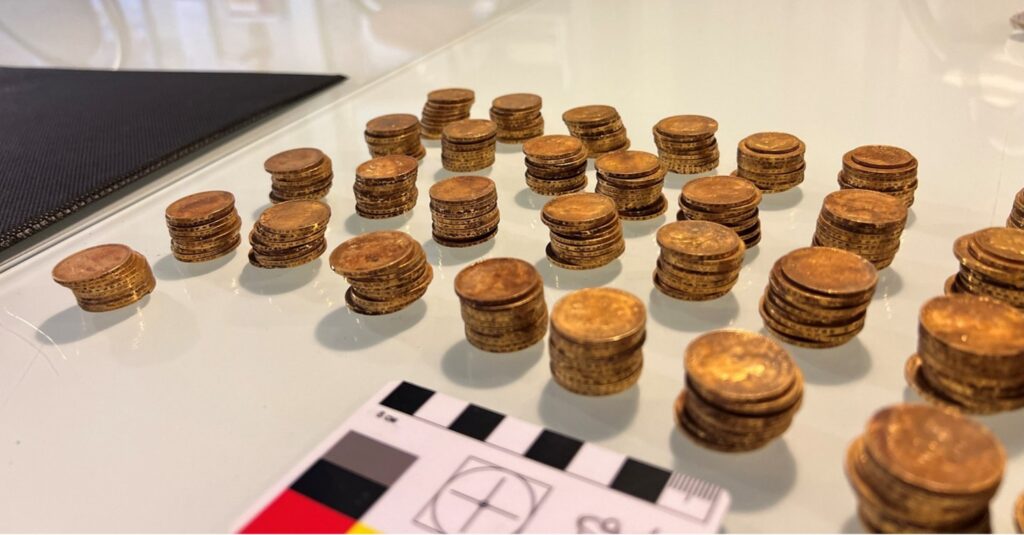
Detailed analysis revealed that the treasure consists of 409 gold coins minted between 1848 and 1911. The earliest coin dates back to the reign of Nicholas I, while most of the coins were struck during the rule of Nicholas II, the final monarch of the Russian Empire.
The majority of the coins are 10-ruble gold pieces, which were widely circulated in the late 19th and early 20th centuries. The most recent coin in the collection dates from 1911, suggesting that the hoard was buried only a few years later.
Researchers believe the treasure may have been hidden during the chaotic events surrounding the collapse of imperial rule in 1917. At the time, many citizens hid their valuables to protect them from confiscation, theft, or political upheaval.
Archaeologists describe the find as a “return hoard” — a type of hidden treasure that owners intended to retrieve later. However, in many cases, historical events prevented them from returning.
Mystery Surrounds the Owner
Despite extensive archival research, historians have not yet been able to determine who owned the gold.
Documents show that during the early 20th century, the street where the coins were discovered contained 24 separate households. Among the residents between 1914 and 1921 were priests from the local church, merchants, a treasurer, an accountant, craftsmen such as shoemakers and locksmiths, as well as clerks, tailors, and laborers.
However, the historical numbering of the houses does not match modern addresses, making it difficult to identify exactly which property corresponds to the excavation site.
For now, the identity of the person who buried the gold remains a mystery — one that historians hope future archival discoveries may help solve.
A Valuable Discovery for Numismatics
Experts say the hoard represents one of the largest collections of gold coins from the late Russian Empire ever discovered during archaeological excavations.
For numismatists and economic historians, the find provides a valuable snapshot of monetary circulation during the final decades of imperial Russia. The coins can help researchers better understand currency distribution, savings practices, and the economic behavior of individuals during a period of political instability.
Such discoveries are rare because gold coins were often melted down, reused, or recovered by their owners long ago.
Treasure to Be Displayed in Museum
After completing its scientific study, the coin hoard will soon be transferred to the All‑Russian Historical and Ethnographic Museum in Torzhok.
Museum officials say the treasure will become part of a public exhibition once restoration and preparation work are completed. The coins are expected to be displayed in the museum’s historic exhibition halls, offering visitors a unique glimpse into a dramatic moment in Russian history.
For archaeologists, the discovery is more than just a collection of valuable objects. It is a powerful reminder of the human stories hidden beneath the ground — stories of uncertainty, hope, and lives disrupted by revolution more than a century ago.
Institute of Archaeology of the Russian Academy of Sciences (IA RAS)
Cover Image Credit: Institute of Archaeology of the Russian Academy of Sciences (IA RAS)