
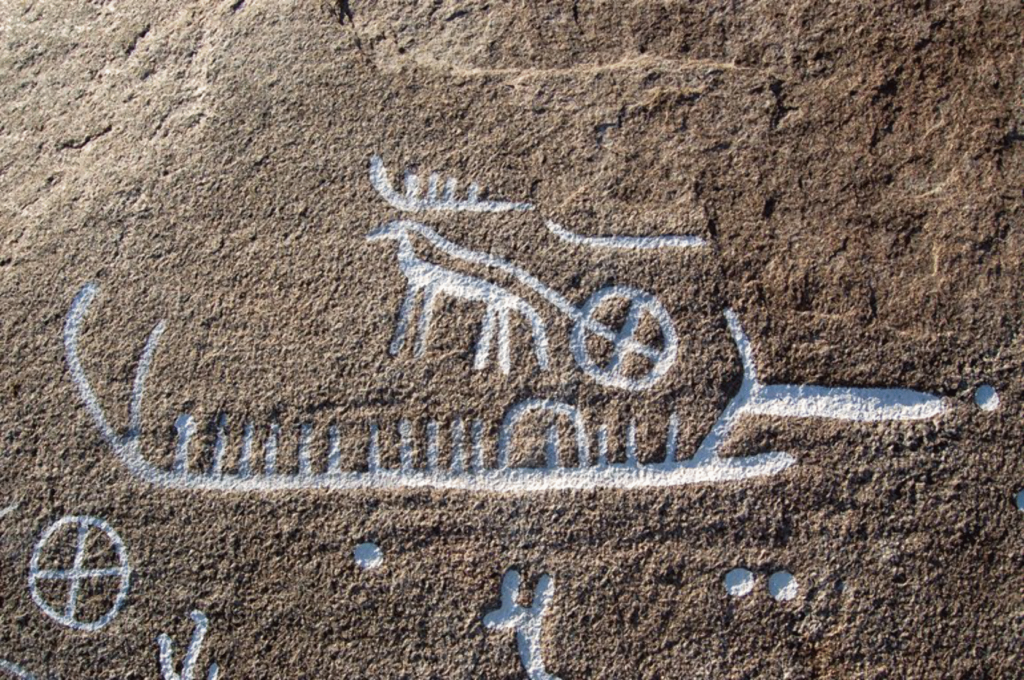
Ancient boats carved into rocks along the Atlantic edge of Spain and Portugal may preserve evidence of a far wider Bronze Age world than previously assumed. A new study suggests that some of these Iberian petroglyphs share striking details with boat images from southern Scandinavia, pointing to long-distance maritime contacts across Europe more than 3,000 years ago.
The research, published in PLOS One, compares boat carvings from Northwest Iberia with the much larger and better-documented corpus of Scandinavian rock art. Boat images are especially common in Sweden and Denmark, where more than 20,000 Bronze Age depictions have been recorded. In Iberia, by contrast, nautical imagery is rare. That makes the newly studied examples from northern Portugal and southwest Galicia particularly important.
The key point is not simply that both regions carved boats. According to the researchers, several Iberian examples include specific design features also known from Scandinavian imagery: decorated ship ends, bird-like or S-shaped terminals, oars, possible steering arrangements, and forms that may represent sails, rigging or sail-related equipment. Some carvings appear to show larger vessels rather than simple canoes.
That level of detail matters. The authors argue that such similarities are unlikely to be accidental or based only on vague impressions of foreign ships. Either sailors from outside Iberia carved some of the images themselves, or local communities had absorbed and adapted maritime technologies and symbols circulating through Atlantic exchange networks.
A Bronze Age Atlantic Route
The study places the Iberian carvings mainly within the Late Bronze Age, around 1300–800 BCE, though some comparative evidence may extend into later centuries. Because rock art is difficult to date directly, the chronology is based on comparison with Scandinavian boat images found on datable bronze objects, stone slabs and other contexts.
This was a period when Atlantic Europe was increasingly connected by the movement of metals, especially copper and probably tin. Northwest Iberia stood between inland metal-rich regions and the sea, making it a potential hub between southern Iberia, Atlantic communities, Britain, Ireland and Scandinavia.
The carvings may therefore belong to the same world as long-distance metal exchange. They do not prove a single “trade route” in the modern sense, but they strengthen the case that Bronze Age maritime communities were moving goods, technical knowledge and religious ideas over very large distances.
The Sea Was Part of the Message
The researchers did not study the carvings only as images. They also examined where they were placed.
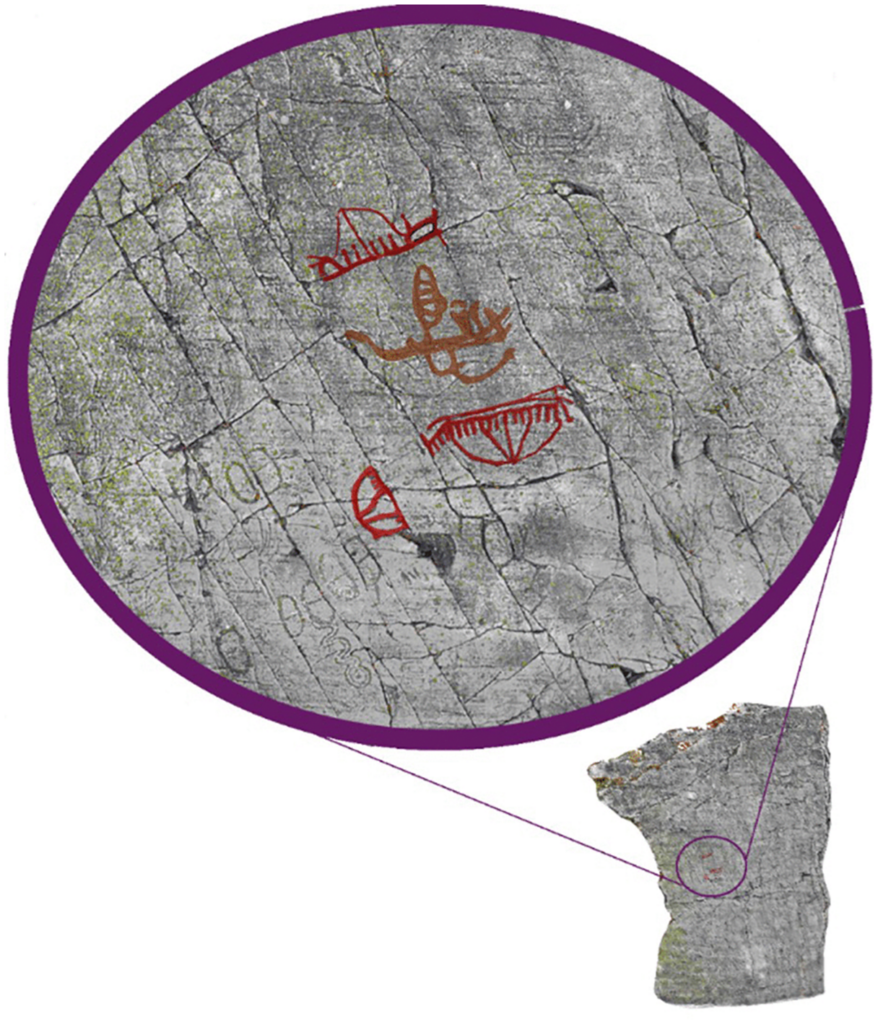
Using GIS-based landscape analysis, they found that many Iberian boat-carving sites are closely connected to water. Several lie near the Atlantic coast. Others are positioned with views toward estuaries, river mouths, bays or navigable routes. Even some inland sites appear to relate to river systems or metal-rich landscapes.
One important example is Penedo do Muro, located far inland at high altitude, roughly 100 km from the coast. Its position seems unusual for boat imagery, but the site lies in the Tâmega Valley, a region associated with tin resources. The researchers suggest that the carvings there may reflect contact between local communities and long-distance travellers interested in exchange networks reaching deep into the interior.
This landscape pattern makes the carvings harder to dismiss as isolated local symbols. They appear deliberately placed in maritime or riverine settings, where water, visibility and movement all mattered.
Boats, Ritual and the Sun
The study also argues that these boats were probably more than practical images of transport. In both Iberian and Scandinavian rock art, boats often appear in symbolic settings. Some Iberian panels include sun crosses or segmented circles near boat images, motifs that resemble Nordic solar iconography.
That connection is important because Bronze Age Scandinavian rock art has long been linked to ideas of the sun’s journey, ritual travel, seafaring identity and elite maritime groups. The Iberian carvings may reflect similar concerns. Boats could have represented real vessels, but also journeys between worlds, seasonal movement, initiation, or the power of groups who controlled maritime knowledge.
This does not mean that Northwest Iberia and Scandinavia shared a single religion. The safer reading is that maritime communities across Atlantic Europe may have exchanged symbols as well as materials. In that sense, the carvings show not just ships, but a shared visual language of travel, exchange and belief.
Modern Tools on Ancient Rock
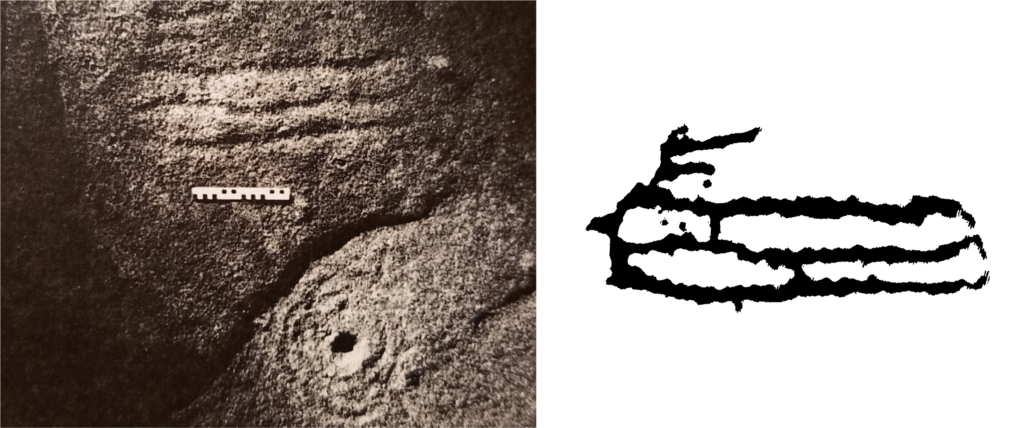
A major strength of the study is its use of digital recording. The team used high-resolution 3D scanning, photogrammetry and Reflectance Transformation Imaging to capture details that are difficult to see with the naked eye. These methods allowed the researchers to re-examine old interpretations and identify subtle carved lines, possible re-carving, surface details and technical features.
The work focused on several key Iberian sites, including Santo Adrião, Eira do Louvado, Laje da Churra and Senhora de Encarnação 1 in northern Portugal, as well as Penedo do Muro 1–2 and Laxe Auga dos Cebros 1 in southwest Galicia. These records were then compared with Scandinavian examples and mapped against the surrounding landscape.
The result is a more cautious but stronger argument than a simple claim of “Vikings before the Vikings” or direct Scandinavian settlement in Iberia. The study does not argue for that. Instead, it proposes a Bronze Age maritime world in which people, metals, boat technologies and symbols could travel across long distances.
The carvings are small, weathered and sometimes difficult to read. Yet taken together, they suggest that communities on Europe’s Atlantic façade were not living at the edge of the world. They were part of a connected seascape, where boats carried more than cargo. They carried technologies, stories, rituals and ways of imagining the sea.
Díaz-Guardamino, M., Bengtsson, B., Newton, E., Bettencourt, A. M. S., Ling, J., Latorre-Ruiz, J., Sampaio, H. A., & Marinho, D. (2026). Boats on the rocks: Late prehistoric nautical iconography and landscape, from Northwest Iberia to Scandinavia. PLOS One, 21(6), e0349417. https://doi.org/10.1371/journal.pone.0349417
Cover Image Credit: Kalleby 418. Díaz-Guardamino et al., 2026
