1 December 2025 The Future is the Product of the Past

1700-year-old weaving workshop discovered in southeast Turkey

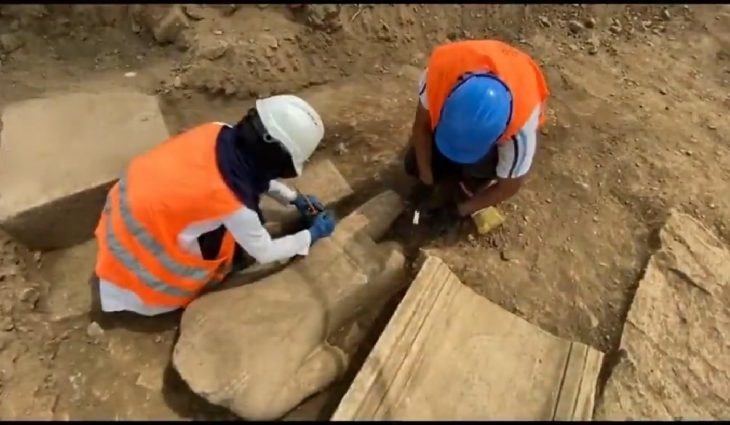
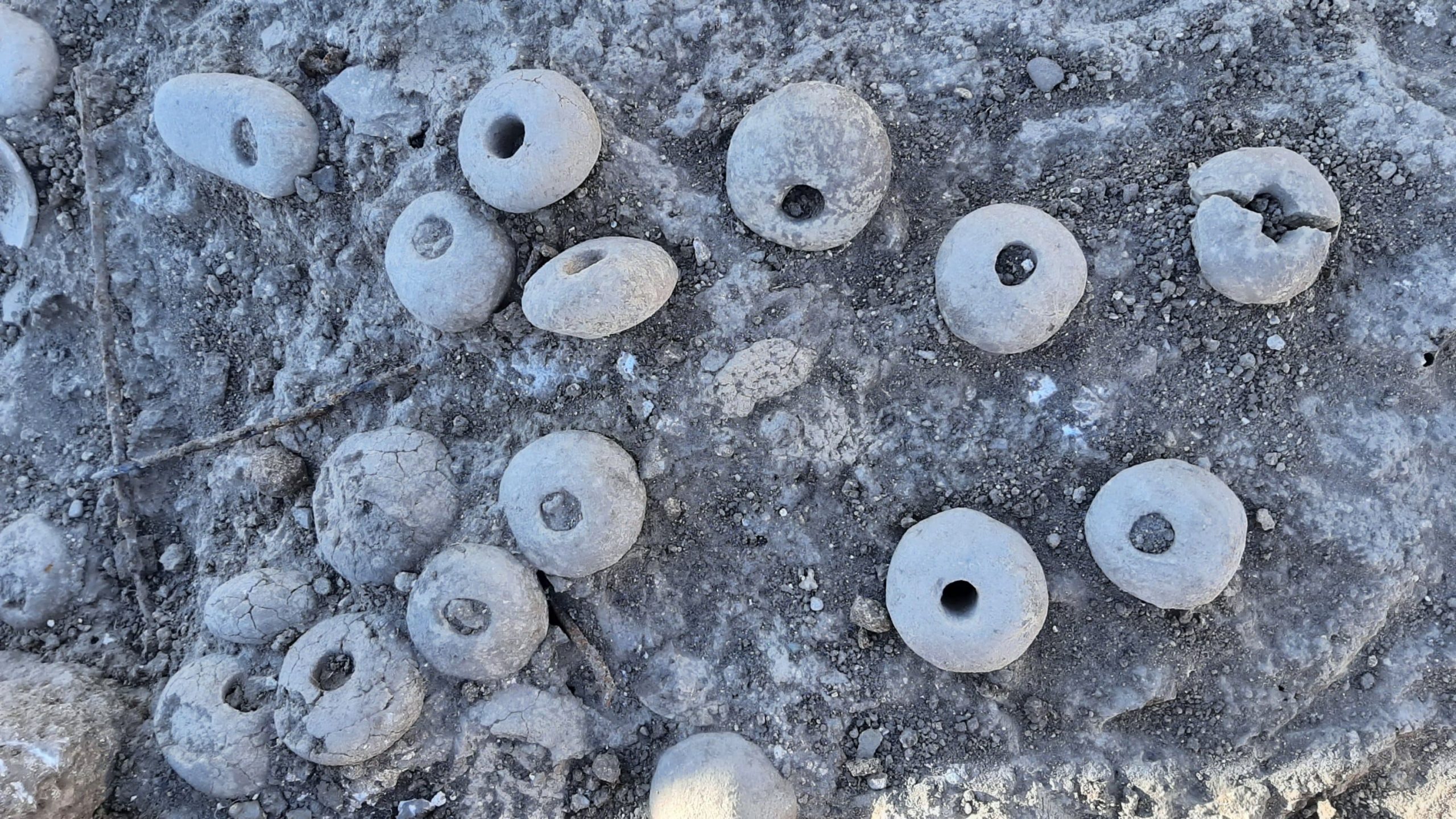
Excavations carried out in the ancient city of Perre in the southeastern province of Adıyaman have unearthed a 1,700-year-old weaving workshop and weight stones used to turn wool into the rope from the Roman era.

Perre was one of the five major cities in the Commagene Kingdom and retained its prominence during the Roman period.

Starting in 2001, the excavations have been carried out at intervals in the ancient city of Perre. A historical Roman fountain, large blocky stones, a bakery structure, water channels, and various architectural structures were unearthed during the archaeological digs this year. The latest discovery of the archaeologists in the ancient city is the 1,700-year-old weaving workshop.
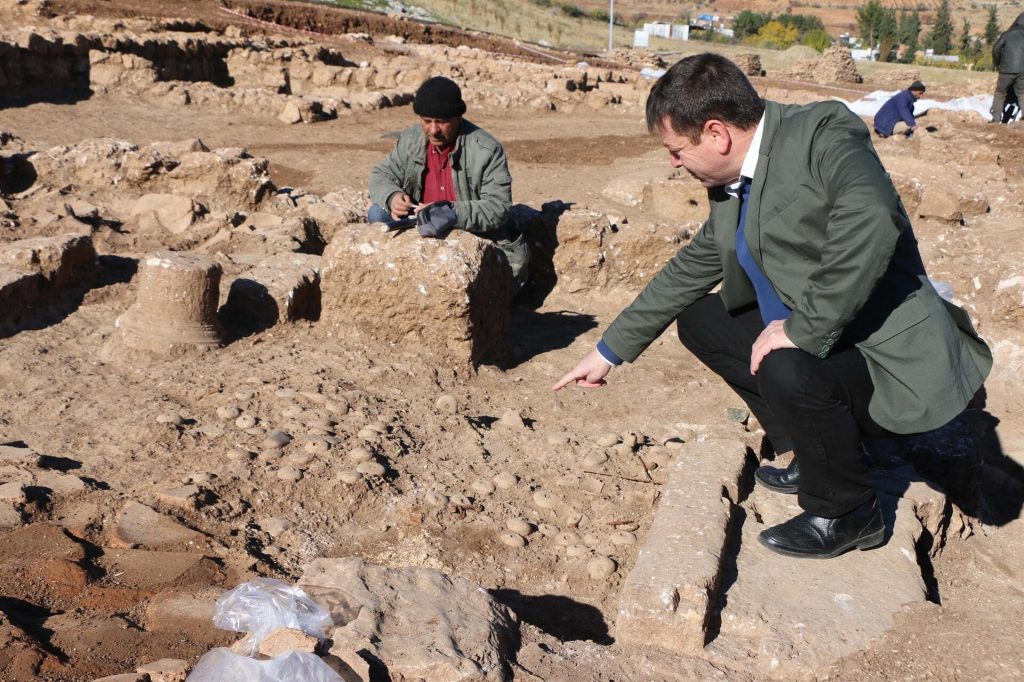
Excavations carried out in the ancient city of Perre in the southeastern province of Adıyaman have unearthed a 1,700-year-old weaving workshop and weight stones used to turn wool into the rope from the Roman era.

Stating that there were dye vats in the region before, Adıyaman Museum Director Mehmet Alkan said: “Excavations have started in three different areas in Perre. As the excavation season approached, the existence of a weaving workshop was detected in an area of 100 square meters, and we unearthed it. How did we understand this? The abundance of heavy stones led us to detect the presence of a small-scale weaving workshop here. We had identified dye vats in this area in previous years. Weaving work was done here and products were dyed here, too.”
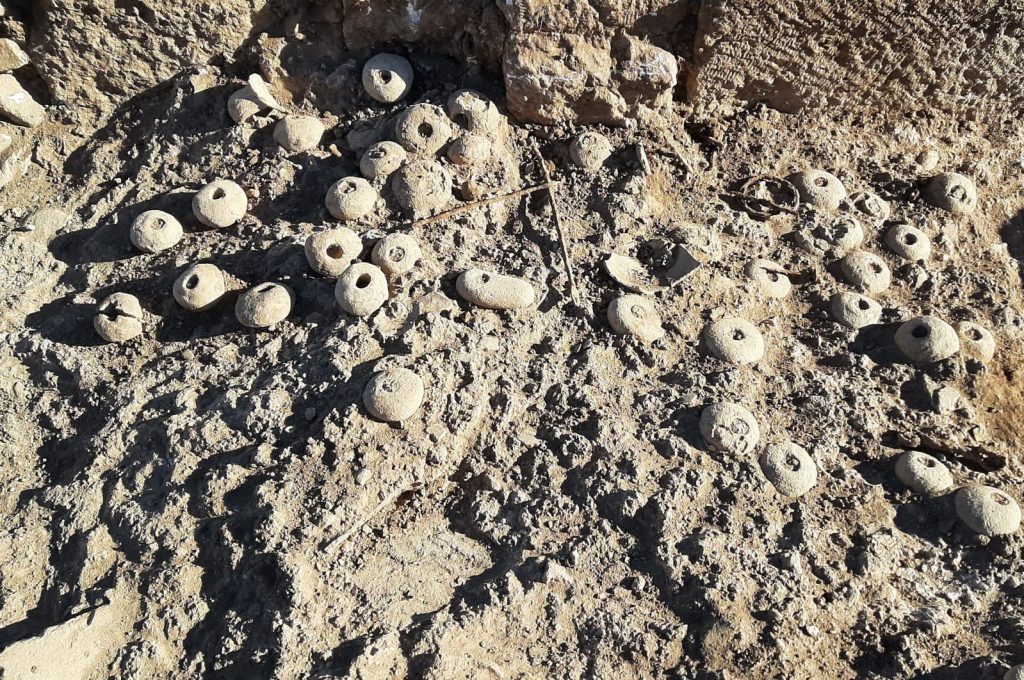
Weight stones used to turn wool into rope are seen in the ancient city of Perre, Adıyaman, southeastern Turkey,

Noting that the area was used as a small-scale industrial area, Alkan said, “Considering that the wall structure and the residential architecture here date between the third and seventh centuries A.D., this workshop dates back to 1,700 years.”


📣 Our WhatsApp channel is now LIVE! Stay up-to-date with the latest news and updates, just click here to follow us on WhatsApp and never miss a thing!!


Mehmet Alkan also stated that with the arrival of winter, the excavation works slowed down.

Perre was one of the biggest cities of the Kingdom of Commagene. It was an important city in terms of religious and geopolitical aspects. The beauty of the city’s water was mentioned in ancient Roman sources. The ancient city lost its importance after the Byzantine Period and never regained its former glory.
Related Articles

3500-year-old grape seed remains found in western Anatolia

12 September 2023

12 September 2023

Archaeologists at the Aşağıseyit Höyük (Aşağıseyit Mound) site in western Anatolia’s Denizli have uncovered a 3,500-year-old grape seed. Aşağıseyi Höyük...

Amarna’s Hidden Chapter: From Abandoned Pharaoh’s City to Christian Monastic Hub

26 June 2025

26 June 2025

New archaeological findings have reshaped our understanding of Amarna, the once-glorious capital of ancient Egypt founded by Pharaoh Akhenaten in...

Mysterious T-Shaped Pillars and 50 Neolithic Structures Found in Sayburç, the Heart of Taş Tepeler

7 September 2025

7 September 2025

Archaeologists working in Şanlıurfa’s Sayburç settlement in southeastern Türkiye have unearthed a remarkable treasure from the deep past: over 50...

Archaeologists have discovered another exceptional find in Mérida

12 August 2023

12 August 2023

In Mérida, Spain, archaeologists recently discovered an “enormous” Roman bath. But it is that inside these baths, in the area...

Neo-Assyrian Writing Boards: The Role of Beeswax, Orpiment, and Carbon Black in 7th Century BC Writing Techniques

13 April 2025

13 April 2025

Recent scientific investigations into the writing boards excavated from the ancient Assyrian city of Nimrud have shed new light on...

Name of Iranian city identified on 1800-year-old Sassanid clay seal

9 April 2024

9 April 2024

In a stunning archaeological find, the name “Shiraz” was identified on a clay sealing from the Sassanid era written in...

Mosaic Discovered in Illegal Dig in Zile Points to Ancient Roman Public Structure

12 July 2025

12 July 2025

Zile, a district in the Tokat province of northern Türkiye, has long been recognized as one of Anatolia’s most historically...

4,000-Year-Old Seal Found at Tavşanlı Mound in Western Türkiye

17 August 2024

17 August 2024

4,000-year-old seal were found at the Tavşanlı Mound (or Tavşanlı Höyük) in Türkiye’s Kütahya province—located in the west of the...

12,000-Year-Old rock art may depict extinct giants of the ice age

13 March 2022

13 March 2022

South America was filled with ice age animals more than 12,000 years ago, including car-sized ground sloths, elephantine herbivores, and...

3,000-Year-Old Hazelnut Shells Discovered in the Sacred Hittite City of Nerik

30 July 2024

30 July 2024

In the sacred Hittite city of Nerik, located in the northern Vezirköprü district of Samsun province in the Central Black...

A 5,000-year-old large house has been discovered in China’s Yangshao Village

7 December 2022

7 December 2022

Henan Provincial Institute of Cultural Heritage and Archaeology archaeologists have excavated the ruins of house foundations dating back more than...

Extraordinary Monumental Roman Burial Mound Discovered in Bavaria Stuns Archaeologists

18 October 2025

18 October 2025

Archaeologists in Bavaria have uncovered what appears to be the foundation of a monumental Roman burial mound, a discovery that...

Silk Road archaeological discoveries draw attention despite the pandemic

20 June 2021

20 June 2021

A report prepared by more than 30 global experts believes that despite the COVID-19 pandemic, archaeological discoveries related to the...

Gate sanctuary discovered during the excavation of Archanes palace in Crete, belonging to the oldest civilisation in Europe

24 October 2024

24 October 2024

Recent excavations at the Archanes Minoan palace in Crete, belonging to the oldest civilisation in Europe, have revealed an important...

An exciting discovery in Hattusa, the capital of the Hittites

11 September 2022

11 September 2022

It is aimed to reach new information about the traditions of the Hittite civilization with 249 new hieroglyphs discovered in...