11 February 2026 The Future is the Product of the Past

Thousands of Ancient Tombs Discovered in Xian

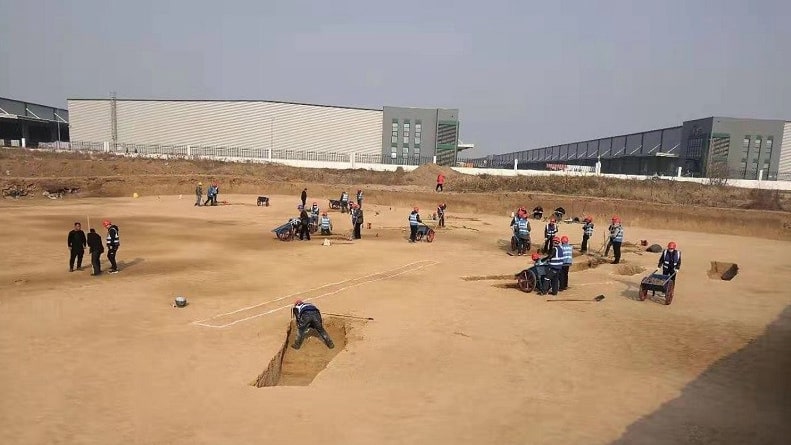
According to the Shaanxi Provincial Archaeological Institute, more than 4,600 ancient cultural remains were discovered during the expansion project of Xianyang International Airport in Xi’an, including more than 3,500 ancient tombs.

Even during the spring festival break, hundreds of workers worked to excavate the area and ensure that the third stage of the airport proceeded smoothly.

The third phase expansion of the Xianyang airport in Xi’an, the capital of Shaanxi Province, is currently known as the largest civil aviation project in northwest China, as part of efforts to build an international aviation center in Xi’an.

The cultural heritage bureau of Shaanxi, “The number and scale of the relics is huge and the workload of archaeological excavation is enormous”, said.

Throughout its history, the city of Xian was home to 13 dynasties and remained the capital of ancient China for a total of 1,100 years. Since it became a transportation hub and experienced an infrastructure boom, scientists have made numerous archaeological discoveries.


📣 Our WhatsApp channel is now LIVE! Stay up-to-date with the latest news and updates, just click here to follow us on WhatsApp and never miss a thing!!


Xi'an Xianyang Uluslararası Havaalanı'ndaki arkeolojik site
The archaeological site at Xi’an Xianyang International Airport Photo: Shaanxi Academy of Archeology

In 2001, scientists discovered the tomb of Princess Li Chi of the Tang Dynasty (618-907 AD). A year later, researchers unearthed the tomb of Zhang Tang, the highest judicial official in the Han and Tang Dynasties (206 BC-220 AD).

“In Xian, before any construction project starts, or before the government sells a certain parcel of land, an archaeological survey is carried out. This is rare in China”, said Wang Zili, deputy director of the Xian Institute for the Preservation of Cultural Heritage.

In fact, it’s no surprise to discover the ancient tombs in Shaanxi. Xi’an is also known as the city where the silk road started. It is a city that has been the capital of China’s famous Terracotta army and Qin Shi Huang, who is accepted as the first emperor of China.

What is the Terracotta Army?

The world-famous Terracotta Warriors and Horses of Qin Shi Huang are a group of sculptures depicting soldiers of Qin Shi Huang, the first emperor of China. According to mythology, the army protects the emperor in the afterlife. The history of these sculptures can be traced back to around the third century BC.

Related Articles

Roman Bath and Magnificent Mosaics Used as Stables by the Villagers For Many Years

3 January 2025

3 January 2025

Archaeological excavations in the ancient city of Herakleia in Muğla’s Milas district in western TĂŒrkiye unearthed a striking discovery from...

2,000-Year-Old Roman Hippodrome Discovered Beneath a Former Landfill in Kayseri

24 October 2025

24 October 2025

In a remarkable archaeological breakthrough, researchers in central TĂŒrkiye have confirmed the discovery of a 2,000-year-old Roman hippodrome (Roman Circus)...

The Myth Behind Homay: New Study Reveals Ancient Links Between Turkic Mother Spirit Umay and Korean Mother Goddesses

5 February 2026

5 February 2026

Across continents and thousands of years, two ancient mythological figures—one rooted in the Korean Peninsula, the other spanning the vast...

Prehistoric Cave Art Handprints With Missing Fingertips Point to Ritual Amputation

3 January 2024

3 January 2024

Researchers who examined prehistoric cave art in France and Spain, a new interpretation of Paleolithic cave art proposes that prehistoric...

Archaeologists Unearth a 400-Year-Old Glass Phallus in a Former Convent Latrine

7 January 2026

7 January 2026

When archaeologists excavated the remains of a former convent complex in the German town of Herford, they expected the usual...

Climate and Archaic humans caused the extinction of giant camels that lived in Mongolia 27,000 years ago, a study says

3 April 2022

3 April 2022

Camelus knoblochi, a species of giant two-humped camel, survived in Mongolia alongside modern humans—and perhaps Neanderthals and Denisovans—until about 27,000...

The oldest evidence of human cannibalism as a funerary practice in Europe

7 October 2023

7 October 2023

According to a new study, cannibalism was a common funerary practice in northern Europe around 15,000 years ago, with people...

Rare Viking Armlet and 2,000-Year-Old Golden Neck Ring Discovered in Sweden

20 March 2025

20 March 2025

Recently, two extraordinary archaeological finds have captivated the attention of historians and enthusiasts alike in Sweden. The first discovery, an...

A 1,100-year-old lead amulet of Bulgarian soldiers sieges Constantinople found

31 March 2023

31 March 2023

A lead plate amulet bearing an inscription in Cyrillic dating from the times of Tsar Simeon the Great was discovered...

‘Incredibly Rare’ Roman Mausoleum Unearthed Near London Bridge Station

13 June 2023

13 June 2023

Archaeologists report discovering an “incredibly rare” and featured preserved floors and walls Roman mausoleum near London Bridge Station, UK. Archaeologists...

Collectors In The Prehistoric World Recycled Old Stone Tools To Preserve The Memory Of Their Ancestors

16 March 2022

16 March 2022

A first-of-its-kind study at Tel Aviv University asks what drove prehistoric humans to collect and recycle flint tools that had...

A princely tomb discovered in the infrastructure project of the A7 Ploießti-Buzău highway in Romania

20 December 2022

20 December 2022

An impressive archaeological discovery took place on the Ploiești-Buzău section of the Moldova Highway. The excavations uncovered a princely tomb,...

World’s Oldest Architectural House Model from 12,000-Year-Old ÇayönĂŒ Hill Now on Display in TĂŒrkiye

6 July 2025

6 July 2025

Unearthed at the 12,000-year-old ÇayönĂŒ Hill, the world’s oldest architectural house model is now on display at the Diyarbakır Museum,...

Karahantepe; It will radically change the way we look at the Neolithic Age

1 June 2022

1 June 2022

Findings on settled village life in the ongoing excavations in Karahantepe will profoundly change our knowledge of the Neolithic Age....

3,000-year-old weavings discovered in Alaska’s Alutiiq settlement

3 September 2023

3 September 2023

Archaeologists have uncovered fragments of woven grass artifacts estimated to be 3,000 years old during excavations at an ancestral sod...