20 December 2025 The Future is the Product of the Past

Enigmas Roman Dodecahedron Uncovered by Amateur Archaeologists in the UK

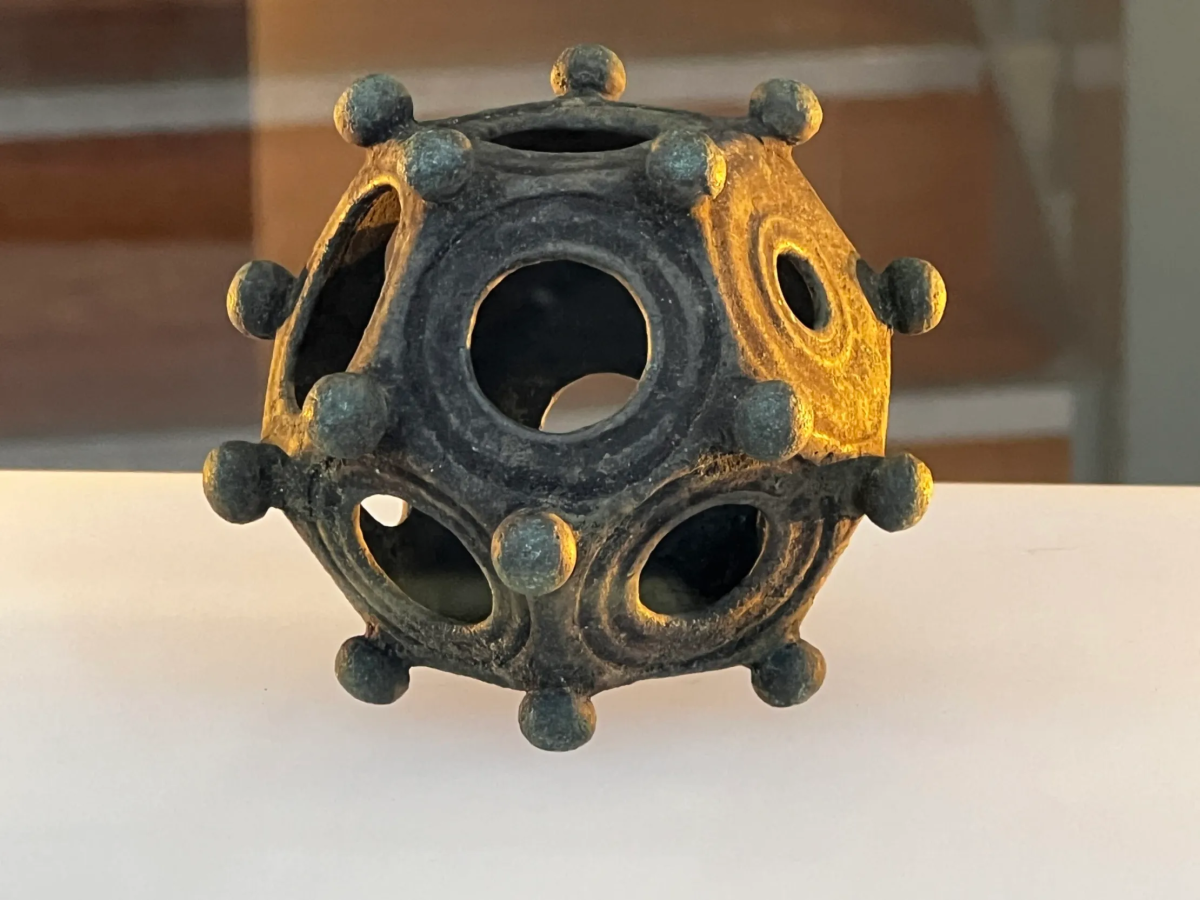
Amateur archaeologists have unearthed a striking Roman dodecahedron in the serene countryside of Norton Disney, England, a mysterious class of objects that have baffled experts for centuries.

A volunteer with the Norton Disney History and Archaeology Group discovered the dodecahedron in the Lincolnshire village of Norton Disney.

The object’s purpose is unknown to modern archaeologists because the 12-sided metal shell lacks markings and no mention of them can be found in contemporary literature.

About thirty-two examples, complete or in part, from Roman Britain are known to exist. The Norton Disney example now makes 33. Throughout the Roman world, there are about 130 known examples. which are located in the Roman provinces of the northwest.

The Norton Disney dodecahedron is an exceptionally good example and the only one in the Midlands. It’s beautifully crafted, undamaged, and in perfect shape. It exhibits exquisite craftsmanship and a superior level of finishing. It is a prime example of expertly crafted and superbly finished work.


📣 Our WhatsApp channel is now LIVE! Stay up-to-date with the latest news and updates, just click here to follow us on WhatsApp and never miss a thing!!



Photo: Norton Disney History and Archaeology Group

Richard Parker, the secretary of the Norton Disney History and Archaeology Group, said they dug up the object, which is the size of a grapefruit, about 35 miles southeast of Sheffield in one of the trenches the group made at the site for the two-week dig.

The Norton Disney dodecahedron is a copper alloy object. 75% copper, 7% tin and 18 % lead. It’s overall height is 8cm. Its overall width is 8.6cm and weighs 254g.

It is also an important find in that it was found “in situ”, where it was deliberately placed some 1700 years before with 4th-century Roman pottery in some sort of excavated hole or quarry pit.

The purpose of dodecahedra is still very unclear because there are no known descriptions of them in Roman literature. They won’t be measuring devices because they aren’t a standard size. They are not a tool because they don’t exhibit any wear. They’re also not knitting machines. Dodecahedron took a great deal of time, effort, and skill to construct, so it wasn’t used for everyday tasks, especially since there are other materials that could have served the same function. It is believed that ritual and religious uses are the most likely uses.

The remarkable metal shell is now on display in the National Civil War Centre, Newark Museum.

Cover Photo: Norton Disney History and Archaeology Group
Related Articles

Newly Discovered 200,000-Year-Old Rock Carvings in Marbella: Potentially Among Europe’s Oldest Cave Art

14 March 2025

14 March 2025

Marbella has just made an incredible discovery that could change everything we thought we knew about prehistoric Europe. Archaeologists working...

Medieval Toy Workshop Unearthed in Freiburg: Archaeologists Discover Forgotten Childhood Treasures

6 September 2025

6 September 2025

Archaeologists in Freiburg, a historic city in Germany, have uncovered a medieval pottery workshop where clay toys were once crafted....

Long Before Zeus and Leda, Natufian People Crafted a 12,000-Year-Old Figurine of a Goose Mating with a Woman

18 November 2025

18 November 2025

Long before Greek poets imagined Zeus seducing Leda in the guise of a swan, prehistoric communities in Southwest Asia were...

Roman camp of 10,000 people discovered in northern Portugal

2 July 2021

2 July 2021

A camp used by 10,000 Roman soldiers sent to conquer northwestern Iberia has been discovered in the Portuguese city of...

An 800-meter-long colonnaded street from the Roman period discovered in TĂĽrkiye’s famous holiday resort Antalya

18 April 2024

18 April 2024

During the archaeological excavations in Hıdırlık Tower, one of the historical symbols of Antalya, the famous holiday resort in the...

Rare African Script Offers Clues to the Evolution of Writing Systems

4 February 2022

4 February 2022

The world’s very first invention of writing took place over 5000 years ago in the Middle East, before it was...

The Walking Giants of Easter Island: How Physics Solved an 800-Year-Old Mystery

10 October 2025

10 October 2025

For centuries, the massive stone statues of Easter Island—known as the moai—have stood as one of archaeology’s greatest enigmas. How...

Well-Preserved Funerary Enclosures, Mausoleums, and Gladiator Epitaph Discovered in Ancient Roman Colony of Liternum, Italy

22 March 2025

22 March 2025

Recent archaeological excavations in the ancient Roman colony of Liternum, located in present-day Giugliano in Campania, Italy, have unveiled significant...

2,000-Year-Old Artifacts Found at Swat’s Butkara Site in Pakistan, Including Coins and Kharosthi Inscriptions

14 February 2025

14 February 2025

Excavations at the Butkara Stupa, located near Mingora in Swat, Pakistan, have uncovered significant findings, including two-thousand-year-old coins, pottery, and...

A pendant with a figure of St. Nicholas found in the Ancient Church Hidden in Turkish Lake

7 October 2022

7 October 2022

Underwater archaeological excavations and research, which were started 8 years ago in the basilica located 20 meters off the lake...

2,000-year-old altar found in Alexandria Troas

9 October 2021

9 October 2021

A 2,000-year-old altar was unearthed during the ongoing excavations in the ancient city of Alexandria Troas, in a region close...

1,800-Year-Old Sanctuary to Mithras discovered in Spain

8 February 2023

8 February 2023

Archaeologists excavating at Villa del Mitra in Cabra, Spain, have uncovered a sanctuary dedicated to the god Mithras, along with...

In the “Siberian Valley of the Kings”, archaeologists have discovered a burial mound containing ornate treasures dating back 2,500 years

20 January 2022

20 January 2022

A Polish-Russian team of archaeologists, excavating in the “Siberian Valley of the Kings” have announced the discovery of a burial...

Jomon Ruins Adding to UNESCO World Heritage List

26 May 2021

26 May 2021

An international advisory panel has recommended that a group of ruins from the ancient Jomon period in northern Japan is...

Floor Mosaic of the Early Byzantine Period Unearthed in St Constantine and Helena Monastery Church in Ordu

12 August 2024

12 August 2024

Republic of TĂĽrkiye Ministry of Culture and Tourism reported that an in-situ floor mosaic was found at the St Constantine...