18 December 2025 The Future is the Product of the Past

Mosaics found in Türkiye’s Sinop belong to dining room of a wealthy family

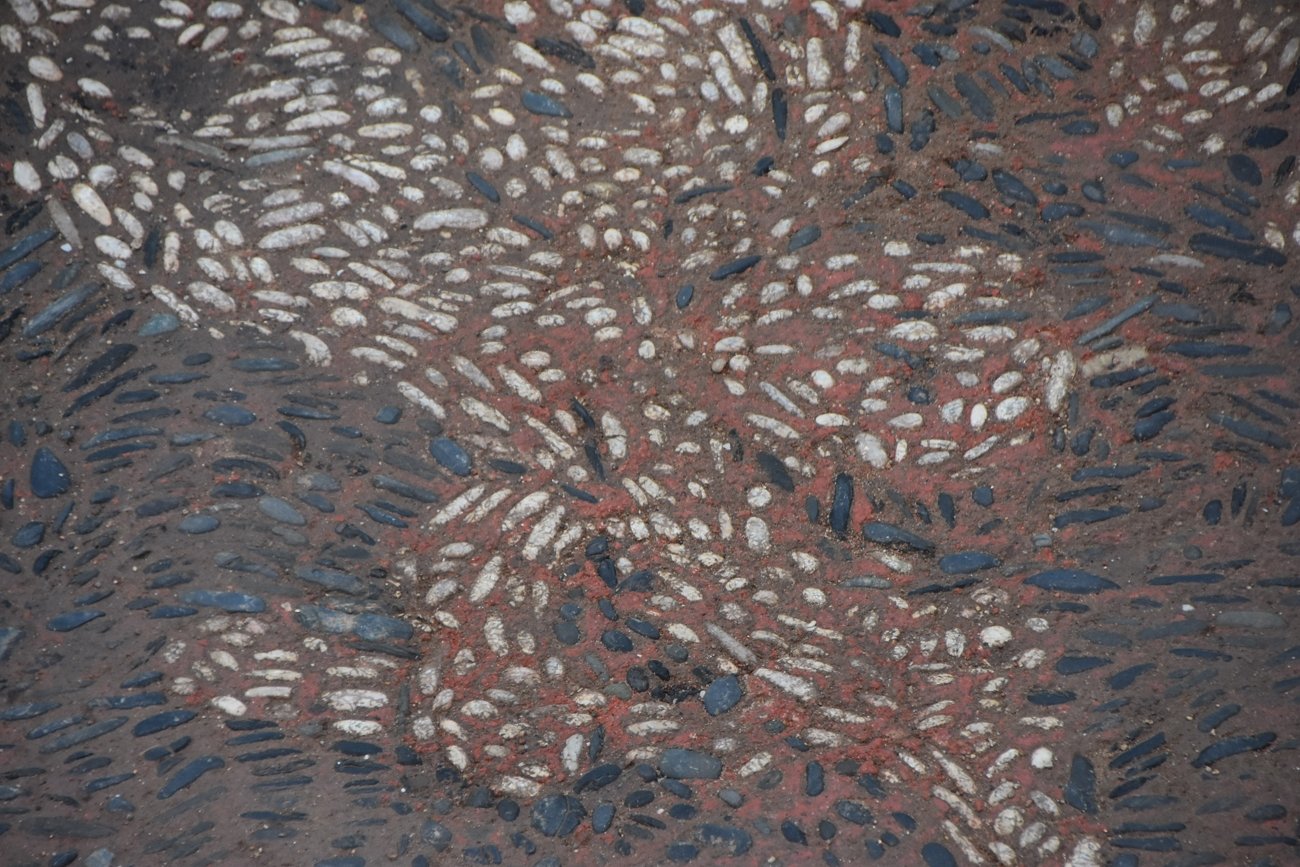
The pebble mosaics unearthed during the excavation of a building complex in the province of Sinop on Turkey’s Black Sea coast turned out to belong to the dining room of a wealthy family from the Hellenistic period.

New findings of importance for the scientific world continue to emerge during the excavations in the Balatlar Building Complex in the city center of Sinop.

Excavations continue under the leadership of Professor Gülgün Köroğlu, one of the distinguished faculty members of Mimar Sinan Fine Arts University.

The structure was recently determined that the artifact belonged to the “dining room of a wealthy family from the 4th century B.C.”

“Dating back to the 4th century B.C. in the Hellenistic era, the mosaics are believed to have adorned the dining room of a wealthy family. These intricate mosaics serve as a testament to Sinop’s prominence as a flourishing hub for trade, religion, and settlement at that time. The mosaic designs exhibit a diverse range of motifs, including religious symbolism, depictions of everyday life, and unique patterns have also been found in various sections of the mosaic,” Köroğlu said.


📣 Our WhatsApp channel is now LIVE! Stay up-to-date with the latest news and updates, just click here to follow us on WhatsApp and never miss a thing!!
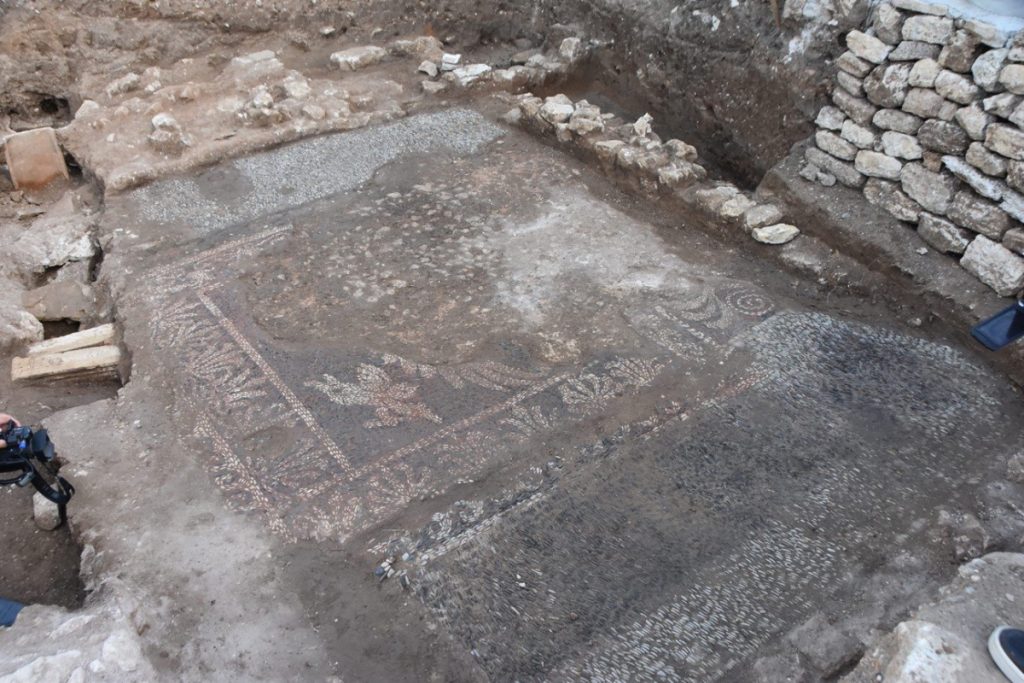


Pebble mosaic belonging to the Hellenistic period, Sinop, Türkiye. Photo: IHA

Sinop Provincial Culture and Tourism Director Metin Süren said, “Pebble stone mosaics that are rarely seen in the remains of buildings dating back to the classical period and the Hellenistic period in the 4th century B.C. have been unearthed in the Balatlar excavations that have been carried out for 11 years.”

Stating that Sinop may be among the most important ancient cities in the world after Rome, Süren said, “Sinop, which has hosted many civilizations from the prehistoric period to the present, is one of the most important ancient cities in the world.”

“We found these mosaics during the recent excavations. There is also a claim that these pebble mosaics are unique in our country and may be rare in the world, perhaps they are found only in ancient cities in Greece or Rome. There are those who claim that Sinop is such an important ancient city that it may be one of the most important ancient cities in the world after Rome, but unfortunately, there are no scientific excavations to confirm these claims except for Balatlar, although nearly 150-200 mounds have been identified and registered so far,” he added.

According to legend, Sinope was founded by the Amazons, who named it after their queen, Sinova. The city’s ancient inhabitants ascribed its foundation to Autolycus, a companion of Hercules. Destroyed by the equestrian nomadic Cimmerians, it was refounded toward the end of the 7th century bce by a colony of Milesians.
Related Articles

5,000-Year-Old Fortress Discovered in Romania Using LiDAR Technology

22 March 2025

22 March 2025

Archaeologists have unveiled a 5,000-year-old fortress hidden deep within the forests of Neamț County, Romania. This remarkable find, made possible...

Roman-era structures unearthed in northwestern Turkiye dam site rescue excavations

18 May 2024

18 May 2024

Rescue excavations at the Reşitköy Dam site in the northwestern Turkiye province of Balıkesir have unearthed Roman structures, including a...

2,000-Year-Old Roman Stele Decorated with an Eagle and Greek Inscriptions Found in Manbij, Syria

23 August 2025

23 August 2025

A striking Roman-era stele carved from black basalt, featuring a detailed eagle clutching a wreath and adorned with Greek inscriptions,...

Hidden Air-Filled Chambers Detected in Menkaure Pyramid May Indicate Lost Entrance

12 November 2025

12 November 2025

Researchers from Cairo University and the Technical University of Munich (TUM) have made a groundbreaking discovery within the Pyramid of...

Unique Roman Aristocratic Tomb Discovered in Sillyon Ancient City

19 August 2025

19 August 2025

Archaeologists have uncovered a unique Roman-era tomb during ongoing excavations in Sillyon Ancient City, located in Türkiye’s Antalya’s Serik district....

Bergama Ancient City Takes Its Place in Digital Environment

1 February 2021

1 February 2021

As a result of the studies carried out by the German Institute, Bergama Ancient City was It was transferred to...

Roman gilded silver fragment uncovered in Norfolk baffles researchers

27 March 2023

27 March 2023

In Norfolk, a metal detector uncovered an ancient Roman fragment made of gilded silver. The piece was clearly a part...

The 7th-Century Lombard Kings’ Tombs Found in Pavia, Italy

24 December 2024

24 December 2024

The excavations, conducted between September and October by the Catholic University, uncovered numerous burials attributed, on the one hand, to...

Archaeologists discover 1,300-year-old ski trapped in Norwegian ice

6 October 2021

6 October 2021

The melting of an ice sheet in Norway has uncovered a pair of remarkably well-preserved skis that had been undisturbed...

Vindolanda marks the 1900th anniversary of Hadrian’s Wall with an altar discovery

9 February 2022

9 February 2022

The excavation season hasn’t started yet, but the Vindolanda Roman fort has kicked off Hadrian’s Wall’s 1900th anniversary year with...

Early humans appreciated geometry and symmetry and were intentionally crafting spherical shapes 1.4 million years ago, according to a new study

7 September 2023

7 September 2023

An examination of 150 round, baseball-sized stones discovered at a site where early humans lived 1.4 million years ago shows...

3700 years old Brain and skin remnants discovered at Bronze Age settlement in western Türkiye

5 September 2023

5 September 2023

Archaeologists discovered, well-preserved brain and skin remnants of two individuals dating to the Bronze Age during excavations at Tavşanlı Höyük...

Relief masks discovered in Turkey’s ancient city of Kastabala

7 January 2022

7 January 2022

In the ancient city of Kastabala (Castabala), which dates back to 500 BC, located in Turkey’s southern province of Osmaniye,...

Largest-Known Flower Preserved in Amber Is Nearly 40 Million Years Old

20 January 2023

20 January 2023

The largest-known fossilized flower encased in amber, dating back nearly 40 million years, was again discovered in the Baltic region...

A 3,300-year-old tablet found at Büklükale from Hittite Empire describes catastrophic invasion of four cities

11 March 2024

11 March 2024

Archaeologists have unearthed a 3,300-year-old clay tablet depicting a catastrophic foreign invasion of the Hittite Empire in Büklükale, about 100...