
2 January 2026 The Future is the Product of the Past

6,000-Year-Old Temple with Blood Channel and Altar Unearthed in Eastern Türkiye

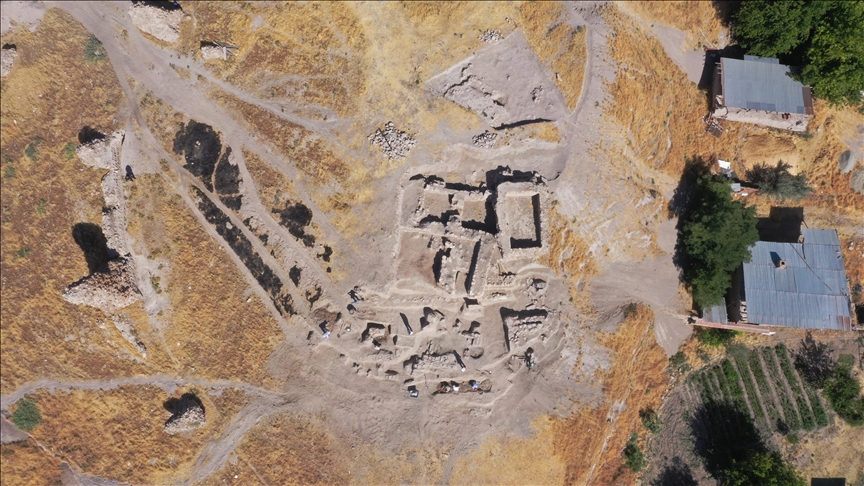
Archaeologists have discovered a 6,000-year-old temple site during ongoing excavations in the village of Tadım, located in Elazığ Province, eastern Türkiye. The site, dating back to the Late Chalcolithic and Early Bronze Age, reveals one of the earliest known examples of ritual architecture in the Upper Euphrates Basin.

The excavation project, conducted under the coordination of the Ministry of Culture and Tourism and led by the Elazığ Museum Directorate, focuses on the Tadım Fortress and Mound (Tadım Höyüğü), a prominent archaeological mound standing approximately 35 meters tall and covering an area of 210 by 160 meters. This site is believed to have been a significant religious and settlement center for ancient communities.

Ritual Structures and Sacrificial Evidence

In the 80–81 numbered grid sections of the mound, researchers unearthed a temple complex featuring a ritual “blood channel” containing human and animal remains, along with an altar stone bearing knife marks. These findings suggest that sacrificial rituals—possibly involving both animals and humans—were performed as offerings to deities, reflecting the spiritual beliefs of the period.

The team also uncovered four podiums, likely used for placing votive offerings, a sacred hearth, and various ceremonial and domestic items. Among the artifacts were:
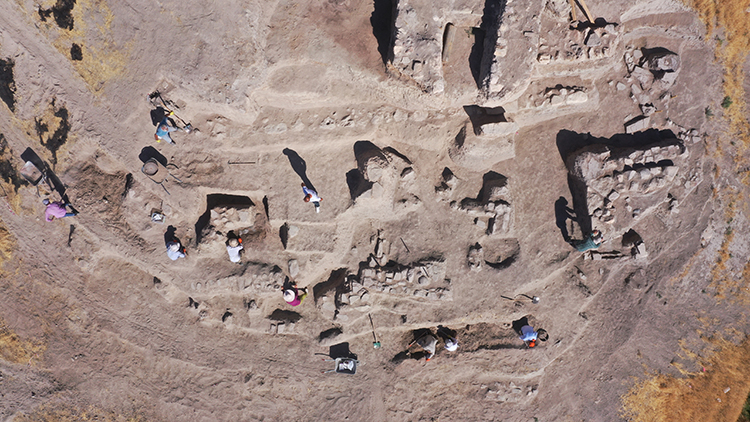
6,000-Year-Old Temple with Blood Channel and Altar Unearthed in Elazığ. Credit: İsmail Şen / Anadolu Agency (AA)

Nakhchivan-style pottery,


📣 Our WhatsApp channel is now LIVE! Stay up-to-date with the latest news and updates, just click here to follow us on WhatsApp and never miss a thing!!


Seal stamps used in agricultural transactions,

Arrowheads and tools from daily life,

Spindle whorls for textile production, and

Idol figurines made of stone, clay, and bone—representing early forms of symbolic or religious expression.

Insights Into Early Urbanization

Excavation supervisor Ergün Demir noted that the architectural remains consist of rubble foundations with mudbrick walls, a construction method that provided resistance to natural disasters and invasions. The layout suggests a pattern of closely spaced structures, indicating early forms of urban planning and communal living.

“This period marks the beginning of more organized settlements in the region,” Demir said. “The evidence from Tadım shows not only religious practices but also early signs of social complexity and economic activity.”
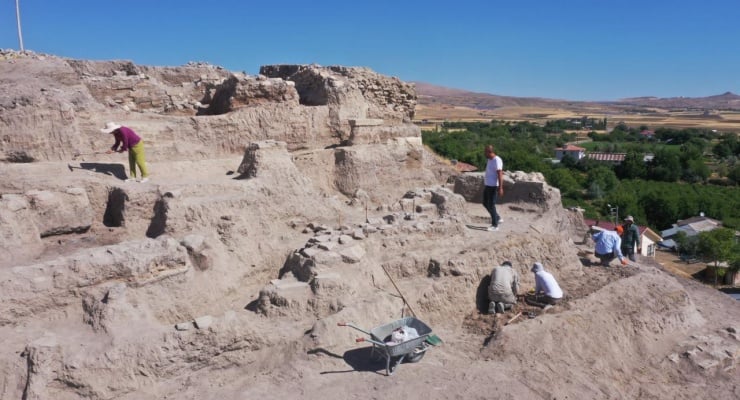
Artifacts uncovered include offering podiums, a sacred hearth, stamp seals, Nakhchivan-style pottery, arrowheads, spindle whorls, and wall remnants. Credit: İsmail Şen / Anadolu Agency (AA)

A Key Site in Anatolian Archaeology

Tadım Höyüğü is now recognized as one of the most promising archaeological sites in eastern Türkiye. The region, located near the Euphrates River, has long been considered a cultural crossroads, linking Mesopotamia to Anatolia. The ongoing excavations are expected to shed further light on trade, agriculture, and belief systems of prehistoric societies.

Ahmet Demirdağ, Elazığ’s Provincial Director of Culture and Tourism, emphasized the significance of the discovery: “This is the first known temple site in the region. The findings give us a rare glimpse into life here 6,000 years ago—how people lived, worked, and worshiped. As we continue to dig, we believe we’ll uncover even older layers of history beneath.”

Excavations are also being carried out at other key locations in Elazığ, including Harput Castle, Palu Fortress, and Salkaya Village, as part of a broader effort to uncover and preserve the region’s rich cultural heritage.

Cover Image Credit: İsmail Şen / Anadolu Agency (AA)

Related Articles

Excavations at Aizanoi in Western Turkey to Resume

29 March 2021

29 March 2021

The ancient city of Aizanoi is located in the town of Çavdarhisar, 57 km from the center of Kütahya (Turkey’s...

‘Astonishingly Preserved’ Ancient Roman Well Found in Cambridgeshire was An Engineering Failure

22 August 2024

22 August 2024

In an excavation at the site of future highway improvements in Cambridgeshire, the team from MOLA (Museum of London Archaeology)...

Face of Medusa, Power of the Gorgon: Ancient Amulets Discovered in Karachay-Cherkessia

16 August 2025

16 August 2025

On Russia’s Archaeologist Day, the State Karachay-Cherkess Historical, Cultural, and Natural Museum-Reserve unveiled, for the very first time, a remarkable...

Scandinavia’s Oldest Identified Ship Burial in Trøndelag “Rewrites History”

14 November 2023

14 November 2023

In Leka, a municipality in Norway’s Trøndelag county, archaeologists have uncovered Scandinavia’s oldest identified ship burial, dating back to around...

New documentary searches history of Turkey’s 7,000-year-old Arslantepe Mound

28 December 2021

28 December 2021

The tale of Turkey’s fascinating 7,000-year-old Arslantepe Mound, an ancient building in Malatya, eastern Turkey that was just added to...

Viking Ship Burials Shrouded in Mystery on Danish Island

25 May 2021

25 May 2021

Archaeologists studying the origins and makeup of the Kalvestene burial field, a famed place in Scandinavian legend, have undertaken new...

Małopolskie Region Reveals Oldest Evidence of Metal Mining in Poland, Dating Back 1,000 Years Earlier Than Previously Thought

16 February 2025

16 February 2025

Researchers have uncovered the oldest confirmed evidence of metal ore mining and metallurgy in Poland through the study of lead...

New Study reveals how England’s ‘White Queen’ worshipped a disembowelled saint at the Chapel of St Erasmus

5 December 2022

5 December 2022

A new study reveals the story of how England’s “White Queen”, Elizabeth Woodville, wife of Edward IV, once worshipped at...

The Metropolitan Museum of Art Celebrates 151th Anniversary of Its Establishment

13 April 2021

13 April 2021

The Metropolitan Museum of Art, one of the few museums in the world, celebrates the 151st anniversary of its establishment....

Stonehenge could be a solar calendar, according to a new study

2 March 2022

2 March 2022

A new study posits that the Stonehenge circles served as a calendar that tracks the solar year of 365.25 days,...

A unique discovery in the ancient city of Aphrodisias, the city famous for its sculptors in the Roman World, “As if he were a breathing God”

30 July 2024

30 July 2024

A marble ‘Zeus head’ was found in the ancient city of Aphrodisias, located within the borders of the Geyre neighborhood...

HS2 archaeologists discover Romanization of Iron Age village in Britain

12 January 2022

12 January 2022

Archaeologists have uncovered a vast Roman trading town on Britain’s HS2 high-speed rail route. Evidence found during a dig of...

An unexpected shipwreck was unearthed at the Tallinn construction site

18 April 2022

18 April 2022

During the construction of the office building on Lootsi Street in Tallinn, Estonia’s capital on the Baltic Sea, a shipwreck...

Advanced imaging techniques reveal secrets of sealed ancient Egyptian animal coffins

21 April 2023

21 April 2023

Researchers from the British Museum have gained valuable insight into the contents of six sealed ancient Egyptian animal coffins using...

Scientists Create a 3D Model of Lost Temple Relief from a 134-Year-Old Photo Using AI

13 November 2024

13 November 2024

The researchers developed a neural network that can take a single 2D photo of a three-dimensional object and produce a...