A remarkably preserved Neolithic axe, recovered from the harbor basin of Steckborn on Lake Constance, is offering new insight into prehistoric craftsmanship, resource use, and lake-dwelling communities in Central Europe. The artifact, dated to nearly 4,800 years ago, was uncovered during underwater excavations ahead of dredging works and is now exhibited at the Museum of Archaeology in Frauenfeld.
Discovery Beneath the Harbor Sediments
What began as a routine infrastructure operation in the winter of 2025/26 quickly turned into a significant archaeological intervention. Falling water levels and heavy sediment accumulation had made dredging necessary in Steckborn’s harbor, a location already known since the 19th century for its prehistoric pile-dwelling remains.
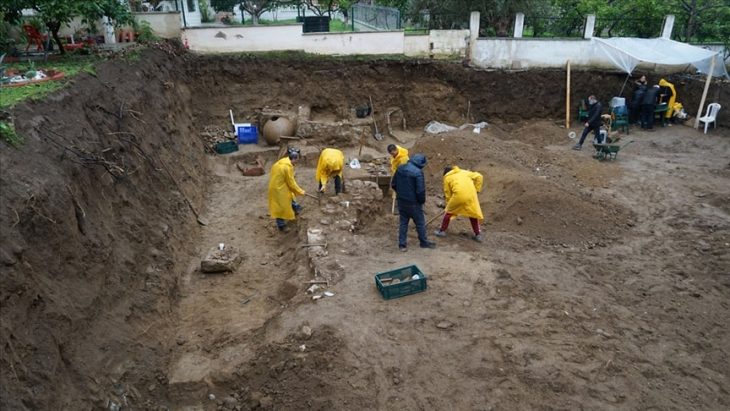
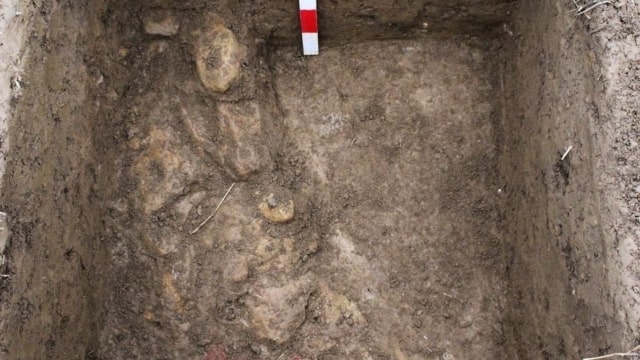
To prevent damage to potential cultural layers, a specialized dive team from the Office of Archaeology of Thurgau conducted a controlled underwater excavation in spring 2025. Covering an area of approximately 50 square meters, the team encountered stratified deposits of lake marl, silt, and well-preserved Neolithic settlement remains.
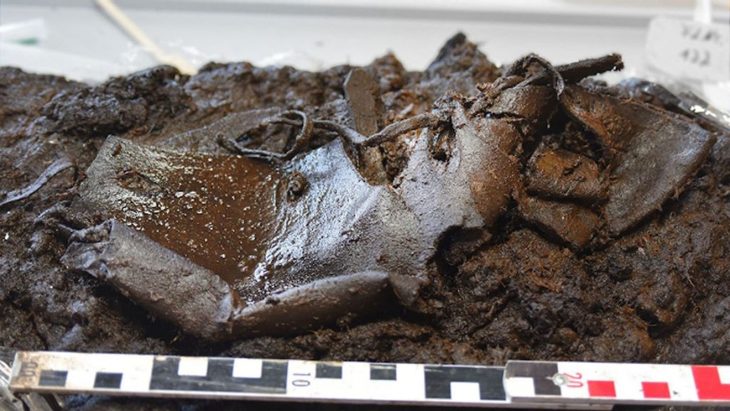
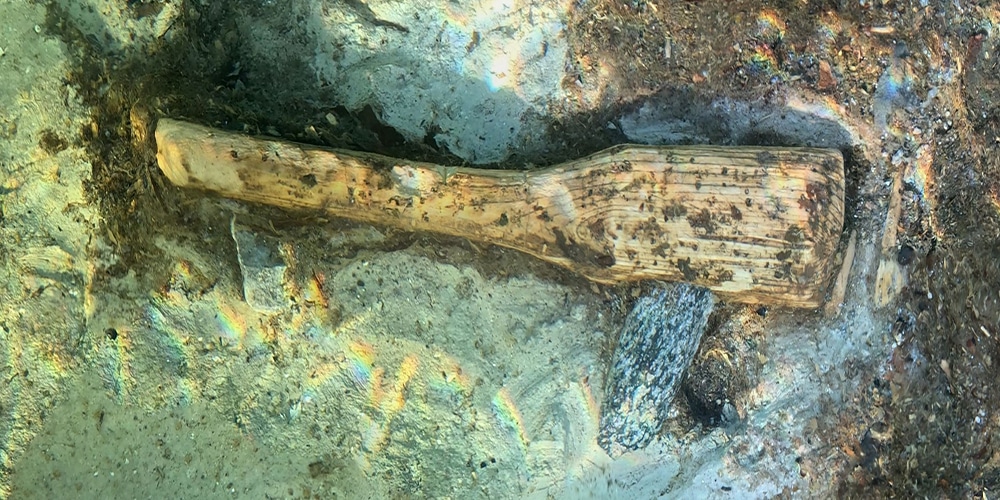
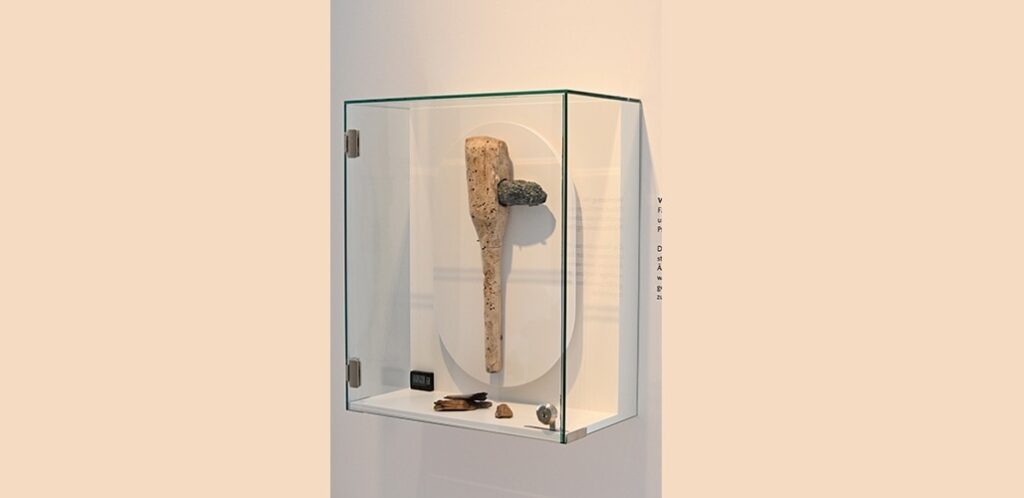
Among wooden house piles, animal bones, pottery fragments, and stone tools, one object stood out: a nearly complete felling axe—exceptionally rare in both preservation and completeness.

A Tool That Survived Millennia
Radiocarbon dating of the axe’s wooden shaft places it at around 2800 BCE, within the Late Neolithic period. The level of preservation is notable, particularly for an organic component such as wood, which typically deteriorates unless protected by waterlogged, oxygen-poor environments.
📣 Our WhatsApp channel is now LIVE! Stay up-to-date with the latest news and updates, just click here to follow us on WhatsApp and never miss a thing!!
The handle was crafted from ash wood, a material known for its durability and flexibility—qualities that made it ideal for tool production in prehistoric contexts. Its survival provides valuable data on woodworking techniques and material selection in Neolithic Europe.
The blade, meanwhile, was fashioned from prasinit, a dense and resilient metamorphic rock associated with the Alpine region. However, researchers emphasize that prehistoric communities in Steckborn likely sourced this material locally from glacial moraines rather than transporting it over long distances through the Alps. This detail reinforces the idea that Neolithic populations had a sophisticated understanding of their immediate geological environment.
Lake-Dwelling Cultures of the Alpine Region
The Steckborn find is part of a broader archaeological landscape linked to prehistoric pile dwellings around the Alps—settlements built on stilts along lake shores and wetlands. These communities, dating from roughly 5000 to 500 BCE, are recognized as a UNESCO World Heritage cultural phenomenon due to their exceptional preservation and the insights they offer into early agrarian life.
Such environments often act as natural archives. Waterlogged conditions protect organic materials—wood, textiles, plant remains—that are rarely preserved on dry land. As a result, finds like the Steckborn axe contribute not only to typological studies of tools but also to reconstructions of daily life, economy, and environmental adaptation.
Archaeological evidence from similar sites around Lake Constance suggests that these communities engaged in mixed subsistence strategies, combining farming, animal husbandry, fishing, and foraging. Tools like the felling axe would have played a crucial role in woodland management, construction, and possibly even symbolic or social practices.
From Excavation to Exhibition
Following its recovery, the axe underwent careful conservation and restoration in the laboratory of the Thurgau Office of Archaeology. The process stabilized both the wooden shaft and the stone blade, ensuring long-term preservation.
In a relatively short turnaround—just one year after its discovery—the artifact has now been placed on public display at the Museum of Archaeology in Frauenfeld. Its exhibition allows visitors to encounter a tangible object from a prehistoric lakeside world that has otherwise long since vanished.
A Quiet Find with Lasting Impact
While not monumental in size, the Steckborn axe represents a convergence of preservation, context, and craftsmanship that rarely survives intact. It anchors abstract discussions of Neolithic life in a concrete, human-made object—one shaped, used, and ultimately lost nearly five millennia ago along the shores of Lake Constance.
Its recovery also underscores a broader reality in European archaeology: even routine construction projects can reveal deeply buried chapters of human history, provided that preventive archaeological measures are in place.
Cover Image Credit: ©Canton Thurgau