
14 January 2026 The Future is the Product of the Past

3,000-Year-Old ‘Wildlife Park’ Discovered at Yinxu Ruins in Henan

Archaeologists working at the Yinxu Ruins in Anyang, Central China’s Henan Province, have uncovered compelling evidence that Shang Dynasty elites curated and managed living collections of wild animals more than 3,000 years ago. The discovery, reported by the Global Times, suggests the existence of what researchers describe as an early form of a “wildlife park,” predating imperial menageries known from later Chinese history and even those of medieval Europe.

The finds come from 19 small to medium-sized sacrificial pits located in the Imperial Tombs area of Yinxu, positioned across the river from the palace complex and ancestral shrines of the late Shang capital. Radiocarbon dating and stratigraphic analysis place the pits firmly within the Shang Dynasty period, roughly between 1600 and 1046 BC.

A rare concentration of wild fauna

Excavations revealed a remarkably diverse assemblage of animal remains. Skeletal evidence includes water buffalo, deer, roe deer, wolves, tigers, leopards, foxes, serows, wild boars, porcupines, and multiple bird species. Ornithological remains span at least five genera, among them swans, cranes, geese, falcons, and eagles. The sheer variety points to deliberate acquisition rather than opportunistic hunting.

Most striking is the discovery of 29 bronze bells recovered from 13 of the 19 pits. Several bells were found still positioned near the necks or heads of animals, strongly implying that these creatures were kept alive, monitored, and possibly trained prior to their ritual use.
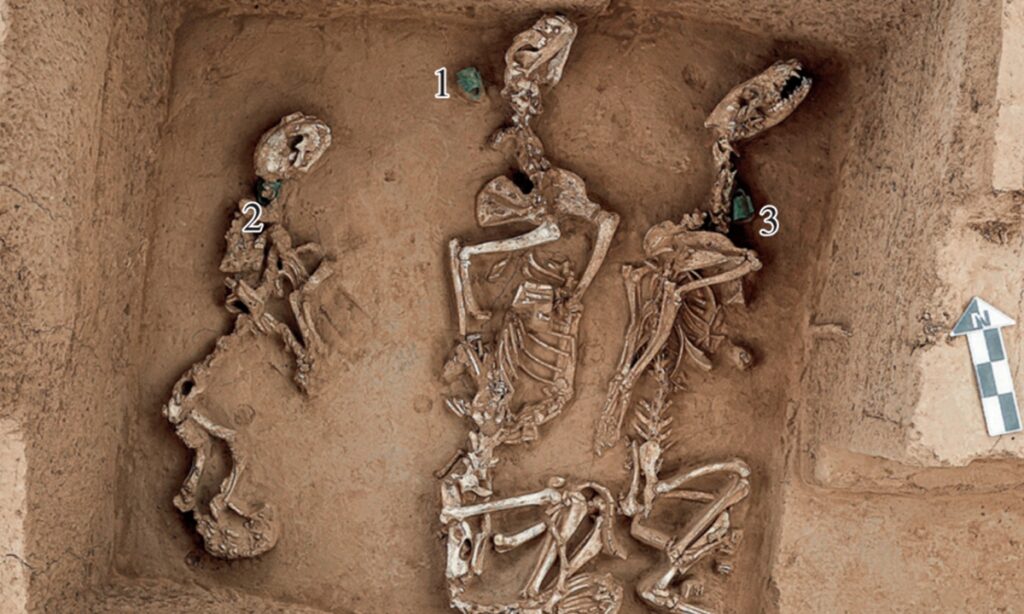
Wild animal relics discovered at the Yinxu Ruins in Anyang, Central China's Henan Province. Credit: Sina Weibo
Wild animal relics discovered at the Yinxu Ruins in Anyang, Central China’s Henan Province. Credit: Sina Weibo

Evidence of animal management

Zeng Yuli, a researcher specializing in ancient agriculture and animal husbandry, explained to the Global Times that the bells were likely tools for animal control and identification. According to Zeng, they reveal an unexpectedly sophisticated approach to animal resource management during the Shang period, including monitoring, categorization, and long-term care.


📣 Our WhatsApp channel is now LIVE! Stay up-to-date with the latest news and updates, just click here to follow us on WhatsApp and never miss a thing!!


This interpretation is supported by Li Xiaomeng, an assistant research fellow at the Chinese Academy of Social Sciences. Li noted that the animals were not acquired through temporary hunts but were probably rare or exotic species raised within controlled imperial gardens or enclosures maintained by Shang nobility.

Niu Shishan, a senior researcher at the same institute, emphasized that the standardized processing and concentrated deposition of the animals point to a comprehensive system encompassing acquisition, rearing, and ritual deployment. Together, these indicators suggest a structured institution rather than isolated ceremonial acts.

Ritual landscapes and sacrifice

Beyond wildlife remains, archaeologists also uncovered human, elephant, and horse skeletons in larger sacrificial pits nearby. The horses present a particularly intriguing pattern: their numbers were consistently even, and several skulls show depressions on the crown. Researchers interpret these features as new evidence for specific sacrificial rites practiced during state-level ceremonies.

“These discoveries give us a vivid glimpse into the scale and choreography of Shang imperial rituals,” Niu told the Global Times. “They also provide material evidence for understanding the dynasty’s religious beliefs and ceremonial systems.”
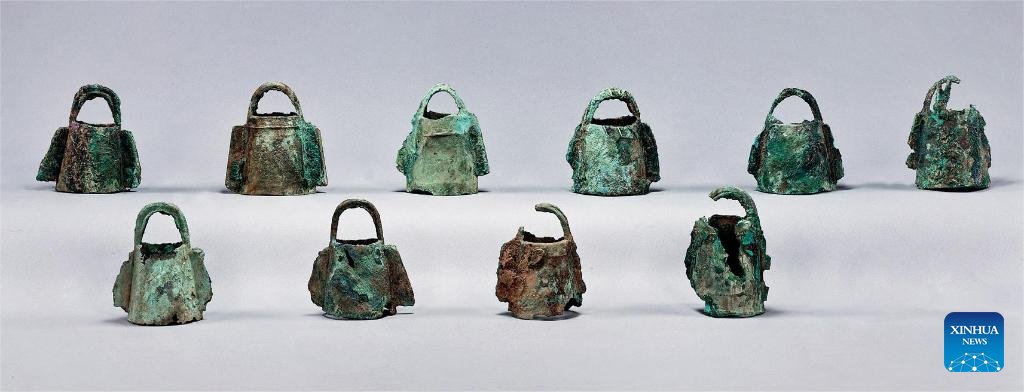
Most striking among the finds are 29 bronze bells recovered from 13 of the 19 sacrificial pits at Yinxu, believed to have been used to manage and identify animals kept by Shang Dynasty elites more than 3,000 years ago. Credit: Xinhua

Yinxu and the capital of “Dayishang”

The Yinxu Ruins are internationally renowned as the site where oracle bone inscriptions were first unearthed, offering the earliest known corpus of Chinese writing. Identified in oracle texts as “Dayishang,” or the Great Settlement of Shang, Yinxu is the first late Shang capital confirmed through both archaeology and written records.

Recent fieldwork has expanded this picture further. Alongside the animal discoveries, archaeologists documented an extensive urban road network with three east–west and three north–south arterial roads. One north–south route extends 1.6 kilometers, making it the longest known thoroughfare from a late Shang capital.

Heritage significance

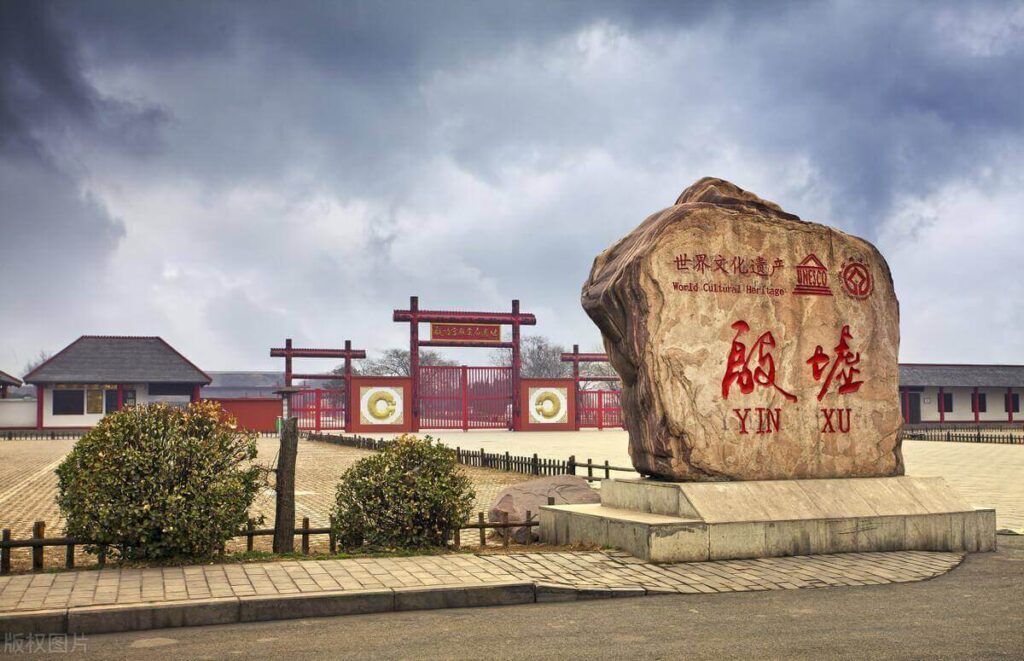
As a UNESCO World Heritage Site and the core of the Yinxu National Archaeological Site Park, the ruins are central to understanding early Chinese state formation. The newly uncovered evidence of managed wildlife adds an unexpected dimension to this narrative, highlighting elite power expressed through control over nature as well as ritual.

Together, the finds deepen our understanding of Shang society, revealing a capital where urban planning, ritual performance, and animal management were closely intertwined more than three millennia ago.

Cover Image Credit: Xinhua

Related Articles

Rare 3,500-Year-Old Chariot Wheel Discovered at Inverness Golf Course

24 April 2025

24 April 2025

Archaeologists have discovered a rare prehistoric chariot wheel at the site of a future golf course near Inverness. The discovery...

Red lipstick dating back 3,600 years was discovered in Iran -the oldest ever found-

14 February 2024

14 February 2024

Archaeologists have discovered a small chlorite vial containing a deep red cosmetic preparation believed to be an ancient type of...

The discovery that surprised archaeologists; a Rare glass cup adorning the table of rich Romans in Crimea

2 April 2022

2 April 2022

A discovery made in Frontovoye-3 necropolis in Crimea shows that during the Roman Empire there were more centers of glass...

Astonishing Find in the Czech Republic: Hikers Discover a 3.7 Kilogram Serbian/Bosnian Gold Treasure

29 April 2025

29 April 2025

A leisurely hike on the slopes of Zvičina Hill in the Czech Republic turned into an extraordinary discovery for two...

Found Home of the Legendary Viking Woman Who Crossed the Atlantic 500 Years Before Columbus

11 March 2021

11 March 2021

Archaeologists in Iceland recently excavated a farm believed to belong to the legendary Viking woman Gudrid Torbjörnsdottir. She is believed...

An Elite Nubian Woman’s Burial, Dating Back 4,000 Years, Reveals the Oldest Evidence of Tumpline Use

15 April 2025

15 April 2025

A recent study analyzing 30 ancient skeletons from the Abu Fatima cemetery in Nubia, Sudan, has revealed that women in...

Shackled skeleton identified as rare evidence of slavery found in Rutland

7 June 2021

7 June 2021

In Rutland, archaeologists discovered an ‘unusual’ skeleton of a Roman slave, who might have been a criminal sentenced to death....

Mustatil Structures in Arabia May Be 7,000-Year-Old Stone Remnants of Cattle Cult

1 May 2021

1 May 2021

Archaeologists examining the mustatil stone remains in the northwest of Arabia think that these stone remains may have been used...

Visit Baalbek’s Famous Temples with a Free 3d Virtual Tour

10 April 2021

10 April 2021

Baalbek, which has traces of settlement since 9000 BC, was one of the cornerstones of ancient civilizations. The famous Baalbek temple...

World’s Largest Geoglyphs Found in the Thar Desert

29 May 2021

29 May 2021

A massive spiral encompassing 100,000 square meters unearthed in the Indian desert may be the greatest drawing ever drawn. The...

Archaeologists discover a 4,000-year-old ancient city in the Iraqi Dhi Qar region

20 July 2021

20 July 2021

An astonishing find was made by archaeologists in Iraq‘s Dhi Qar province, where an ancient settlement estimated to be 4,000...

Rare Five Bronze Age Axes found in the Forests of Poland

5 December 2023

5 December 2023

Archaeologists in Poland have discovered five Bronze Age axes in Starogard Forest District, located in Kociewie. A metal detectorist named...

Giant Prehistoric Rock Engravings Discovered in South America May Be The World’s Largest

5 June 2024

5 June 2024

Researchers made a groundbreaking discovery of what is thought to be the world’s largest prehistoric rock art. Enormous engraved rock...

Scientists discover traces of paint on the Parthenon Sculptures that reveal their true colours

12 October 2023

12 October 2023

Recent research on the Parthenon Sculptures has found traces of the original paint used to decorate the Parthenon Sculptures, revealing...

Norse Runic Text found in Oslo could be Prayer!

30 December 2021

30 December 2021

Archaeologists from the Norwegian Institute for Cultural Heritage Studies (NIKU) have unearthed two objects inscribed in Norse runic text in...

Comments
Leave a Reply

Your email address will not be published. Required fields are marked *