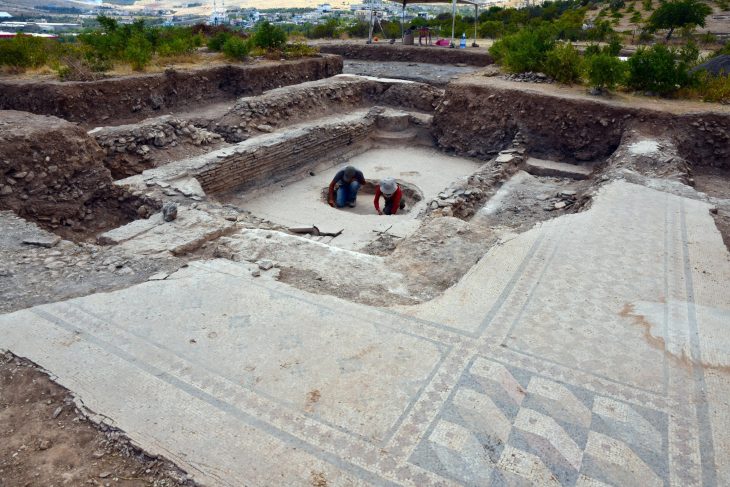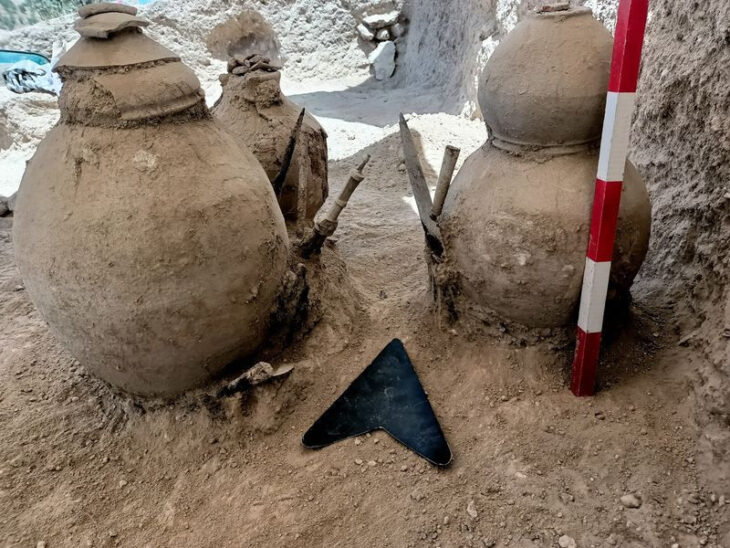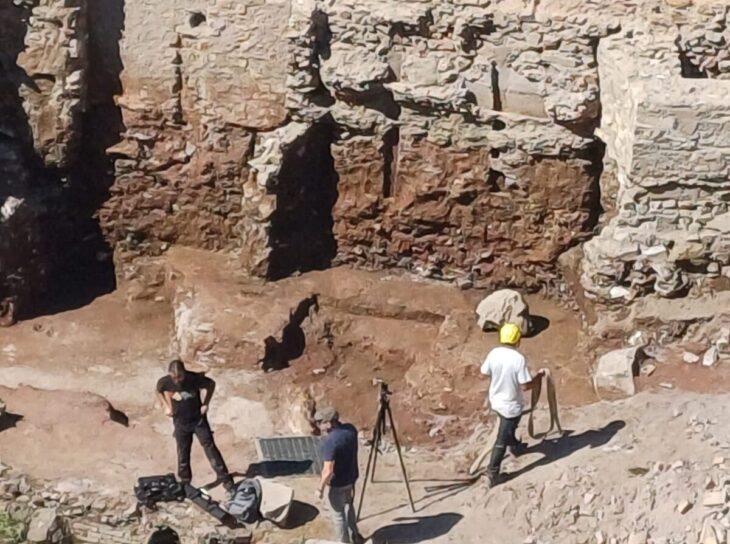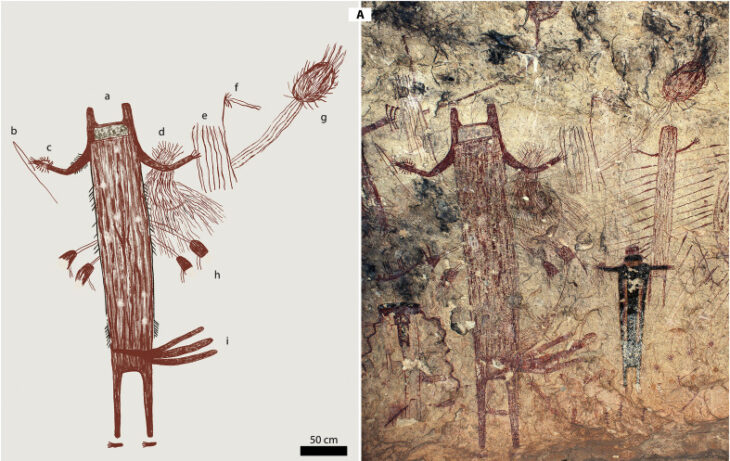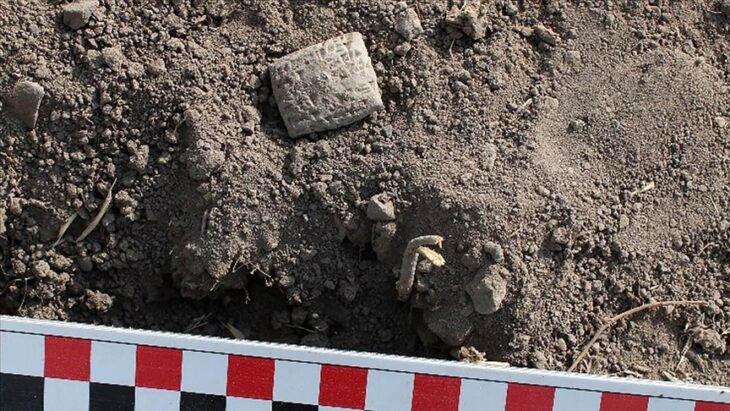
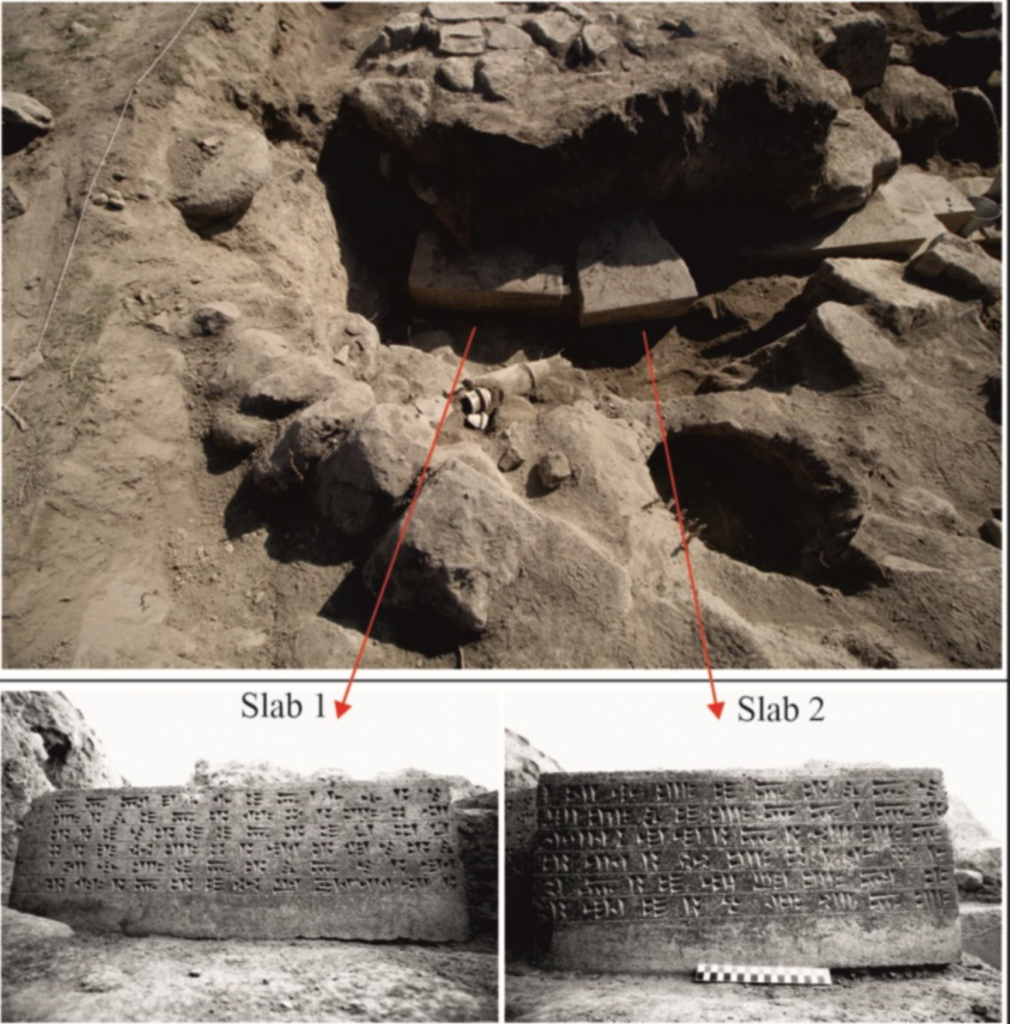
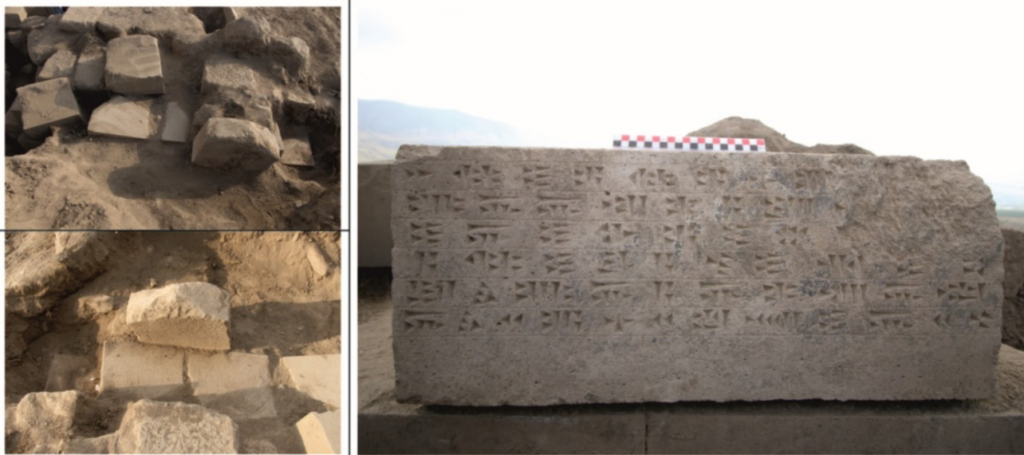
A remarkable archaeological discovery in eastern Türkiye is reshaping what scholars know about the ancient Kingdom of Urartu. During rescue excavations at the Körzüt Fortress in the Lake Van Basin, archaeologists uncovered three exceptionally well-preserved cuneiform inscriptions dating back nearly 2,800 years. These newly discovered texts, carved in stone during the reign of Urartian King Minua (810–786 BCE), provide fresh and compelling insights into Urartu’s military power, religious life, and regional control.
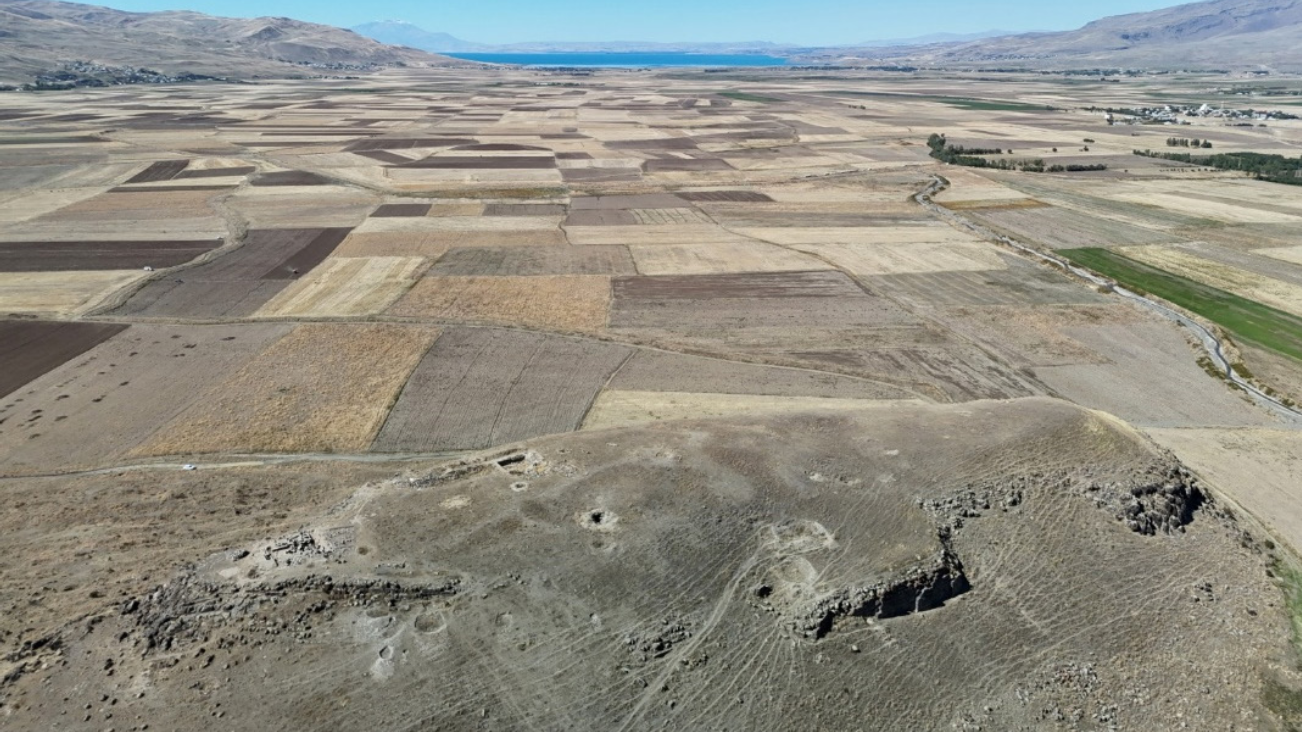
The discovery was made in 2023 during excavations conducted by the Van Museum Directorate at Körzüt Fortress, a strategically located stronghold overlooking the fertile Muradiye Plain. Long recognized as an important Urartian site, Körzüt has now emerged as a key center for understanding how the kingdom expanded its influence across eastern Anatolia and beyond.
Messages from a Warrior King
Beyond the dramatic discovery of the inscriptions themselves, the true breakthrough lies in their scholarly interpretation. In their study, Assoc. Prof. Dr. Sabahattin Erdoğan (Van Yüzüncü Yıl University) and Anastasiia Süğlüm (Istanbul University) provide a meticulous philological analysis that allows the ancient Urartian king to “speak” once more.
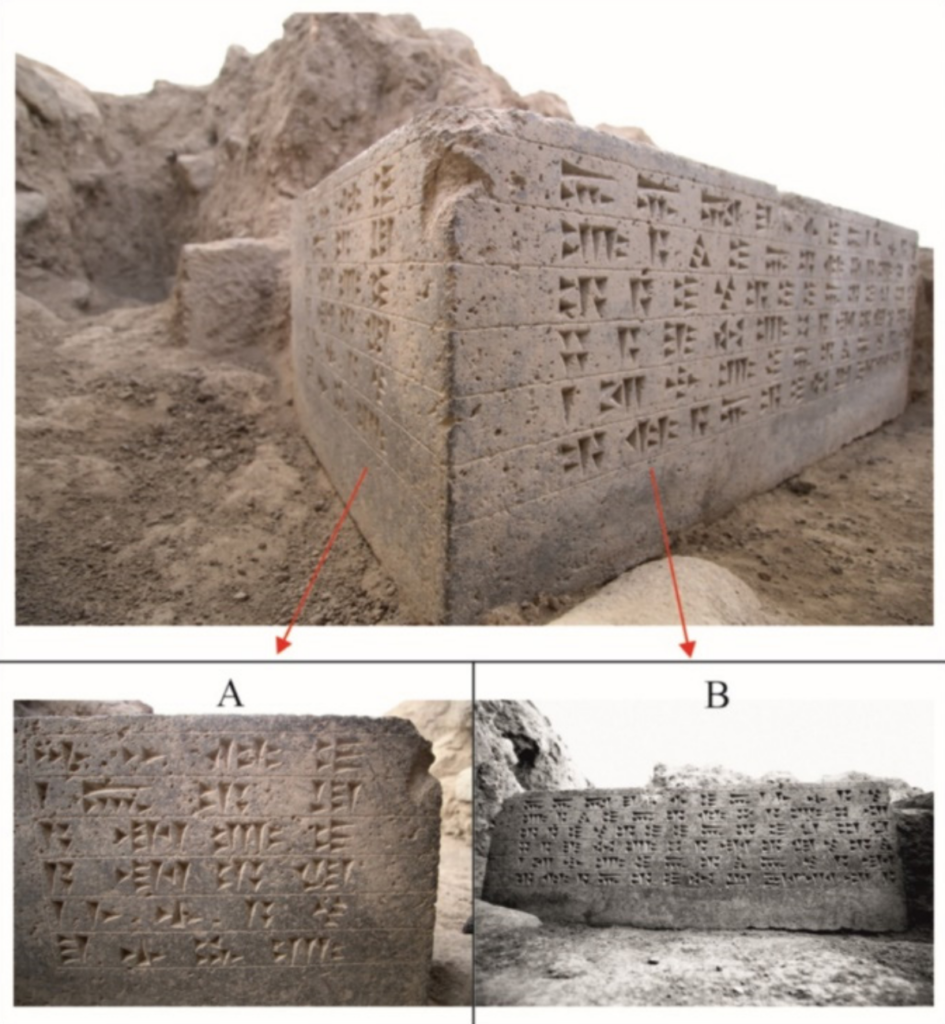
The inscriptions were found embedded in the walls of a Susi (Haldi) Temple inside the fortress. Written in classical Urartian cuneiform and carved onto basalt slabs, the texts record a military campaign led by King Minua, son of Išpuini—one of Urartu’s most powerful rulers. Thanks to their exceptional state of preservation, Erdoğan and Süğlüm were able not only to read the inscriptions clearly but also to reconstruct missing sections by comparing them with parallel texts from other Urartian sites.
One of the most striking passages begins with a traditional invocation of divine authority. In their translation, the inscription opens with Minua attributing his actions to the power of the god Haldi:
📣 Our WhatsApp channel is now LIVE! Stay up-to-date with the latest news and updates, just click here to follow us on WhatsApp and never miss a thing!!
“With the power of Haldi, Minua, son of Išpuini, says…”
This formula, identified and contextualized by the authors, reflects the Urartian belief that military success and royal legitimacy were granted directly by the gods. According to Erdoğan and Süğlüm, such invocations were not symbolic flourishes but essential components of Urartian state ideology.
A City Never Conquered Before
Perhaps the most historically significant section of the text is Minua’s description of the conquest of Luḫiuni, the royal city of the Erkua tribal union. As translated by the authors, the inscription declares:
“I conquered Luḫiuni, a city which no one else had conquered before.”
According to the inscriptions, Minua launched a campaign against the tribal union known as Erkua, capturing its royal city, Luḫiuni. The texts vividly describe the spoils of war: men, women, horses, cattle, and sheep were seized and transported to the Urartian capital, Ṭušpa (modern-day Van). The inscriptions emphasize that Luḫiuni was a city “no one had conquered before,” underscoring the scale and prestige of Minua’s victory.
These narratives do more than glorify conquest. They offer rare first-hand testimony of Urartian imperial strategy—how military success, religious devotion, and state administration were deeply intertwined.
A Temple Built for the God Haldi
The inscriptions were discovered in the temple dedicated to Haldi, the chief god of the Urartian pantheon and divine protector of kingship. The newly identified Susi Temple follows a square-plan design characteristic of Urartian religious architecture, with a narrow entrance corridor leading into a central cella built directly on bedrock.
This architectural discovery is as significant as the inscriptions themselves. It confirms that Körzüt Fortress was not only a military outpost but also a major religious and administrative center. The placement of royal inscriptions on the temple walls suggests that Minua intended the site to function as a permanent reminder of divine favor and royal authority.
Reuniting Lost Pieces of History
One of the most important implications of the Körzüt discovery is its connection to previously known inscriptions found in nearby villages. For decades, scholars debated where these scattered inscription fragments originally came from. The newly uncovered slabs strongly suggest that many of those texts once adorned Körzüt Fortress before being displaced over centuries.
By comparing language, formulas, and place names, researchers now believe the Körzüt inscriptions are part of a larger ceremonial inscription commissioned by King Minua. This allows scholars to reconstruct missing sections, correct earlier misreadings, and even identify new words in the Urartian language.
A Strategic Stronghold in the Van Region
Körzüt Fortress occupies a commanding position along major ancient routes connecting the Lake Van Basin to the Aras River Valley and Iran. From this vantage point, Urartian administrators could control trade, agriculture, and troop movements across the Muradiye Plain—one of the region’s most productive landscapes.
Archaeological evidence suggests that Körzüt played a key role in Urartu’s “chain defense system,” a network of fortresses designed to secure the kingdom’s northern frontier. Yet the scale of construction, the presence of a monumental temple, and the richness of inscriptions indicate that Körzüt was more than a military checkpoint. It was likely a royal investment meant to anchor Urartian authority both economically and symbolically.
Dating the Rise of Körzüt Fortress
The inscriptions have also helped resolve a long-standing debate about when Körzüt Fortress was built. Earlier theories placed its construction in the earliest phase of Urartian architecture. However, the discovery of Minua’s inscriptions firmly dates the fortress—and its temple—to the late 9th century BCE, during Minua’s reign or the joint rule of Minua and his father Išpuini.
This places Körzüt among the major state-sponsored projects that marked Urartu’s transformation into a centralized and expansionist empire.
Why This Discovery Matters
The Körzüt inscriptions are more than archaeological artifacts; they are voices from a powerful ancient state speaking across millennia. They illuminate how Urartian kings justified conquest through divine authority, managed captured populations, and reshaped landscapes through fortress-building and temple construction.
For historians and archaeologists, the discovery provides a clearer picture of Urartu’s political organization and its campaigns in eastern Anatolia. For the wider public, it offers a rare and tangible connection to a civilization that once rivaled Assyria in power and ambition.
As research continues, Körzüt Fortress is set to become one of the most important reference points for understanding Urartian history—proof that even after centuries of study, the ancient past still holds the power to surprise.
Erdoğan, S., & Süğlüm, A. (2025). Recently discovered Urartian cuneiform inscriptions in the temple of the Körzüt fortress. Anadolu Araştırmaları / Anatolian Research, 31, 145–169. https://doi.org/10.26650/anar.2024.31.1593151
Cover Image Credit: Erdoğan, S., & Süğlüm, A. (2025) – Anatolian Research