27 December 2025 The Future is the Product of the Past

1500-Year-Old Mosaic Saved in illegal Excavation Operation

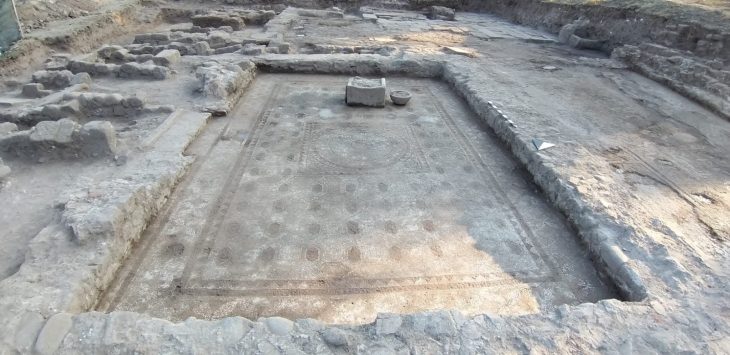
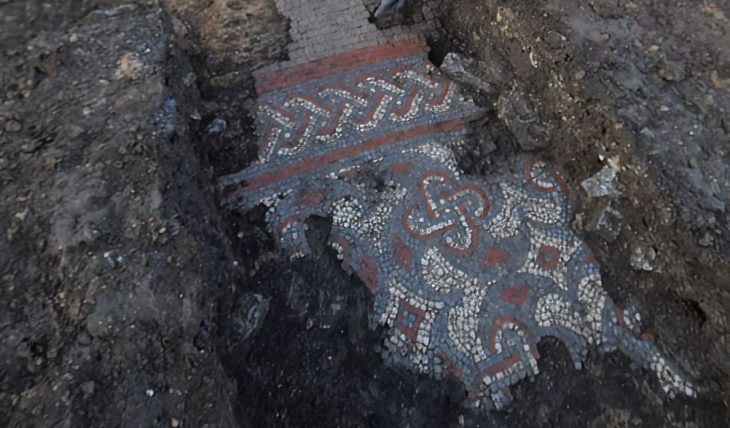
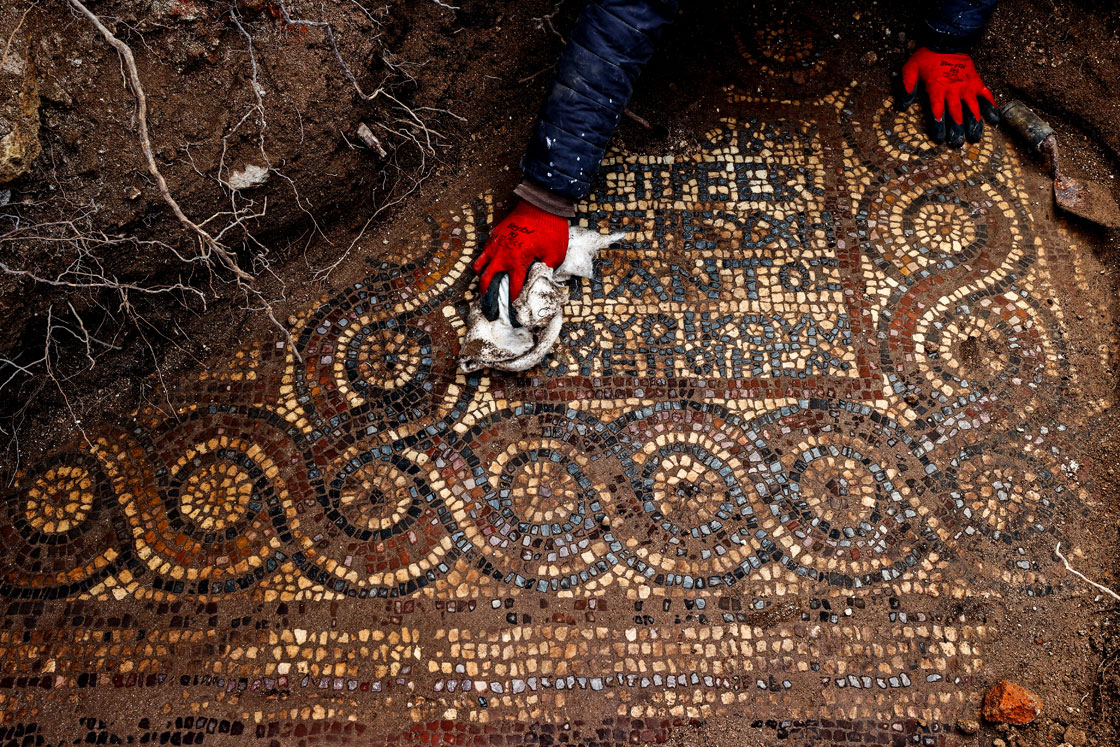
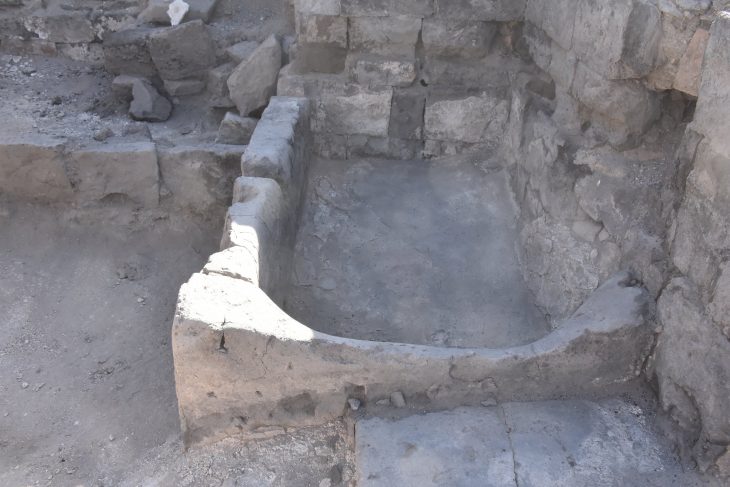
During the illegal excavation operation carried out in Izmir’s Aliağa district, a monastery built during the Roman period and about 1500 years old mosaic were found.

Provincial Gendarmerie Command teams started work upon the notification that illegal excavations were carried out in the mountainous area where there is no means of transportation by vehicle. The teams, which organized an operation to the specified address, caught 2 people trying to take off the historical remains about 2 meters below the ground.

Upon the informing of the gendarmerie, the experts of the Izmir Archeology Museum made an investigation in the region. At the end of the studies, the ruins of a Roman monastery and a 1500-year-old mosaic, which is said to be rare in the world, were found and the region was taken under protection.

The article on the work decorated with ivy motifs, stating that the mosaic was “made by a man from the elders of the church for the welfare of his family” drew attention.

The mosaics will be taken to the museum after the studies. A separate work will be done for the monastery.


📣 Our WhatsApp channel is now LIVE! Stay up-to-date with the latest news and updates, just click here to follow us on WhatsApp and never miss a thing!!


izmir mosaic
During the illegal excavation operation carried out in Izmir’s Aliağa district, a monastery built during the Roman period and about 1500 years old mosaic were found. Photo: Mehmet Emin Mengüarslan / AA

“It is a very difficult region to reach”

İzmir Archeology Museum Director Hünkar Keser told Anadolu Agency correspondent that the region is a registered area.

“This is a mountainous region and very difficult to reach. Upon the notification of the gendarmerie, we came to the area with our experts. We detected the floor mosaics. This place was used as a monastery and has a basilica” she spoke.

Stating that the work is of great importance in terms of archeology, Keser said that after the procedures here, they will carry the mosaics to the museum.

Explaining that they estimate that the monastery was used from the 4th century to the 14th century, Keser said, “The mosaics here are very valuable archaeologically. It is located at a point that can be reached by a tractor from the pathways. This is a universal cultural asset and a rare artifact. We will take the mosaic and bring it to the museum. We thank the security forces for their sensitivity. ” found the assessment.

Hünkar Keser added that the experts will initiate more detailed investigations in the region.

Source: Anadolu Agency 
Related Articles

1,800-Year-Old Staircase Leading to One of Western Anatolia’s Best-Preserved Libraries Discovered in Ancient Nysa

23 December 2025

23 December 2025

Nysa, one of the most intellectually vibrant cities of Roman Asia Minor, has yielded a new architectural discovery that deepens...

One of its kind, 1,500-year-old Roman ‘Lorica Squamata’ legion armor restored

19 June 2024

19 June 2024

The 1,500-year-old Roman ‘Lorica Squamata’ legion armor, the only known example in the world, found in the ancient city of...

Exciting Discovery “Kybele Cave” in Anatolian Archeology

29 March 2021

29 March 2021

A cave determined to be from the Roman period was found in Kocaeli’s Kandıra district. It turned out that this...

An Urartian female executive grave was found at the Çavuştepe Mound

9 September 2021

9 September 2021

The grave of an Urartian, who was buried with his horse, cattle, and dog, had been found recently. Today, another...

Kerkenes Excavations Reveal Possible Proto-Turkic Kurgans Dating Back 2,600 Years

22 October 2025

22 October 2025

Archaeological excavations at the ancient city of Kerkenes (Pteria) in central Anatolia have revealed burial features that may be linked...

A Rare Late Neolithic Period Seal found in Domuztepe Mound

25 August 2022

25 August 2022

A rare Late Neolithic Seal was discovered during the 2022 excavations of the Domuztepe Mound (Domuztepe Höyük), located on the...

Leptis Magna was once one of the most important African cities of the Roman Empire

28 September 2021

28 September 2021

The ancient city of Leptis Magna, as was its name in antiquity, was once one of the most prominent and...

‘Incredibly Rare’ Roman Mausoleum Unearthed Near London Bridge Station

13 June 2023

13 June 2023

Archaeologists report discovering an “incredibly rare” and featured preserved floors and walls Roman mausoleum near London Bridge Station, UK. Archaeologists...

Temple of Zeus Lepsynos in Turkey regains its glory

9 May 2022

9 May 2022

The temple of Zeus in the ancient city of Euromos in southwestern Turkey regains its original splendor with the revitalization...

The three-headed statue of Goddess Hecate discovered in Turkey’s Mersin

18 August 2023

18 August 2023

In the ancient city of Kelenderis in Mersin, located in the south of Turkey, the statue of the 3-headed goddess...

Millefiori Glass Plateques From the 5th Century AD Discovered in the Ancient Lycian City of Myra

9 September 2024

9 September 2024

One of the six leading cities of ancient Lycia and the birthplace of Santa Claus (or Sinterklaas in Dutch), the...

Archaeological excavations started again after 50 years in Tunceli Tozkoparan mound

28 June 2021

28 June 2021

Archaeological excavations at the Tozkoparan Mound in Turkey’s Tunceli province are anticipated to turn the city into one of eastern...

Return of a 4,250-year-old Hattian golden beak-spouted ewer to Turkey

27 October 2021

27 October 2021

The 4,250-year-old golden beak-spouted ewer was returned to the Anatolian Civilizations Museum by the Gilbert Art Foundation. Culture and Tourism...

History of 8,500 years waits for a museum

19 June 2023

19 June 2023

The conservation process of the Yenikapı shipwrecks, which were discovered during the Marmaray project and considered the largest collection of...

14,000-year-old settlement discovered in western Turkey

26 November 2021

26 November 2021

During the rescue excavation carried out in a cave in Dikili, İzmir, in western Turkey, 14 thousand-year-old stone tools and...