9 March 2026 The Future is the Product of the Past

1900 years old a rare mosaic was discovered in Durrës, Albania

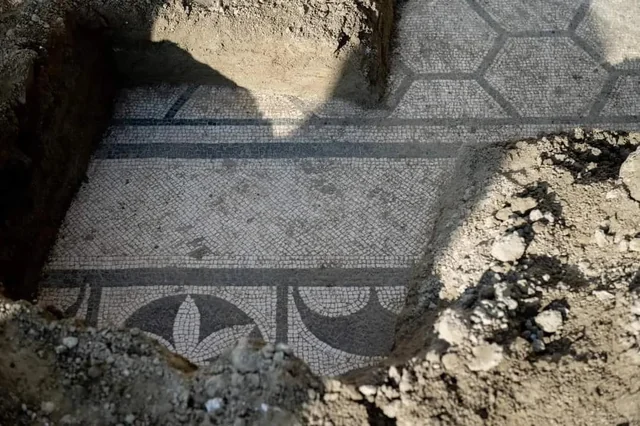
In the port city of Durrës, on the Adriatic Sea in western Albania, a unique mosaic dating back 1900 years was found.

As one of the oldest and most significant port cities in the Balkans, Durrës is 34 kilometers from Tirana. With nearly 3.000 years of history, it is Albania’s most ancient city or the eternal city over the Adriatic Sea. Its foundation dates back to 627 B.C., when the Corinthians and settlers from Corcyra invaded the Taulants’ Illyrian territory.

It later passed to the Romans, who called it Dyrrhachium. It thereby became the most important port of Illyricum. In the 4th century, it became the capital of Epirus Nova (a Roman province).

The city is home to Emperor Hadrian’s Roman amphitheater with a capacity of 15,000 seats. It is the second-largest amphitheater in the Balkans.

The city of Durrës is also known for the “Beauty of Durres” mosaic from the 4th century BC, currently on display in the National History Museum in Tirana.


📣 Our WhatsApp channel is now LIVE! Stay up-to-date with the latest news and updates, just click here to follow us on WhatsApp and never miss a thing!!
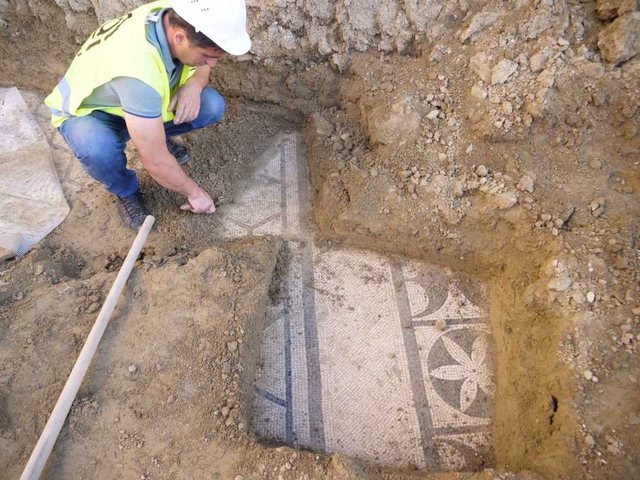


Photo: Vox News

The mosaic was unearthed during works for opening the foundations for the reconstruction of a high school.

According to archaeologist Professor Luan Perzhita, who leads the work for this archaeological discovery, this is a very rare mosaic not only for Albania but for the entire Balkan region.

This mosaic composed of dark blue and white stones with geometric and floral figures belongs to the end of the 1st century and the beginning of the 2nd century and is part of a luxurious villa that was located near the Durrës amphitheater. So far, only a portion of this mosaic, which is estimated to cover an area of 60 square meters, has been discovered.
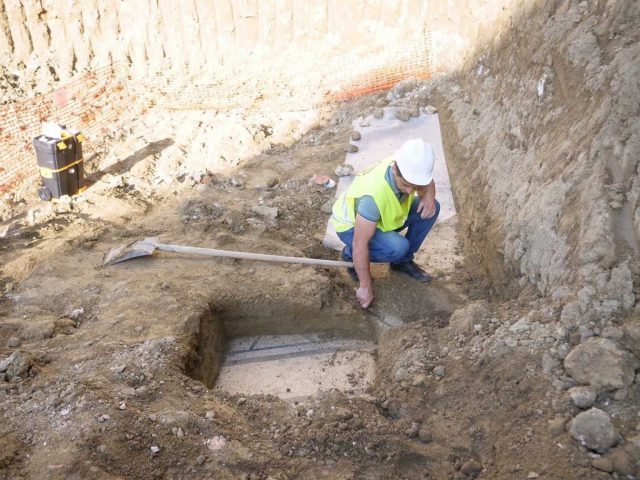
Photo: Vox News

In addition to the mosaic, a 3-meter-high part of the wall on the eastern side, as well as several other objects, was discovered.

This is a very rare archaeological find that adds to Durrës’ extraordinary cultural heritage.

Cover Photo: Vox News
Related Articles

Serbia Mass Grave Shock: 2,800-Year-Old Burial Reveals Targeted Killing of Women and Children

24 February 2026

24 February 2026

A groundbreaking interdisciplinary investigation led by researchers from institutions including Leiden University has uncovered compelling evidence of gender- and age-selective...

Silver coins found near the ruins of the medieval monastery in Holy island

10 November 2021

10 November 2021

Archaeologists have discovered a silver coin on Lindisfarne, known as Holy Island, in the northeast of England. Dig Ventures is...

Sensational find in Ephesus: more than 1,400-year-old district discovered

29 October 2022

29 October 2022

During this year’s excavations at Ephesus in Turkey, archaeologists from the Austrian Academy of Sciences (AW) discovered an incredibly well-preserved...

18,000-Year-Old Evidence of Human Brain Consumption Found in Poland’s Maszycka Cave

22 February 2026

22 February 2026

New scientific research has uncovered compelling evidence that prehistoric humans practiced cannibalism—including the consumption of human brains—around 18,000 years ago...

An inscription containing the Turk name was discovered for the first time in Anatolia

3 September 2022

3 September 2022

For the first time in the pre-Islamic Early period Turkish history, an inscription bearing the inscription expression “Turk” and written...

Ancient settlements that challenge traditional thinking “Karahantepe and Taş Tepeler”

5 December 2021

5 December 2021

After Göbeklitepe in Şanlıurfa, which sheds light on 12,000 years ago in human history and is considered one of the...

Viking Family identified using New DNA Technology

9 June 2021

9 June 2021

Researchers were able to confirm the connection between two Viking remains discovered in Denmark and England thanks to new DNA...

Madinat al-Zāhira: The Enigmatic Palace-City Lost for 1,000 Years, Revealed by New LiDAR Evidence in Córdoba

14 January 2026

14 January 2026

For more than a thousand years, the precise location of Madinat al-Zāhira, the enigmatic palace-city founded by Almanzor (al-Mansur Ibn...

A Trove of ‘Exceptional’ stunningly preserved bronze statues found at an Ancient Thermal Spa in Tuscany, Italy

10 November 2022

10 November 2022

A group of Italian archaeologists made the discovery of 24 well-preserved bronze statues from an ancient thermal spring in Tuscany....

Mycenaean Gold Ornaments Reveal Surprising Northern European Solar Symbols

13 January 2026

13 January 2026

Two small gold objects discovered in Mycenaean tombs on the Greek island of Cephalonia are reshaping what archaeologists know about...

A Jewel Worthy of a Duke: The Medieval Treasure Unearthed from the Moat

28 November 2025

28 November 2025

A remarkable archaeological discovery from the moat of Castle Kolno in Poland is offering fresh insight into medieval aristocratic culture...

3500-year-old mysterious hieroglyphs discovered in Yerkapı Tunnel in Hattusa deciphered

12 October 2023

12 October 2023

Some of the Anatolian hieroglyphs discovered last year in the Yerkapı Tunnel in Hattusa, the former capital of the Hittite...

Early humans appreciated geometry and symmetry and were intentionally crafting spherical shapes 1.4 million years ago, according to a new study

7 September 2023

7 September 2023

An examination of 150 round, baseball-sized stones discovered at a site where early humans lived 1.4 million years ago shows...

Anglo-Saxon monasteries were more resilient to Viking attacks than thought

31 January 2023

31 January 2023

Researchers from the University of Reading’s Department of Archaeology have found new evidence that Anglo-Saxon monastic communities were more resistant...

A Ribat Mosque shares space with the Roman sanctuary dedicated to Sun and Ocean was discovered in Portugal

2 November 2023

2 November 2023

The ruins of a second Islamic ‘ribat’ mosque dating back to the 11th and 12th centuries have been discovered at...