8 January 2026 The Future is the Product of the Past

World’s First Pregnant Ancient Egyptian Mummy has been Discovered

Experts from the Polish Academy of Sciences aim to research all mummies in museums as part of the Warsaw Mummy Project.

As part of this project, researchers worked to discover more about the woman thought to be in her 20s.

The first mummified bones of an ancient Egyptian pregnant woman dating back over 2,000 years have been found in Thebes. According to scans of the body, she died at the age of 28 weeks pregnant.

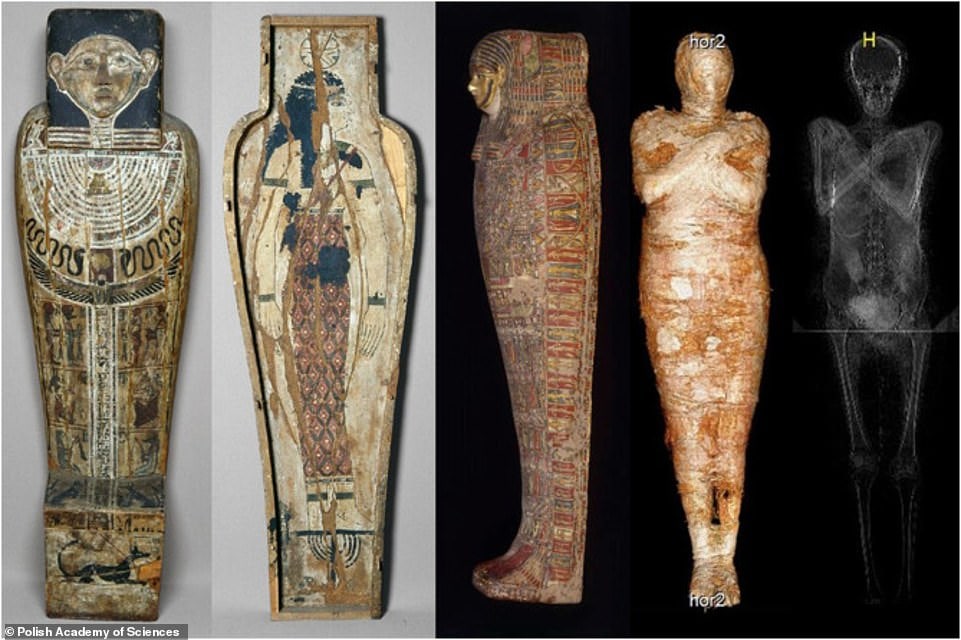
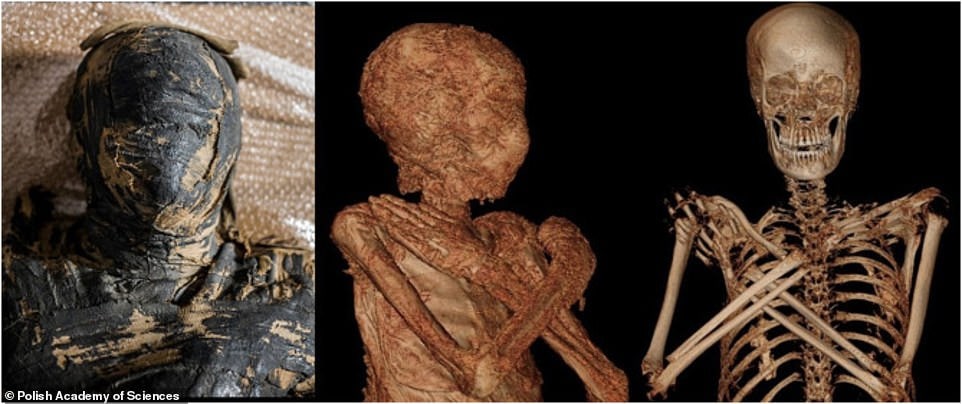
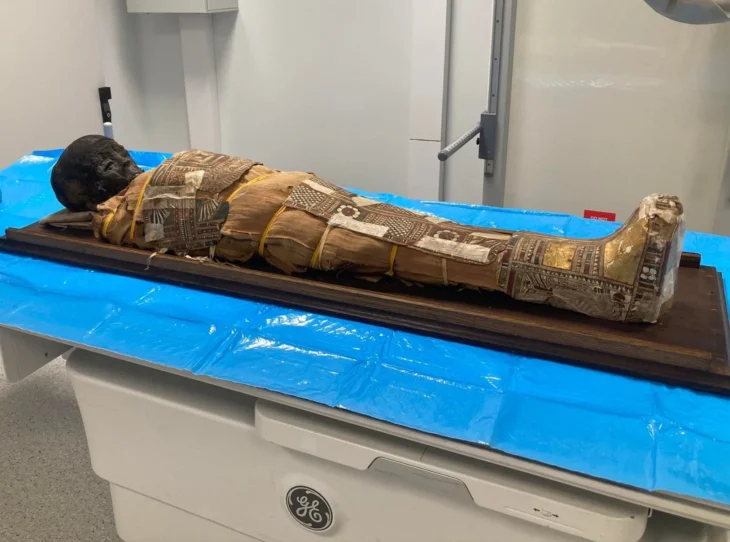
The team found the remains of a fetus, estimated to be 26 to 30 weeks old, inside the woman using a combination of CT scans and X-rays. The first time a pregnant mummy has been discovered.

According to the authors of a paper published in the Journal of Archaeological Science, the body of the woman who died 2,000 years ago was carefully wrapped in fabrics and left with a rich collection of amulets to see her into the afterlife.


📣 Our WhatsApp channel is now LIVE! Stay up-to-date with the latest news and updates, just click here to follow us on WhatsApp and never miss a thing!!


The team can’t say why the fetus was left inside the woman and not mummified separately, but it could be because it was too young to have a name and needed to travel to the afterlife inside its mother.

Study lead author Dr. Wojciech Ejsmond said this was the ‘first discovery of a pregnant embalmed body,’ adding: ‘There is no other so well preserved ancient body of a pregnant woman.

The body was wrapped in fine fabrics and laid to rest with a set of amulets representing Horus’ four sons, which the team believes indicate she was a powerful figure in Thebes.
World's First Pregnant Ancient Egyptian Mummy
The head and CT scans the mummy. The first remains of an ancient Egyptian mummified pregnant woman have been discovered in Thebes, dating back more than 2,000 years, the corpse was 28 weeks into her pregnancy when she died.

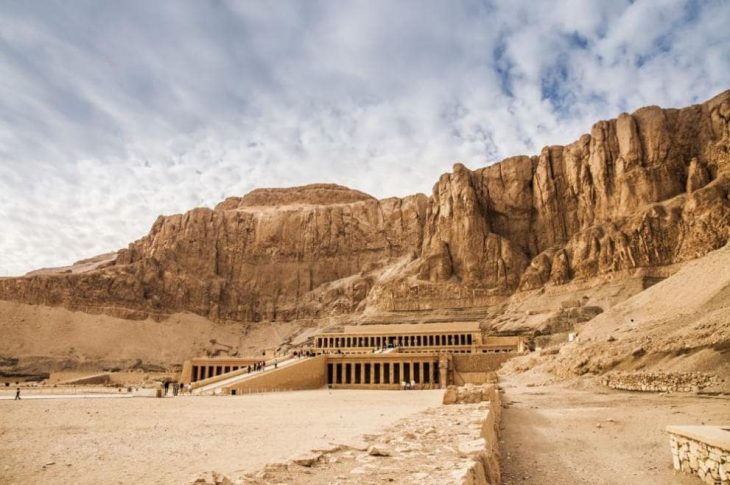
According to the study writers, the mummy was discovered in royal tombs in Thebes, Upper Egypt, and came from the elite of the Theban culture.

The woman was transported to Warsaw, Poland, in 1826, at the time of some of the most famous Egyptian Valley of the Kings findings, and is now on display at the National Museum in Warsaw.

‘This mummy provides new possibilities for pregnancy studies in ancient times, which can be compared with and related to current cases,’ study authors wrote.

‘Furthermore, this specimen sheds a light on an unresearched aspect of ancient Egyptian burial customs and interpretations of pregnancy in the context of ancient Egyptian religion.’

‘For Egyptologists, this is a fascinating discovery because we know little about perinatal health and childhood in ancient Egypt,’ Dr. Ejsmond added.

‘Physicians can study, for example, the intestinal content of the fetus to gather information on the development of the immune system in ancient times.’

The fetus was mummified alongside its mother in the lower part of the lesser pelvis and partly in the lower part of the greater pelvis. It was not, however, removed from its original location.
Related Articles

Farmer was Discovers 2600-year-old Stone Slab of Pharaoh Apries

19 June 2021

19 June 2021

The Egyptian Ministry of Antiquities announced that a farmer in Ismailia, Egypt, uncovered a 2,600-year-old stone monument erected by Pharaoh...

Ancient Egyptian silos and administrative buildings uncovered at Kom Ombo in Egypt’s Aswan

6 March 2022

6 March 2022

The Egyptian-Austrian archaeological mission working in the Temple of Kom Ombo in Egypt’s southern province of Aswan unearthed an administrative...

Why Was This Pharaoh Buried in Another King’s Tomb? New Tanis Evidence Uncovers a Royal Cover-Up

25 November 2025

25 November 2025

For decades, archaeologists working at Tanis have grappled with an unsettling mystery: why was an unmarked granite sarcophagus lying deep...

Archaeologists have uncovered the source of King Solomon’s wealth

31 August 2021

31 August 2021

An archeological team working in Israel’s Timna Valley believes they have discovered the reason behind King Solomon’s legendary wealth. The...

Interesting from Each Other 7 Amazing Historical Discoveries

21 April 2021

21 April 2021

Archaeologists signed interesting from each other and magnificent discoveries with their work in the last 20 years. Let’s take a...

Byzantine-Era Monastic Complex Discovered in Sohag, Egypt

8 January 2026

8 January 2026

Archaeologists in Upper Egypt have uncovered the remains of a remarkably well-preserved monastic residential complex dating back to the Byzantine...

Hidden Air-Filled Chambers Detected in Menkaure Pyramid May Indicate Lost Entrance

12 November 2025

12 November 2025

Researchers from Cairo University and the Technical University of Munich (TUM) have made a groundbreaking discovery within the Pyramid of...

People knew how to make bread 14,400 years ago

15 May 2022

15 May 2022

Archaeological finds in Jordan’s Black Desert show that humans used stone ovens to bake bread 14,400 years ago. Researchers have...

Massive New Kingdom Fortress Unearthed on the Horus Military Road in North Sinai

12 October 2025

12 October 2025

An Egyptian archaeological mission has uncovered a massive military fortress dating back to Egypt’s New Kingdom period along the ancient...

A New Study: The Great Sphinx of Giza may have been blown into shape by the wind

1 November 2023

1 November 2023

The theory, occasionally raised by others, that the Great Sphinx of Giza may have been a lion-shaped natural landform that...

King Scorpion’s Legacy: Violence, Divinity, and the Rise of the World’s First Territorial State

30 August 2025

30 August 2025

A barren desert today, the rocky landscape east of Aswan once served as the backdrop for one of history’s most...

Al-Ula, The Living Museum of Ancient Arab Civilizations

12 February 2021

12 February 2021

Al-Ula oasis is located in the lush Wadi Al-Qura, or “valley of villages”, about 110 km southwest of the modern...

The Cairo University archaeological mission unearths the tomb of Ramses II’s royal treasurer at Saqqara necropolis

1 November 2021

1 November 2021

Archaeologists working at the Saqqara necropolis have unearthed the tomb of Ptah-M-Wiah, a high-ranking ancient Egyptian official and head of...

Polish archaeologists have uncovered nine crocodile heads within ancient Egyptian tombs of nobles

25 December 2022

25 December 2022

Polish archaeologists excavating the Theban Necropolis in Egypt discovered nine crocodile heads hidden inside two tombs belonging to high-ranking nobles....

Ramses the Great

7 May 2021

7 May 2021

Ramses the Great was the name given to Ramses II, also known as Ramesses or Rameses. He was the third...