1 December 2025 The Future is the Product of the Past

Torrential Rain Reveal 2500-Year-old Small Bull Statue

After heavy rains near the ancient Olympia site, a bronze bull statue of a bull believed to be at least 2500 years old was unearthed in Greece.

The discovery of a small, intact object was made by archaeologists near the temple, the Greek Ministry of Culture said.

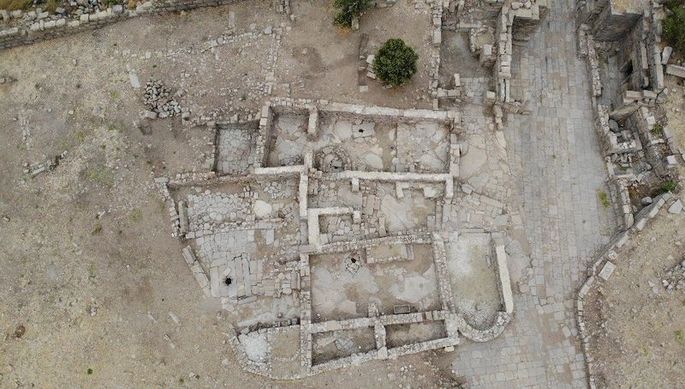
It was found near the temple of Zeus and the Altis, the sacred enclosure and core of the sanctuary, the ministry said. “One of its horns was poking out of the ground following recent heavy rainfall.”

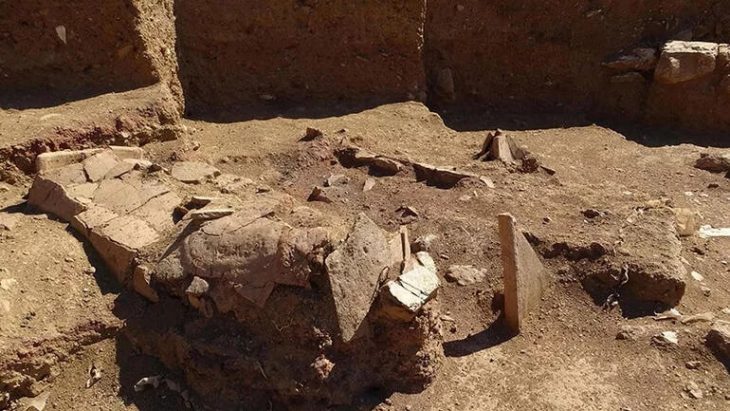
Archaeologist Zaharoula Leventouri noticed a small horn sticking out of the moist soil near the temple of Zeus during an inspection and stopped to carefully remove the soil from the area.

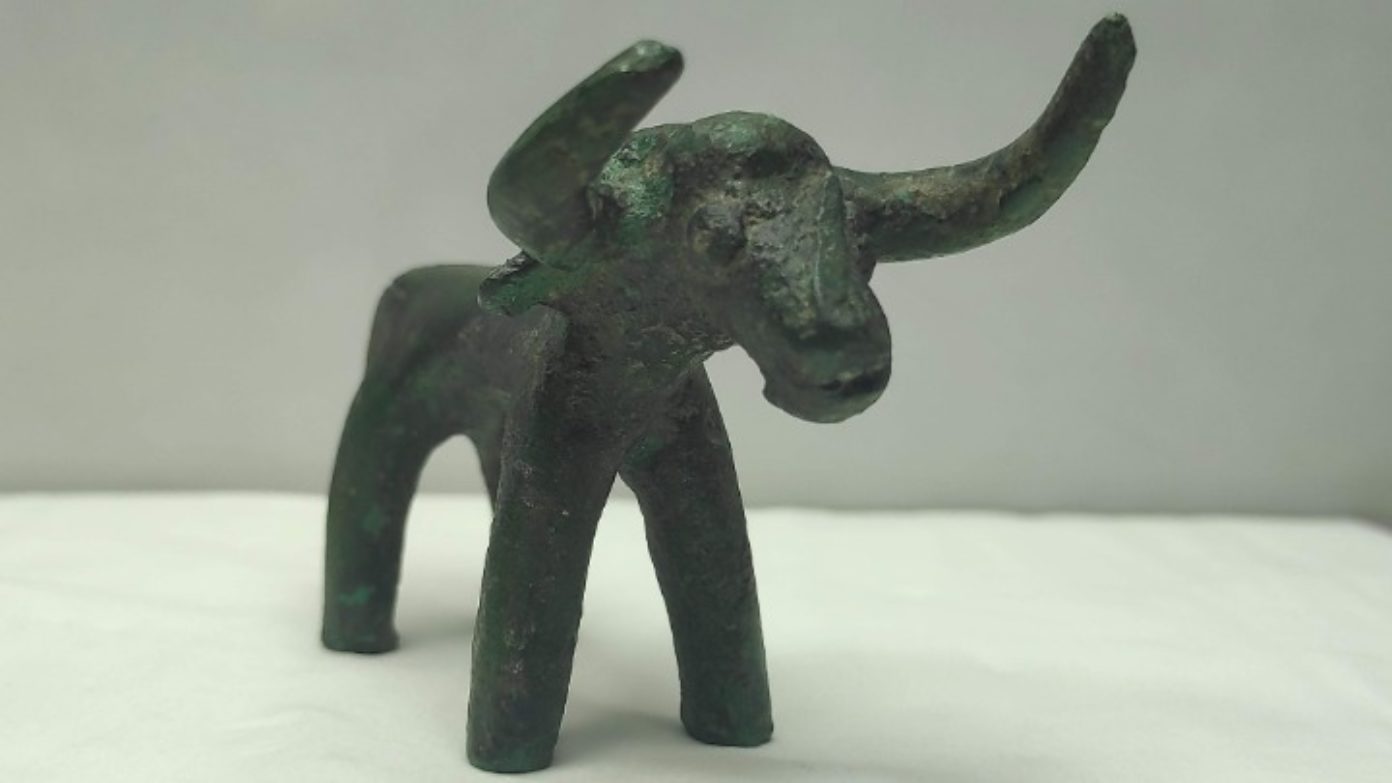
Archaeologist Zaharoula Leventouri unearthed a small bronze bull and dated this small statuette to the Geometric period of Greece from 1000 BC to 700 BC.


📣 Our WhatsApp channel is now LIVE! Stay up-to-date with the latest news and updates, just click here to follow us on WhatsApp and never miss a thing!!


The burn marks on the statuette suggest that it may have been one of the thousands of offerings to the Greek god Zeus.

Archaeologists have discovered dozens of exquisite pottery with unique geometric patterns of the period, but bronze statues of that period are not common because the Greeks later melted many bronze sculptures to reuse this material for hundreds of years.
A bronze bull idol unearthed at the archaeological site of Olympia in Greece. Photograph: Greek Ministry of Culture/Reuters

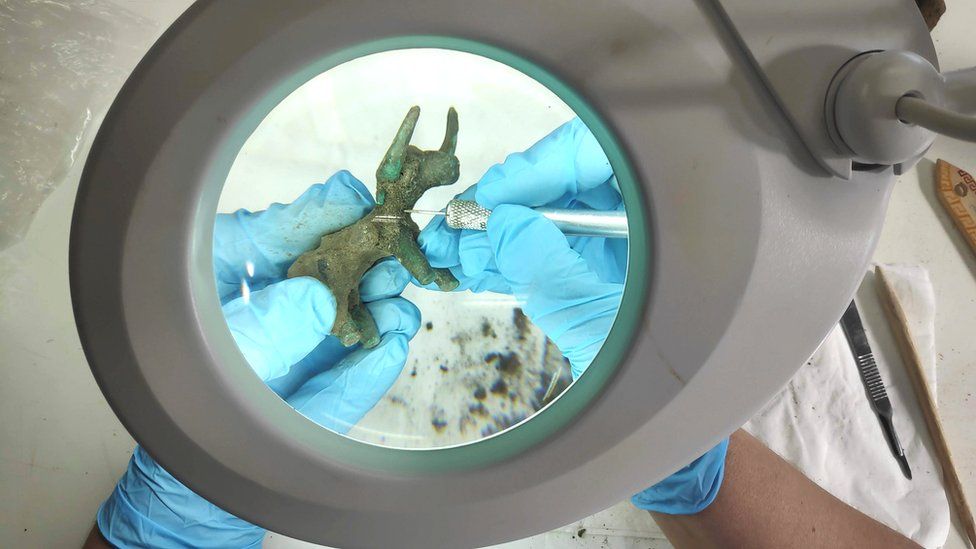
The bronze bull was sent for further investigation by experts from the Greek Ministry of Culture who later determined that it was most likely a gift dedicated to Zeus in his temple at Ancient Olympia.

Like other animal and human figurines, the bull discovered near the temple of Zeus was likely to have been offered by believers during a sacrifice, which would explain the burn marks and “sediments removed during its purification”, the ministry added.

The ancient Olympic Games were held in Olympia every four years from 776 BC to at least 393 AD, and the cities and states of Greece put aside conflicts in order to participate.

Located in the Peloponnese, Olympia was an important center not only of religious life in ancient Greece but also of sports.

Cover Photo:  AMNA
Related Articles

Marmore, the Highest and Oldest Artificial Waterfall in Europe, Created by the Romans

4 March 2024

4 March 2024

Approximately eight kilometers away from the town of Terni in Umbria, Italy, there is a waterfall that is one of...

Three New Domus de Janas Unearthed in Sardinia: 5,000-Year-Old “Fairy Houses” Discovered

29 July 2025

29 July 2025

Hidden beneath the rugged landscapes of Sardinia lie the silent dwellings of an ancient world — the Domus de Janas,...

The biblical narrative of Sodom may have been inspired by a cosmic meteorite that devastated an ancient city

21 September 2021

21 September 2021

The Bible account of Sodom’s destruction lies at the heart of classic “fire and brimstone” judgment day prophesies. But what...

2500-year-old Persian ancient palace dish discovered in Oluz Höyük, Türkiye

18 October 2023

18 October 2023

A 2,500-year-old earthenware pot containing bone fragments and grains from the Persian-era palace kitchen was discovered during archaeological excavations at...

A ‘very rare’ clay figurine of god Mercury and a previously unknown Roman settlement were discovered at the excavation site in Kent

23 February 2024

23 February 2024

At a previously unknown Roman settlement that was formerly next to a busy port but is now 10 miles from...

The ability to produce ceramic vessels came to Europe via Siberia and the Caspian Sea region

6 January 2023

6 January 2023

A new study suggests that the knowledge for making ceramic vessels came to Europe from the Middle East and the...

The 5,000-Year-Old Beaded Burials that Reveal Women’s Power in Copper Age Iberia: Over 270,000 Beads

6 February 2025

6 February 2025

Archaeologists investigating the Montelirio tholos burial site in southwestern Spain, dating back approximately 5,000 years, have uncovered that the women...

The oldest grave in northern Germany 10,500 years old

14 October 2022

14 October 2022

Archaeologists have discovered the oldest known human remains in northern Germany in a 10,500-year-old cremation grave in Lüchow, Schleswig-Holstein. The...

Medieval Masterpiece: Rare Jesus Christ Relief from Ani Ruins Unveiled After 130 Years

14 August 2025

14 August 2025

A significant archaeological artifact depicting Jesus Christ has been put on public display for the first time at the Kars...

Ancient Yemeni Farmers’ Irrigation Mastery Unearthed

31 October 2025

31 October 2025

The General Authority for Antiquities and Museums’ Dhamar branch has unveiled a remarkable archaeological find in Wadi Hijrat Munathidah, north...

The history of Kültepe Mound in central Turkey goes back another 300 years

12 December 2021

12 December 2021

In Kültepe, where the first written documents of Anatolia were unearthed, the date based on 5 thousand years was updated...

The Ephesus Massacre: 80,000 Romans Slaughtered in a Single Night of Blood and Betrayal

29 May 2025

29 May 2025

The Ephesus Massacre saw 80,000 or more Romans killed overnight during the Asiatic Vespers — one of the deadliest uprisings...

‘Remarkable Archaeological Find’ Metal detectorist unearths Roman cavalry swords in North Cotswolds

18 September 2023

18 September 2023

Authorities announced Monday that two incredibly rare Roman cavalry swords were uncovered in the Cotswolds, England, during a metal detectorist...

5,000-Year-Old Earthquake Evidence Unearthed at Çayönü Tepesi Sheds Light on Anatolia’s Seismic Past

5 November 2025

5 November 2025

Archaeologists excavating the prehistoric settlement of Çayönü Tepesi, near Ergani in southeastern Türkiye, have uncovered compelling evidence of a 5,000-year-old...

Roman camp of 10,000 people discovered in northern Portugal

2 July 2021

2 July 2021

A camp used by 10,000 Roman soldiers sent to conquer northwestern Iberia has been discovered in the Portuguese city of...