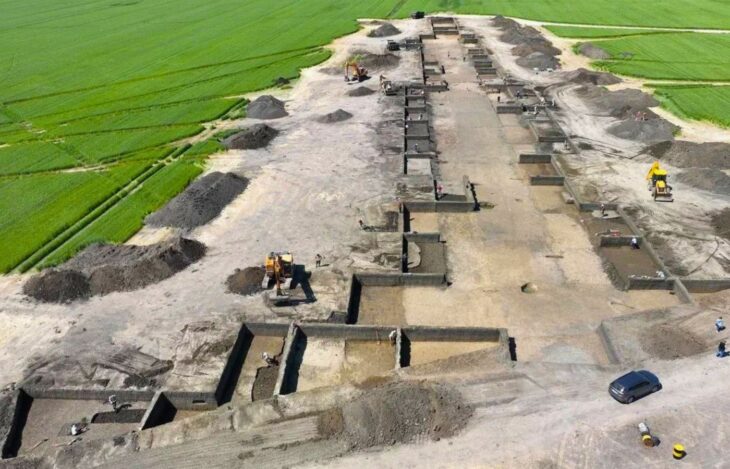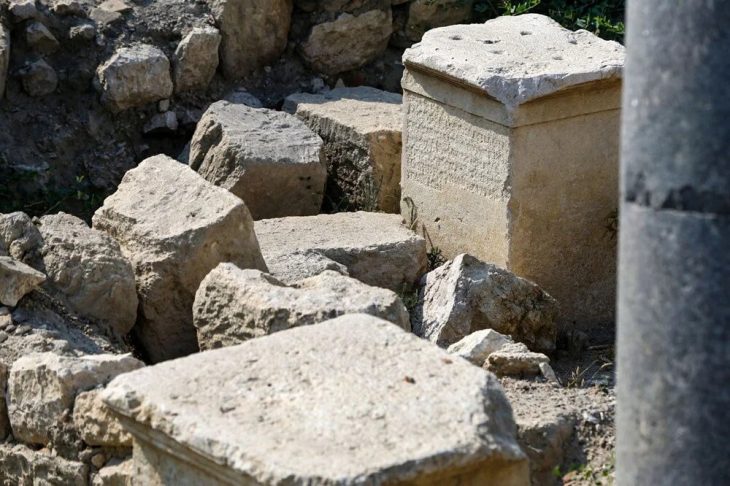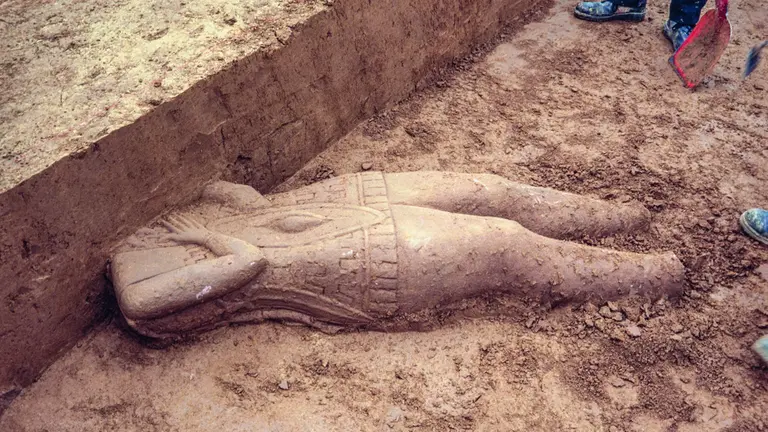
The Glauberg Celtic Prince is one of the most extraordinary Iron Age discoveries in Central Europe. Unearthed in 1996 near the Glauberg hill in Hesse, Germany, this remarkable archaeological find has reshaped our understanding of early Celtic elite culture. Often referred to as the “Celtic Prince of Glauberg,” the burial dates to approximately the early 5th century BCE, placing it firmly within the Late Hallstatt to Early La Tène period of the Celtic Iron Age.
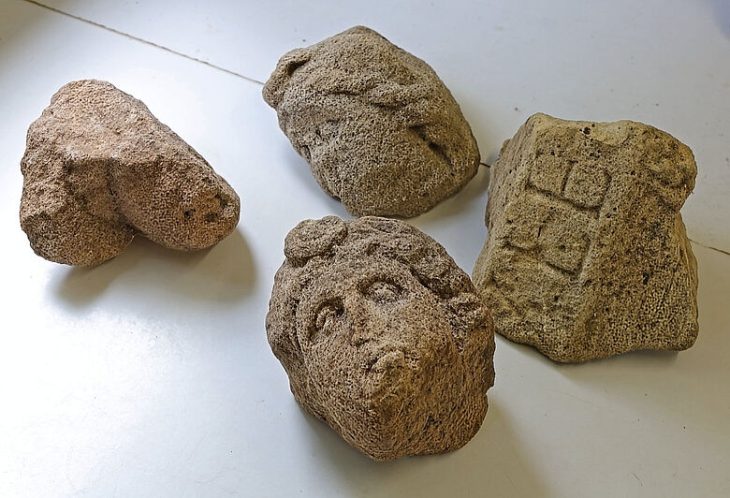
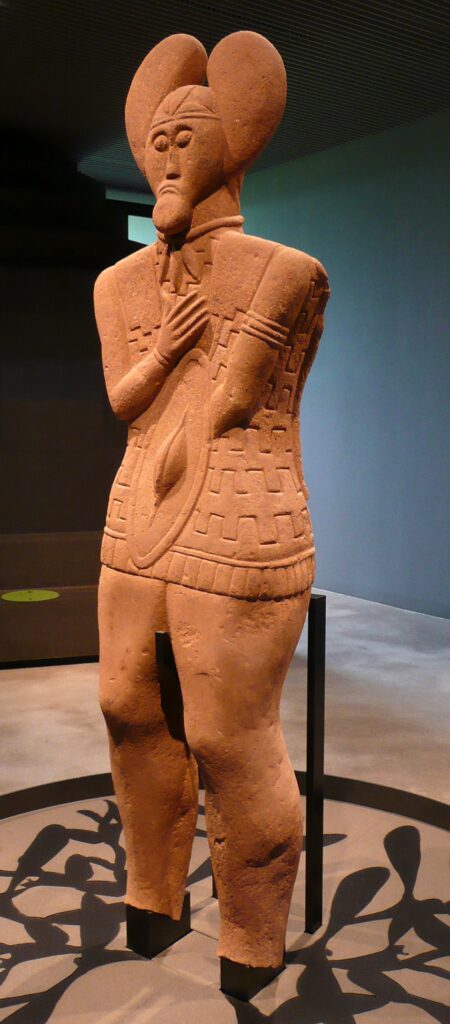
What makes the Glauberg Celtic Prince truly exceptional is the life-sized sandstone statue discovered near the burial mound. This statue is one of the oldest known anthropomorphic Celtic sculptures in Europe. The figure is depicted wearing distinctive leaf-shaped headgear—often interpreted as mistletoe leaves—along with a torc (a rigid neck ring symbolizing status and power), a shield, and a sword. These elements strongly indicate aristocratic rank and possibly even religious significance.
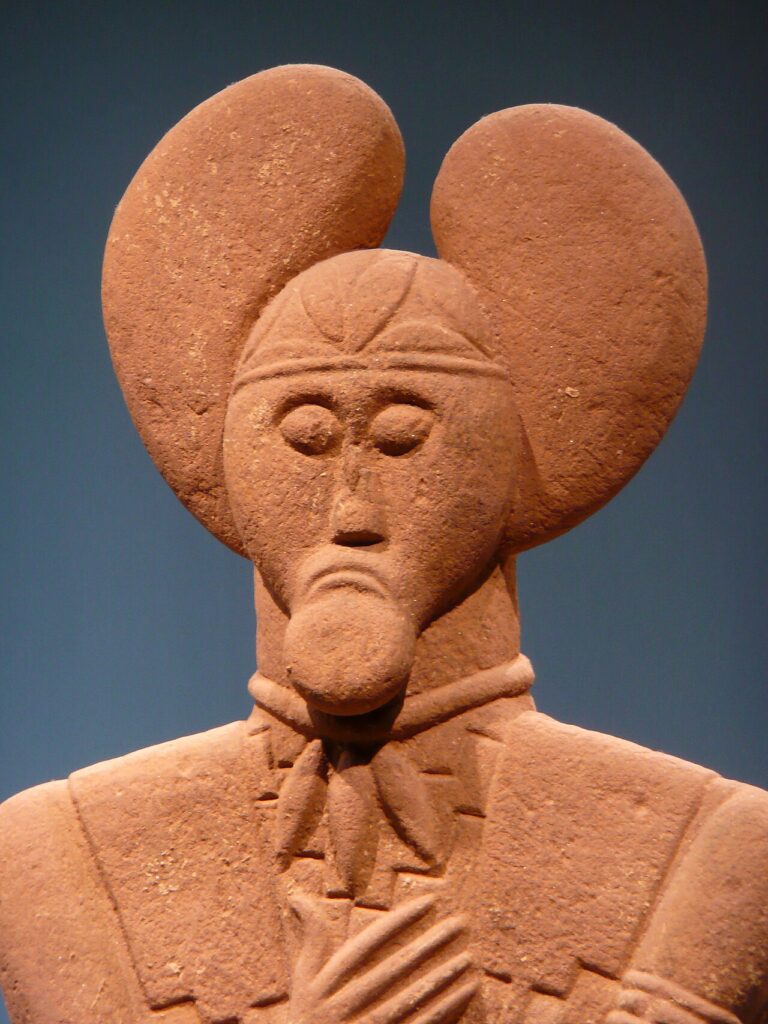
One of the most striking features of the Glauberg Celtic Prince statue is his unusual headdress. At first glance, it may resemble Mickey Mouse ears, but it actually represents a stylized mistletoe leaf crown. This symbolic headgear is widely interpreted as a sign of sacred authority and possibly priestly status within Celtic society. In Celtic belief systems, mistletoe held deep spiritual significance, often associated with ritual practices and elite religious power. The distinctive “mistletoe crown” not only makes the sculpture visually unique among Iron Age artifacts, but also strengthens the theory that the Glauberg figure was more than a warrior — he may have been a ruler with both political and spiritual authority.
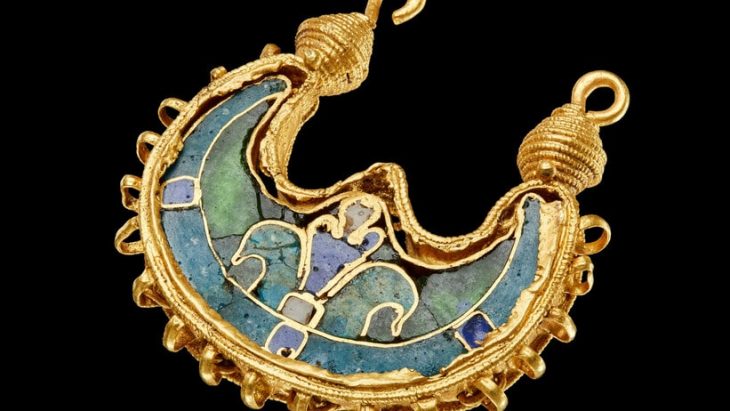
The burial chamber itself contained lavish grave goods, including gold jewelry, finely crafted weapons, and imported items that suggest long-distance trade connections across Iron Age Europe. Such artifacts highlight the extensive cultural and economic networks of the Celtic world. The princely tomb was part of a larger complex featuring burial mounds, processional avenues, and fortified settlements, indicating that the Glauberg site was a significant political and ceremonial center.
Radiocarbon dating and artifact typology confirm that the burial dates to around 480–450 BCE. This period marks the transition from the Hallstatt culture to the La Tène culture, a time when Celtic art and social hierarchies were becoming increasingly sophisticated.
📣 Our WhatsApp channel is now LIVE! Stay up-to-date with the latest news and updates, just click here to follow us on WhatsApp and never miss a thing!!
Today, the discoveries from the Glauberg site are displayed at the Keltenwelt am Glauberg, where visitors can explore the fascinating legacy of this Iron Age prince.