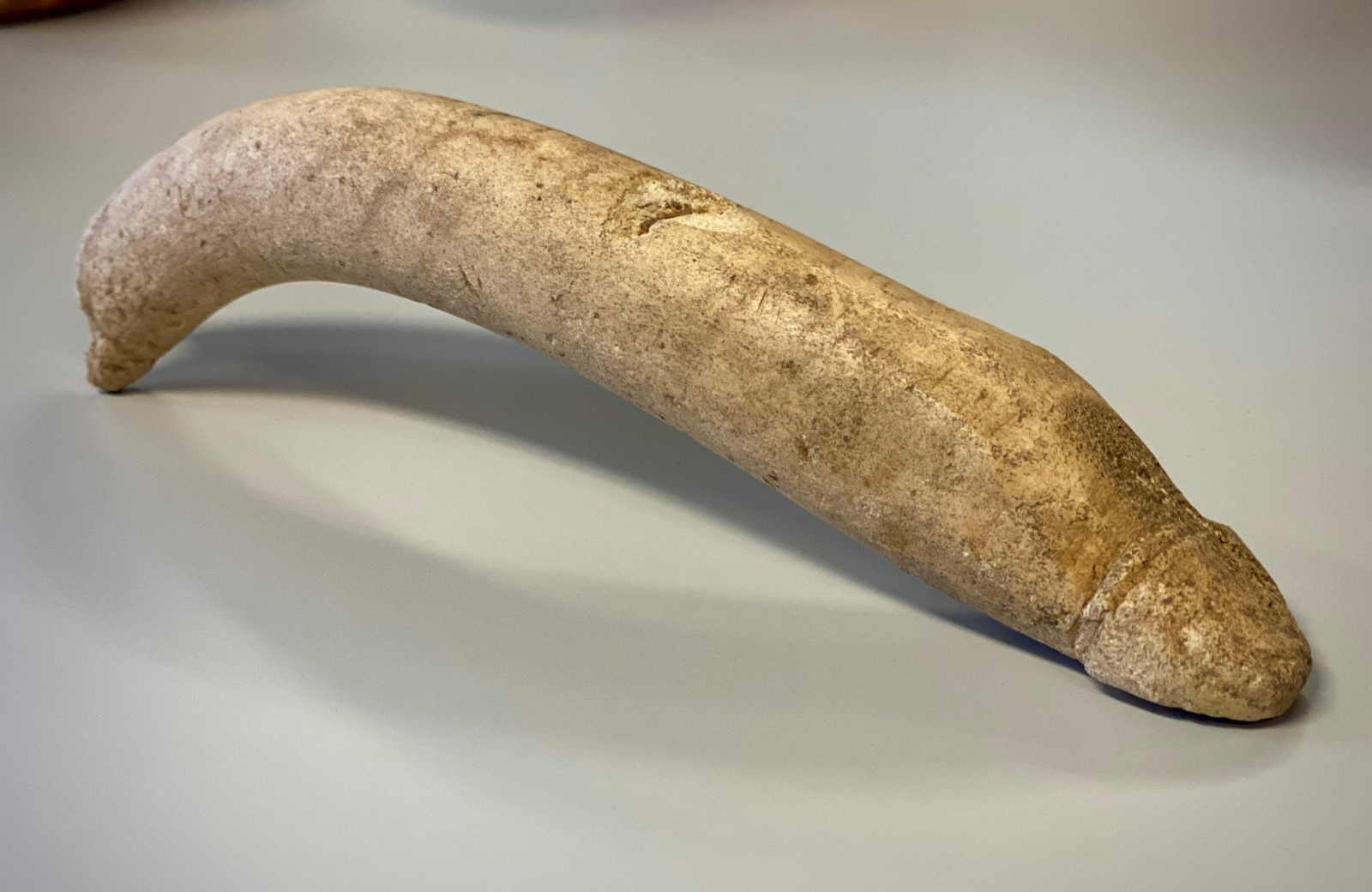
A rare Roman bone phallus, an exceptionally unusual artifact in both material and form, has been discovered among long-forgotten archaeological storage boxes in Nijmegen.
The find, uncovered during a major cataloguing project at the Valkhof Museum, is already being described as one of the most remarkable Roman objects identified in the Netherlands in recent years—offering fresh insight into symbolism, craftsmanship, and daily life on the empire’s northern frontier.
Inside just a fraction of the 16,000 unopened boxes—filled with finds from decades of excavations—researchers have already identified rare Roman artifacts, including finely crafted pottery and an exceptionally unusual bone carving that is rewriting assumptions about Roman material culture.
A Hidden Archive Comes Back to Life
For years, the vast collection sat largely untouched after being transferred to the province of Gelderland following legislative changes nearly two decades ago. Only recently, with an €8 million investment, has a systematic effort begun to catalogue, study, and preserve the contents.
The scale of the project is immense. It is expected to take at least six years to process every box. Yet even the first 300 boxes have already yielded discoveries that specialists describe as “extraordinary.”
📣 Our WhatsApp channel is now LIVE! Stay up-to-date with the latest news and updates, just click here to follow us on WhatsApp and never miss a thing!!
Provincial archaeologists emphasize that these finds are not isolated curiosities but part of a broader, interconnected picture of Roman life in the region—one that had remained largely invisible due to the sheer volume of unexamined material.
Roman Craftsmanship and Daily Life
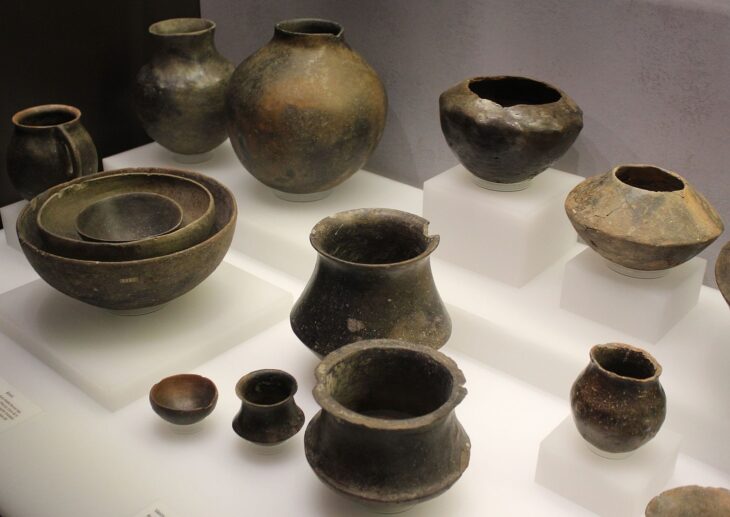
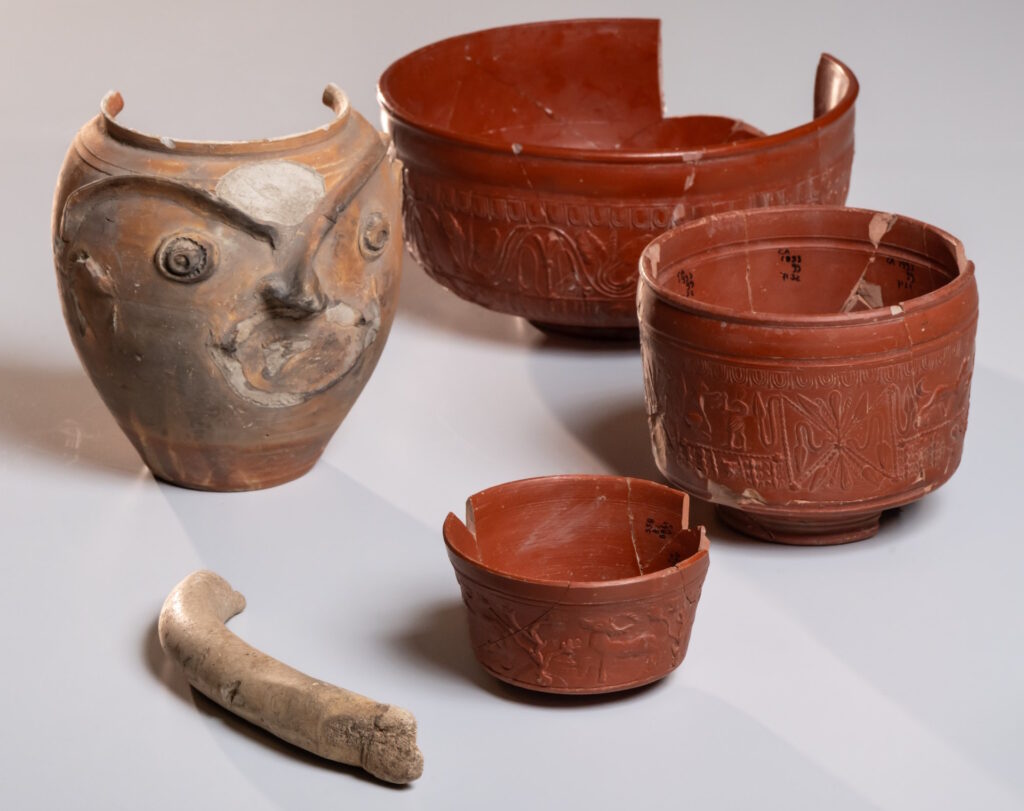
Among the most striking objects are fragments of high-quality Roman tableware, including orange-red cups and bowls produced using mold-based techniques. These vessels are decorated with intricate scenes—such as deer leaping through woodland landscapes—suggesting not only technical sophistication but also aesthetic refinement.
Equally notable is a nearly intact drinking vessel featuring a sculpted human face. Known as a “face beaker,” this type of pottery originated in the Mediterranean during the early Roman Empire and spread across Europe alongside Roman military expansion.
In the Rhineland region, such objects are often associated with military environments or burial contexts. Rather than depicting specific individuals, the faces likely served symbolic or protective purposes—objects placed in graves or used in daily life to ward off misfortune.
A Rare and Unusual Discovery
Perhaps the most talked-about find is a 20-centimeter-long phallus carved from bone—an object that stands out not only for its form but also for its material. While phallic imagery was widespread in the Roman world, examples were typically made from stone or metal. Organic versions are exceedingly rare.
This artifact offers valuable insight into Roman belief systems. Far from being taboo, such imagery functioned as a protective symbol. Phallic amulets were commonly displayed in homes, worn as jewelry, or positioned at entrances to guard against the “evil eye.”
The Nijmegen example reinforces this understanding while adding a new dimension: it demonstrates that these symbolic objects were also crafted in organic materials, expanding the known range of Roman artistic practices.
Why Nijmegen Matters in Roman History
These discoveries are especially significant given Nijmegen’s historical role. Known in antiquity as Noviomagus, the city was one of the oldest urban centers in the Netherlands and a key military and administrative hub along the northern frontier of the Roman Empire.
Located near the Rhine frontier, Nijmegen hosted Roman legions and played a strategic role in controlling movement and trade across the region. Archaeological evidence has long suggested continuous occupation, but the newly uncovered artifacts deepen that narrative.
They reveal a community that was not merely military but culturally vibrant—one that engaged with Roman artistic traditions, trade networks, and symbolic practices.
A Treasure Still Unfolding
What makes this discovery particularly compelling is its unfinished nature. Thousands of boxes remain unopened, each with the potential to reshape understanding of Roman life in northwestern Europe.
Researchers stress that this is only the beginning. As the cataloguing project continues, new finds are expected to emerge—possibly including objects that challenge existing interpretations of Roman culture at the empire’s edge.
For now, the early results offer a clear message: beneath layers of storage dust and administrative delay, an entire chapter of Roman history has been waiting—quietly, but intact—for its moment to be rediscovered.
Cover Image Credit: Provincie Gelderland