3,500-year-old Egyptian fortress in Sinai reveals heavily fortified routes tied to the biblical Exodus, offering new archaeological context to one of history’s most debated journeys.
A vast New Kingdom Egyptian fortress uncovered in northern Sinai is drawing renewed attention to one of history’s most debated narratives—the Exodus of the Israelites from Egypt. While archaeology rarely delivers direct proof of biblical events, discoveries like this one reshape the landscape in which those stories may have unfolded.
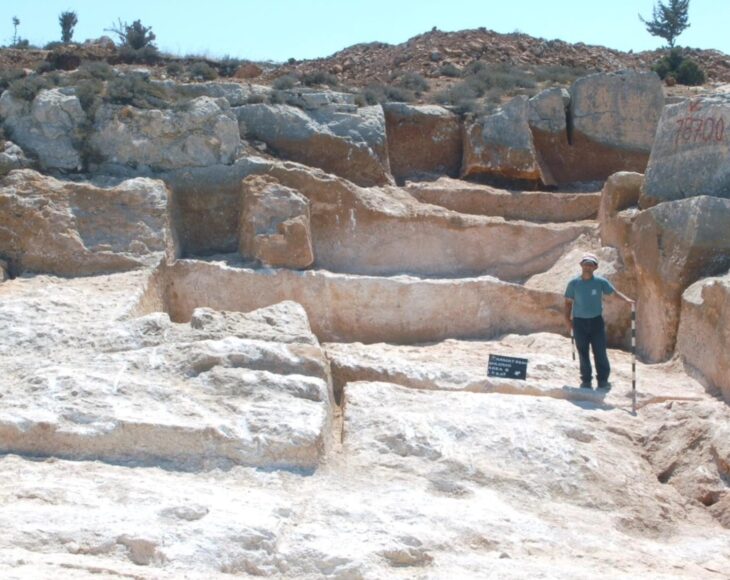
The newly excavated site at Tell el-Kharouba, located near the Mediterranean coast in North Sinai, reveals a highly organized military stronghold built along the ancient Ways of Horus, Egypt’s most strategic eastern frontier route. This corridor once connected the Nile Delta to the Levant, functioning as both a trade artery and a heavily fortified military zone.
A Fortress Built to Control a Strategic Corridor
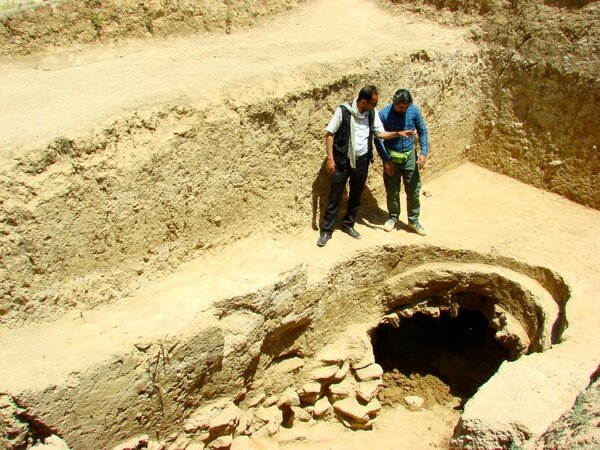
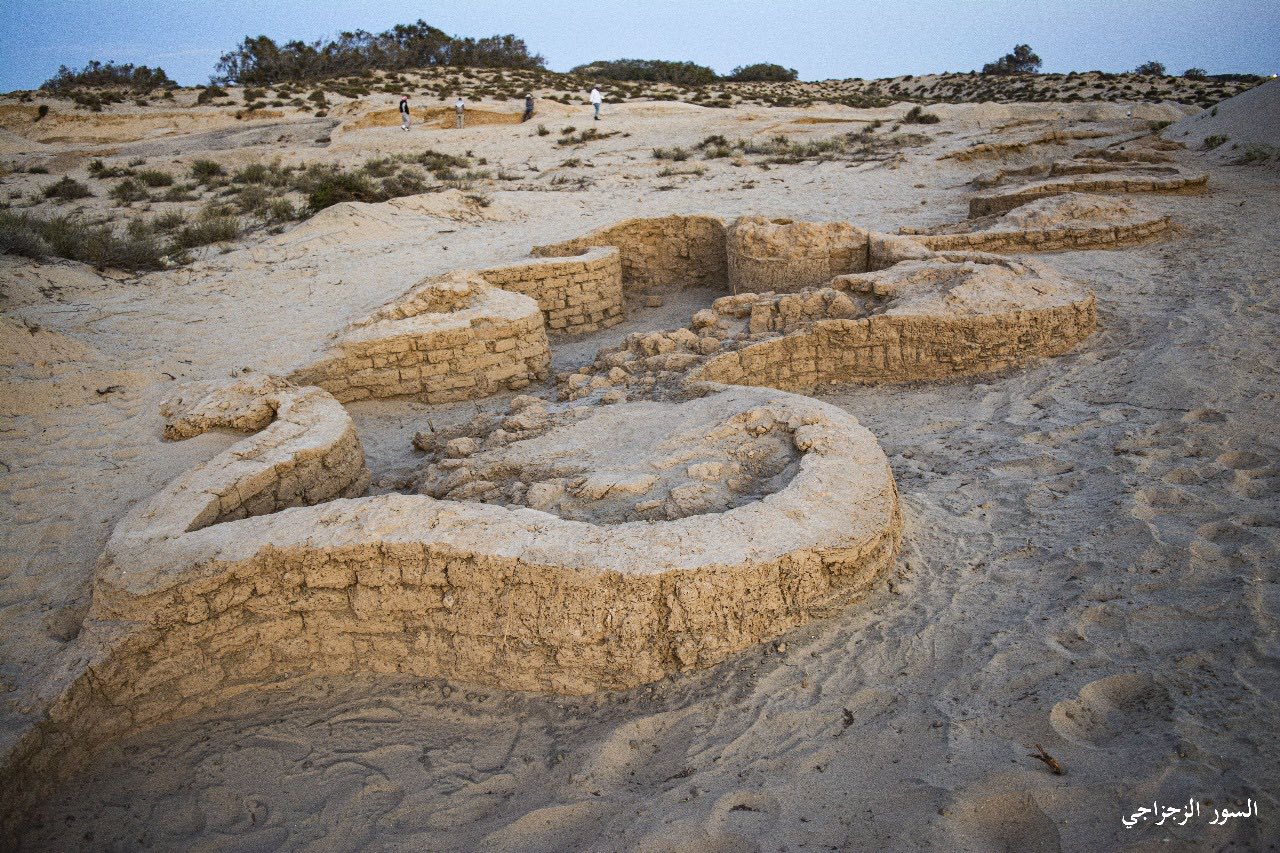
Archaeologists working under Egypt’s Ministry of Tourism and Antiquities have identified a sprawling complex covering roughly 8,000 square meters. Excavations have exposed a 105-meter-long southern wall, reinforced with defensive architecture including at least eleven towers, along with portions of the northern and western fortifications.
One of the most striking features is a zigzag defensive wall, stretching approximately 75 meters across the western side of the fortress. This design was not decorative—it reflects a sophisticated understanding of environmental challenges, particularly the shifting sands and strong desert winds of Sinai. It also enhanced defensive capabilities by complicating direct assaults.
📣 Our WhatsApp channel is now LIVE! Stay up-to-date with the latest news and updates, just click here to follow us on WhatsApp and never miss a thing!!
The fortress was not an isolated outpost. It formed part of a broader network of military installations established during Egypt’s New Kingdom period (circa 1550–1070 BCE), when pharaohs sought to secure their eastern borders and maintain influence over Canaan and Syria.
Life Inside the Garrison
Beyond its imposing defenses, the site offers a rare glimpse into the daily lives of Egyptian soldiers stationed at the empire’s frontier.
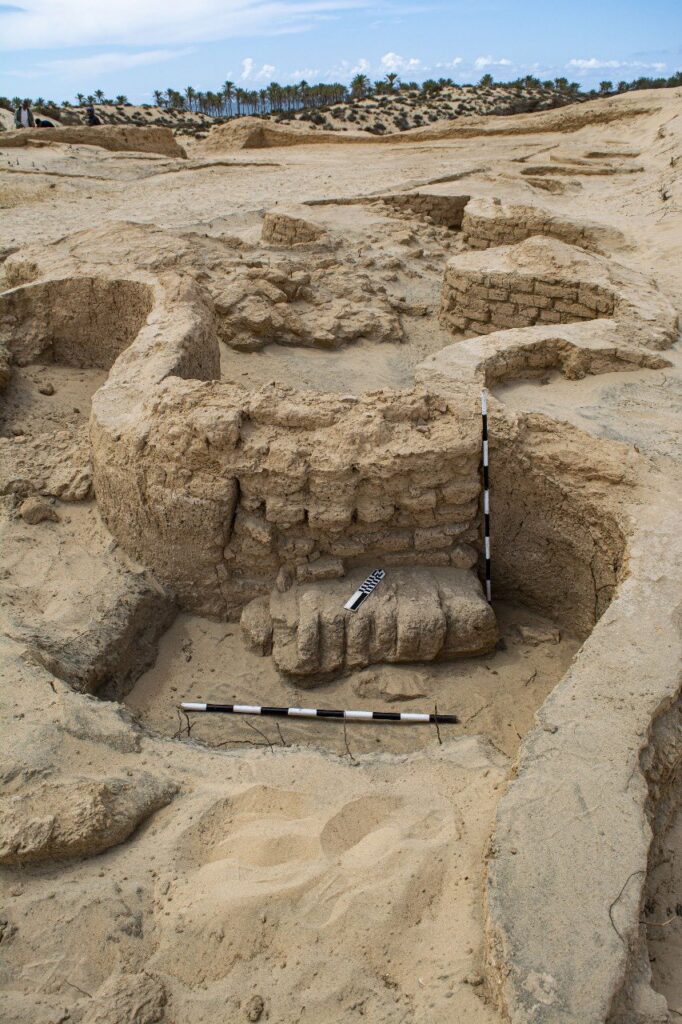
Excavations uncovered a designated residential zone, complete with storage areas, courtyards, and facilities that suggest the fortress housed a garrison of several hundred troops. A large bread oven, found alongside fossilized dough remains, points to organized food production within the compound—evidence of a self-sustaining military community.
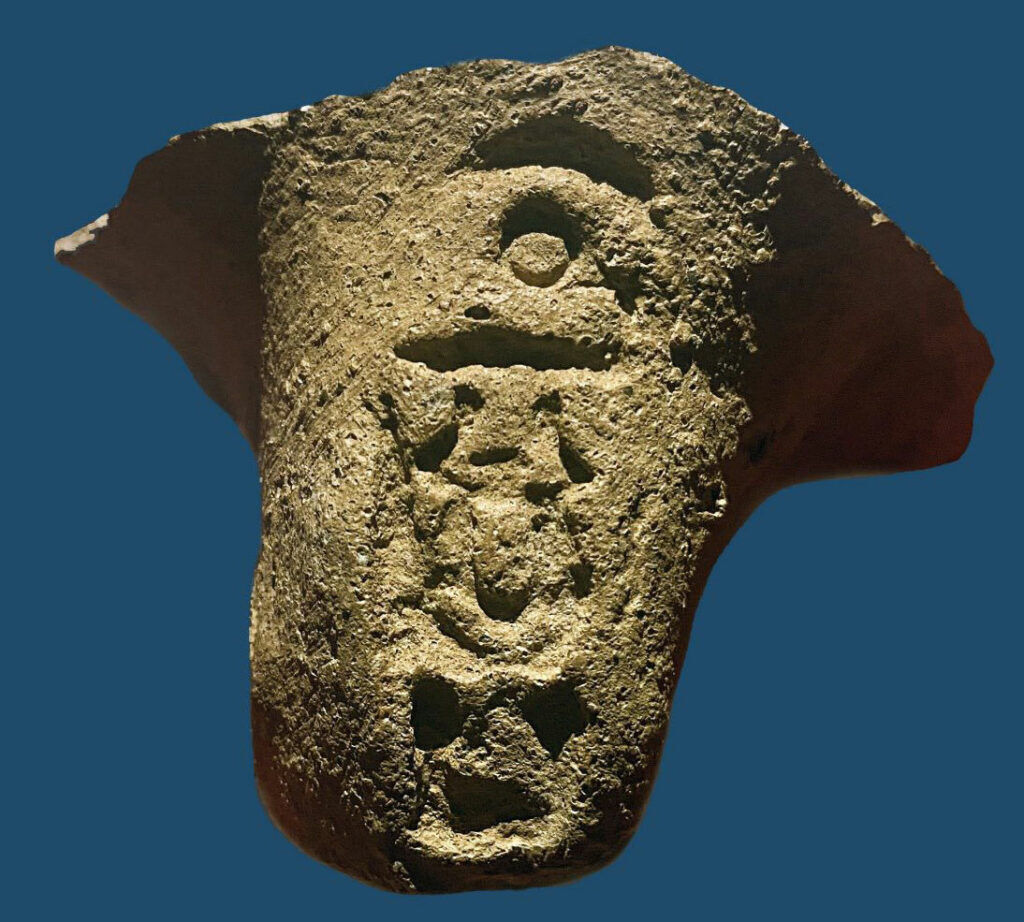
Fragments of pottery, storage vessels, and foundation deposits were also recovered. Among them was a vessel handle bearing the name of Pharaoh Thutmose I, linking the construction of the fortress to the early 18th Dynasty, a formative period in Egypt’s imperial expansion.
The association with Thutmose I is particularly significant. His reign in the late 16th century BCE marked a period of rapid Egyptian expansion, with campaigns reaching as far as the Euphrates. The establishment of fortified routes like the Ways of Horus formed part of this broader imperial strategy—decades before the period traditionally linked to the Exodus.
Intriguingly, archaeologists also identified volcanic stones likely imported from the Aegean region, highlighting long-distance connections and the logistical sophistication of the Egyptian state.
The “Ways of Horus” and the Geography of Exodus
The significance of this discovery extends beyond military history. The Ways of Horus—known in biblical texts as “the way of the land of the Philistines”—has long been discussed as a potential route connecting Egypt to Canaan.
As the Book of Exodus records:
“When Pharaoh let the people go, God did not lead them on the road through the Philistine country, though that was shorter. For God said, ‘If they face war, they might change their minds and return to Egypt.’ So God led the people around by the desert road toward the Red Sea.” (Exodus 13:17–18)
According to the biblical account, the Israelites did not take this direct northern path. Instead, they were led through the wilderness, avoiding what is described as a heavily militarized route.
This is where archaeology becomes especially compelling.
The existence of a dense chain of fortresses along this road supports the idea that the northern corridor was under strict Egyptian control. For any migrating group, especially one seeking to escape imperial authority, this would have been a dangerous and impractical route.
Another passage reinforces the scale of this movement:
“The Israelites journeyed from Rameses to Succoth. There were about six hundred thousand men on foot, besides women and children.” (Exodus 12:37)
In this sense, the newly discovered fortress does not prove the Exodus—but it strengthens the plausibility of the narrative’s geography. It provides a tangible framework for understanding why an alternative, more arduous path through the desert might have been chosen.
Between Faith and Evidence
It is important to draw a clear line: no direct archaeological evidence has yet confirmed the Exodus as a historical event. There are no inscriptions naming Moses at this site, nor clear traces of a mass migration through Sinai tied definitively to the biblical account.
Yet archaeology rarely works in absolutes. Instead, it builds context.
And context matters.
As another biblical verse puts it:
“By day the Lord went ahead of them in a pillar of cloud to guide them on their way, and by night in a pillar of fire…” (Exodus 13:21)
Discoveries like Tell el-Kharouba do not ask us to replace belief with evidence, nor evidence with belief. Rather, they invite us to explore how material remains and ancient narratives can intersect—sometimes unexpectedly.
For many, the story of the Exodus carries meaning that extends beyond historical verification. It is a narrative of identity, liberation, and memory. Whether one approaches it through faith, scholarship, or curiosity, its cultural impact is undeniable.
What archaeology can offer is something different but equally valuable: a way to reconstruct the world in which such stories emerged.
A Frontier of Empires—and Ideas
The Sinai Peninsula has always been more than a geographic bridge. It was a frontier of empires, a zone of movement, conflict, and exchange. The fortress at Tell el-Kharouba stands as a reminder that this landscape was once tightly controlled, carefully monitored, and deeply strategic.
Each newly uncovered wall, tower, and artifact adds resolution to a picture that is still incomplete. The hope among archaeologists is that continued excavations may reveal additional structures—possibly even a nearby military harbor that once supported the fortress.
For now, the site offers something quietly powerful.
Not definitive answers—but sharper questions.
And perhaps that is where the true excitement lies.
Because even in the absence of absolute proof, discoveries like this one remind us that the ancient world is not lost—it is waiting, layer by layer, to be understood.
Egyptian Ministry of Tourism and Antiquities
Cover Image Credit: 3,500-year-old Egyptian fortress at Tell el-Kharouba, North Sinai. Egyptian Ministry of Tourism and Antiquities